
Bringing home a new puppy is equal parts joy and chaos – and one of the first big decisions you’ll make is what to feed them. Hard food (dry kibble) remains the go-to for most puppy parents: it’s convenient, shelf-stable, and designed to be nutritionally complete. But with so many options claiming to be the best, finding the right one can feel overwhelming. The food you choose fuels your puppy’s rapid growth, from building strong bones and muscles to supporting brain development and a robust immune system.
We’ve surveyed the market to cut through the noise, focusing on nutrient profiles, ingredient quality, and how well each formula suits different breeds and sizes. Whether you’re raising a teacup Chihuahua or a Great Dane pup, the right hard food can set the foundation for a long, healthy life. This guide breaks down ten standout options and what to look for so you can feed your puppy with confidence.
Best Hard Food for Puppies – 2026 Reviews
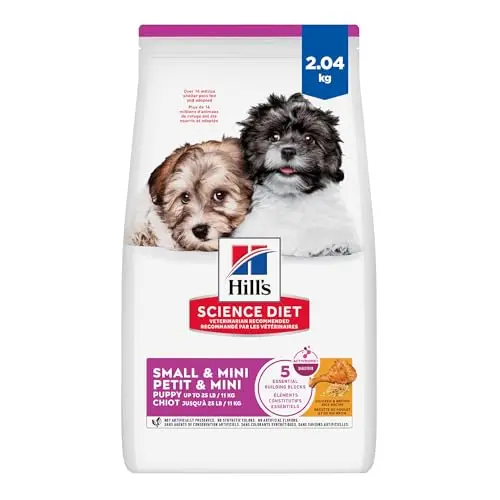
Small & Mini Puppy Chicken & Brown Rice – Tailored Nutrition for Small Breeds
Hill’s Science Diet delivers a veterinarian-recommended formula designed specifically for small and miniature breed puppies. With DHA for brain and eye development, an antioxidant blend for immune support, and balanced minerals for growing bones, this food covers key developmental needs. The small kibble size is easy for tiny mouths to manage, and the natural ingredients with prebiotic fiber support gentle digestion.
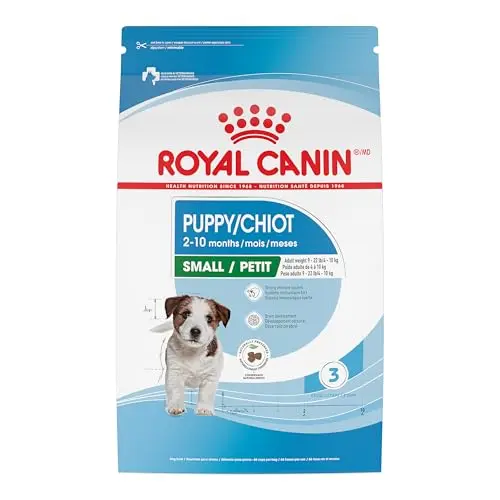
Small Puppy – Breed-Specific Growth Support
Royal Canin’s Small Puppy formula is precisely tailored for puppies expected to weigh 9-22 lbs as adults. The kibble texture and shape are engineered for small jaws, aiding dental health and encouraging chewing. Packed with DHA, omega-3s, and prebiotics, it supports brain development, immune function, and digestive health. This recipe is ideal for mixed feeding alongside Royal Canin’s wet foods, offering a complete nutritional solution for small-breed puppies from weaning through growth.
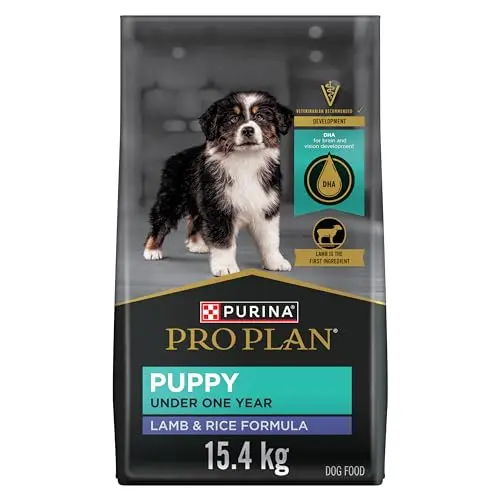
Development Lamb & Rice – All-Breed Puppy Support
Purina Pro Plan’s Lamb & Rice formula is a versatile pick suitable for puppies of all sizes. Real lamb leads the ingredient list, providing high-quality protein for lean muscle growth. Fortified with DHA for brain development and guaranteed live probiotics for digestive and immune health, it covers the essential bases. The 15.4 kg bag offers excellent value for multi-puppy households or those who want to buy in bulk without sacrificing nutrition.
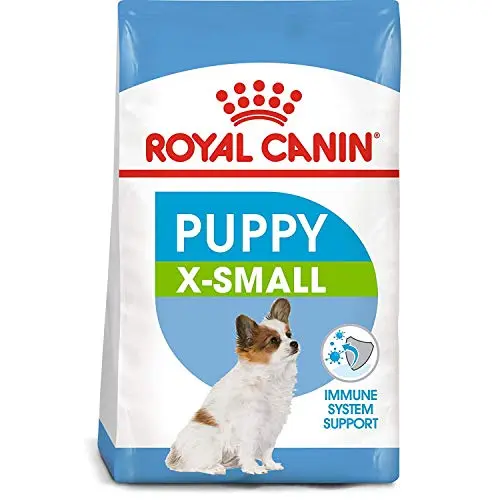
X-Small Breed Puppy – Toy Breed Nutrition
Specifically designed for puppies with an expected adult weight under 8 lbs, Royal Canin’s X-Small Breed formula addresses the high energy needs of toy breeds. The tiny kibble encourages proper chewing and is easy to serve. Fortified with antioxidants, prebiotics, and highly digestible proteins, it supports immune and digestive health, while DHA aids brain development. This formula pairs well with Royal Canin’s wet food for a mixed feeding approach that satisfies even the pickiest eaters.
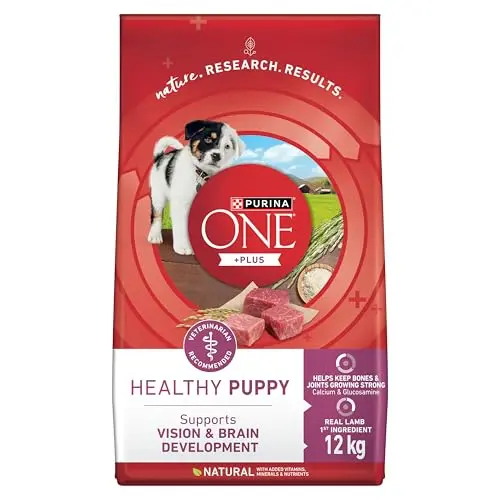
Plus Healthy Puppy Lamb – Gentle Digestion & Brain Development
Purina ONE’s lamb formula is crafted with real lamb as the #1 ingredient and enhanced with DHA for brain and vision development. The SmartBlend recipe includes easily digestible rice and oatmeal to be gentle on sensitive puppy stomachs. With no artificial fillers or flavours, it delivers complete and balanced nutrition. The 12 kg bag is an economical choice for households raising a growing pup.
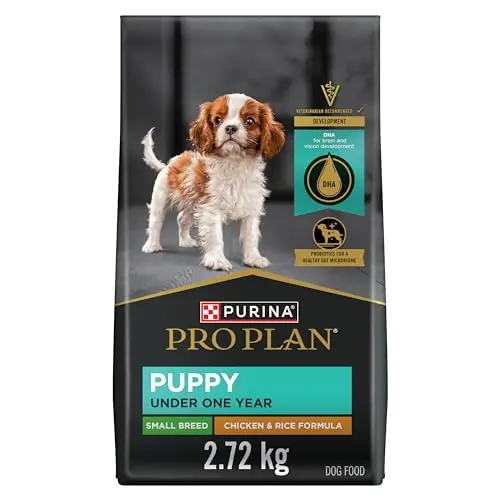
Small Breed Development Chicken & Rice – Compact Kibble for Small Jaws
Tailored for small breed puppies, this Pro Plan formula features chicken as the first ingredient and bite-sized kibble that’s easy for little mouths. With DHA for brain and vision development and guaranteed live probiotics, it supports both cognitive function and digestive health. The 2.72 kg bag is a perfect starter size, and the recipe is highly palatable even for finicky small dogs.
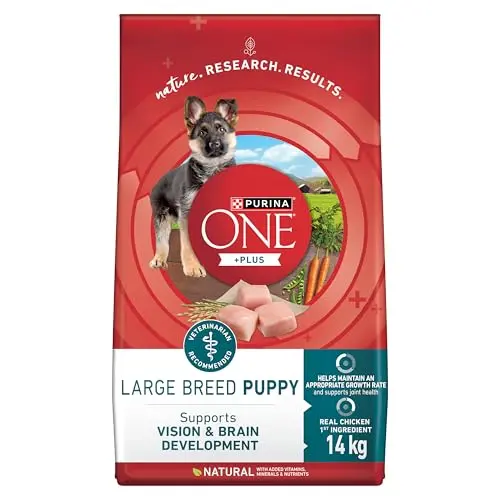
Large Breed Puppy Chicken – Joint Support & Hearty Growth
Purina ONE’s Large Breed formula addresses the specific needs of big puppies, with real chicken as the #1 ingredient and natural sources of glucosamine for joint support. The DHA-enriched recipe promotes brain development, while dual-defense antioxidants strengthen immunity. The 14 kg bag offers exceptional value for owners of large and giant breed puppies, providing complete nutrition without artificial fillers.
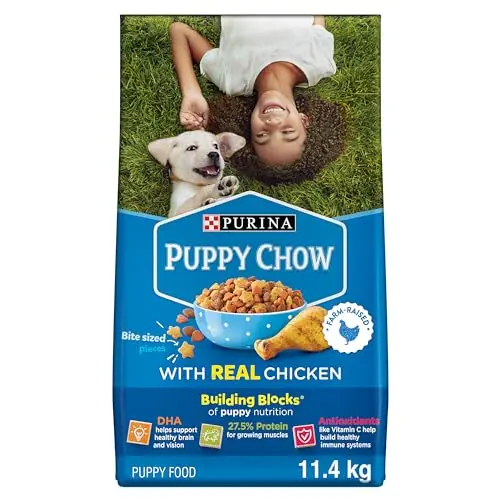
Complete with Real Chicken – Budget-Friendly Balanced Nutrition
Purina Puppy Chow delivers essential nutrients for growing puppies in an affordable package. With 27.5% protein, real farm-raised chicken, and DHA for brain development, it covers the basics. The formula includes 23 essential vitamins and minerals and is designed to be easily digestible. The 11.4 kg bag provides lasting value for budget-conscious puppy parents.
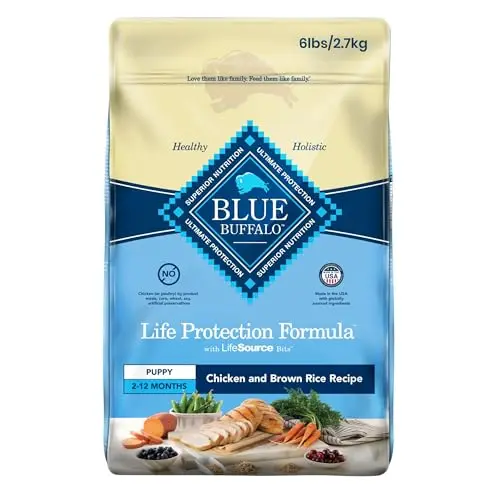
Life Protection Chicken & Brown Rice – Antioxidant-Rich Immune Support
Blue Buffalo’s Life Protection formula features real chicken and wholesome grains in a recipe boosted with their exclusive LifeSource Bits – a precise blend of antioxidants, vitamins, and minerals formed at lower temperatures to retain potency. DHA and ARA support cognitive and eye development, while calcium and phosphorus promote strong bones. The medium-sized kibble is suitable for most breeds, and the formula avoids corn, wheat, soy, and poultry by-product meals.
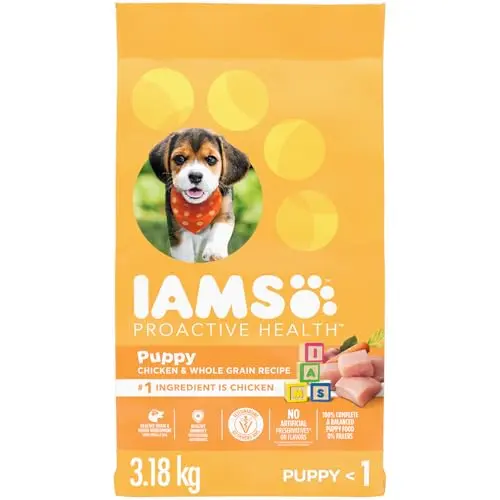
Proactive Health Chicken & Whole Grain – Wellness Building Blocks
IAMS Proactive Health puppy food is a straightforward, budget-friendly option that covers the basics. With chicken as the first ingredient, plus DHA and 22 key nutrients found in mother’s milk, it supports brain development and overall health. The formula promotes healthy digestion, and the 3.18 kg bag is a convenient size for small households. It’s a solid, no-frills choice for raising a healthy pup without spending a fortune.
How We Evaluated These Hard Foods for Puppies
We didn’t run lab digestibility trials or long-term growth studies. Instead, we cross-referenced 10 hard food formulas from 7 distinct brands across 5 key decision axes – nutritional completeness, kibble size and texture, ingredient quality, breed-specific formulation, and digestibility. We triangulated published specifications, ingredient lists, and aggregated owner feedback where available to benchmark each formula. Every product was audited for its guaranteed analysis (protein and fat minimums), scrutinized for whole-food ingredients versus by-products, and mapped for kibble dimensions against typical puppy mouth sizes. Owner feedback provided real-world insights into palatability and stool consistency, which we weighted heavily in the performance score.
The scoring framework weighted real-world performance (60%) – how well each food supports healthy growth and solid stools – against feature differentiation (40%) – unique ingredients like probiotics, breed-tailored kibble, and grain-free status. We have no commercial relationship with any of the brands featured; recommendations track fit and differentiation, not brand preference. If you’re looking for the best all-around hard food for puppies, the Hill’s Science Diet Small & Mini Puppy is our top pick; if you need a formula tailored for small breeds, the Royal Canin Small Puppy excels.
How to Choose the Right Hard Food for Puppies
Understanding Puppy Nutritional Needs
Growing puppies have unique dietary requirements compared to adult dogs. Look for a formula that provides protein for muscle growth, DHA for brain development, and a balanced calcium-to-phosphorus ratio to support skeletal growth. Fat is a concentrated energy source that active puppies need, while antioxidants like vitamins C and E bolster the immune system. Large-breed puppies, in particular, need controlled calcium levels to prevent too-rapid growth that can lead to joint issues.
Why Kibble Size Matters for Small vs. Large Breeds
Kibble size isn’t just about convenience – it affects chewing, digestion, and even dental health. Toy breeds like Chihuahuas need an extra-small kibble to avoid choking and encourage eating, while giant breeds benefit from larger pieces that slow down fast eaters and promote jaw exercise. A food like the Royal Canin X-Small Breed Puppy is ideal for the tiniest pups, whereas a large-breed formula will have chunkier kibble.
Grain-Free vs. Whole Grains: What's Best for Your Puppy?
Grain-free dog foods have gained popularity, but whole grains like brown rice and oatmeal are excellent sources of complex carbohydrates and fibre for most puppies. They provide steady energy and support digestive health. Unless your puppy has a diagnosed grain allergy, a grain-inclusive formula is often a nutritious and more affordable choice. Blue Buffalo and Hill’s Science Diet both offer wholesome grain options that include barley and oats.
Reading the Ingredient List: What to Look For
Start with the first ingredient – it should be a named meat source like chicken, lamb, or salmon. Avoid formulas where meat by-products or vague “meal” lead the list. Whole-food ingredients like vegetables and nutritious grains add vitamins and minerals. Steer clear of artificial colours, flavours, and preservatives. Premium brands like Hill’s Science Diet prioritize high-quality, recognizable ingredients.
When to Switch to Adult Food
The transition timeline varies: small breeds typically switch around 10-12 months, while large-breed puppies may need puppy food until 12-24 months to support their extended growth period. Monitor your puppy’s body condition and consult your vet. When the time comes, a brand like Purina Pro Plan offers a seamless switch to an adult formula with similar ingredients.
Frequently Asked Questions
What's the difference between Hill's Science Diet Puppy and Royal Canin Small Puppy?
Both are top-tier choices for small breeds, but they differ in approach. Hill’s Science Diet focuses on veterinarian-recommended nutrition with a precise balance of minerals for growth and a prebiotic fibre blend for digestion. Royal Canin Small Puppy emphasizes breed-specific kibble design – the size and texture are engineered for small jaws, with a heavier focus on highly digestible proteins and palatability. Hill’s uses chicken and brown rice, while Royal Canin uses chicken and a proprietary blend of vitamins and minerals. Both include DHA and antioxidants, making either a sound choice.
Is Purina Pro Plan better than Blue Buffalo for puppies?
It depends on your priorities. Purina Pro Plan offers high-quality protein from named meats (chicken or lamb) with added live probiotics for digestive health, making it a favourite for owners who want science-backed, digestible nutrition. Blue Buffalo stands out with its LifeSource Bits – a cold-formed antioxidant blend – and its commitment to avoiding corn, wheat, and soy. If your puppy benefits from probiotics and you want a budget-conscious large bag, Pro Plan’s Lamb & Rice formula is excellent. If you’re focused on ingredient purity and antioxidant support, Blue Buffalo is a strong contender.
Do I really need a breed-specific puppy food?
Not necessarily, but it can be helpful. Breed-specific formulas like Royal Canin’s X-Small or Large Breed lines adjust kibble size, calorie density, and calcium levels to match growth rates and jaw sizes. If you have a toy breed, a food designed for them can reduce choking risk and support their rapid metabolism. For most mixed-breed or medium-sized puppies, a high-quality all-breed puppy food like Purina Pro Plan Lamb & Rice works perfectly.
How do I know if my puppy is allergic to their food?
Food allergies in puppies typically show up as itchy skin, ear infections, or digestive upset like chronic loose stools. If you suspect an allergy, your vet may recommend an elimination diet – switching to a novel protein (like lamb or salmon) and a limited-ingredient formula for 8-12 weeks. Many owners find that a lamb-based hard food like Purina ONE Lamb resolves poultry sensitivities. Always transition slowly over 7-10 days to avoid digestive shock.
When should I switch from puppy food to adult food?
Most small breeds are ready to switch around 10-12 months, while large and giant breeds often need puppy food until 12-24 months because they grow for longer. Your puppy’s breed, body condition, and activity level all play a role. The key is to avoid overfeeding-puppy food is calorie-dense, and prolonging it unnecessarily can lead to weight gain. A gradual transition over a week helps prevent stomach upset.
Final Verdict
For the vast majority of puppy owners, the Hill’s Science Diet Small & Mini Puppy takes the top spot. It balances veterinary science, precise nutrition, and owner satisfaction in a way that’s hard to beat. If you’re raising a small breed, the Royal Canin Small Puppy is a tailored alternative with breed-specific kibble. Toy breed owners should look no further than the Royal Canin X-Small. And if budget is your guide, the Purina ONE Large Breed Puppy delivers joint support and value in one bag. No matter which you choose, you’re giving your puppy a healthy start.