
Watching your dog deal with digestive upset after mealtime – the soft stools, the gurgling tummy, the discomfort – is a heartbreaker. You know a diet change could help, but wading through bags of kibble labelled ‘sensitive’ or ‘digestive care’ is overwhelming. The challenge: finding a formula that’s genuinely gentle on the stomach while still delivering complete nutrition.
We surveyed the standout sensitive-stomach kibbles across major brands. The best options go beyond a marketing label – they pair highly digestible proteins with targeted prebiotics, omega fatty acids for skin and coat health, and carefully selected fibres that support a balanced gut. Whether your dog struggles with occasional loose stools or a chronic irritable tummy, this guide hands you the criteria and confidence to pick the right bowl.
Best Kibbles for Dogs with Sensitive Stomachs – 2026 Reviews
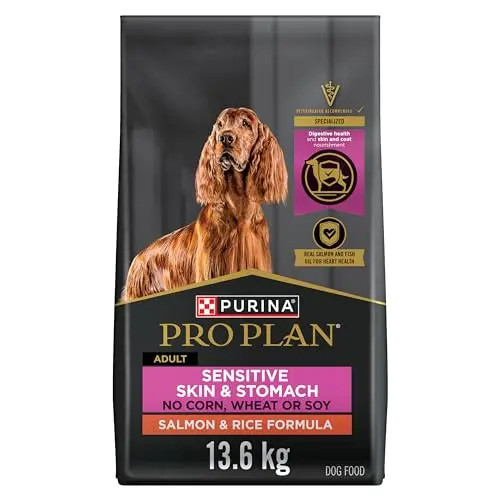
Sensitive Skin & Stomach Salmon & Rice Formula – High-Protein, Prebiotic-Rich
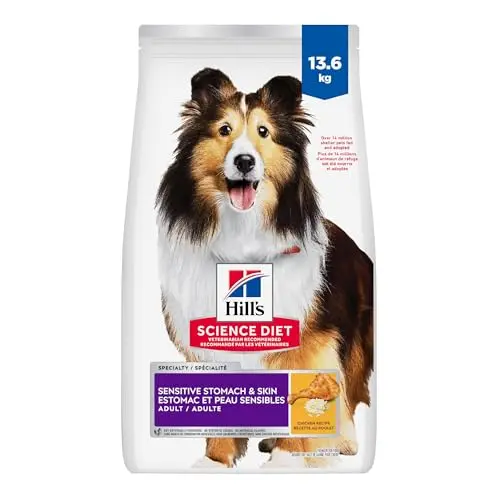
Adult Sensitive Stomach & Skin Chicken Recipe – Gut Health with Prebiotic Fiber
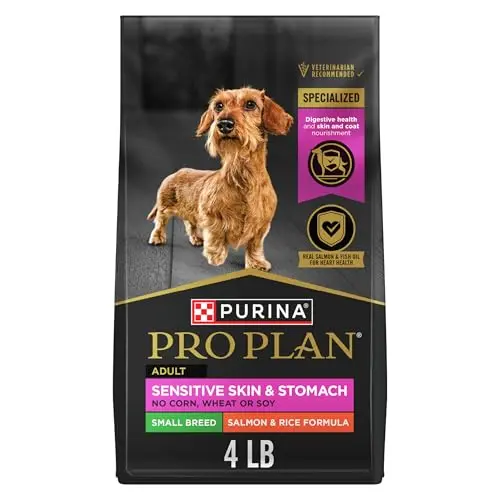
Sensitive Skin & Stomach Small Breed Salmon & Rice – Designed for Little Jaws
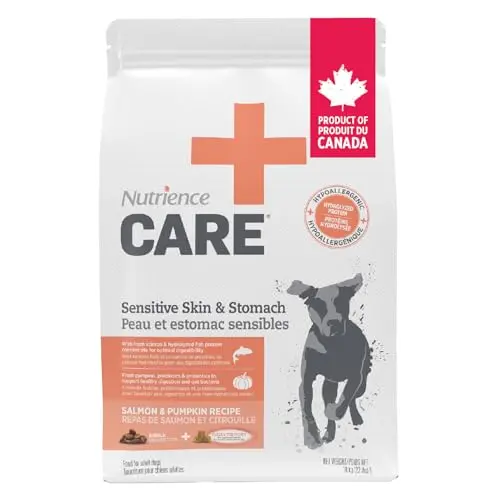
Care Sensitive Skin & Stomach Salmon Formula – Grain‑Free Digestiboost Blend
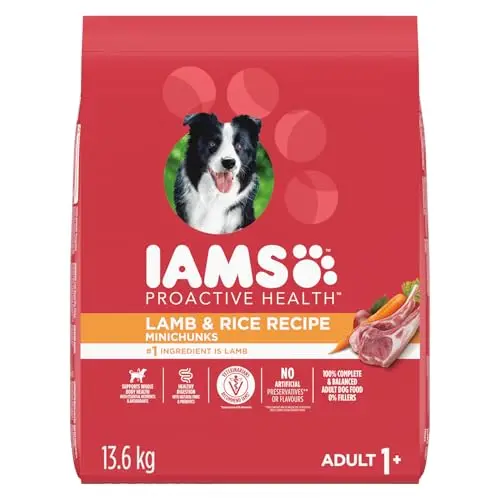
Proactive Health Minichunks Lamb & Rice – Firm Stool Support in 10 Days

True Solutions Digestive Care Chicken Formula – Clinically Proven Prebiotic Fiber
How We Evaluated These Kibbles for Dogs with Sensitive Stomachs
We didn’t run controlled feeding trials or lab digestibility tests. What we did: cross‑referenced 6 sensitive‑stomach kibble models from 5 distinct brands across 5 key decision axes – protein source and digestibility, prebiotic/probiotic inclusion, fatty acid profile for skin health, grain‑free vs. grain‑inclusive, and kibble size to texture. We triangulated published specifications, formula ingredient panels, and aggregated owner feedback where available, matching each kibble against real‑world digestive scenarios.
The scoring framework weighted real‑world digestive fit (60%) – how effectively each formula addresses loose stools, gas, and gut discomfort based on recipe design and user‑reported outcomes – against feature differentiation (40%) – unique nutritional advantages like novel proteins, targeted prebiotic blends, or breed‑specific kibble. We have no commercial relationship with any of the brands featured; recommendations track digestive efficacy and ingredient quality, not brand preference. If you’re looking for the one sensitive‑stomach kibble that nails both skin and digestion while pleasing fussy eaters, the Purina Pro Plan Sensitive Skin & Stomach Salmon & Rice Formula is your match; if your dog’s sensitivity centres on skin, Hill’s Science Diet Sensitive Stomach & Skin delivers notable coat improvement along with digestive calm.
How to Choose the Right Kibble for Dogs with Sensitive Stomachs
What Makes a Kibble Suitable for Sensitive Stomachs?
The most important factor is digestibility – how easily your dog’s system breaks down and absorbs the food. Look for a named animal protein as the first ingredient (chicken, salmon, lamb) and avoid vague terms like ‘meat meal.’ Added prebiotics, such as beet pulp or chicory root, feed beneficial gut bacteria and help firm up stools. A moderate fibre level from gentle sources like oat meal or pumpkin keeps things moving without irritation. Many sensitive‑stomach formulas also limit potential allergens by using a single protein source and omitting artificial colours, flavours, and preservatives.
Prebiotics vs. Probiotics: Why Both Matter for Gut Health
Prebiotics are non‑digestible fibres that encourage the growth of good bacteria already in your dog’s gut – think of them as fertiliser for the microbiome. Probiotics, on the other hand, are live beneficial bacteria added directly to the food. Not all sensitive‑stomach kibbles include probiotics, but many incorporate prebiotic fibres like chicory root, beet pulp, or oat fibre. If a formula features both, it can offer a one‑two punch for digestive stability. Check the ingredient list for terms like ‘dried chicory root’ or ‘Lactobacillus’ to confirm.
Grain‑Free vs. Grain‑Inclusive: Does It Help with Sensitive Stomachs?
Going grain‑free is not automatically better for every dog with a sensitive stomach. While some dogs genuinely react to grains like wheat, corn, or soy, many tolerate rice, barley, and oatmeal well – and these grains can actually provide gentle, easily digestible carbohydrates. Grain‑free formulas, such as the Nutrience Care Sensitive Skin & Stomach, swap grains for ingredients like sweet potatoes and peas, which can be a good trial if food allergies are suspected. Watch your dog’s stool quality and itchiness during any diet change; those are your best indicators.
Protein Choices: Chicken, Salmon, or Lamb for Sensitive Dogs?
Novel proteins – ones your dog hasn’t eaten before – often help when food sensitivities are at play. Salmon stands out in many sensitive‑stomach kibbles because it’s rich in omega‑3s that reduce inflammation in the gut and skin. Lamb is another single‑source protein that’s less commonly fed, reducing the chance of a pre‑existing allergy, as seen in the IAMS Proactive Health Minichunks Lamb & Rice. Chicken is highly digestible and widely accepted but may be problematic if your dog has already developed a poultry sensitivity. Rotating proteins every few bags can prevent new allergies from forming.
Kibble Size and Texture: Small Considerations for Big Comfort
Don’t underestimate the mechanical side of digestion. If a kibble is too large or hard for your dog to chew properly, they may gulp it whole, leading to air intake and stomach upset. Small‑breed formulas, like Purina Pro Plan Sensitive Skin & Stomach Small Breed, feature a mini‑sized kibble designed for tiny jaws, promoting thorough chewing and slower eating. Even in standard‑size dogs, a crunchy texture that encourages biting-rather than inhaling-can improve digestion and dental health. Always match kibble dimensions to your dog’s mouth size.
Hill's Science Diet vs. Purina Pro Plan: Which Sensitive Stomach Kibble Stands Out?
Both are heavyweight contenders, but they shine in slightly different scenarios. Hill’s Science Diet Sensitive Stomach & Skin leans on veterinarian‑recommended formulation and a proven prebiotic (beet pulp) to balance gut flora while visibly improving coat health with Vitamin E and omega‑6s. It’s a superb pick if your dog’s sensitivity shows up equally in the gut and on the skin. Purina Pro Plan Sensitive Skin & Stomach, by contrast, leans into high‑protein salmon and oat meal for ultradigestible nourishment, with an added prebiotic fibre for stool quality – plus it’s consistently reported to be highly palatable for picky eaters. If your dog turns up their nose at most foods, start with Purina; if skin and coat are a bigger battle, Hill’s may be the tiebreaker.
Frequently Asked Questions
What's the difference between Hill's Science Diet Sensitive Stomach & Skin and Purina Pro Plan Sensitive Skin & Stomach?
The two formulas take slightly different routes to the same goal. Hill’s relies on beet pulp prebiotic fibre to nurture gut bacteria, combined with Vitamin E and omega‑6s for skin, making it a dual‑action pick for dogs with visible coat issues tied to digestion. Purina Pro Plan uses salmon as the first ingredient and oat meal for a gentle, highly digestible base, plus a natural prebiotic fibre – no artificial colours or flavours round out the allergy‑friendly profile. In practice, owners report both resolve stomach upset quickly; go with Purina if your dog is a picky eater or needs a fish‑based protein, and choose Hill’s if your vet has recommended it or skin irritation is a big concern.
How long does it take for a sensitive stomach kibble to work?
Most dogs begin to show improvement within a week to ten days after transitioning fully onto the new food. IAMS even bases its marketing on a 10‑day firm stool promise. That said, if your dog has chronic digestive issues, you may see gradual changes over two to three weeks as the gut microbiome adjusts. For skin‑related improvements, give it four to six weeks – coat health takes longer to manifest. Always transition slowly over 7‑10 days by mixing increasing amounts of the new kibble with the old to avoid upsetting the stomach further.
Is grain‑free kibble necessary for dogs with sensitive stomachs?
Not necessarily. Only a small percentage of dogs have true grain allergies; most sensitive‑stomach issues stem from protein sensitivities, artificial additives, or fibre imbalances. A grain‑inclusive formula with gentle grains like oat meal or rice can be very soothing on the digestive tract. That said, the Nutrience Care Sensitive Skin & Stomach is a grain‑free option that uses sweet potatoes and pumpkin for easily digestible carbohydrates, making it worth trying if your dog has shown reactions to multiple grain‑inclusive foods. Your vet can help you determine whether a grain‑free trial is appropriate.
Can I feed a small‑breed sensitive stomach kibble to my large dog?
The main difference is usually the kibble size, not the nutritional adequacy. The small‑breed version will still meet AAFCO nutrient profiles for adult dogs, but a large dog may gulp tiny kibble too fast, increasing the risk of bloat or choking. Conversely, the standard‑size version would be fine for a small dog if they can physically manage the larger pieces. When in doubt, choose the formula matched to your dog’s size to encourage proper chewing and slower eating, which aids digestion.
What's the difference between the Nutrience Care and Blue Buffalo True Solutions for digestive issues?
Nutrience Care takes a limited‑ingredient, grain‑free approach with fresh Canadian salmon and a unique Digestiboost blend (pumpkin, turmeric, ginger) that actively soothes inflammation along the digestive tract. Blue Buffalo True Solutions is grain‑inclusive and focuses on a clinically proven prebiotic fibre to promote stool quality, plus antioxidant‑rich LifeSource Bits for immune support. If food allergies or grain intolerance are likely, the Nutrience option eliminates those variables. If you want a veterinarian‑formulated kibble with chicken as the primary protein and grain for sustained energy, the Blue Buffalo formula targets digestive regularity specifically.
Final Verdict
For most dogs with a tender tummy, the Purina Pro Plan Sensitive Skin & Stomach Salmon & Rice Formula is the answer – it combines highly digestible salmon, prebiotic fibre, and a taste that even finicky eaters embrace. If skin flare‑ups alongside stomach issues are your dog’s reality, the Hill’s Science Diet Sensitive Stomach & Skin offers a vet‑backed formula that visibly improves coat condition while calming the gut. For petite pups who can’t manage large kibble, the Purina Pro Plan Small Breed shrinks everything to the right scale without sacrificing nutritional benefits. And if grain‑free is your direction, the Nutrience Care Sensitive Skin & Stomach delivers a novel‑protein, allergy‑friendly formula with added gut‑soothing botanicals. Your dog’s sensitive stomach doesn’t have to be a lifelong puzzle – these picks put the answer in the bowl.