
Raising a German Shepherd puppy is a rewarding challenge. These intelligent, high-energy dogs grow fast, and that growth demands precise nutrition. The wrong food can lead to joint issues, digestive upset, or uneven development – problems a breed already prone to hip dysplasia doesn’t need. So getting the right large breed puppy food matters, and it matters early.
But with endless bags lining the pet store shelves, all claiming to be the best, how do you choose? We’ve done the legwork. We compared ingredient lists, joint-support claims, digestibility, and real-world feedback across the top large breed puppy foods to find the ones that work best for German Shepherds. Whether you prioritize breed-specific formulas, budget-friendly value, or natural ingredients, there’s a clear pick here for your pup.
Best Large Breed Puppy Food for German Shepherds – 2026 Reviews
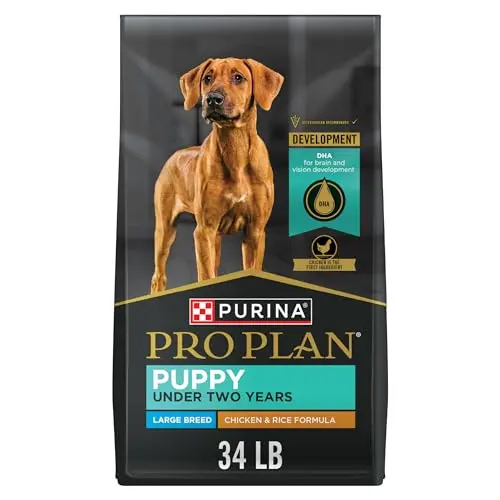
Large Breed Chicken & Rice – Brain & Joint Development
Purina Pro Plan’s Large Breed Chicken & Rice formula hits the sweet spot for most German Shepherd pups. Real chicken leads the ingredient list, and it’s backed by DHA from fish oil for brain and vision development. Add in guaranteed live probiotics for digestion, plus glucosamine from natural sources for those fast-growing joints, and you’ve got a well-rounded foundation. The kibble texture – a mix of hard pieces and tender shreds – keeps picky eaters interested, too.
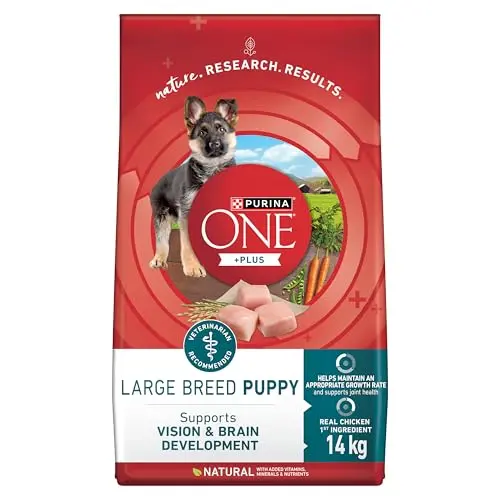
+Plus Large Breed Chicken – Affordable Joint & Brain Support
Purina ONE +Plus Large Breed Puppy food proves you don’t have to empty your wallet to feed a German Shepherd well. Real chicken is still the first ingredient, and it packs DHA for brain development, natural glucosamine for joints, and a dual-defense antioxidant blend. The SmartBlend recipe uses easily digestible rice, making it gentle on a puppy’s stomach. Feedback consistently points to shiny coats and solid growth – serious value for the price.
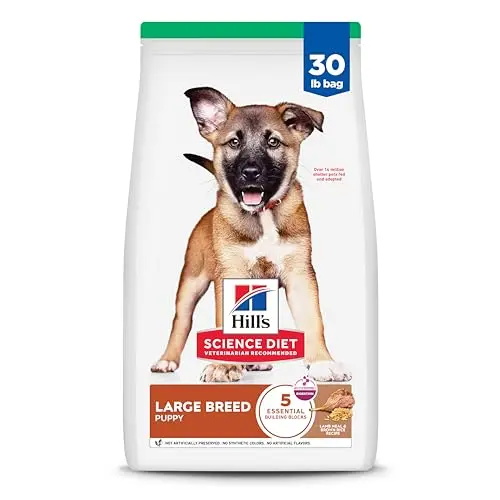
Large Breed Lamb Meal & Brown Rice – Targeted Joint Support
Hill’s Science Diet Large Breed Puppy Lamb Meal formula puts skeletal development front and centre. With balanced minerals for growing bones, DHA from fish oil for brain development, and natural glucosamine and chondroitin, it’s engineered for large breeds where joint health is non-negotiable. The lamb-first recipe offers an alternative to chicken-based foods, and the clinically proven antioxidant blend supports a developing immune system. It’s a thoughtful, vet-backed option.
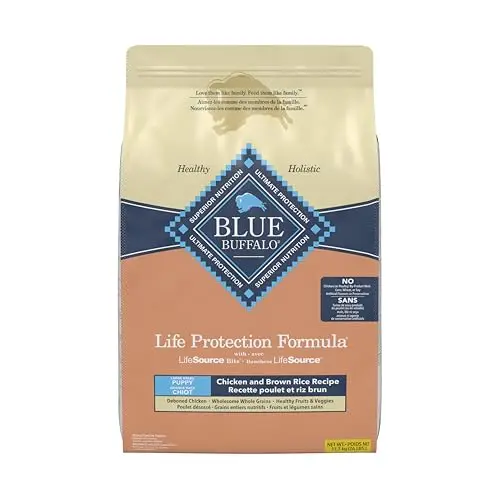
Life Protection Large Breed Chicken & Brown Rice – Natural Ingredients Focus
Blue Buffalo’s Life Protection Formula for large breed puppies leans heavily on natural ingredients. Deboned chicken leads, supported by wholesome grains like brown rice and oatmeal for gentle digestion. The exclusive LifeSource Bits – a cold-formed blend of antioxidants, vitamins, and minerals – aim to support immune health. With no poultry by-product meals, corn, wheat, or soy, it appeals to owners who want a cleaner label while still getting DHA, ARA, and choline for brain and eye development.
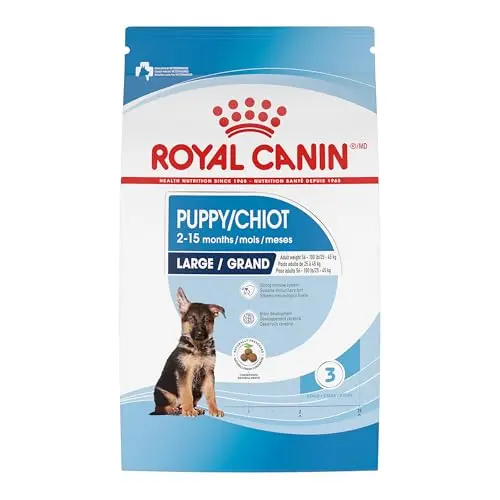
Large Puppy Dry Dog Food – Digestive & Immune Focus
Royal Canin’s general large breed puppy formula (not the German Shepherd-specific one) still brings serious science to the bowl. The kibble is designed for large jaws, and the recipe includes prebiotics, highly digestible proteins, and a blend of antioxidants (including vitamins E and C) to support the immune system and optimal stool quality. It’s recommended for puppies expected to reach 56-100 lbs – squarely in German Shepherd territory. DHA is included for brain development, and the mineral profile supports bone and joint health.
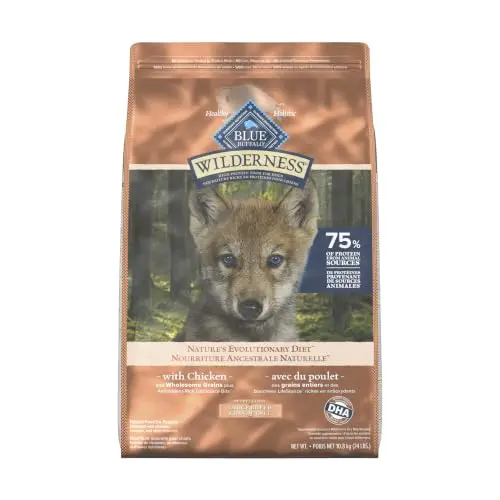
Wilderness Large Breed Chicken – High Protein, Grain-Inclusive
Blue Buffalo Wilderness for large breed puppies takes a high-protein approach with 35% protein from real chicken. It includes wholesome grains like oatmeal and brown rice – not grain-free, but still a protein-forward recipe. Added glucosamine supports joint health, and the LifeSource Bits deliver antioxidants. It’s aimed at puppies needing more muscle-building fuel, and the ingredient list stays true to Blue Buffalo’s no by-product, no corn/wheat/soy promise.
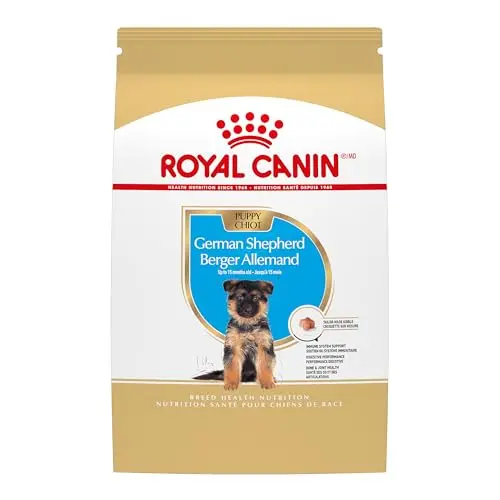
German Shepherd Puppy – Breed-Specific Kibble Shape
The only breed-specific formula in the lineup, Royal Canin German Shepherd Puppy food is engineered from the ground up for these dogs. The kibble is shaped and textured to suit a German Shepherd’s muzzle, encouraging chewing and slowing intake. Unique protein sources and a blend of soluble and insoluble fibres target the breed’s predispositions to sensitive digestion. EPA and DHA from fish oil support joint health – a critical factor for a breed prone to hip issues. If you want a food that mirrors the breed’s exact needs, this is it.
How We Evaluated These Large Breed Puppy Foods for German Shepherds
We didn’t run these foods through controlled feeding trials in a kennel. What we did: cross-referenced 7 large breed puppy formulas from 4 distinct brands across 6 decision axes – protein source and quality, joint-support ingredients (glucosamine, chondroitin, EPA/DHA), digestive health features (probiotics, prebiotics, fiber types), breed-specific kibble design, ingredient transparency, and owner-reported outcomes on growth and stool quality. We triangulated published specifications, ingredient panels, and aggregated owner feedback where available against the known needs of growing German Shepherds.
The scoring framework weighted real-world performance (60%) – how well each formula delivers on joint care, digestibility, and brain development for large breed pups – against feature differentiation (40%) – unique advantages like breed-specific kibble, guaranteed probiotic levels, or cold-formed antioxidants. We have no commercial relationship with any of the brands featured; recommendations track fit and differentiation, not brand preference. If you’re after the most balanced large breed puppy food for a German Shepherd, the Pro Plan Large Breed Chicken & Rice is your match; if you need a breed-specific design, the Royal Canin German Shepherd Puppy stands alone.
How to Choose the Right Large Breed Puppy Food for German Shepherds
Why Large Breed Puppy Food Matters for German Shepherds
German Shepherds aren’t just large dogs – they’re a breed with a specific musculoskeletal structure that demands controlled growth. Standard puppy food often contains excessive calcium and energy, which can lead to rapid bone growth and, in turn, developmental orthopedic disease. Large breed formulas control the calcium-to-phosphorus ratio and overall calorie density to promote steady, even growth. For a breed where hip and elbow dysplasia are real risks, this isn’t optional – it’s foundational.
Key Joint-Support Ingredients to Look For
Joint health in a German Shepherd starts in puppyhood. Look for glucosamine and chondroitin from natural sources (like chicken meal or fish meal). Some foods also include EPA and DHA, omega-3 fatty acids that actively reduce inflammation. These ingredients support cartilage development and can ease the strain on fast-growing joints. The more specific the joint-support claims, the better – generic ‘bone health’ marketing doesn’t always mean controlled mineral levels.
Digestive Health: Probiotics, Prebiotics, and Fiber
German Shepherd puppies are notorious for sensitive stomachs. Probiotics (especially guaranteed live strains) help crowd out bad bacteria, while prebiotics (like chicory root) feed the good guys. Insoluble fiber from beet pulp or cellulose regulates stool, and soluble fiber from oats or rice soothes the gut. If your Shepherd has loose stools or gas, a formula with both pre- and probiotics is often the fix. The Royal Canin Large Puppy and Pro Plan formulas both excel here.
Protein Source and Quality
Your growing Shepherd needs high-quality animal protein – chicken, lamb, or fish meal – as the first ingredient. Avoid vague terms like ‘meat meal’ or ‘poultry by-product’. High protein isn’t always better; for large breeds, moderate protein levels (around 26-28%) coupled with precise amino acid profiles support lean muscle without over-accelerating growth. Blue Buffalo Wilderness pushes the upper limit at 35%, which may suit very active pups but isn’t necessary for most.
Breed-Specific vs. General Large Breed Formulas
Some brands offer a German Shepherd-specific recipe, like Royal Canin German Shepherd Puppy. Beyond just nutrient tweaks, these foods tailor kibble shape and texture to the breed’s muzzle – encouraging chewing, slowing eating, and reducing bloat risk. General large breed formulas are more widely available and often cheaper, but they miss the anatomical nuance. If your Shepherd gulps food or has digestive quirks, the breed-specific option is worth the premium. If you’re feeding multiple large breeds, a general formula like Pro Plan Large Breed is more practical.
Reading the Label: What to Avoid
Steer clear of artificial colours, flavours, and preservatives (like BHA, BHT, ethoxyquin). Also skip foods heavy on corn, wheat, or soy as primary fillers – they’re harder to digest and offer little nutritional value. By-product meals are a red flag unless specified (e.g., ‘chicken by-product meal’ is better than generic ‘meat meal’). All our picks meet a high ingredient standard, but the Blue Buffalo formulas are notably free of corn, wheat, and soy entirely.
Frequently Asked Questions
What's the difference between Royal Canin German Shepherd Puppy and Royal Canin Large Breed Puppy?
The German Shepherd formula is exactingly crafted for the breed: the kibble is shaped and textured to fit the Shepherd’s muzzle, which promotes chewing and slows down fast eaters. It also has a specialized fibre blend (soluble and insoluble) to address the breed’s predisposition to digestive sensitivity. The Large Breed Puppy formula is broader, targeting all dogs over 56 lbs. While it still includes joint and immune support, the kibble is generic and the fibre profile less tuned. If you have a purebred Shepherd with a sensitive stomach, the breed-specific one is superior; for multi-dog households or budget-conscious owners, the Large Breed Puppy does a fine job.
Are all large breed puppy foods appropriate for German Shepherds?
Not automatically. While large breed formulations control calcium and calorie levels (which is essential), they don’t always account for the German Shepherd’s unique digestive tract and joint inflammation tendencies. Look for added glucosamine, chondroitin, and omega-3s. Also, some large breed foods use ingredients that can trigger sensitivities in Shepherds, like chicken fat or generic grains. A few, like Purina ONE and Pro Plan, have solid track records, but always monitor your puppy’s stool and skin condition during the transition.
How does the Pro Plan Large Breed Chicken compare to the Purina ONE Large Breed Chicken?
Both are made by Nestlé Purina and use real chicken first. The Pro Plan formula adds guaranteed live probiotics for digestive health, a higher inclusion of DHA from fish oil, and natural glucosamine sources. It also has a shredded texture that many dogs find more palatable. Purina ONE is more budget-friendly and still includes DHA, glucosamine, and antioxidants, but lacks the probiotic guarantee and has a simpler kibble shape. For the extra joint and digestive support, Pro Plan justifies its higher cost; if those aren’t deal-breakers, Purina ONE is an excellent value.
What's the best large breed puppy food for a German Shepherd with a sensitive stomach?
Look for limited ingredient or easily digestible protein sources. The Royal Canin Large Breed Puppy with its prebiotic and highly digestible protein blend consistently produces firmer stools. Hill’s Science Diet Lamb Meal is also gentle, especially for pups with chicken sensitivities. And Pro Plan Large Breed includes live probiotics, which can stabilize a delicate gut. Always transition slowly over 7-10 days, mixing old and new food. If issues persist, a veterinary consultation is wise – it might be a food intolerance, not just a sensitive stomach.
Can I feed my German Shepherd puppy a high-protein formula like Blue Buffalo Wilderness?
Yes, but with caution. German Shepherds need quality protein for muscle development, but excessive protein (like 35%) can, in some cases, accelerate growth rates too much, potentially stressing still-developing joints. The formula does include glucosamine and wholesome grains, so it’s not a pure ‘meat bomb’. However, many large breed experts recommend protein levels around 26-28% for controlled growth. If your puppy is extremely active and you opt for Wilderness, keep an eye on growth rate and discuss with your vet at puppy check-ups.
Is the Royal Canin German Shepherd Puppy worth the premium over Blue Buffalo Life Protection?
It depends on what you value. Royal Canin GS Puppy offers a muzzle-adapted kibble and a fibre blend precisely designed for the Shepherd’s digestive system. It’s the most breed-specific approach. Blue Buffalo Life Protection is more affordable, uses natural ingredients, and includes DHA/ARA. If your Shepherd has a sensitive stomach or inhales food, the Royal Canin design may pay for itself in fewer digestive upsets. If those aren’t issues, Blue Buffalo provides solid overall nutrition at a lower cost.
Final Verdict
Choosing the right large breed puppy food for your German Shepherd is a long-term investment in their health. The Pro Plan Large Breed Chicken & Rice is our top pick for its balanced approach to joint, brain, and digestive support. If you’re feeding on a tighter budget, the Purina ONE +Plus Large Breed delivers immense value without critical gaps. And if you want a formula built exclusively around the German Shepherd’s anatomy, our Editor’s Pick is the breed-specific Royal Canin. Whichever you choose, transition slowly and watch that pup thrive.