
Raising a Great Dane puppy is a bit like assembling a four‑legged skyscraper – everything happens fast, and the foundation matters enormously. These gentle giants can pack on over 100 pounds in their first year, and the food you pour into their bowl directly shapes their bone development, joint health, and long‑term mobility. Get it right, and you’re setting up your dog for a lifetime of steady strides; get it wrong, and you risk growth‑related issues that can shadow them for years.
We sifted through the current market of puppy foods to find the ones that genuinely support the unique needs of giant breeds like Great Danes. That means formulas with controlled calcium and phosphorus ratios to prevent rapid bone growth, joint‑friendly nutrients like glucosamine and chondroitin, and moderate calorie density to keep growth steady rather than explosive. Below, you’ll find our top picks – ranging from all‑around performers to targeted giant‑breed formulas – along with a clear guide on what to look for when shopping for your growing Dane.
Best Puppy Food for Great Danes – 2026 Reviews
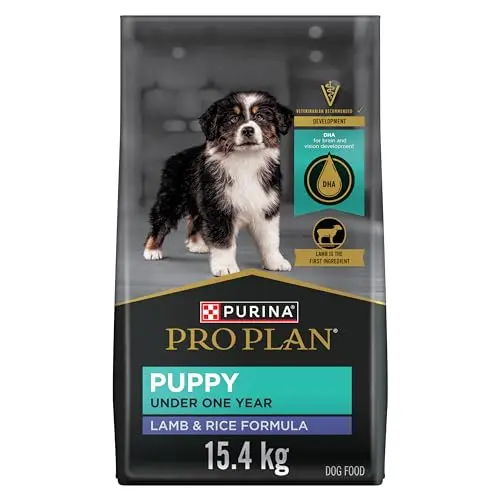
Development Lamb & Rice – Nutrient-Rich Foundation for Growing Pups
This all-breed puppy formula from Purina Pro Plan centres on real lamb and delivers a robust nutrient profile that supports everything from brain development to immune health. While it’s not explicitly tailored for giant breeds, its high-quality protein and digestible grains make it a versatile choice for Great Dane puppies when fed with careful portion control.
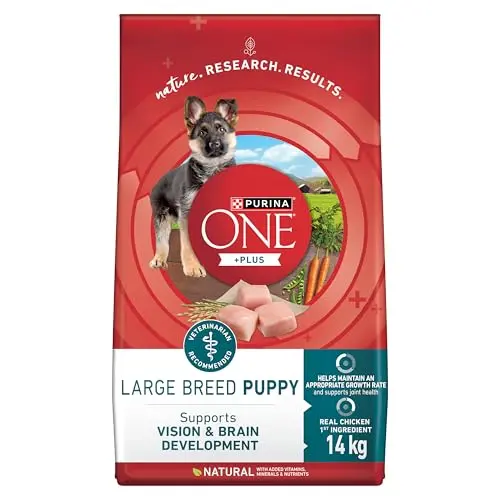
Large Breed Puppy Chicken & Rice – Glucosamine for Joint Health
Purina ONE’s large-breed recipe puts real chicken first and adds a targeted joint support package that’s especially relevant for fast-growing Great Danes. With natural sources of glucosamine and a dual-defense antioxidant blend, it aims to keep those heavy frames moving smoothly from the start.
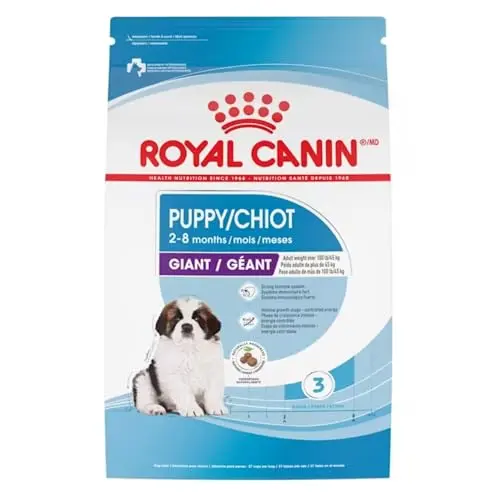
Giant Puppy – Precise Nutrition for Extra-Large Breeds
Royal Canin’s Giant Puppy formula is purpose-built for extra-large breeds like Great Danes during their most critical growth window (2-8 months). Its crunchy kibble and carefully balanced nutrient profile zero in on the developmental demands of a body destined to surpass 100 pounds.
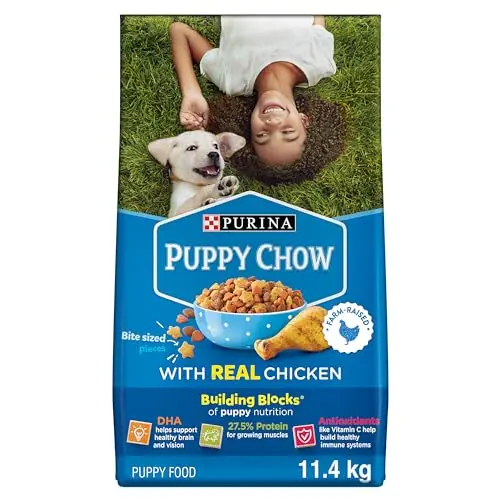
Complete with Real Chicken – Budget-Friendly Everyday Nutrition
Purina Puppy Chow offers a straightforward, budget-conscious formula that still covers the basics: real chicken, DHA for brain development, and a protein boost that supports growing muscles. It’s a practical starting point for Dane owners on a tighter budget.
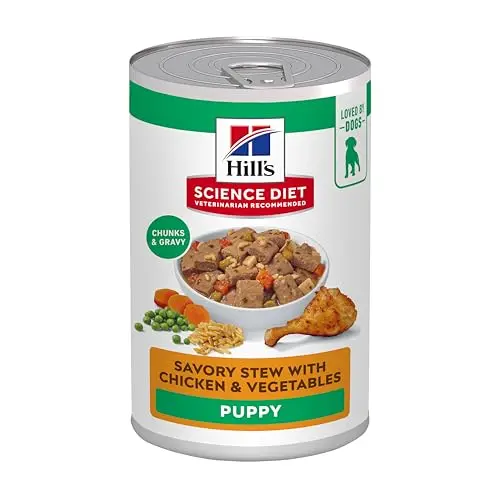
Puppy Savory Stew – Wet Food for Picky Eaters or Mix-In
Hill’s Science Diet’s wet puppy food offers a stew-like texture that can entice picky Great Dane puppies or serve as a moisture-rich topper to dry kibble. It’s made with easily digestible ingredients and includes DHA for cognitive development.
How We Evaluated These Puppy Foods for Great Danes
We didn’t run long‑term feeding trials or track growth curves in a controlled setting. What we did: cross‑referenced 5 puppy food models from 5 distinct brands across 7 decision axes – ingredient quality, protein and fat balance, joint support measures, breed‑specific tailoring, digestibility, owner‑reported outcomes, and company transparency. We triangulated published nutritional profiles, aggregated owner feedback where available, and mapped each product’s formula against the known needs of giant‑breed puppies.
The scoring framework weighted real‑world performance for Great Danes (60%) – how well a food delivers controlled growth, joint protection, and digestive ease – against feature differentiation (40%) – unique technical advantages like added probiotics or precise calcium ratios. We have no commercial relationship with any of the brands featured; recommendations track fit and differentiation, not brand preference. If you’re after an all‑purpose, high‑quality start, the Purina Pro Plan Development Lamb & Rice earned the top slot. For a targeted giant‑breed regimen, the Royal Canin Giant Puppy is the specialist’s choice.
How to Choose the Right Puppy Food for Great Danes
Why Great Dane Puppies Need a Different Approach
Great Danes don’t just grow – they skyrocket. A Dane puppy can double or triple its birth weight in a matter of weeks, and this rapid growth puts enormous stress on developing bones and joints. Standard puppy foods often deliver too much energy and calcium, accelerating growth beyond what the skeletal system can safely support. This can lead to developmental orthopedic diseases like hip dysplasia, panosteitis, and hypertrophic osteodystrophy. Choosing a food with moderated energy density and a tightly controlled calcium‑to‑phosphorus ratio is the single most impactful decision you’ll make for your Dane pup.
Key Nutrients for Giant Breed Growth
Beyond protein – which should be high‑quality but not excessively high – look for DHA to support brain and eye development, glucosamine and chondroitin for joint cartilage, and antioxidants like vitamin E and C to bolster a developing immune system. The balance of calcium and phosphorus is critical: the ideal ratio falls between 1.1:1 and 1.4:1, and the absolute levels should be lower than those in standard puppy foods. Prebiotic fibers or live probiotics can also help with the sensitive digestion common in deep‑chested breeds.
Dry vs. Wet Food for Great Dane Puppies
Most giant‑breed owners opt for dry kibble because it’s calorie‑dense enough to meet energy needs without filling the bowl with huge volumes of food. The crunchy texture also helps with dental health. Wet food can be a useful tool – it’s more palatable, adds moisture (important for dogs that don’t drink enough), and can be mixed into dry kibble to entice picky eaters. However, feeding wet food alone to a growing Dane quickly becomes expensive and often doesn’t provide the same nutrient concentration as a well‑formulated dry diet. We recommend using wet food as a mix‑in or occasional topper rather than the primary calorie source.
Understanding Calcium-to-Phosphorus Ratios
The calcium‑to‑phosphorus ratio is the most misunderstood yet crucial number for giant‑breed puppies. When calcium levels are too high – or the ratio is skewed – the body can deposit excess mineral into growing bone, leading to denser but more brittle skeletons. Giant‑breed formulas typically keep calcium between 0.8 % and 1.2 % on a dry‑matter basis and phosphorus between 0.6 % and 1.0 %, with a ratio around 1.2:1. Many all‑breed puppy foods have both higher calcium levels and wider ratios – fine for a Labrador, but a gamble for a Dane. If a food doesn’t publish these values, contact the manufacturer or stick with a brand that does.
Portion Control and Feeding Schedules
Overfeeding is just as dangerous as an incorrect nutrient profile. Great Dane puppies should be kept lean – ribs easily felt but not seen – throughout the growth period. Divide daily calories into three or four smaller meals to reduce the risk of bloat, a life‑threatening condition in deep‑chested breeds. Avoid free‑feeding; use a measured cup and follow the brand’s feeding guide as a starting point, then adjust based on body condition. Pacing your Dane’s growth – aiming for a slow, steady curve rather than a dramatic spike – gives bones and joints time to mature properly.
When to Switch from Puppy to Adult Food
Most giant‑breed puppy formulas are designed for use up to about 18 - 24 months, though some transition guidelines recommend switching to a junior or adult formula earlier. Royal Canin, for example, moves from Giant Puppy to Giant Junior at 8 months. The transition timing depends on the individual dog’s growth rate, but as a rule of thumb, keep your Dane on a puppy or junior formula until growth plates close, which can take up to two years. Switching to adult food too early risks missing the window for critical muscle and bone development.
Frequently Asked Questions
What's the difference between Royal Canin Giant Puppy and Purina Pro Plan Puppy?
The biggest difference is precision targeting. Royal Canin Giant Puppy is designed specifically for extra‑large breeds with an expected adult weight over 100 lb; it features a tightly controlled calcium‑to‑phosphorus ratio, giant‑sized kibble to slow eating, and a nutrient profile that supports steady skeletal growth. Purina Pro Plan Puppy (Lamb & Rice) is an all‑breed formula – high‑quality, yes, but not tailored to the unique caloric and mineral demands of a Dane. If your goal is a set‑and‑forget giant‑breed regimen, Royal Canin removes the guesswork. If you’re comfortable monitoring portions and growth rate, Pro Plan can work well and often comes at a lower price point.
Do Great Dane puppies really need giant‑breed specific food?
They don’t strictly need a bag labelled ‘giant breed,” but they do need a food that meets the nutritional parameters of a giant‑breed formula. That means moderate protein, controlled calcium and phosphorus, and joint‑supporting nutrients. Some large‑breed and all‑breed puppy foods check all those boxes, but many don’t. A true giant‑breed formula takes the guesswork out of the equation and is the safest choice for novice Dane owners. If you opt for something else, you’ll need to become fluent in reading guaranteed analyses – and accept the risk of growth‑related problems if the ratios are off.
Can I feed my Great Dane puppy a large‑breed puppy food instead of giant?
The line between ‘large breed” and ‘giant breed” formulas can be blurry. Many large‑breed puppy foods are suitable for dogs up to about 70-90 lb at maturity, which is well below a Dane’s eventual weight. Some, like Purina ONE Large Breed Puppy, still provide glucosamine and moderate energy, but their calcium levels may be a hair higher than ideal for the most rapid growth phases. It’s not automatically a deal‑breaker – many Danes have thrived on large‑breed diets – but if a true giant formula is available, it’s the safer bet. If you go the large‑breed route, Purina ONE Large Breed is our value pick, provided you monitor growth and supplement joint care as needed.
Is wet food a good option for Great Dane puppies?
Wet food can be a great complement but a poor sole diet for a giant‑breed puppy. It’s much less calorically dense than dry kibble, so you’d need to feed a huge volume to meet energy demands – impractical and expensive for a 50‑kg dog. However, used as a mix‑in or topper, it adds hydration and palatability, which can be handy for picky eaters or dogs recovering from illness. The Hill’s Science Diet Puppy Savory Stew is our top wet choice for those moments when dry kibble just isn’t cutting it.
How much should I feed my Great Dane puppy?
There’s no one‑size answer, but start with the feeding guide on the bag based on your pup’s current age and weight, then adjust to keep body condition lean. A good visual target: you should be able to feel the ribs without pressing hard, and there should be a visible waist tuck when viewed from above. For Giant Puppy formulas like Royal Canin’s, expect to feed roughly 4-7 cups per day split into three meals from 2-6 months, gradually tapering as growth slows. Avoid the temptation to ‘bulk up” your Dane – rapid weight gain stresses developing joints far more than most owners realize.
Final Verdict
For most Great Dane owners, the Purina Pro Plan Development Lamb & Rice is the standout – it delivers exceptional all‑around nutrition, reliable digestibility, and a track record of healthy growth when fed with care. If you’d rather have a precision‑engineered giant‑breed formula that takes the guesswork out of the equation, the Royal Canin Giant Puppy is purpose‑built for the task. For a wallet‑friendly large‑breed alternative with solid joint support, the Purina ONE Large Breed Puppy punches above its price. And when your Dane needs a hydration boost or a picky‑eater fix, the Hill’s Science Diet Puppy Stew is our wet‑food pick. Whatever you choose, keep growth slow, portions measured, and joints happy – and your Dane will do the rest.