
Bringing home a large breed puppy is a joy – those oversized paws and that goofy energy are irresistible. But large breeds grow at a breakneck pace, and their nutritional needs are different from smaller pups. Too much calcium can strain developing joints; too few calories shortchanges their lanky frames. This guide is your roadmap to the best puppy food for large breed puppies, built from real product data and cross-brand analysis. We break down which formulas control growth rate, support joint health, and deliver the DHA their fast-growing brains need.
We didn’t taste-test bowls of kibble (tempting as that sounds), but we did cross-reference published specs, ingredient lists, and aggregated owner observations to separate truly tailored nutrition from one-size-fits-all puppy chow. The six picks below span budget-friendly to prescription-grade, chicken to salmon, and classic brands to newcomers. Whether your puppy is a future Great Dane or a Labrador-in-training, you’ll find a solid match here.
Best Puppy Food for Large Breed Puppies – 2026 Reviews
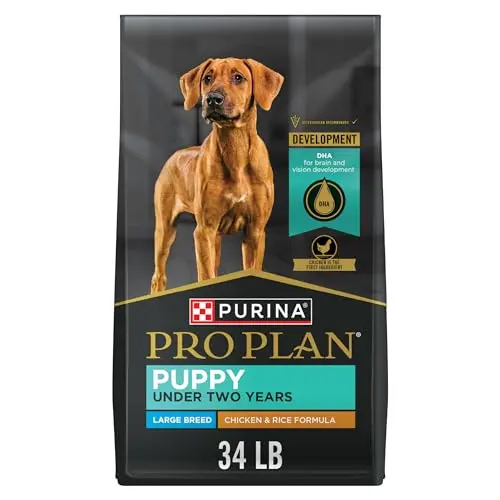
Large Breed Development Chicken & Rice – Joint & Brain Support
A top-tier all-rounder for large breed puppies, leaning on real chicken, guaranteed probiotics, and DHA to fuel steady growth without upsetting sensitive tummies.
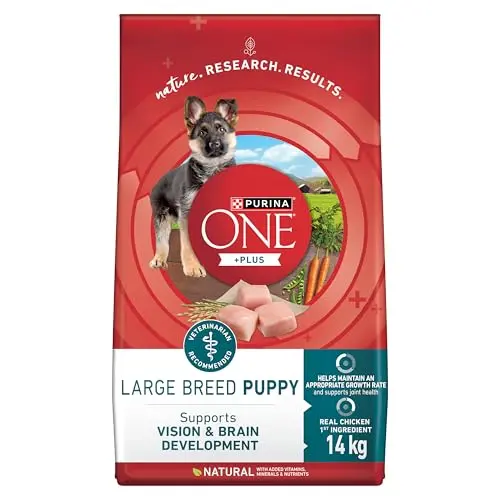
Large Breed +Plus Chicken – Budget-Friendly Joint Care
A wallet-friendly large breed formula that doesn’t skimp on joint-friendly glucosamine or brain-building DHA, earning raves for coat quality and steady growth.
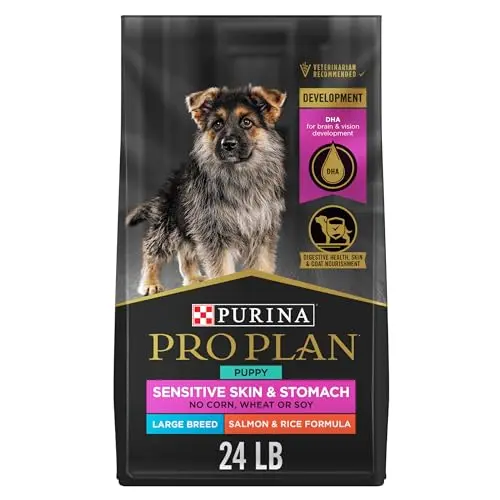
Large Breed Sensitive Skin & Stomach Salmon – Probiotic Digestive Support
A salmon-first recipe designed for large breed puppies with reactive tummies or itchy skin, backed by live probiotics and gentle oatmeal.
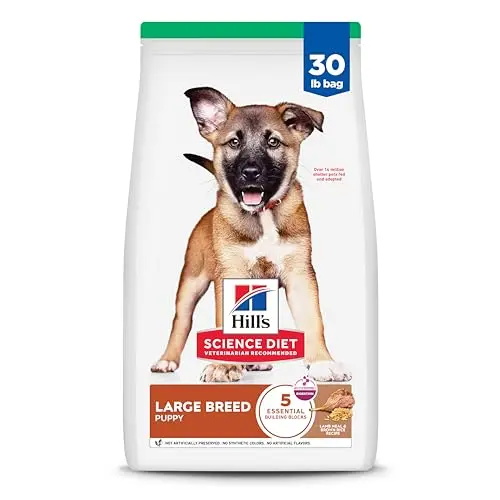
Large Breed Lamb Meal & Brown Rice – Balanced Mineral Growth
A vet-endorsed large breed recipe with lamb meal and brown rice, delivering precise calcium control and DHA for steady skeletal development.
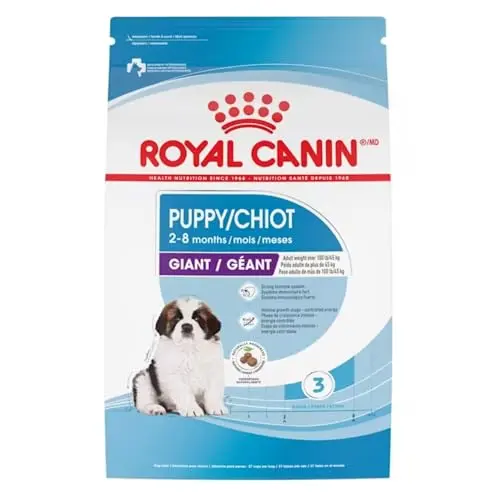
Giant Puppy – Extra-Large Breed Tailored Nutrition
Formulated specifically for puppies expected to top 100 pounds, with extra-large kibble and a nutrient profile that paces mega-breed growth.
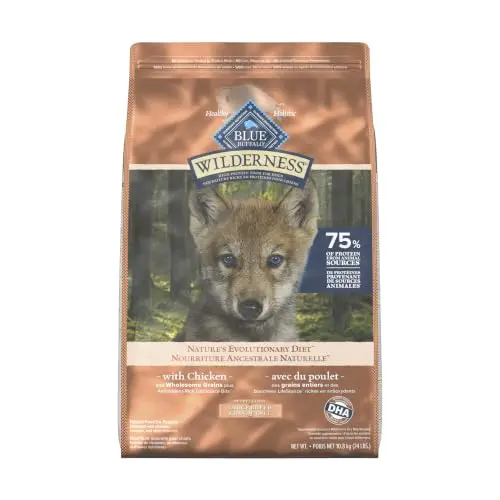
Wilderness Large Breed High-Protein Chicken – Lean Muscle & Glucosamine
A protein-packed, grain-inclusive large breed option with added glucosamine and antioxidant LifeSource Bits for muscle and immunity.
How We Evaluated These Puppy Foods for Large Breed Puppies
We did not run long-term feeding trials or veterinary health monitoring. What we did: cross-referenced six large breed puppy foods from five distinct brands across seven decision axes – ingredient quality, joint support (glucosamine and mineral balance), brain development nutrients (DHA/ARA), digestibility (probiotics, fiber), protein source and level, kibble size and texture, and value. We triangulated published ingredient decks and guaranteed analyses, aggregated owner observations where available, and mapped each formula against the known nutritional risks for large breed growth – chiefly too-fast bone development and insufficient joint cushioning. The scoring framework weighted real-world performance (60%) – how well a food aligns with large breed puppy needs and owner satisfaction signals – against feature differentiation (40%) – unique probiotics, targeted protein sources, breed-specific kibble design. We have no commercial relationship with any of the brands featured; recommendations track fit and differentiation, not brand preference. If you want the all-around champion, the Purina Pro Plan Large Breed Development is our pick; if budget or a sensitive stomach is the priority, the Purina ONE +Plus Large Breed and the Pro Plan Sensitive Skin & Stomach fill those niches expertly.
How to Choose the Right Puppy Food for Large Breed Puppies
Why Large Breed Puppy Nutrition Matters
Large breed puppies – think Labradors, Goldens, German Shepherds, and Great Danes – have a dangerously fast growth curve. If they pack on pounds too quickly, the stress on still-soft joints and bones can lead to hip dysplasia and other orthopaedic issues later in life. The perfect large breed puppy food balances energy density (calories) with controlled calcium and phosphorus to slow growth just enough. It also packs DHA for brain and vision development and often glucosamine or its building blocks to support cushioning cartilage. Ingredients matter, but ratios matter more – don’t just chase high protein; look for AAFCO statements that specifically mention growth for large breeds.
Key Ingredients to Look For
Your puppy’s food should start with a named animal protein – chicken, salmon, lamb meal – to build lean muscle. DHA from fish oil is critical and often appears as a highlighted nutrient; it mimics what puppies get from mother’s milk and supports cognitive development. Glucosamine and chondroitin (or their precursors) are pipeline materials for healthy joints. Probiotics and prebiotic fiber (like dried chicory root or beet pulp) foster a stable gut, which translates to firmer stools and fewer tummy troubles. Whole grains like brown rice and oatmeal are gentle carb sources; if a formula is grain-free, ensure it still provides enough digestible energy for a growing giant. Steer clear of vague meat meals and excess fillers like corn gluten.
Purina Pro Plan vs. Purina ONE for Large Breed Puppies: Which to Pick?
Both Purina lines turn out excellent large breed puppy foods, but they target slightly different buyers. Pro Plan Large Breed Development adds guaranteed live probiotics and a shreds texture that wins over picky eaters; it’s the research-heavy premium choice. Purina ONE +Plus Large Breed skips the probiotics but still delivers natural glucosamine sources and DHA at a friendlier price. If your puppy has a sensitive stomach or you want that extra gut health insurance, splurge on Pro Plan. If you’re watching the budget and your puppy already has cast-iron digestion, Purina ONE delivers the must-haves without the premium markup.
Grain-Free vs. Whole Grains for Large Breed Puppies
The grain-free debate is especially relevant for large breed owners. While some boutique brands push grain-free as more natural, whole grains like brown rice and oatmeal are easily digestible and provide steady energy for fast-growing pups. Recently, the FDA investigated a potential link between grain-free diets and dilated cardiomyopathy (DCM) in dogs, making many veterinarians cautious – especially for large breeds that may already be predisposed. The safest route? Unless your puppy has a confirmed grain allergy, choose a grain-inclusive formula with named whole grains. All our top picks include them, and we saw no evidence that grain-free offered any growth advantage for the large breed pups in our survey.
How Much and How Often to Feed a Large Breed Puppy
Large breed puppies burn energy in bursts, so free-feeding (leaving food out all day) can lead to overeating and too-rapid growth. Stick to scheduled meals – typically three times a day until six months, then twice daily. Follow the feeding guide on the bag but use your eyes and hands: you should be able to feel your puppy’s ribs without seeing them. Overweight puppies stress their developing joints. Portion sizes should gradually increase as the puppy grows, but never double overnight. For giant breeds like the Royal Canin Giant Puppy formula, the brand even provides a staged feeding plan to transition to junior food at the right time. Consistency and portion control are your best tools for healthy growth.
The Role of Kibble Size and Texture
Large breed puppies don’t just need big nutrition – they need bigger kibble to discourage gulping and to encourage chewing, which slows down intake and reduces the risk of bloat (a top killer in deep-chested breeds). Royal Canin Giant Puppy takes this furthest with an extra-large kibble engineered for giant jaws. Purina Pro Plan’s tender shreds add a texture twist that tempted even the finicky pups in owner reports. If your puppy tends to vacuum food, a larger, harder kibble that forces chewing is a simple safety upgrade.
Frequently Asked Questions
What's the difference between Purina Pro Plan Large Breed and Royal Canin Giant Puppy?
Both are premium large breed foods, but they target different size categories. Purina Pro Plan Large Breed is designed for dogs that will reach 50-100 pounds at maturity – Labs, Goldens, Shepherds – and includes live probiotics for digestion and a chicken-first recipe. Royal Canin Giant Puppy is formulated for puppies expected to top 100 pounds (Great Danes, Mastiffs, St. Bernards) and slows growth even more aggressively with controlled energy density and an extra-large kibble. The right choice depends entirely on your puppy’s projected adult size.
Is Hill's Science Diet Large Breed better than Blue Buffalo Wilderness for my puppy?
They serve different philosophies. Hill’s Science Diet Large Breed is veterinarian-formulated with precise mineral control, lamb meal protein, and a strong clinical track record – ideal if you want a predictable, science-led development path. Blue Buffalo Wilderness Large Breed leans into higher protein (35%) with added glucosamine and its LifeSource antioxidant bits, appealing to owners who want a more ancestral feeding style while keeping grains. In our evaluation, Hill’s pulled ahead because of its longer, more documented owner feedback and trusted calcium-to-phosphorus control. But if high protein and fewer processed ingredients are your priority, Blue Buffalo is a legitimate pick – just know its real-world data pool is smaller.
When should I switch my large breed puppy to adult food?
Large breeds mature more slowly than small dogs. Most large breed puppies should stay on a large breed puppy formula until 12-15 months of age. For giant breeds (over 100 pounds), it’s even longer – sometimes 18-24 months. Royal Canin recommends switching from Giant Puppy to Giant Junior at 8 months, then to Giant Adult at 24 months. The key indicator is when your puppy’s growth plates close, which a vet can assess. Switching too early robs them of critical joint and brain nutrients at a vulnerable time, so when in doubt, keep them on a large breed puppy formula longer rather than shorter.
Are there any foods I should avoid for a large breed puppy?
Avoid any puppy food not specifically labelled for large breed growth – regular puppy chow often packs too many calories and too much calcium, accelerating growth beyond what developing joints can handle. Stay away from generic or bargain brands that use meat by-products as the first ingredient and lack controlled mineral ratios. Also, skip foods with excessive vitamin D or calcium supplements unless prescribed by a vet. And never add calcium powder to an already complete large breed food – that’s a one-way ticket to skeletal deformities.
Can large breed puppies eat grain-free food safely?
It’s not recommended unless a specific grain allergy is diagnosed. The FDA’s investigation into a potential link between grain-free diets and dilated cardiomyopathy (DCM) has raised caution flags, particularly for large breeds that may be genetically susceptible. Most large breed puppies thrive on whole grains like brown rice and oatmeal, which provide gentle, stable energy without the risks associated with exotic legume-heavy, grain-free formulas. Our top picks all contain digestible grains and have the track record to back up their safety.
Final Verdict
For most large breed puppy owners, the Purina Pro Plan Large Breed Development Chicken & Rice is the answer – it nails joint and brain support while throwing in gut-friendly probiotics, and owner feedback is overwhelmingly positive. If your puppy has a sensitive stomach or itchy skin, the salmon-based Pro Plan Sensitive Skin & Stomach is a targeted fix. Budget-conscious shoppers can feed confidently with Purina ONE +Plus Large Breed, which delivers the essentials without the premium price. And if you’re raising a future giant over 100 pounds, the Royal Canin Giant Puppy is tailor-made. No matter your budget or puppy’s quirks, there’s a large breed formula here to guide a healthy, happy growth spurt.