
Bringing home a tiny toy poodle puppy is all excitement and fluff – until you’re standing in the pet food aisle, confronted by a wall of bags, none of which seem made for a dog that will top out at two and a half kilograms. The wrong kibble can mean a pup who struggles to chew, a tummy that’s constantly upset, or growth that doesn’t stay on track. For these diminutive dynamos, the right puppy food has to tick a few very specific boxes: it needs to be small enough for a tiny mouth, nutrient-dense enough to fuel rapid development, and gentle on a digestive system that can be, let’s say, particular.
The good news is that several brands now formulate puppy foods with toy breeds in mind. The tricky part is separating the ones that genuinely support a toy poodle’s needs from those that just slap ‘small breed” on the bag without delivering the right kibble size or nutritional balance. That’s exactly why we put this guide together: we surveyed the market’s most talked-about options, concentrating on formulas that emphasize tiny kibble, high-quality protein, DHA for brain development, and digestibility. The result is a curated cross-brand roundup that will help you zero in on a food your poodle pup will actually want to eat – and that you’ll feel good about serving.
No two toy poodle puppies are exactly alike, so we’ve included options for picky eaters, sensitive stomachs, and budget-conscious households. Let’s meet the top contenders.
Best Puppy Food for Toy Poodles – 2026 Reviews
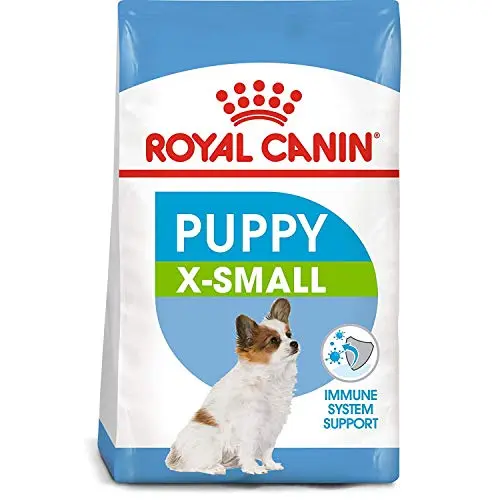
X-Small Breed Dry Puppy Food – Tailor-Made for the Tiniest Poodles
Specifically engineered for the smallest of the small, Royal Canin X-Small Puppy is the most purpose-built food on this list for toy poodles. With an expected adult weight cap of 3.6 kg, it’s laser-focused on the nutritional demands of breeds like teacup and toy poodles. The tiny kibble shape is designed for miniature jaws, and the formula is rich in DHA, antioxidants, and prebiotics to support brain, immune, and digestive development. It’s the pick we’d reach for first if we were raising a toy poodle from weaning through the first year.
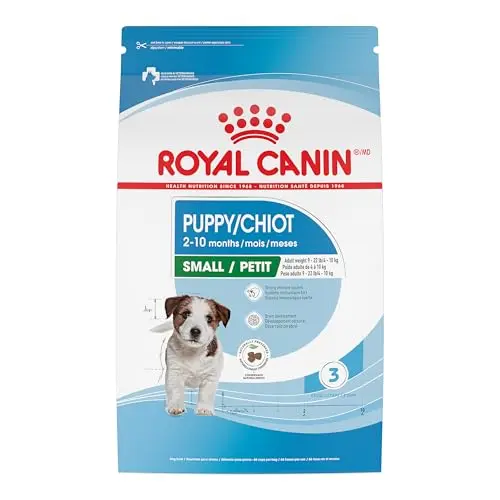
Small Puppy Dry Dog Food – A Slightly Larger Alternative for Growing Poodles
Royal Canin’s Small Puppy formula is intended for breeds that will mature between 4 and 10 kg, making it ideal for toy poodles at the larger end of the spectrum or those whose growth is trending beyond the extra-small bracket. It shares the same crunchy, easy-to-serve kibble texture and includes DHA, antioxidants, and prebiotics. The slightly bigger piece size and broader nutritional spectrum make it a natural step up – or a starting point if your vet expects your poodle to land closer to 5 kg.
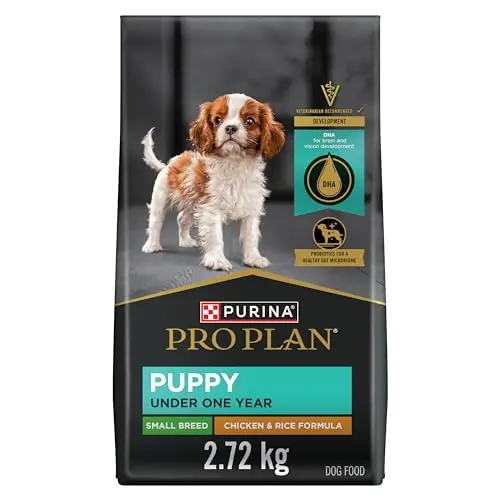
Development Small Breed Chicken & Rice – Protein-Packed Power for Active Pups
Purina Pro Plan’s small breed puppy formula puts real chicken first and delivers high protein to fuel the boundless energy of a young toy poodle. It’s fortified with live probiotics for digestive health and DHA for brain development. The bite-sized kibble is designed for small mouths, and at a roughly mid-range price point, it hits a sweet spot between premium tailoring and everyday affordability. If your toy poodle is on the more active side – bouncing off walls between naps – this high-octane recipe keeps up.
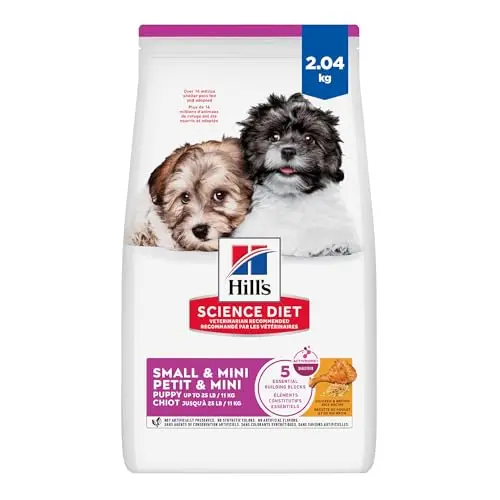
Puppy Small & Mini Chicken & Brown Rice – Tiny Kibble, Big Nutrition
Hill’s has two puppy small breed formulas; the ‘Small & Mini” is the one we’d point toy poodle owners toward first. It’s explicitly designed for the smallest of small breeds, with a kibble size that matches what you’d expect in a truly ‘toy” formulation. The recipe leans on high-quality chicken, brown rice, and a prebiotic fiber blend to support gentle digestion. Antioxidants, DHA, and balanced minerals round out a formula that’s science-backed and widely recommended by vets.
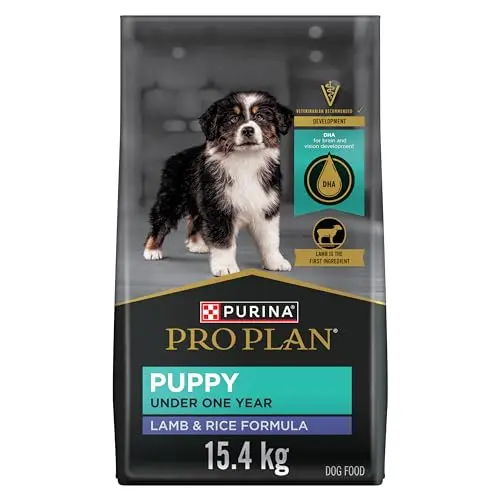
Development Lamb & Rice – A Large-Bag Lamb Option for Sensitive Systems
If your toy poodle shows signs of chicken sensitivity, this lamb-based formula is a compelling alternative. Like the chicken recipe, it includes DHA for brain development and live probiotics for gut health. The 15.4 kg bag size makes it a budget-friendly bulk buy for multi-dog homes or owners who don’t want to restock every other week. While it’s not explicitly labeled for small breeds, the kibble size is reported as tiny enough for puppies, and the ingredient list steers clear of common allergens like corn, wheat, and soy.
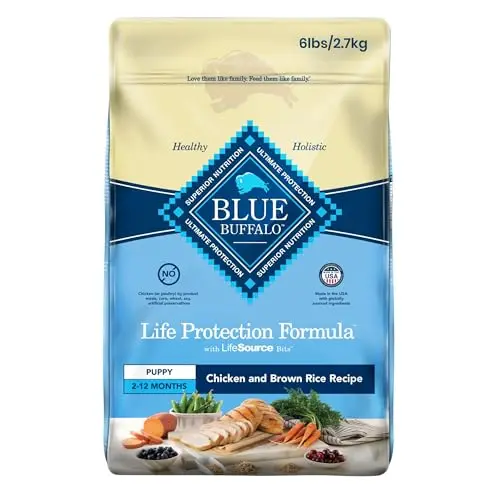
Life Protection Chicken & Brown Rice – LifeSource Bits for Immune Health
Blue Buffalo’s puppy recipe stands out for its ‘LifeSource Bits” – a precise blend of antioxidants, vitamins, and minerals cold-formed to preserve potency. It avoids poultry by-product meals and common fillers like corn, wheat, and soy, leaning on wholesome grains for energy. DHA and ARA support brain and eye development, and the kibble is on the smaller side, making it workable for a toy poodle’s mouth. If you’re an ingredient-conscious buyer, this one will check a lot of boxes.
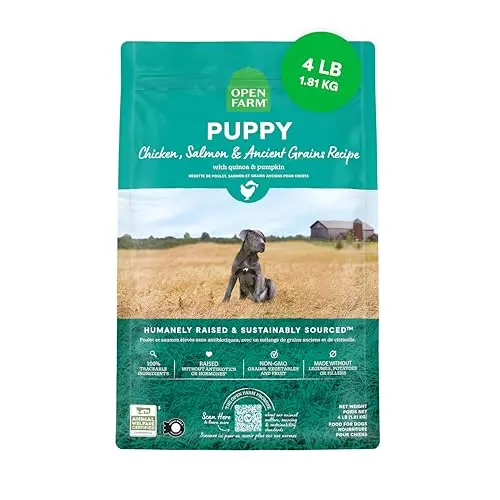
Ancient Grains Chicken & Salmon – Humanely Raised, Highly Digestible
Open Farm takes a different approach: 90% of the protein comes from animal sources (chicken and salmon), blended with ancient grains like oats and quinoa that are often gentler on sensitive stomachs than modern wheat. It’s completely free of peas, potatoes, and legumes, and every ingredient is traceable back to its source. While it’s not breed-size specific, the small batch production and focus on digestibility make it a smart option for toy poodles who’ve struggled with more common formulas.
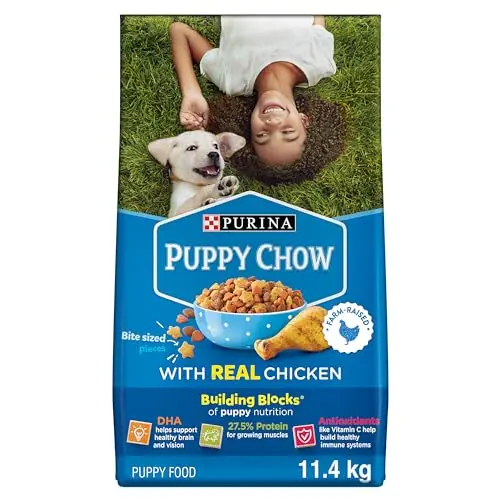
Complete with Real Chicken – A Value Pick That Doesn't Skimp on Basics
If the price tags on premium brands are giving you sticker shock, Purina Puppy Chow offers a budget-friendly alternative that still covers the puppy essentials. It’s made with real chicken, includes DHA for brain development, and packs 27.5% protein – more than some pricier options. The kibble is on the larger side for a toy breed, but many owners of small puppies report it works fine. For a multi-poodle household or a guardian who simply can’t justify spending a premium, this is the every-day value champion.
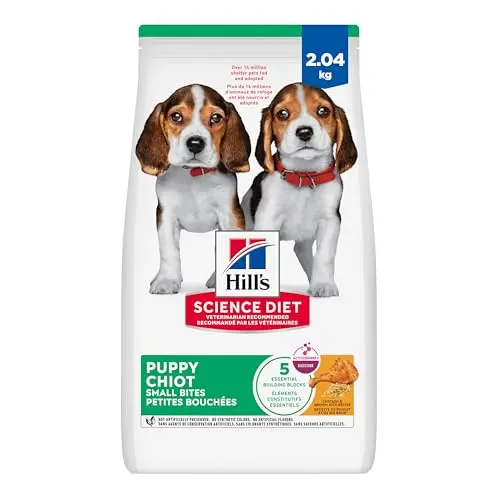
Puppy Small Bites Chicken & Brown Rice – A Trusted Vet Staple for Little Jaws
Often confused with the ‘Small & Mini” version, Hill’s Science Diet Small Bites is a long-standing vet favourite for any puppy who needs a smaller-than-average kibble. It’s clinically formulated with DHA, high-quality protein, and a prebiotic fiber blend. While it’s not as hyper-targeted as the Small & Mini, it remains a very solid, widely recommended option for toy poodles who don’t need the absolute tiniest piece size. The 2.04 kg bag is a practical starter size for testing the waters.
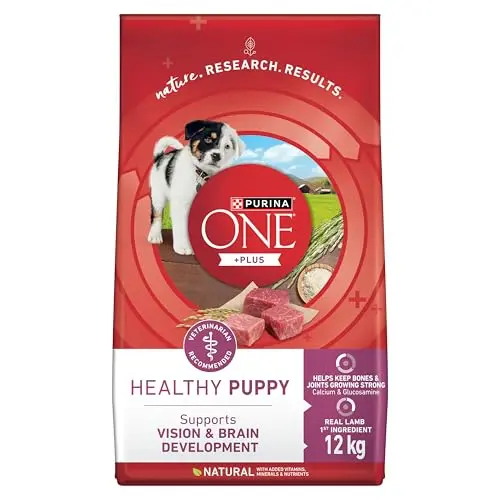
+Plus Healthy Puppy Formula Lamb – Simple Goodness Without Fillers
Purina ONE’s puppy formula is a straightforward, no-nonsense option that focuses on real lamb as the first ingredient and omits artificial flavours and fillers. It’s designed for all breed sizes, but the kibble size is reported to work for medium puppies – a borderline case for toy poodles. Its strength lies in the simplicity: DHA for brain development, easily digestible rice and oatmeal, and a large bag size that’s kind to the wallet. If you’re looking for an affordable, filler-free food and your poodle is trending larger, this might do the trick.
How We Evaluated These Puppy Foods for Toy Poodles
We didn’t conduct feeding trials or digestibility lab studies. What we did: cross-referenced 10 dry puppy food products from 7 distinct brands across 6 decision axes – kibble size and suitability for tiny mouths, breed-specific formulation (especially for toy and very small breeds), ingredient quality and protein sourcing, inclusion of DHA and developmental nutrients, digestive support features (probiotics, prebiotics, fibre), and overall nutritional balance for growing puppies. We triangulated published specifications and ingredient lists, aggregated owner feedback where available, and placed a heavy thumb on the scale of use-case fit – meaning every product was evaluated specifically through the lens of feeding a toy poodle puppy.
The scoring framework weighted real-world performance (60%) – how well each option delivers on its stated use case – against feature differentiation (40%) – unique technical advantages and use-case specificity. We have no commercial relationship with any of the brands featured; recommendations track fit and differentiation, not brand preference. For most toy poodle puppies, the Royal Canin X-Small Breed Puppy is the match; if you’re prioritising budget without sacrificing essential nutrition, the Purina Puppy Chow is your alternative.
How to Choose the Right Puppy Food for Your Toy Poodle
Why Toy Poodles Need Specialized Puppy Food
Toy poodles are at the extreme small end of the spectrum – most adults weigh under 3 kg and stand only 25 cm tall. That miniature stature comes with a metabolic engine that runs hot and a digestive system that can be unforgiving. Standard puppy foods, even those labeled ‘small breed,” often have kibble that’s too large for a toy poodle’s mouth, and their calorie density may not match the rapid growth of such a tiny dog. A true toy-breed formula packs more nutrition into a smaller volume, with easy-to-chew pieces and ingredients that support sensitive stomachs.
Kibble Size: The Make-or-Break Factor for Tiny Mouths
This is non-negotiable. A toy poodle puppy may weigh as little as 500 grams at eight weeks – a kibble the size of a pea can be intimidating, or even a choking hazard. Look for foods that explicitly describe their kibble as ‘extra small,” ‘mini,” or ‘toy breed”. In this roundup, products like the Royal Canin X-Small and Hill’s Science Diet Small & Mini get this right. If you end up with a kibble that’s slightly too large, you can soak it in warm water or crush it, but a purpose-made tiny kibble is far more convenient.
Ingredients to Look for (and a Few to Avoid)
A high-quality puppy food for a toy poodle should have a named meat (chicken, lamb, salmon) as the first ingredient, and ideally avoid by-product meals or vague meat sources – though some vets defend by-product meal as nutritionally sound. DHA (omega-3 fatty acid) is critical for brain and eye development. Prebiotics and probiotics can help the sensitive poodle gut stay regular. You’ll also want to see a balance of calcium and phosphorus for bone growth. Common allergens like corn, wheat, and soy can trigger itching or loose stools in poodles, so grain-inclusive but without these fillers is a smart middle ground – or go grain-free with care, as some grain-free diets have been linked to heart issues in predisposed breeds.
Royal Canin X-Small vs Hill's Science Diet Small & Mini: Which for a Toy Poodle?
These two products are the most directly targeted at the smallest puppies, and they’re often compared. The Royal Canin X-Small is engineered with an even tighter weight cap (up to 3.6 kg adult), making it the most precise for a very small toy poodle. Its kibble is slightly smaller, and it’s backed by breed-specific research. The Hill’s Small & Mini uses a natural ingredient philosophy and includes a prebiotic blend that can be gentler on some dogs’ digestion. Both are excellent; the choice often comes down to which your puppy prefers and how their stool looks on it. If your poodle is at the smallest end of the breed, Royal Canin’s X-Small is the safer bet; if they’re trending a bit larger, Hill’s can work beautifully.
When to Consider a Limited-Ingredient or Sensitive-Stomach Formula
Toy poodles can be prone to food sensitivities – symptoms like chronic itchiness, ear infections, or recurring loose stool. If you’re seeing those, it might be time to simplify. The Open Farm Ancient Grains formula is a strong candidate: it limits its protein sources to chicken and salmon, uses easy-to-digest ancient grains, and omits legumes and common triggers. Similarly, the Purina Pro Plan Lamb & Rice switches to a novel protein. Always transition slowly over 7-10 days, and give a new food at least a few weeks before deciding it doesn’t agree.
Budget-Friendly Options That Still Deliver
Raising a puppy is expensive, and not every household can drop $40 on a tiny bag of kibble. The good news is that some budget foods still meet core nutritional requirements. Purina Puppy Chow provides 27.5% protein and DHA at a fraction of the cost of premium brands – the trade-off is a larger kibble and the inclusion of corn and soy. If you’re willing to do a little prep (soaking or crushing), it can absolutely work for a toy poodle. The key is to check that the protein percentage is robust (25%+), that DHA is listed, and that you’re comfortable with the ingredient list.
Frequently Asked Questions
Do toy poodle puppies need a special puppy food, or can they eat regular small breed food?
They do best with a food that’s explicitly designed for the smallest of small breeds. While many ‘small breed” formulas may work, true toy poodles often need an even tinier kibble and a more concentrated calorie and nutrient density because of their rapid, miniature-scale growth. A food like Royal Canin X-Small Breed Puppy targets puppies with an expected adult weight under 3.6 kg, which is exactly where many toy poodles land. If you use a general small breed food, check that the kibble is easy for your pup to chew and that the calorie content supports their growth without causing excessive weight gain.
What's the difference between Royal Canin X-Small Breed Puppy and Royal Canin Small Puppy?
Royal Canin designs these for different expected adult weights. The X-Small Breed Puppy is for dogs who will mature under 3.6 kg (8 lbs) – that’s most toy poodles. Its kibble is smaller, and the nutrient profile is calibrated for that ultra-small bracket. The Small Puppy formula targets dogs who will mature between 4 and 10 kg (9-22 lbs), which covers larger toy poodles or miniature poodles. If your toy poodle’s parents were both under 3 kg, the X-Small is the safer choice. If your pup is expected to be on the bigger end, the Small Puppy may be appropriate, but know that the kibble will be slightly larger and the formula slightly less condensed.
My toy poodle has a sensitive stomach. Which food on your list is gentlest?
The Open Farm Ancient Grains Chicken & Salmon recipe was specifically designed with sensitive stomachs in mind, using unrefined ancient grains like oats and quinoa that are easier on digestion, plus no peas or legumes. It also has a relatively simple ingredient list. The Hill’s Science Diet Small & Mini is another strong contender – its prebiotic fiber blend often helps with stool consistency. Always transition to a new food over at least a week, and monitor for improvements. If one doesn’t work, the next may, but these two are a great place to start.
How often should I feed my toy poodle puppy?
Toy poodles are at risk of hypoglycemia (low blood sugar) as very young puppies because they have small energy reserves and a high metabolism. From 8 to 12 weeks, they typically need four small meals a day. From 3 to 6 months, you can reduce to three meals. After 6 months, most toy poodles do well on two meals a day for life. Keep to a schedule – these dogs love routine – and always have fresh water available. Slightly moistening the kibble with warm water at first can make it easier to eat and also help with hydration.
Final Verdict
For the vast majority of toy poodle puppies, the Royal Canin X-Small Breed Puppy Food is the answer – it’s the product that’s most thoughtfully engineered for dogs who will barely tip the scales at 3 kg, with a kibble size that’s genuinely miniature and a nutritional profile that supports everything from brain development to stool quality. If your budget is feeling the squeeze, the Purina Puppy Chow gives you essential DHA and high protein at a far lower cost, though you’ll likely need to soften the larger kibble. And for poodles whose tummies are especially finicky, the Open Farm Ancient Grains takes a transparent, digestible approach that’s often worth the upgrade. Whichever you choose, remember that the best food is the one your individual puppy thrives on – so trust your pup’s energy level, coat, and poop as the ultimate judges.