
Bringing home a new puppy is one of those moments that flips your life upside down in the best way – the clumsy paws, the first wobbly zoomies, the inevitable chewed-up shoe. And then there’s the food dilemma. You’re standing in an aisle stacked with bags promising everything from brain-boosting DHA to immune-boosting probiotics, and every brand swears they’re the one. The truth? Puppy nutrition isn’t a one-size-fits-all deal. The right food depends on your pup’s breed size, activity level, and any early sensitivities, and getting it wrong can lead to digestive upset, slow growth, or picky eating later on.
We cross-shopped the puppy food market to find the options that genuinely deliver on their promises. Across key nutritional axes – DHA for cognitive development, high-quality proteins for muscle growth, and digestion-friendly formulas – we surfaced a handful of standouts that keep puppies thriving. Whether you’re feeding a teacup Chihuahua or a Great Dane pup, this guide helps you cut through the noise and land on a kibble your furry chaos gremlin will actually eat.
We didn’t run these through long-term supervised feeding trials. What we did: cross-referenced ingredient panels, published nutritional specs, and owner feedback where available to rate 10 puppy foods from 6 distinct brands against the metrics that matter most during that critical first year. Our picks aren’t brand-biased – they’re driven by what’s actually in the bag and how it maps to real-world puppy needs.
Best Rated Dog Food for Puppies – 2026 Reviews
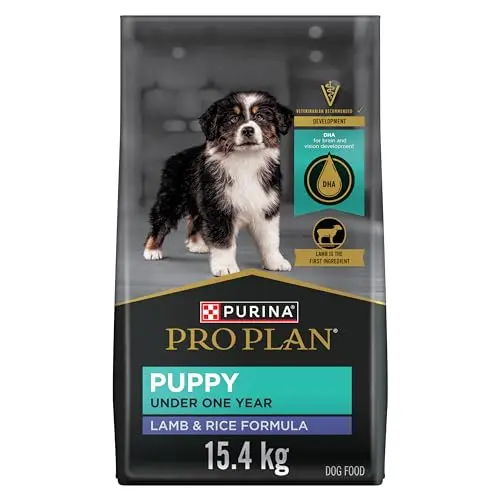
Development Lamb & Rice – Total Puppy Nourishment
A nutrient-packed, all-breed puppy food with real lamb as the first ingredient and guaranteed live probiotics supporting digestion and immunity. The DHA from fish oil fuels brain and vision development, and the protein-rich recipe builds lean muscle without artificial colours or flavours.
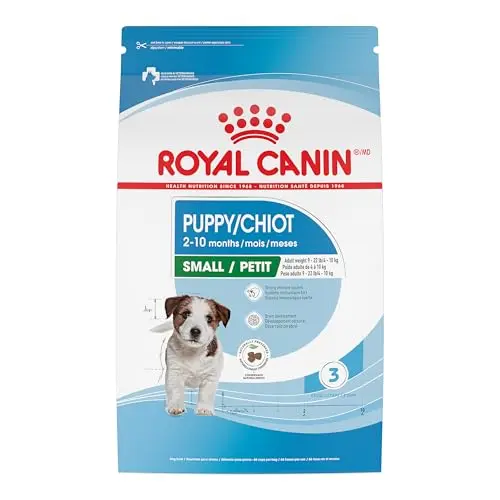
Small Puppy – Precise Nutrition for Small Breed Growth
Tailor-made for puppies expected to weigh 9-22 lbs as adults, this formula balances energy density with a kibble designed for small jaws. It packs DHA, antioxidants, and prebiotics into tiny, crunchy pieces that support dental health alongside overall development.
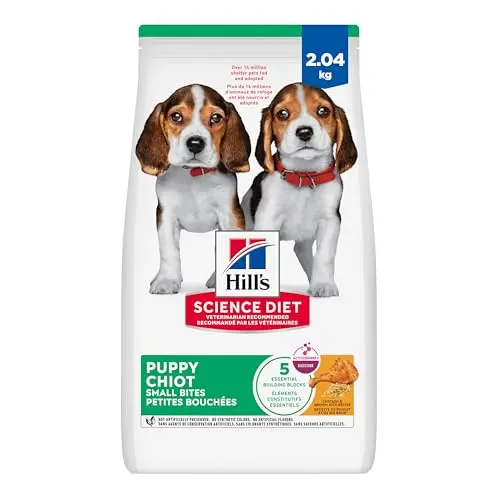
Puppy Small Bites – Brain and Eye Development Focus
A veterinarian-backed dry puppy food with DHA from fish oil for cognitive growth and a prebiotic fibre blend that eases digestion. The small kibble size suits smaller breeds while still delivering a complete nutrient profile.
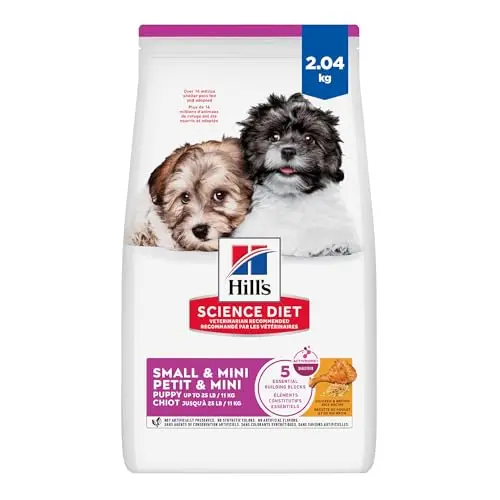
Puppy Small & Mini – Immune System Booster
Nearly identical to the Small Bites recipe, this variant emphasizes antioxidant support for the immune system while retaining DHA for brain development. The kibble is engineered for toy and miniature breed jaws.
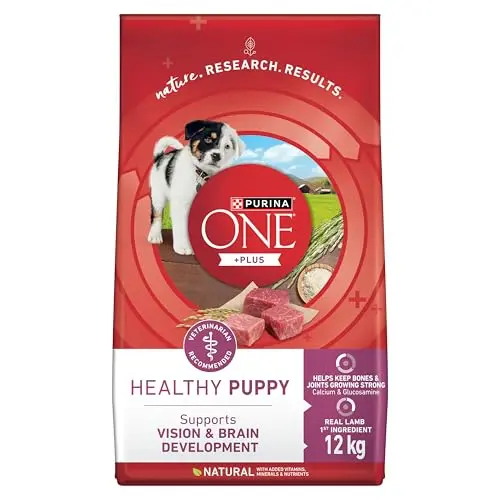
+Plus Healthy Puppy Lamb – Gentle on Tummies
Real lamb leads a simplified ingredient list that sidesteps common chicken allergies. Added rice and oatmeal ease digestion, while DHA boosts brain and vision growth – all without artificial fillers.
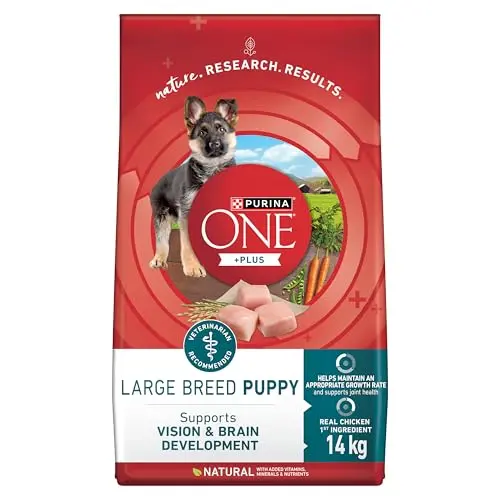
+Plus Large Breed Puppy Chicken – Joint Health Champion
Built for rapid growth curves, this large breed puppy food includes natural glucosamine sources for joints and DHA for brain development. The chicken-based protein supports lean muscle without over-accelerating growth plates.
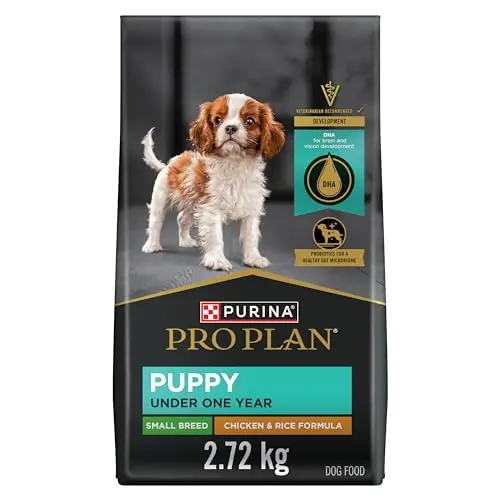
Development Small Breed Chicken & Rice – Protein-Packed for Active Pups
A calorie-dense, high-protein recipe for small breed puppies with boundless energy. Real chicken leads, supported by live probiotics and DHA, all in a petite kibble that’s easy to crunch.
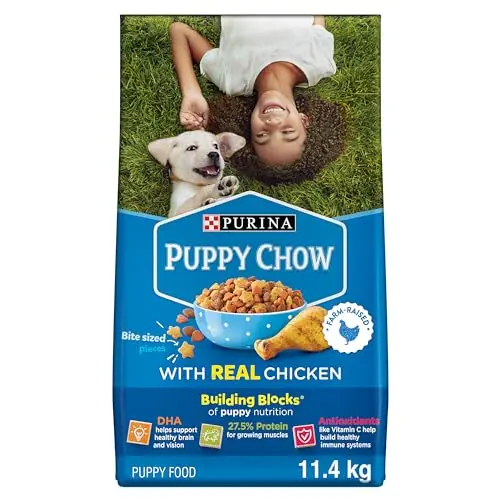
Complete with Real Chicken – Building Blocks for Growth
A straightforward, budget-friendly puppy food with real chicken and 27.5% protein for growing muscles. Includes DHA for brain health and antioxidants for immune development, with no rawhide or unnecessary additives.
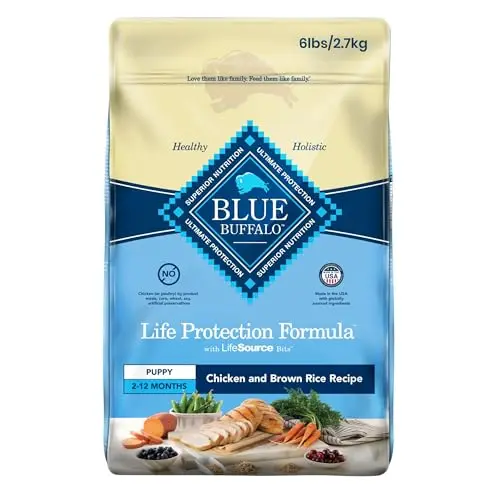
Life Protection Puppy Chicken & Brown Rice – Antioxidant Boost
Blue Buffalo’s puppy food features LifeSource Bits – cold-formed antioxidant-rich nuggets – plus DHA and ARA for brain development. Brown rice, barley, and oatmeal provide gentle, whole-grain energy.
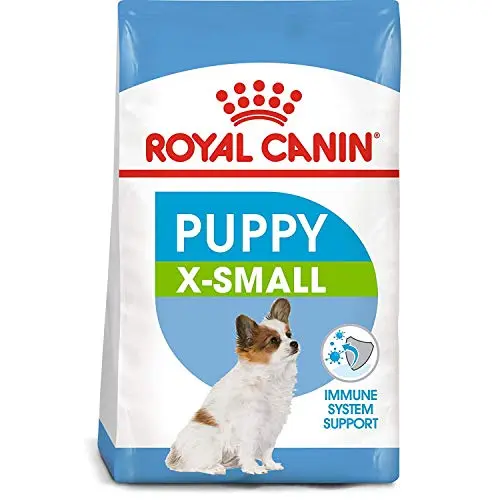
X-Small Breed Puppy – Tiny Paws, Big Nutrition
Specifically for puppies expected to weigh under 8 lbs as adults, this food offers ultra-tiny kibble, high energy density, and a blend of prebiotics and antioxidants for delicate tiny breed systems.
How We Evaluated These Rated Dog Foods for Puppies
We didn’t do long-term supervised feeding trials in controlled kennels. What we did: cross-referenced 10 puppy food models from 6 distinct brands across seven core decision axes – protein source and quality, DHA/ARA levels, digestive support (prebiotics and probiotics), kibble size and breed specificity, ingredient transparency, antioxidant and immune support, and owner-reported palatability and stool quality. We triangulated published nutritional panels, AAFCO compliance profiles, and aggregated owner feedback where available to get a real-world picture of how these foods perform in a home environment.
The scoring framework weighted real-world nutritional fit (60%) – how well a food matched the developmental needs of puppies across different sizes and sensitivities – against formula differentiation (40%) – unique features like live probiotics, LifeSource Bits, or size-specific kibble design. We have no commercial relationship with any of the brands; these picks follow the data, not brand loyalty. If you need one food that covers all bases, the Pro Plan Lamb & Rice is our top pick; if you’re raising a small breed and want precision, the Royal Canin Small Puppy is purpose-built for the job.
How to Choose the Right Rated Dog Food for Your Puppy
Protein Source and Quality: Why It Matters for Growing Pups
Protein is the building block of your puppy’s muscles, skin, and organs – but not all proteins are created equal. Look for named meat sources like chicken, lamb, or fish as the first ingredient, not generic ‘meat meal’ or by-product meals. High-quality puppy foods typically contain 27-30% protein, with real animal proteins providing the essential amino acids like taurine and arginine that support rapid growth. Lamb-based formulas tend to be easier on sensitive stomachs, while chicken is a well-tolerated staple for most pups. If you’re unsure, start with a chicken recipe and switch to lamb if you notice signs of intolerance like itching or loose stools.
DHA and ARA: The Brain-Boosting Fatty Acids Your Puppy Needs
DHA (docosahexaenoic acid) and ARA (arachidonic acid) are omega fatty acids naturally found in mother’s milk that fuel brain and eye development. The best puppy foods supplement with fish oil, marine microalgae, or egg products to deliver these nutrients. This is especially critical during the first six months when neural connections are being written at a furious pace. If you see ‘DHA’ listed on the bag, that’s a green flag – it means the brand is intentionally supporting your puppy’s cognitive wiring.
Digestive Health: Probiotics, Prebiotics, and Easily Digestible Grains
Puppy stomachs are delicate, and signs of digestive distress are one of the top reasons owners switch foods. Formulas with guaranteed live probiotics (like the Purina Pro Plan we recommend) actively colonize the gut with beneficial bacteria, while prebiotic fibres (like the blend in Hill’s Science Diet) feed those bacteria. Easily digestible carbohydrates – rice, oatmeal, barley – are gentler than corn or soy and produce less gaseous aftermath. If your puppy has a history of diarrhoea, prioritize a recipe with both pre- and probiotics and a single source of animal protein.
Breed Size and Kibble Design: Small, Medium, Large – The Right Fit
Kibble isn’t just about flavour; size and texture matter enormously. Toy and small breeds need a tiny kibble they can crunch without hazard, while large and giant breed puppies benefit from larger, less dense pieces that slow down eating and promote chewing. Some brands, like Royal Canin, engineer their kibble for specific dental arch sizes. Beyond size, the calorie density also shifts: small breeds burn energy faster, so their food is often more calorie-dense, while large breeds need controlled growth to protect developing joints. Don’t feed a Great Dane pup the same bag as a Chihuahua.
Hill's Science Diet vs. Royal Canin: Which Small Breed Formula Wins?
Both are veterinarian-backed and breed-size focused, but they take different paths. Hill’s leans on clinical nutrition science with a broad prebiotic blend to stabilize digestion across all small breeds. Royal Canin goes deeper into size-and-weight-specific nutrient calibrations – their Small Puppy and X-Small Puppy formulas have different fat and mineral ratios. If you want a science-backed all-rounder for any small breed under ~20 lbs, Hill’s is the safer bet. If your puppy is on the extreme micro end or you want food that matches an exact breed profile, Royal Canin’s granularity wins.
Purina Pro Plan vs. Purina ONE: How Do They Compare?
Both hail from the same parent company, but Pro Plan is the more performance-oriented line, packing in additional functional ingredients like guaranteed live probiotics. Purina ONE offers simplicity-focused formulas with a clean ingredient list and no artificial fillers – often at a more approachable price per pound. For puppies with known sensitivities, the ONE line’s limited ingredient approach (e.g., lamb and oatmeal) can be a gentler entry. Pro Plan suits puppies who need that extra gut-resilience edge, especially during stress periods like rehoming or vaccination schedules.
Frequently Asked Questions
What's the difference between the Pro Plan Lamb & Rice and the Hill's Science Diet Small Bites?
The Pro Plan Lamb & Rice is an all-breed formula that uses lamb as its primary protein and includes guaranteed live probiotics for gut health, making it a strong generalist pick. The Hill’s Small Bites is designed specifically for small and mini breeds, with a smaller kibble and a prebiotic fibre blend that targets digestive comfort in tiny tummies. If you have a mixed-size litter or a medium breed puppy, the Pro Plan’s one-size-fits-all approach is more practical. For a breed that will stay under 25 lbs, Hill’s offers targeted kibble and antioxidant support that Pro Plan’s broad formula doesn’t specifically address.
Is Royal Canin Small Puppy worth the price compared to Purina ONE Large Breed for a medium-sized puppy?
It depends on your puppy’s expected adult size. Royal Canin Small Puppy is tailored for dogs that will top out at 22 lbs – its kibble, calories, and mineral ratios are all tuned for that growth curve. Purina ONE Large Breed is built for puppies expected to pass 50 lbs, with joint-supporting glucosamine and controlled calcium levels to prevent rapid bone growth issues. If your pup is a medium breed (like a Beagle or Cocker Spaniel), neither is ideal. You’d be better off with an all-breed puppy food like the Pro Plan Lamb & Rice, which avoids size-exclusive formulations. Mismatching food to breed size can lead to under- or over-supplementation of critical nutrients.
At what age should I switch my puppy from puppy food to adult food?
This varies by breed size. Small breeds mature faster and can typically switch around 9-12 months. Medium breeds transition between 12-14 months. Large and giant breeds may need puppy food for up to 18-24 months to support their prolonged skeletal development. The key indicator isn’t age alone – it’s when your puppy’s growth plates close and they stop gaining height. Switching too early can deprive them of essential DHA for brain maturity and the extra protein for final muscle fill-out. Consult your vet, but as a rule, keep your Great Dane on a large breed puppy formula longer than you’d keep a Pomeranian on puppy kibble.
Do grain-free puppy foods offer better nutrition?
Not necessarily, and for puppies, they can be a risk. The recent FDA investigation into canine dilated cardiomyopathy (DCM) flagged potential links to grain-free diets high in peas, lentils, and potatoes. Unless your puppy has a diagnosed grain allergy (which is rare), there’s no nutritional benefit to avoiding whole grains like brown rice or oatmeal – these provide digestible energy and fibre without the filler effect of corn or soy. All of our top picks include wholesome grains unless otherwise noted, and we’d recommend sticking to grain-inclusive options during the critical growth phase.
Final Verdict
For the vast majority of puppies, the Purina Pro Plan Development Lamb & Rice is the food we’d put our name behind – it delivers brain-boosting DHA, digestion-supporting live probiotics, and high-quality lamb protein in a formula that works from Chihuahuas to Great Danes. If you’re raising a small breed, the Royal Canin Small Puppy offers breed-specific precision that’s hard to beat. Got a pup with a tender tummy? The Purina ONE Lamb formula quiets digestive drama without cutting DHA. And for the big guys, the Purina ONE Large Breed looks after joints from day one. No matter which you choose, you’re giving your puppy the best possible start – and that’s a decision you can feel good about every time you fill the bowl.