
Feeding one dog is simple. Feeding two or more can turn your kitchen into a tense, fast-paced free-for-all: one dog inhales their food and muscles in on the other’s bowl, someone starts growling, and the slow eater ends up shortchanged. It’s stressful for you and, more importantly, for them—and left alone, it can escalate.
The reassuring news is that multi-dog mealtime problems are almost always a management issue, not a hopeless one. With the right setup and a little training, calm, fair mealtimes are absolutely achievable. Here’s how to get there.
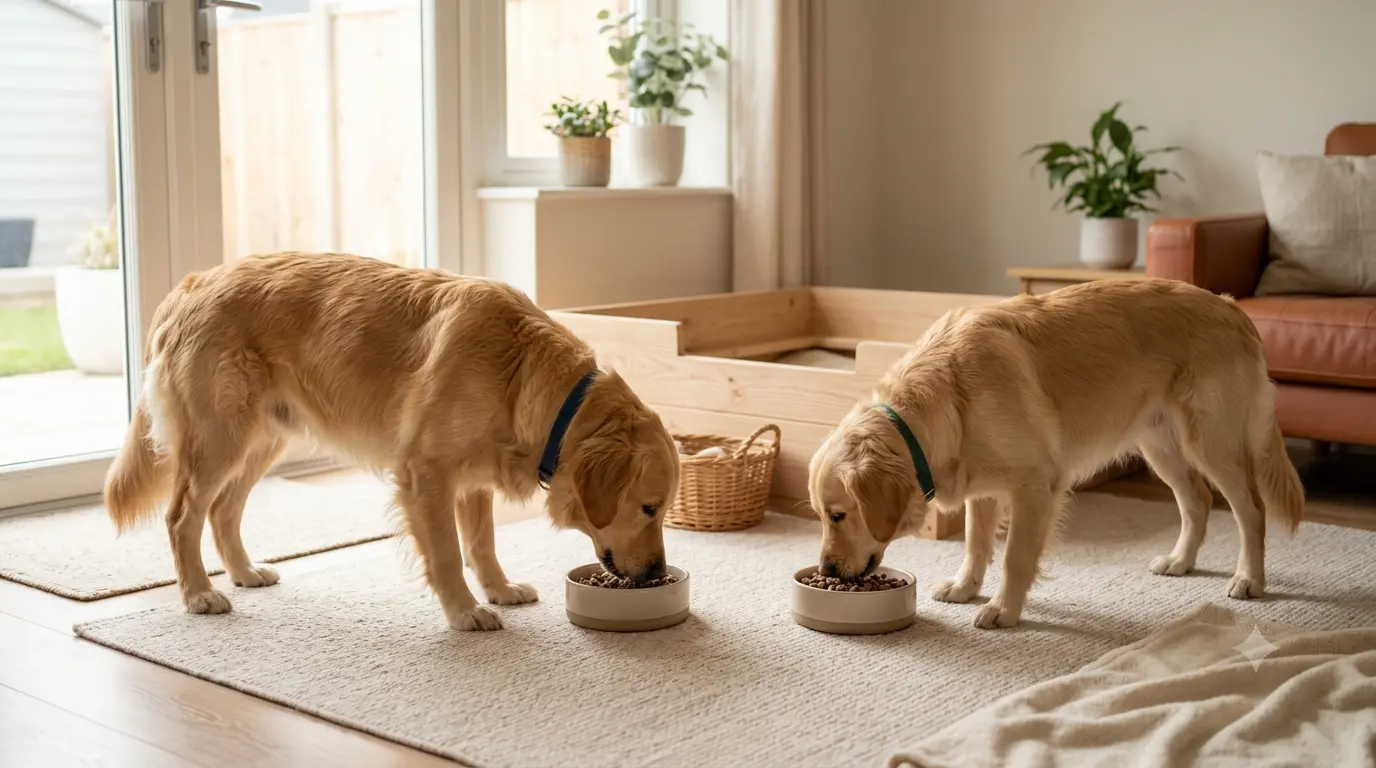
Why Does My Dog Growl When Eating? Understanding Resource Guarding
Before fixing the behavior, it helps to understand it. A dog who growls, stiffens, or hunches over their bowl when another dog (or person) approaches is showing resource guarding—protecting something valuable. It’s a normal, instinctive behavior rooted in the simple logic that food is worth defending. It doesn’t mean your dog is “bad” or “aggressive” at heart; it means they feel their meal is under threat.
Why You Should Never Punish a Growling Dog
This is important: don’t punish the growl. A growl is communication—your dog’s way of saying “I’m uncomfortable, please back off.” If you punish it, you don’t remove the discomfort; you just teach the dog to stop warning and skip straight to snapping next time. That makes things far more dangerous. Instead, respect what the growl is telling you and change the underlying situation so your dog no longer feels the need to guard.
Desensitization: Making the Bowl a Source of Good Things
The goal of training here is to flip your dog’s expectation. Rather than “someone approaching my bowl means I might lose my food,” you want “someone approaching means something even better appears.” This is done gradually and at a distance the dog is comfortable with: a person or, carefully managed, the presence of another dog near mealtime becomes associated with a bonus—a tasty extra dropped into the bowl. Over time, the dog learns that company at dinner predicts good things, not threats. Serious guarding is best worked on with a qualified positive-reinforcement trainer or behaviorist, since technique and safety really matter.
How to Stop One Dog from Stealing Another’s Food
Often the quickest wins come from simply managing the environment so stealing can’t happen in the first place. You don’t have to fix everything through training when smart setup does the heavy lifting.
Separate, Barriers, and Crates
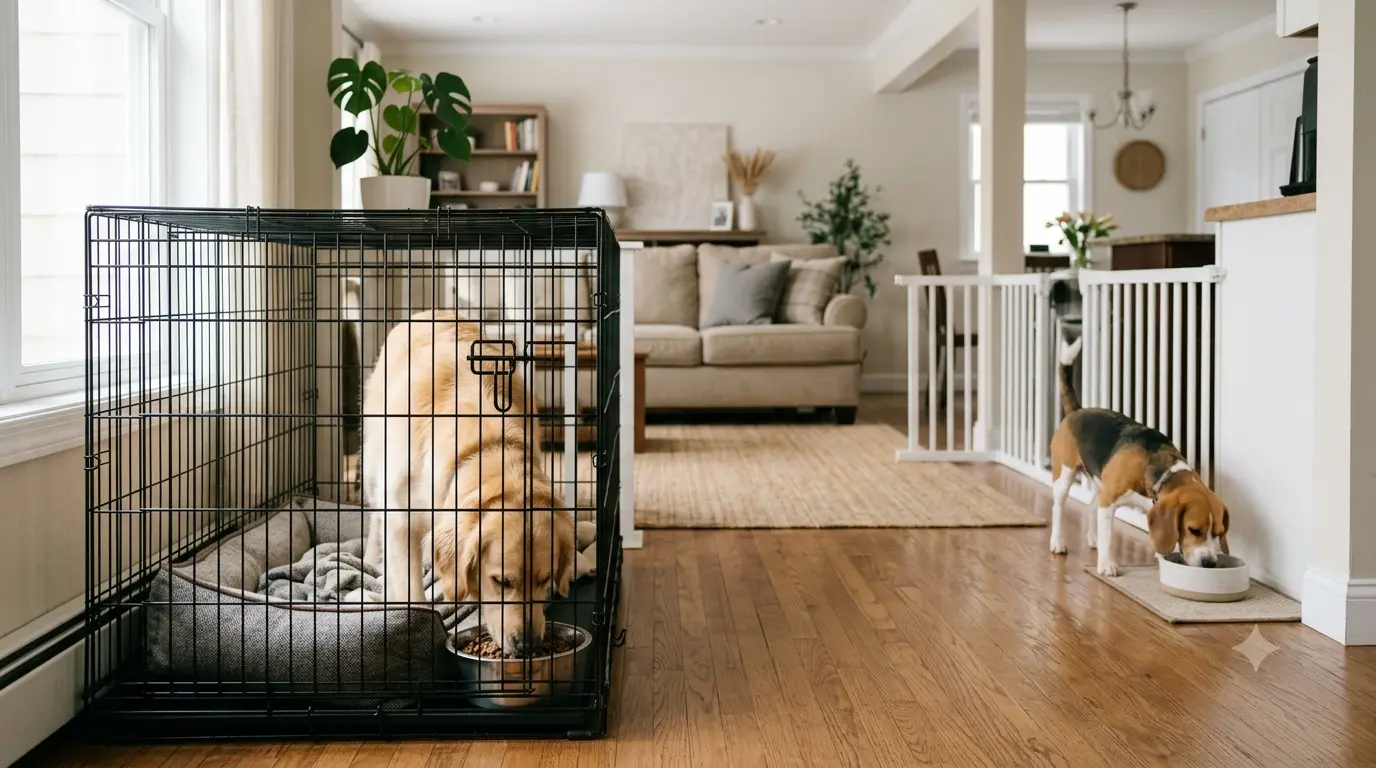
The single most effective fix is to feed dogs apart. Place bowls in different rooms, on opposite sides of a room, or use baby gates and crates to give each dog their own private space to eat undisturbed. Feeding in crates is especially tidy: each dog gets a safe, calm spot, no one can rush anyone else’s bowl, and you can let them out once everyone’s finished and bowls are picked up. Removing empty bowls promptly prevents post-meal patrolling and squabbles.
Physical separation solves the stealing problem instantly and takes the pressure off—which often reduces guarding too, since a dog who never has to defend their food gradually relaxes.
Managing Mismatched Eaters
Multi-dog homes often have a speed demon and a dawdler, and the mismatch causes its own headaches.
When One Dog Eats Too Fast While the Other Starves
A classic problem: one dog wolfs their food in seconds and then homes in on the slower dog’s still-full bowl. Feeding separately (as above) is the first fix, but you can also tackle the speed itself. A slow-feeder bowl for the fast eater evens the pace, giving the slower dog time to finish undisturbed—and it’s healthier for the gulper too. Our guide on slowing down a dog who eats too fast covers the how-to.
For an older or slower dog who needs peace to eat—or who’s losing interest in food altogether—a quiet, protected spot matters even more; if appetite is the issue, our piece on a senior dog not eating well may help. Giving each dog a setup suited to their pace keeps everyone fed fairly.
Technology for Multi-Pet Households
For homes where separation is tricky or dogs are on different diets, microchip-activated feeders are a clever solution. These feeders read your dog’s existing microchip (or a collar tag) and open only for the correct dog, snapping shut when the wrong one approaches. That completely blocks food theft and lets you feed each dog their own diet—invaluable when one is on a special or prescription food the other shouldn’t touch. They take a little setup and investment, but for the right household they solve several problems at once. Even so, supervision during the transition and for guarding-prone dogs is still wise.
The Bottom Line
Multi-dog feeding drama is almost always fixable through management and kindness rather than conflict. Feed dogs apart to stop stealing on the spot, never punish a growl (respect it and address the cause instead), slow down fast eaters so slower dogs can finish, and consider a microchip feeder for tricky setups. Serious resource guarding deserves a professional trainer’s help. Get the environment right, and mealtimes go from a battleground back to the calm, ordinary routine they should be.
Frequently Asked Questions
How do I stop one dog from stealing another dog’s food?
The most reliable fix is feeding them apart—in separate rooms, behind baby gates, or in crates—so stealing simply can’t happen. Remove empty bowls promptly to prevent patrolling. For dogs on different diets or hard-to-separate homes, a microchip feeder that opens only for the right dog works well.
Why does my dog growl when eating, and how do I fix it?
Growling at mealtime is resource guarding—your dog defending food they value. Never punish it, as that teaches them to skip the warning and bite instead. Reduce the pressure by feeding them separately, and use gradual desensitization (approaching predicts a bonus, not a threat), ideally with a positive-reinforcement trainer for serious cases.
What do I do when one dog eats too fast while the other starves?
Feed them separately so the fast eater can’t reach the slow one’s bowl, and slow the gulper down with a slow-feeder bowl. This gives the slower dog time to finish in peace and is healthier for the fast eater too. Giving each dog a setup matched to their pace keeps feeding fair.
Are microchip feeders worth it for a multi-dog home?
For many households, yes. They open only for the correct dog—read via microchip or collar tag—so they block food stealing entirely and let you feed dogs different diets, including prescription foods. They require some setup and cost, but they solve several multi-dog feeding problems at once.
Is it bad to feed my dogs together if they get along?
If they’re relaxed and no one guards, steals, or feels rushed, feeding together can be fine. But if you see any growling, stealing, or one dog dominating the other’s bowl, separate them—it removes the tension and often prevents guarding from developing in the first place.