
If your dog has a sensitive stomach, you know the struggle: the odd noises, the gentle vomiting, the food trial rounds. It can feel like you need a PhD in canine gastroenterology just to pick a bag of kibble. We cross-shopped the affordable end of the market to find options that balance digestive relief with real-world value, because you shouldn’t have to choose between your dog’s comfort and your budget.
The key differentiators in this category come down to two things: how the food soothes the gut (prebiotics, probiotics, highly digestible proteins) and what it costs per meal, not just per bag. We’ll walk through nine solid options across four brands, each with a slightly different angle on solving the sensitive-stomach puzzle. By the end, you’ll know which one matches your dog’s needs and your wallet.
Best Affordable Dog Food for Sensitive Stomach – 2026 Reviews
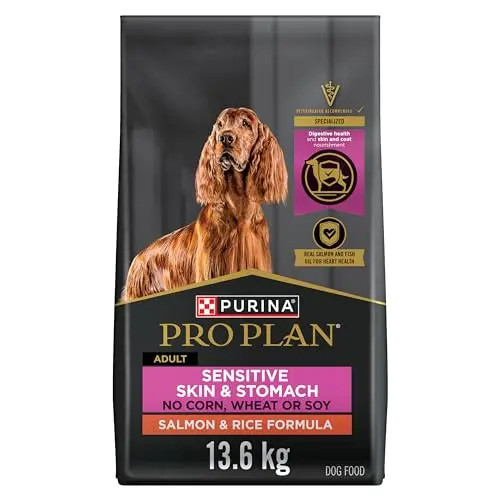
Sensitive Skin & Stomach Salmon & Rice Formula – Digestion & Coat Support
A market-leading salmon-based recipe that tackles sensitive stomachs at a value that’s hard to beat. The real salmon first ingredient and oat meal base make it gentle on digestion, while omega-rich oils from fish and sunflower support a shiny coat and joint health. A 13.6 kg bag stretches far, making it our top pick for most households.
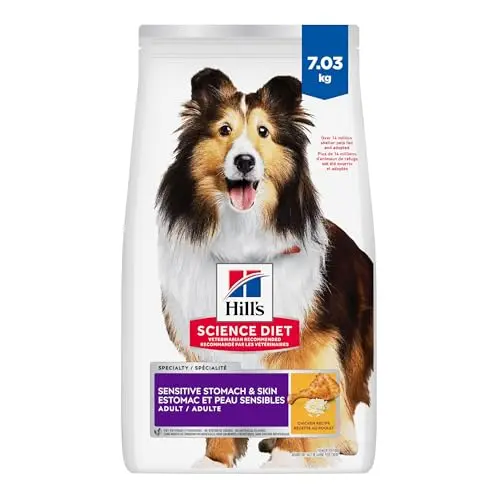
Sensitive Stomach & Skin Chicken Recipe – Veterinary-Trusted Digestive Support
The vet-recommended classic. Hill’s built its reputation on digestive health, and this chicken-based formula leans on beet pulp prebiotic fibre to gently regulate the gut. It’s a moderate-sized bag (7.03 kg) that suits first-time tryers and delivers the brand’s hallmark balanced nutrition with an emphasis on skin and coat nourishment.
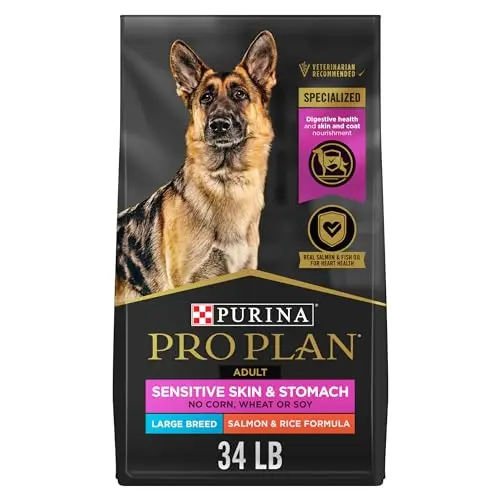
Large Breed Sensitive Skin & Stomach Salmon & Rice – Joint & Digestive Care
Scaling the sensitive stomach formula for big dogs, this version adds glucosamine and elevated EPA for joint support – a common concern alongside digestion in large breeds. The 15.4 kg bag offers serious volume, and the salmon formula mirrors our top pick’s gut-friendly approach with an extra focus on mobility.
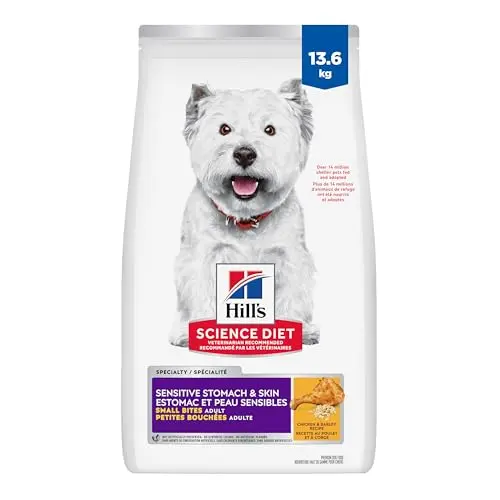
Sensitive Stomach & Skin Small Bites – Easy Chew for All Breeds
The same trusted Hill’s formula in a smaller kibble size that works for toy breeds, seniors, or any dog that prefers a quick chew. The 13.6 kg bag stretches the value of the small-bite format, delivering the prebiotic and omega-rich nutrition across a longer feeding window.
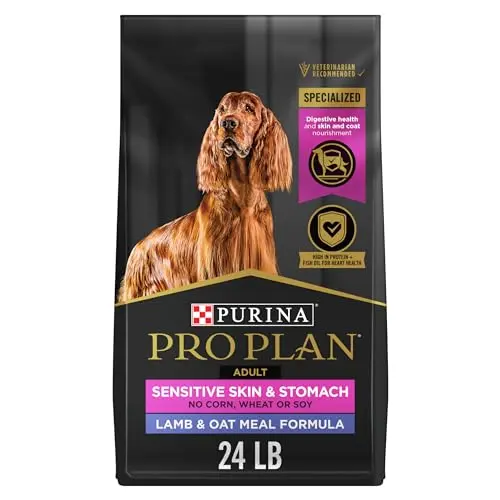
Sensitive Skin & Stomach Lamb & Oat Meal Formula – Alternative Protein
A lamb-first alternative for dogs that don’t respond well to poultry or fish, this formula keeps the oat meal and prebiotic foundation but swaps in a novel protein source. The 10.89 kg bag strikes a middle ground between trial size and value bulk.
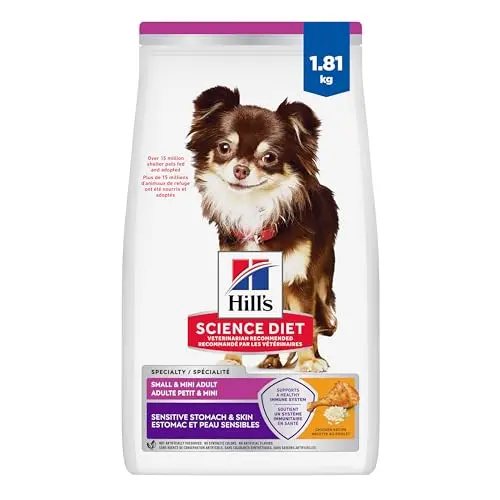
Small & Mini Sensitive Stomach & Skin Chicken Recipe – Tiny Kibble for Little Mouths
Specifically engineered for small and mini breeds, this formula uses extra-tiny kibble and a concentrated nutrient profile to match the metabolic needs of diminutive dogs. The 1.81 kg bag is a perfect trial size for picky eaters.
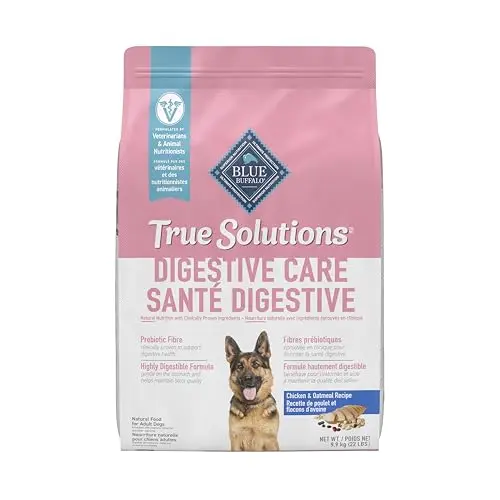
True Solutions Digestive Care – Clinically Proven Prebiotic for Stool Quality
Leveraging clinically tested prebiotic fibre, Blue Buffalo’s digestive care line targets stool quality and overall gut health without ditching the brand’s signature LifeSource Bits. The 9.9 kg bag is a reasonable size for mid-sized dogs, and the real chicken first formula stays free of corn, wheat, and soy.
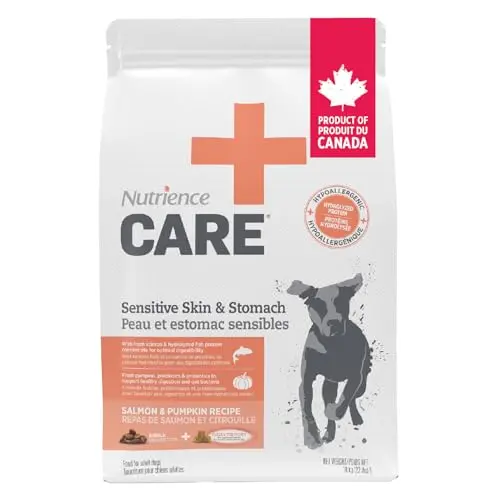
Care Sensitive Skin & Stomach Salmon – Grain-Free with Digestiboost
A Canadian-made grain-free option that goes beyond basic sensitivity support. The 10 kg bag packs fresh salmon, pumpkin, probiotics, and a proprietary Digestiboost blend (chicory root, turmeric, ginger) for a holistic approach to digestive and immune health. All life stages, all breed sizes.
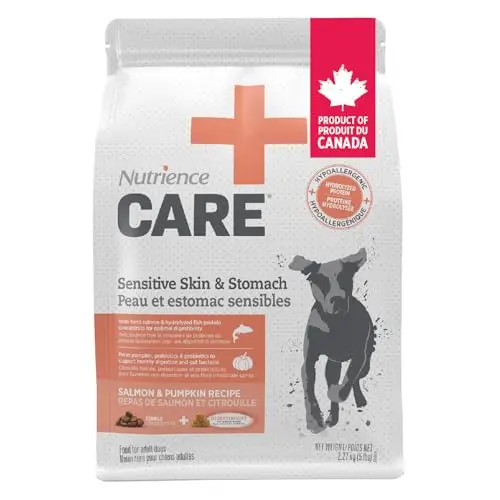
Care Sensitive Skin & Stomach Salmon – Trial Size Grain-Free
The smallest and most affordable entry point into the Nutrience Care line, this 2.27 kg bag offers the same Digestiboost-enhanced, fresh salmon formula at a trial-friendly size. It’s a low-risk way to see if grain-free, probiotic-rich food works for your dog’s stomach.
How We Evaluated These Affordable Dog Foods for Sensitive Stomach
We did not conduct veterinary feeding trials or controlled digestibility tests. What we did: cross-referenced 9 dog food models from 4 distinct brands across 5 decision axes – ingredient digestibility, prebiotic/probiotic support, protein source suitability, real-world owner feedback, and value per serving. We triangulated published specifications, ingredient lists, and aggregated owner feedback where available to map how each formula performs for the most common sensitivity triggers: loose stools, gas, vomiting, and secondary skin irritation.
The scoring framework weighted real-world digestive health support (60%) – how likely the food is to settle an upset stomach based on formula design and owner-reported outcomes – against formula differentiation (40%) – unique features like novel proteins, joint support, or breed-specific kibble that set a product apart. We have no commercial relationship with any of the brands featured; recommendations track fit and differentiation, not brand preference. If your dog struggles with chronic loose stools and skin issues, the Purina Pro Plan Salmon & Rice is our top pick; if you need a vet-trusted chicken alternative with a strong skin component, the Hill’s Science Diet Chicken Recipe serves you better.
How to Choose the Right Affordable Dog Food for Sensitive Stomach
What to Look for in a Dog Food for Sensitive Stomach
When a dog has digestive sensitivities, the ingredient panel matters more than brand recognition. Look for highly digestible whole protein sources – chicken, salmon, or lamb – listed first, not accompanied by ambiguous by-products. The carbohydrate base should be gentle; oat meal and rice often outperform corn or wheat for sensitive systems. Equally important are prebiotic fibres (like beet pulp or chicory root) that feed beneficial gut bacteria, and probiotics if included. Avoid artificial colours, flavours, and preservatives – these can act as low-grade irritants. Lastly, consider fat content; moderate levels (12-15%) are typically easier on the stomach than high-fat formulas.
Key Ingredients that Support Digestive Health
Not all fibres are created equal. Prebiotics – like the beet pulp in Hill’s Science Diet or the chicory root in Nutrience Care – selectively nourish good bacteria, stabilising the gut environment. Probiotics (live beneficial bacteria) can accelerate the repopulation of a healthy microbiome, though they’re less common in dry foods due to manufacturing heat. Omega-3 fatty acids from fish oil offer anti-inflammatory benefits that calm the gut lining, while pumpkin provides gentle bulk for firmer stools. The Nutrience and Purina formulas both leverage these synergistically.
Grain-Free vs. Grain-Inclusive: Which is Better for Sensitive Stomachs?
The grain debate splits owners, but for sensitive stomachs, the answer often comes down to individual allergies. Grains like oat meal and brown rice are not inherently problematic and can actually aid digestion through soluble fibre. However, some dogs are truly grain-intolerant, showing persistent loose stools until grains are removed. Nutrience Care offers a compelling grain-free option with its potato and legume base, while Purina Pro Plan and Hill’s Science Diet lean on gentle grains. If your dog has not been diagnosed with a grain allergy, starting with a grain-inclusive formula like the Purina Pro Plan Salmon & Rice is a safer, budget-friendlier bet.
How to Choose the Right Protein Source for Your Dog
Protein sensitivities are common, and poultry tops the list of allergens. If your dog has reacted to chicken-based foods, novel proteins like salmon or lamb often bring relief. Our top pick, Purina Pro Plan Salmon & Rice, is a top choice for fish-tolerant dogs, while the Purina Pro Plan Lamb & Oat Meal serves the poultry-averse. Some dogs are salmon-specific, so keep an elimination diet mindset when switching. Transition slowly over 7-10 days to avoid shocking the system.
Purina Pro Plan vs. Hill's Science Diet: Which Sensitive Stomach Formula Fits Your Dog?
These two giants dominate the sensitive stomach aisle, but they appeal to different buyers. Hill’s Science Diet carries a heavy recommendation from veterinarians, and its beet pulp prebiotic approach is straightforward and effective – it’s the easy button for owners who want a trusted, no-fuss solution. Purina Pro Plan offers more variety: salmon, lamb, even large breed or small breed tweaks. Its salmon formula in particular delivers a richer omega package and often a lower per-kilogram cost on larger bags. Choose Hill’s if you want vet-tested simplicity; choose Purina if you want to tailor the formula to a specific protein or breed size while saving a few dollars.
Understanding Bag Sizes and Value: Does Bigger Always Mean More Affordable?
Affordability is about cost per meal, not the sticker price. A 13.6 kg bag of Purina Pro Plan may cost more upfront than a 2.27 kg bag of Nutrience, but its per-serving price can be less than half. Use this rule: divide the bag price by the number of cups (roughly 0.45 kg per cup for dry food) to get a real comparison. For tiny dogs, the smallest bag sizes (like the Hill’s Small & Mini 1.81 kg) make sense to maintain freshness; for large breeds, the biggest bags are almost always the most economical. The Purina Large Breed 15.4 kg and the Purina Salmon 13.6 kg are champions of per-meal value.
Hydration and Feeding Tips for Dogs with Sensitive Stomachs
Even the best food can cause upset if fed incorrectly. Divide daily portions into 2-3 smaller meals to ease the digestive load – this alone can reduce vomiting. Always provide fresh water, and consider adding a splash of warm water to kibble to soften it, speeding gastric emptying. Avoid sudden switches: any new food should be introduced over at least a week, mixing increasing amounts of the new with the old. If symptoms persist beyond 2 weeks of a transition, consult a vet – chronic sensitivity can mask underlying conditions.
Frequently Asked Questions
What's the difference between Purina Pro Plan Sensitive Skin & Stomach and Hill's Science Diet Sensitive Stomach & Skin?
Both target digestive and skin health, but their approaches differ. Purina Pro Plan uses oat meal as the primary grain and often includes fish oil for omega-3s, with protein sources like salmon or lamb that suit rotation. Its prebiotics come from natural oat fibre. Hill’s Science Diet relies on chicken as a consistent single protein and uses beet pulp prebiotic fibre, which is highly researched for stool quality. Hill’s is the top vet recommendation, while Purina offers more protein variety and breed-specific sizes. For most dogs starting out, the Hill’s formula is a safe first choice; if you need to avoid chicken or want a lower per-kg cost, the Purina salmon variant wins.
How does Nutrience Care compare to Blue Buffalo Digestive Care for sensitive stomachs?
Nutrience Care is grain-free and probiotic-rich, with ingredients like fresh salmon, pumpkin, and a proprietary Digestiboost complex (turmeric, ginger, chicory root) that aggressively targets inflammation and gut flora. Blue Buffalo True Solutions Digestive Care is grain-inclusive but clinically tested – its prebiotic fibre blend is validated for stool quality, and it includes LifeSource Bits for antioxidants. Nutrience suits owners wanting a holistic, grain-free Canadian-made option; Blue Buffalo suits those preferring a science-backed, clinically proven prebiotic. Neither is inherently better; it depends on whether your dog reacts to grains or needs a more targeted digestive formula.
Can affordable dog food really help with my dog's sensitive stomach?
Absolutely. Affordability doesn’t mean low quality – it often means optimizing ingredient sourcing and avoiding luxury price markups. The foods we reviewed strip away unnecessary fillers and lean on proven digestive aids like prebiotics and highly digestible grains. For example, the Nutrience Trial Size packs fresh salmon and probiotics at a budget entry point. The key is picking a formula with transparent ingredients and sticking to a slow transition. Many dogs thrive on sub-$100 large bags for months.
Is grain-free dog food better for dogs with sensitive stomachs?
Not universally. While some dogs have genuine grain intolerances that cause loose stools or skin flare-ups, most sensitive stomachs respond well to gentle grains like oat meal and rice. Grain-free diets have been linked to nutritional dilated cardiomyopathy in some studies, so they should be chosen thoughtfully. If your dog has a diagnosed grain allergy, Nutrience Care’s grain-free formula is a solid choice. Otherwise, starting with a grain-inclusive food like Purina Pro Plan or Hill’s Science Diet is safer and typically more budget-friendly.
Final Verdict
For the vast majority of dogs with sensitive stomachs, the Purina Pro Plan Sensitive Skin & Stomach Salmon & Rice is our pick – it’s effective, widely available, and delivers exceptional per-meal value. If your dog leans toward chicken and you want the vet-recommended gold standard, the Hill’s Science Diet Chicken Recipe is a reliable alternative. Large breed owners should look at the Purina Large Breed Salmon for the joint-digestion combo. And if budget is the very first concern, the Nutrience Trial Size lets you test a premium grain-free formula at minimal cost. No matter which you choose, transition slowly and watch for firmer stools – your dog will thank you.