
You hit the snooze button one too many times, and now you’re rushing out the door – but the dog still needs breakfast. An automatic pet feeder can save the day, keeping meal times on track even when life gets chaotic. For dogs, the right feeder does more than just dispense kibble; it offers precise portions, fresh storage, and the reliability to work day after day.
Not all automatic feeders are created equal, especially when dogs are the target. You need a hopper big enough for their appetites, a mechanism that won’t jam with larger kibble, and controls that are easy to set. We compared the top options across the market to help you pick the one that fits your routine and your pup’s needs.
Best Automatic Pet Feeders for Dogs – 2026 Reviews
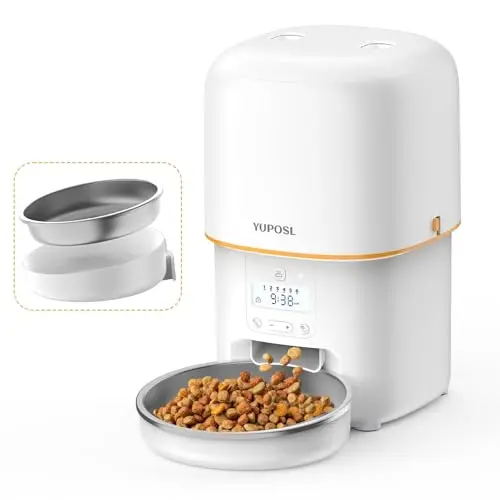
YPF01-PW20 – Long-Battery Anti-Jam Feeder for Dogs
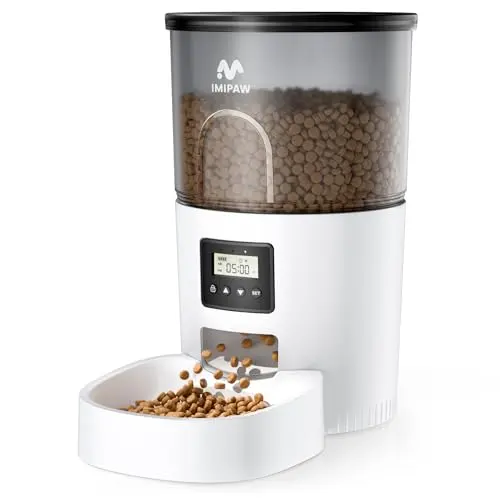
IMI3L-KY-02 – Customizable 6-Meal Schedule
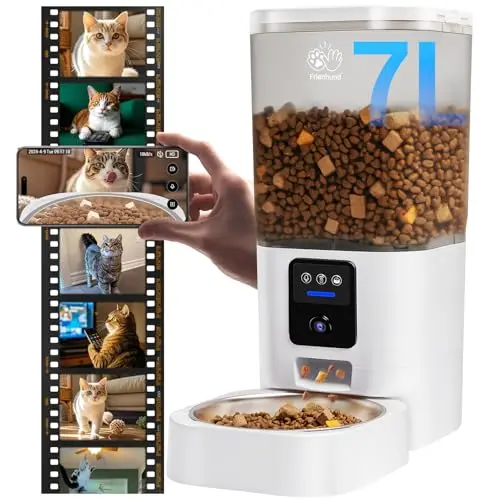
ACF100W – Smart Feeder with HD Camera
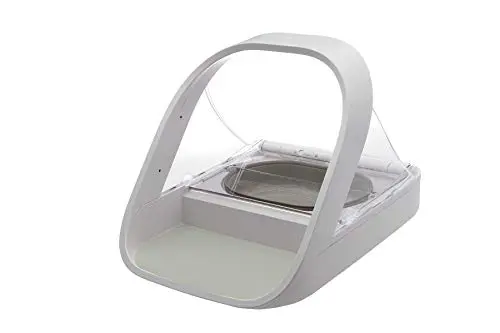
SureFeed – Selective Feeding via Microchip
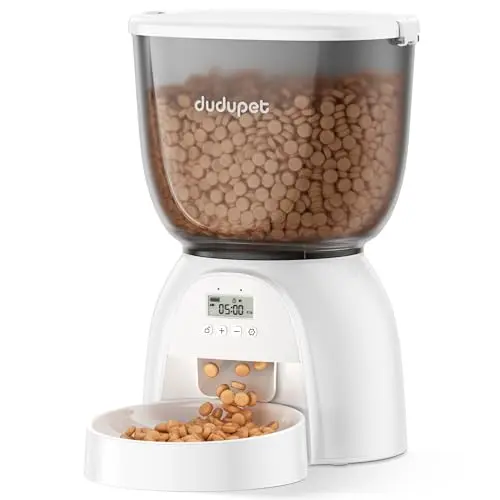
DU-F11K – 5L Programmable Feeder
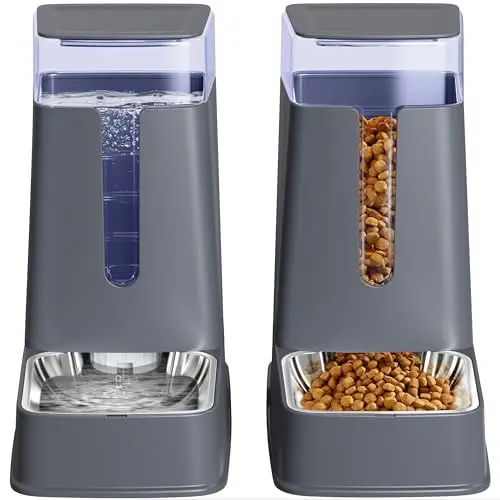
Gravity Feeder & Waterer Set
How We Evaluated These Automatic Pet Feeders for Dogs
We didn’t run long-term reliability trials or monitor thousands of feeding cycles. What we did: cross-referenced 6 automatic feeders from 6 distinct brands across 5 decision axes – capacity, programmability, anti-jam design, freshness seals, and smart features. We triangulated published specifications, aggregated owner feedback where available, and use-case fit for dog owners.
The scoring framework weighted real-world performance (60%) – how well each feeder meets a dog’s diet needs – against feature differentiation (40%) – unique advantages like camera monitoring or RFID access. We have no commercial relationship with any of the brands featured; recommendations track fit and differentiation, not brand preference. If you need a set-and-forget workhorse, the Yuposl YPF01-PW20 is your match; if budget and schedule flexibility matter most, the IMIPAW IMI3L-KY-02 delivers outstanding value.
How to Choose the Right Automatic Pet Feeder for Dogs
Understanding Automatic vs. Timed Feeders
An automatic feeder for dogs means it dispenses food without you having to be there – but not all do it the same way. Timed feeders let you schedule precise meals, while gravity feeders simply keep the bowl full as your dog eats. For most dog owners, a timed model is better because it prevents overeating and maintains structure. Look for at least 4 programmable meals to match a typical feeding routine.
Capacity: How Much Food Does Your Dog Need?
A feeder’s hopper capacity determines how often you refill. A 3L tank works for a small dog for days, but a large breed may eat through it in a day. For multi-dog homes or longer getaways, a 5L or 7L model like the Frienhund ACF100W is a better fit. Always check the kibble size compatibility – some feeders jam with large dental or breed-specific kibble.
Programmability and Meal Customization
The best feeders let you fine-tune meals. The IMIPAW IMI3L-KY-02 offers 6 meals and 120 portions, while the DUDUPET DU-F11K goes up to 16 meals. More meals are useful for dogs that need small, frequent feedings. A manual feed button is a bonus for an extra snack. Look for an intuitive LCD or app interface – confusing programming defeats the purpose.
Anti-Jam and Freshness Features
Nothing is more frustrating than a feeder that clogs. A reliable anti-jam rotor – like those in the Yuposl and IMIPAW – keeps kibble moving. Freshness matters too: airtight seals, desiccant packs, and lockable lids keep food from going stale. The SureFeed even seals the bowl completely between meals, a must for wet food.
Smart vs. Basic: Do You Need a Camera?
If you worry about your dog while away, a WiFi-connected feeder with camera brings peace of mind. The Frienhund ACF100W streams 2K video and works on 5GHz Wi‑Fi for a stable connection. But for many, a simpler timed feeder does the job without the premium. Consider whether you’ll actually use motion alerts and two-way audio before paying for them.
Choosing Between Microchip-Selective and Open Feeders
In a multi-pet household where one dog steals food or needs a specific diet, a selective feeder is transformative. The SureFeed recognizes your dog’s microchip and only opens for that pet. If you have only one dog, an open feeder is simpler and less expensive.
Setup and Cleaning: What to Expect
Most automatic feeders require periodic cleaning – removable bowls and tanks are a major plus. The Yuposl’s stainless steel bowl and Hipidog’s dishwasher-safe bowls make hygiene easy. Check power requirements: while many run on batteries, a dual-power model that uses an adapter with battery backup is more reliable during outages.
Frequently Asked Questions
What's the difference between the Yuposl YPF01-PW20 and IMIPAW IMI3L-KY-02?
Both are solid mid‑capacity feeders, but the Yuposl stands out with its 180‑day battery life and stainless steel bowl, making it more durable and placement‑flexible. The IMIPAW offers similar scheduling but relies more on the adapter and includes a desiccant pack. For dogs that need near‑silent operation, Yuposl’s rotor is noticeably quieter; for those prioritizing budget, IMIPAW is the sharper deal.
Is the Frienhund ACF100W's camera worth it for dog owners?
If you travel or work long hours, absolutely. The 2K camera with night vision and two‑way audio lets you watch your dog eat and soothe them remotely. The 7L capacity also means less refilling. However, if you’re mostly home, a basic timed feeder saves money without losing essential scheduling features.
Can the SureFeed prevent my large dog from stealing the cat's food?
Yes, and that’s its primary strength. The SureFeed reads your dog’s microchip and closes when the wrong pet approaches. It works with wet or dry food and seals tight. Keep in mind the small bowl – for a large dog eating multiple meals a day, you’ll be refilling it often. It’s best for dietary management, not bulk feeding.
Are all 'automatic' feeders actually automatic?
Technically, yes – but the term covers everything from programmable timed feeders to gravity‑fed bowls. True automatic feeders let you schedule meals and control portions; gravity feeders are passive and don’t restrict how much your dog eats. For most dog owners, a timed automatic feeder gives the right mix of convenience and health control.
How do I know if a feeder's capacity is enough for my dog?
Check the daily feeding amount recommended on your dog’s food bag, then multiply by the days you want between refills. A 3L hopper holds roughly 12‑15 cups of kibble, enough for a small dog for a week but a large dog may need a 5L or 7L model. Also consider kibble density – dense, small kibble packs more per litre.
Final Verdict
For most dog owners, the Yuposl YPF01-PW20 is the answer – it nails reliable anti‑jam feeding and exceptional battery life without any fuss. If you’re watching your wallet, the IMIPAW IMI3L-KY-02 delivers flexible scheduling at a friendlier price. For tech‑savvy households, the Frienhund ACF100W‘s camera and huge hopper are worth the splurge. And if food theft is your real headache, the SureFeed is purpose‑built to solve it. Pick the one that matches your dog’s appetite and your daily rhythm – they’ll all bring more order to meal time.