
Coming home to find your dog has turned the crate tray into a pile of plastic shards is a frustration no pet owner wants to repeat. If your pup treats the pan like a chew toy, you know the cycle: buy a replacement, reinforce the crate, maybe try a bitter spray – and still, within weeks, the corner is gnawed off. That’s where a truly chew proof crate tray changes the game.
Chew proof doesn’t have to mean “indestructible in a lab test”; it means standing up to daily pressure from determined jaws and claws without cracking, splitting, or releasing harmful chemicals. We focused on metal and heavy-duty options that have earned real-world trust from owners of powerful chewers. Our guide breaks down the materials, sizing, and compatibility so you can pick the tray that ends the replacement cycle for good.
Best Chew Proof Dog Crate Trays – 2026 Reviews
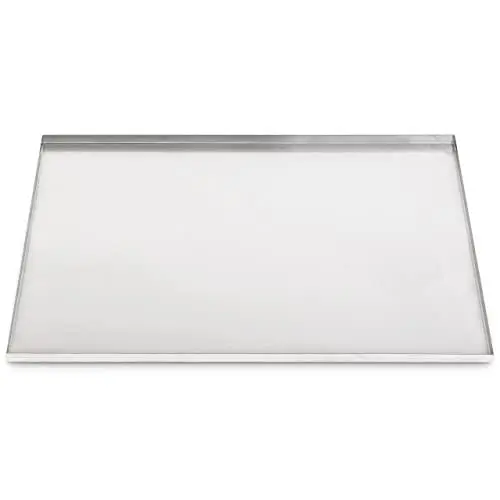
41" x 26" Stainless Steel Pan – Chew-Proof & Crack-Proof
A virtually indestructible stainless steel tray that laughs off the most determined chewing. Designed to fit a wide range of 42-inch crates, it’s the ultimate upgrade for owners dealing with destructive dogs.
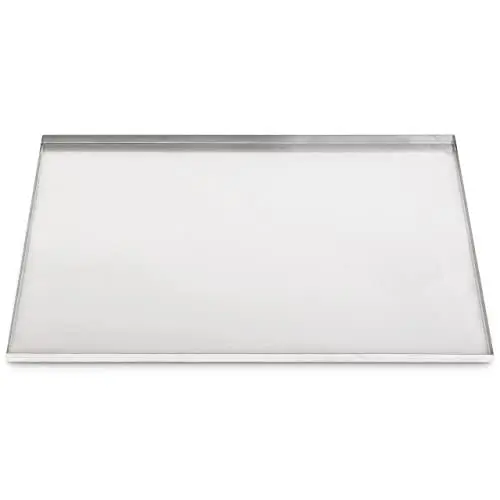
29.5" x 20.5" Galvanized Metal Pan – Compact Chew-Proof Tray
Proof that you don’t need a massive tray to get serious chew protection. This scaled-down version of the Pinnacle system fits 30-inch crates perfectly, bringing the same indestructible promise to medium and small dogs.
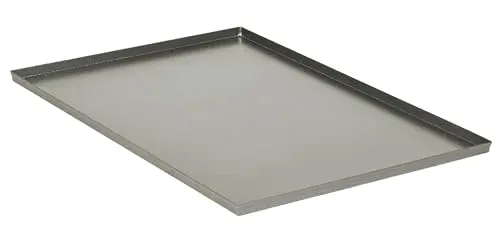
42" Metal Replacement Pan – Heavy-Duty Chew Guard
A purpose-built metal pan for Midwest’s 42-inch crates, delivering the same tough-as-nails durability owners expect from the brand’s steel lineup. If plastic trays don’t survive your dog’s crate sessions, this is the straightforward fix.
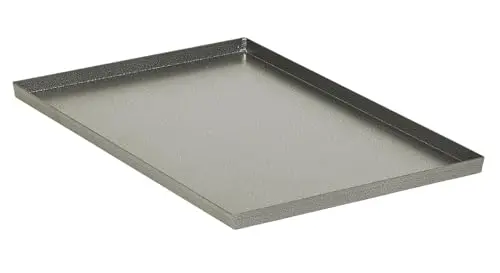
36" Metal Replacement Pan – Affordable Chew Protection
The same metal-pan idea in a 36-inch size, hitting a sweet spot between price and extreme durability. If you’ve been replacing cracked plastic tray after tray, this one-and-done fix costs less than a year’s worth of cheap pans.
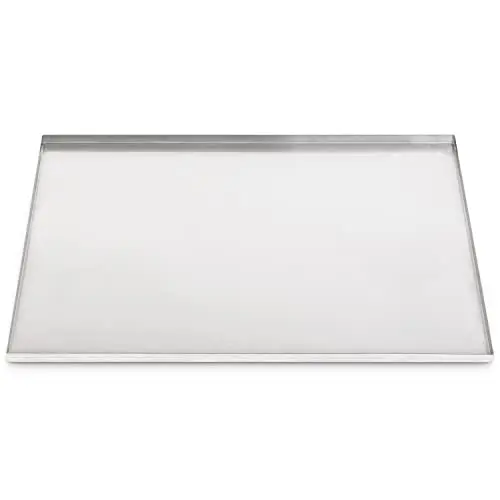
40.75" x 26.5" Galvanized Metal Tray – Heavy-Duty Chew Defense
A solid, no-frills galvanized tray for 42-inch crates from a lesser-known brand. It promises the same chew-proofing as the top-tier options, though buyer data is thinner.
How We Evaluated These Chew Proof Dog Crate Trays
We didn’t run destructive chew tests in a lab. What we did: cross-referenced 5 chew-proof crate trays from 3 distinct brands across four decision axes – material durability, size compatibility with common crates, leakproof design, and real-world chew resistance reported by owners. We triangulated published specifications, aggregated owner feedback where available, and use-case fit against profiles ranging from aggressive large-breed chewers to mid-size dogs with heavy digging habits.
The scoring framework weighted real-world durability and owner validation (60%) – because a tray that claims to be chew-proof must prove it – against feature differentiation (40%) – unique construction details, size options, and material choices. For the broadest compatibility and most thoroughly vetted track record, the Pinnacle 41″ Stainless Steel Pan took top honors; if your budget is tighter but you still need metal toughness, the Midwest 36″ Metal Pan is the best value. We have no commercial relationship with any of the brands featured; recommendations follow fit and differentiation, not brand loyalty.
How to Choose the Right Chew Proof Dog Crate Tray
What Makes a Crate Tray Truly Chew Proof?
The term gets thrown around loosely, but genuine chew proofing comes down to material and construction. Plastic trays – even those labeled ‘durable” or ‘heavy-duty” – routinely fail under moderate chewing. Metal, on the other hand, presents a surface that most dogs simply can’t sink teeth into. Look for stainless steel or galvanized metal with welded seams rather than glued joints. Trays like the Pinnacle Systems models are built with a polypropylene coating over steel, which resists both teeth and odours. Watch out for thin-gauge metal that can bend; a tray should feel substantial when you lift it.
Also consider the side height. A low 1-inch lip works for most dogs, but if you have a chronic digger, higher sides (rare in this category) can help keep bedding inside. The best trays don’t rely on a single claim – they’re backed by owner reports of months of abuse without failure.
Metal vs. Plastic: Which Material Holds Up?
In this category, metal wins overwhelmingly. Even the best injection-molded plastic trays crack under repeated jaw pressure. Metal trays like the Midwest metal replacements and the Pinnacle Systems line use powder-coated steel or galvanized metal that stands up to hours of biting. Plastic can be a viable choice for non-chewers or puppies, but if you’ve already replaced a plastic tray, skip the intermediate step. The only real downside to metal is weight – a stainless steel pan like the Pinnacle 41″ weighs over 3.5 kg – but that heft is a trade-off for peace of mind.
If you’re determined to try plastic, look for polypropylene blends rather than vacuum-formed ABS, but be prepared for eventual failure. For destructive dogs, the Pinnacle 41″ Pan is the benchmark.
Sizing Your Replacement Tray So It Actually Fits
Measure the inside base of your crate, not the overall crate dimensions. Most wire crates have a lip or rail that the tray slides into, so the tray must be slightly smaller than the outer footprint. Pinnacle’s trays are designed to fit a range of brands, but always compare your crate’s internal width and depth to the tray’s listed dimensions. Midwest’s metal pans are model-specific: the 36MPAN fits 36-inch Life Stages crates with bent slide bolt latches only, while the 42MPAN snaps into the 42-inch versions. Universal-fit trays like the Pinnacle 40.75″ model give more leeway but may leave a small gap. When in doubt, choose a tray that’s exactly the same size or up to 0.5 inches smaller in both directions. A tray that’s too tight can buckle, and one too loose lets a determined dog get a tooth under the edge.
Crate Compatibility: Midwest, Pinnacle, and Universal Fits
If you own a Midwest or New World crate, the Midwest 42″ Pan or Midwest 36″ Pan are plug-and-play solutions – they’re made for those crates and installation takes seconds. Pinnacle Systems trays, on the other hand, are universal: they’re built to fit most single- and double-door metal crates from You & Me and other brands. This makes them a safer bet if you have a non-Midwest crate or plan to switch crates later. The Pinnacle Woodcraft 40.75″ tray also claims universal fit but has less community verification, so double-check your interior measurements. As a rule of thumb, if your crate is a standard wire model from a major pet retailer, a universal metal tray will likely fit – just avoid trays that require you to force them in, as that can warp the metal over time.
Cleaning and Maintaining a Metal Tray
Metal trays are a cinch to clean: a mild detergent and warm water wipe-down, or a quick hose-off outdoors. Avoid harsh chemicals; they can degrade the powder coating or galvanized finish. The biggest maintenance chore is drying the tray thoroughly after deep cleans, especially in the corners where the seam meets the lip. Even rust-resistant models can develop surface rust if water pools overnight. A dry cloth or a few minutes in the sun before reinstalling eliminates this. If your tray sees regular accidents, consider adding a crate mat on top – it won’t compromise chew protection but will make daily spot-cleaning faster. The Pinnacle stainless steel tray is particularly easy to wipe down and doesn’t absorb odours, which is a huge plus in multi-dog households.
Understanding Your Dog's Chewing Style
Not all chewing is equal. Anxious chewers focus on corners, so a tray with rolled edges and no sharp external lips (like the Midwest pans) resists that prying motion. Diggers scratch at the surface; a powder-coated finish like on the 36MPAN stands up to claw marks better than plain galvanized. Heavy, persistent jaw-strength chewers – think Pit Bulls, Rottweilers, or Mastiffs – demand stainless steel or thick-gauge galvanized metal. If your dog is a casual chewer, a high-quality plastic tray might suffice, but once the habit is formed, switching to metal prevents a costly replacement cycle. The Pinnacle 29.5″ tray is ideal for smaller dogs with a chewing habit, while the Midwest 42″ tackles the biggest breeds.
Frequently Asked Questions
What's the difference between Pinnacle Systems and Midwest metal replacement pans?
The main difference is brand compatibility. Pinnacle Systems trays are designed as universal fits – they work with most single- and double-door wire crates from various brands, including You & Me. Midwest pans are precision-cut for specific Midwest and New World crate models. In terms of material, Pinnacle offers both stainless steel (41″ model) and galvanized metal (29.5″ and 40.75″), while Midwest uses a powder-coated steel. Stainless is the most corrosion-resistant; powder-coated holds up well but can chip. For a multi-brand household, Pinnacle’s universal fit is more flexible; if you already own a Midwest crate, the Midwest pan ensures a no-gap fit.
How does the Pinnacle 29.5-inch tray compare to the Midwest 36-inch pan?
They serve different crate sizes. The Pinnacle 29.5″ tray is made for 30-inch crates, typically medium or small dog enclosures, while the Midwest 36″ pan fits larger 36-inch crates. Both are metal and chew-proof, but the Pinnacle uses galvanized steel (lighter, slightly more scratch-prone) and the Midwest uses powder-coated steel. The Pinnacle includes a lifetime warranty; Midwest offers a 1-year warranty. The Pinnacle is also a universal fit, so it can slide into many brands’ 30-inch crates, whereas the Midwest works only with Midwest/New World models. If you have a 30″ crate, the Pinnacle is the clear pick; for 36″ Midwest crates, the Midwest pan offers a guaranteed fit.
Can any metal tray be considered completely chew proof?
No tray is 100% chew-proof for every dog. Even heavy-gauge metal can be dented or scratched by the most powerful and persistent chewers, but for the vast majority of dogs, a well-constructed metal tray will survive years of abuse. Look for welded seams rather than crimped edges, and avoid thin-gauge metal (under 20 gauge). The Pinnacle 41″ stainless tray has the most documented success across large, aggressive breeds. If your dog has managed to damage a metal tray, the issue is likely improper fit (giving them a corner to grab) or a tray made from lighter materials. For extreme cases, some owners double up with a crate mat on top, which adds another layer without compromising the tray’s protection.
What size tray should I get for a large dog crate?
Large crates are typically 42 inches long, so a tray measuring 40-41 inches in length and 26-27 inches in width is ideal. The Pinnacle 41″ and the Midwest 42″ both fit this category. Measure your crate’s interior length and width at the base; the tray should be 0.5-1 inch smaller in each dimension to slide in smoothly. If you have an oversized breed (Great Dane, Mastiff), you might need a custom solution, but for most large dogs, the Pinnacle 41″ Stainless Steel Pan is the gold standard. It’s compatible with a wider range of brands than the Midwest-specific models, so it’s the safest bet if you’re unsure of your crate’s make.
Final Verdict
For most owners battling a destructive chewer, the Pinnacle 41″ Stainless Steel Pan is the answer. It combines the broadest crate compatibility with a material that has genuinely proven itself against the worst biters. If your dog is medium-sized and you need to save some cash, the Midwest 36″ Metal Pan delivers essential chew-proof protection at the best price. And for small- to medium-crate setups, the Pinnacle 29.5″ Galvanized Tray is the compact champion. Whichever you pick, you’re graduating from the endless plastic-tray replacement cycle to a one-time fix that lasts.