
You come home to a fluffy cloud of stuffing, a guilty-looking dog, and a shredded bed that barely survived the afternoon. If your dog treats beds like chew toys, you know the drill – and you know that most beds don’t stand a chance. But a truly non-chew dog bed can change the game, and we’ve rounded up the ones that actually hold up.
Not every bed marketed as durable lives up to the claim. We looked at reinforced corners, bite-resistant fabrics, and materials that stand up to persistent gnawing – without sacrificing the comfort your dog needs for a good night’s sleep. This guide walks you through the strongest, smartest options on the market so you can pick the right armour for your pup’s nap time.
Best Non-Chew Dog Beds – 2026 Reviews
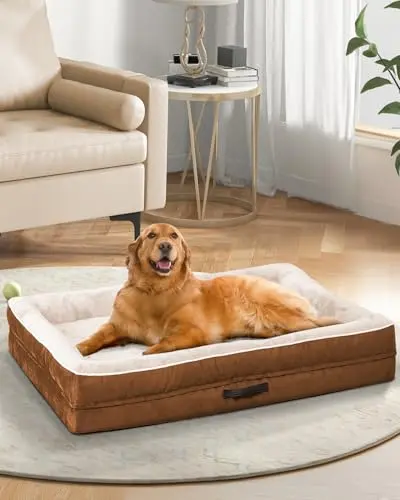
Orthopedic XL Chew-Resistant Bed – Plush Bolster & Egg-Crate Foam
A large, supportive bed that wraps your dog in soft flannel while resisting the wear and tear of curious chewers. Four-sided bolsters provide neck and head support, and the egg-crate foam base offers even pressure relief – all wrapped in a removable, waterproof cover.
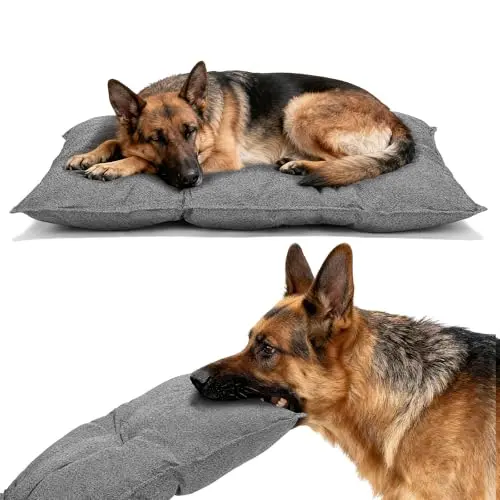
Indestructible Crate Pad – Reinforced Corners & Soft Padding
Specifically designed to withstand crate life, this pad uses bite-resistant fabric and reinforced corners to defeat even the most persistent crate chewers. The high-loft padding adds comfort without making the pad too easy to shred, and the low-profile shape fits most standard crates.
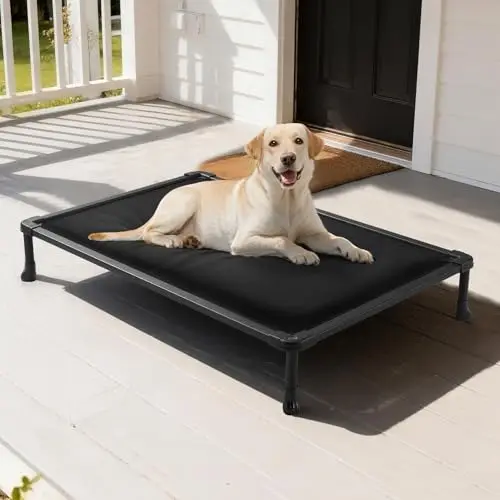
Chew Proof Elevated Cot – All-Metal Frame & Waterproof Mat
By lifting your dog off the ground on a metal frame encased in chew-proof edges, this cot removes most of the temptation to chew. The included PP cotton-filled mat is waterproof and easy to clean, and the whole setup supports dogs up to 150 pounds.
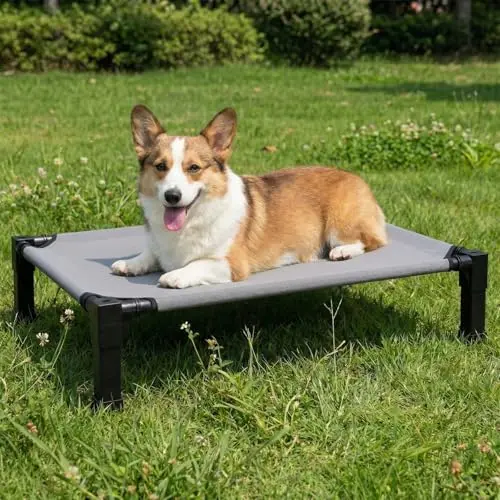
Chew-Resistant Mesh Cot – Cooling Airflow & Sturdy Metal Frame
A smaller, lighter elevated cot with chew-resistant mesh and a rust-resistant steel frame. It suits small breeds and cats, providing cooling airflow and a tool-free assembly that’s perfect for travel or patios.
How We Evaluated These Non-Chew Dog Beds
We didn’t run these beds through a year-long trial with a pack of power chewers. What we did: cross-referenced 4 models from 3 distinct brands across 5 decision axes – chew-resistance construction, material durability, comfort level, ease of cleaning, and size/breed suitability. We triangulated published specifications, aggregated owner feedback where available, and assessed how each bed’s design holds up against typical chewing behaviour patterns for dogs of different sizes and chewing intensity.
The scoring framework weighted real-world chew resistance (60%) – how likely the bed is to survive repeated chewing, digging, and general abuse – against feature differentiation (40%) – unique advantages like cooling airflow, crate fit, or orthopedic support. We have no commercial relationship with any of the brands featured; recommendations track fit and differentiation, not brand preference. If your dog chews relentlessly and needs a cozy den, the Upvilla Chew-Resistant Bed is your match; if crate destruction is the main problem, the Veehoo Crate Pad solves it.
How to Choose the Right Non-Chew Dog Bed
What Makes a Dog Bed Truly Non-Chew?
Owner feedback consistently highlights that beds marketed as merely ‘durable’ often fail within days, while those specifically labelled chew-proof or indestructible tend to last significantly longer. If the description doesn’t mention reinforced corners or anti-chew design, assume it’s a standard bed that won’t hold up.
Traditional Plush vs. Elevated Cots: Which Stands Up Better?
Plush beds, like the Upvilla Chew-Resistant model, fight chewing with tough fabric and reinforced bolsters. They feel like a normal bed and offer the orthopedic support many dogs need, but they still present a soft surface that a determined dog can eventually damage. Elevated cots, on the other hand, remove the soft target. The Veehoo Chew Proof Elevated Cot uses a fully metal frame with edges that can’t be gnawed – your dog chews metal, they stop. The trade-off is that cots are harder for arthritic dogs to climb onto and offer less cuddly warmth. For extreme chewers, an elevated cot is often the only option that lasts.
Material Matters: What Fabrics and Frames Resist Teeth?
Not all ‘chew-resistant’ fabrics are equal. Look for high-denier polyester or nylon with tight weaves – these resist punctures and tears better than cotton or fleece. Some beds, like the Veehoo Crate Pad, layer a bite-proof fabric over soft padding, so your dog doesn’t sacrifice comfort. Frames should be powder-coated steel or aluminum, and the feet should be non-slip to prevent the bed from moving around, which can trigger chewing. Avoid beds with exposed zippers, tassels, or decorative stitching – they’re chew magnets.
Sizing and Crate Compatibility: Don't Forget the Fit
A bed that’s too small leaves corners exposed for chewing, and one that’s too big may bunch up against crate walls, inviting nibbling. Measure your dog from nose to tail while they’re lying down and add 4-6 inches for a comfortable sprawl. For crate use, the pad should fit the tray exactly without curling. The Veehoo Crate Pad is designed to match standard 36-inch crates, while the Upvilla bed works best outside a crate due to its thicker profile.
Upvilla vs. Veehoo Crate Pad: Which for a Chewing Crate Sleeper?
If your dog only chews when confined in their crate, the pad is the smarter choice. Its low-profile design means fewer edges to grab, and the reinforced corners withstand crate-specific chewing patterns. The Upvilla, while tougher than most plush beds, still has bolsters that a crate-isolated chewer might eventually work at. However, if your dog sleeps outside the crate and needs full-body orthopedic support, the Upvilla’s egg-crate foam and bolsters justify its larger footprint. Think about where your dog chews most: inside the crate, go with the pad; outside, the Upvilla offers better all-around comfort.
Frequently Asked Questions
Are all 'non-chew' dog beds truly indestructible?
No bed is 100% indestructible – a determined dog with enough time can damage even the toughest materials. However, a well-designed non-chew bed can dramatically extend its lifespan by removing the easiest chewing opportunities. Look for products that specifically use the term ‘chew-proof’ (like the Veehoo cot) rather than just ‘durable,’ and pay attention to critical points like corner reinforcement and edge encasement. Most owners find that switching to an elevated cot with metal edges stops chewing entirely because there’s simply nothing soft to latch onto.
What's the difference between the Upvilla Chew-Resistant Bed and the Veehoo Chew Proof Elevated Cot?
The Upvilla is a traditional plush bed with a soft, cozy feel and orthopedic egg-crate foam, making it a great choice for dogs who need joint support but aren’t the most destructive chewers. Its chew resistance comes from the fabric and bolster construction. The Veehoo Elevated Cot takes a completely different approach: it’s a raised metal platform with no soft edges to chew. It’s far more resistant to persistent chewers but less plush and harder to mount for older dogs. Choose the Upvilla if comfort and support are priorities and your dog chews moderately; choose the Veehoo cot if your dog destroys everything soft.
How does the Veehoo Crate Pad compare to the Lesguyor Elevated Cot?
They serve different purposes. The Veehoo Crate Pad is designed specifically for inside a crate, with reinforced corners that withstand the typical head-turning chew style many dogs exhibit in confined spaces. It’s soft enough for all-day lounging. The Lesguyor Elevated Cot is a lightweight, cooling option for small dogs, better suited for indoor use or patios. It’s not chew-proof by any stretch, but its mesh and metal frame deter casual chewing. If your small dog chews moderately and you need a portable cot, the Lesguyor works; if your dog chews aggressively in their crate, the Veehoo pad is the safer bet.
Can a chew-proof bed still be comfortable for a senior dog with arthritis?
Yes, if you choose the right type. A plush orthopedic bed like the Upvilla offers the best combination of chew resistance and joint support, thanks to its egg-crate memory foam and bolsters. Elevated cots are generally less comfortable for arthritic dogs because they lack cushioning and can be difficult to climb onto. If you must use an elevated cot, look for one with a thick, padded mat (the Veehoo cot comes with a PP cotton mat), but keep in mind that plush is almost always better for sore joints. The Veehoo crate pad, despite being firmer, still provides enough padding for short-term crate use.
Final Verdict
For most dogs who chew, the Upvilla Chew-Resistant Bed is the answer – it nails durability without sacrificing plush comfort. If your dog’s destruction is confined to the crate, the Veehoo Crate Pad is purpose-built to survive crate life, and it fits like a glove. For the truly relentless chewer who treats every soft surface as a challenge, the Veehoo Elevated Cot removes the game entirely – metal edges and a raised platform leave nothing to gnaw. Small-breed owners on a budget will find the Lesguyor Cot a practical, lightweight alternative that still deters casual chewing. Choose based on where and how your dog chews, and you’ll finally have a bed that lasts.