
If you share your home with an English Bulldog, you’ve probably learned that beneath those adorable wrinkles lies a digestive system that needs kid-glove treatment – and a coat that can flare up at the drop of a new kibble. The right dog food isn’t just about filling a bowl; it’s your first line of defense against chronic skin infections, joint discomfort, and the infamous bulldog gas. That’s why we surveyed the market’s top dry dog foods tailored to sensitive stomachs, skin health, and joint support, all through the lens of what a bulldog actually needs.
In this guide, we cut through the marketing noise to focus on formulas that address the breed’s genetic lottery: brachycephalic build, predisposition to food allergies, and early-onset arthritis. From vet-recommended staples to limited-ingredient rescues, you’ll find a food that matches your bulldog’s specific quirks – whether that’s a poultry allergy, a finicky palate, or a joint that’s already a bit creaky.
Best Dog Food for English Bulldogs – 2026 Reviews
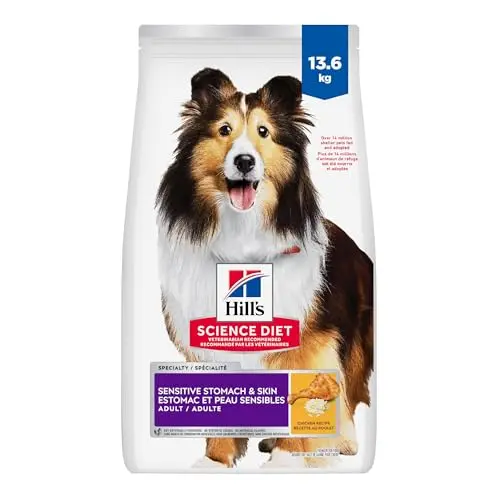
Adult Sensitive Stomach & Skin – Chicken Recipe
A top choice for bulldogs with sensitive systems, this highly digestible recipe uses chicken as the primary protein and includes prebiotic fibre to support gut health. Its omega-6 and vitamin E blend helps soothe dry, itchy skin common in the breed. Backed by vet recommendations, it’s formulated with natural ingredients and no artificial nonsense.
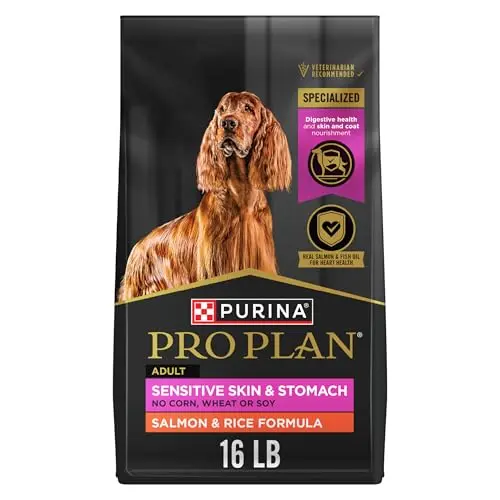
Sensitive Skin & Stomach – Salmon & Rice Recipe
Purina Pro Plan’s sensitive formula swaps in salmon as the star protein, delivering omega-3s that tackle inflammation from the inside out. The oatmeal and prebiotic fibre combination is a time-tested duo for firmer stools. It’s a soy- and wheat-free recipe that’s also free from artificial colours and flavours, making it a solid pick for bulldogs with food sensitivities.
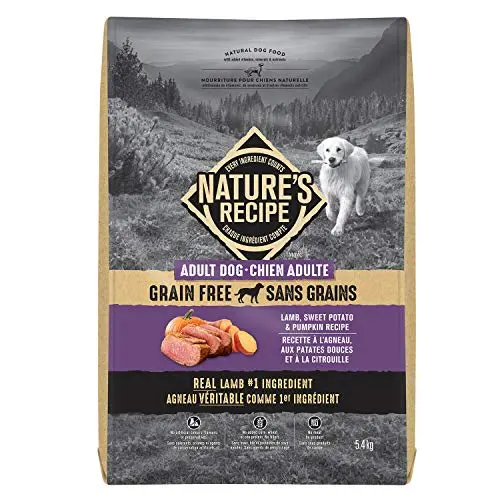
Grain Free Lamb – Sweet Potato & Pumpkin
With lamb as the primary protein and no grains, this limited-ingredient diet cuts out common allergens. Sweet potato and pumpkin provide gentle fibre, while naturally occurring glucosamine and chondroitin support those creaky bulldog joints. Added taurine promotes heart health, addressing a lesser-known concern in the breed.
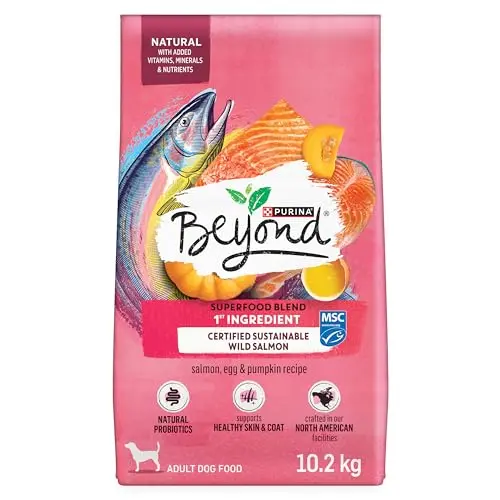
Superfood Blend – Salmon, Egg & Pumpkin
Purina Beyond strips things back with a short ingredient list led by wild-caught salmon. The addition of egg boosts digestible protein, while pumpkin and oatmeal support digestion. Made without poultry by-product meal or artificial additives, it’s a clean, nutrient-dense option for bulldogs with multiple food sensitivities.
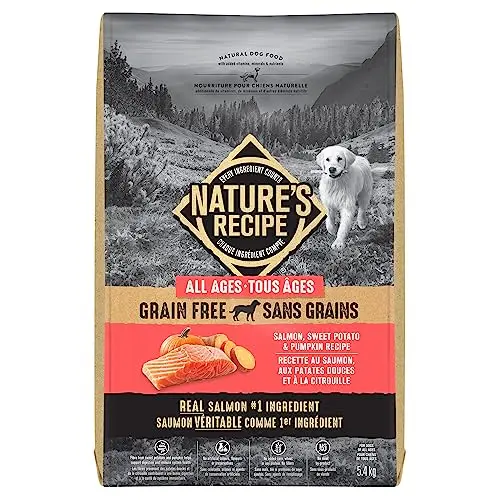
Grain Free Salmon – Sweet Potato & Pumpkin
A salmon-forward version of Nature’s Recipe, this grain-free option focuses on omega-rich fish protein for skin and coat health, while still including joint-friendly glucosamine. It’s suitable for all life stages, making it a versatile choice whether you have a growing puppy or a senior bulldog.
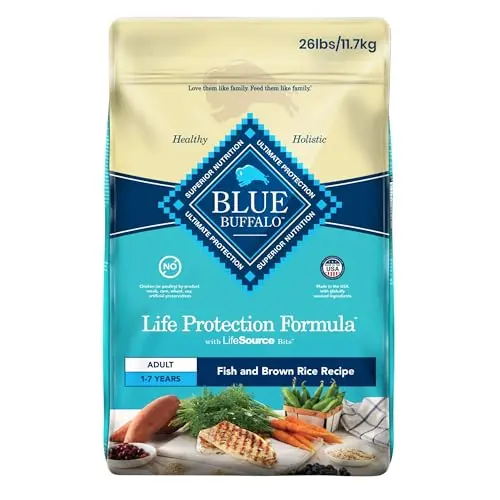
Life Protection Formula – Fish & Brown Rice
Blue Buffalo’s formula uses deboned whitefish as the top ingredient, with brown rice for sustained energy. The LifeSource Bits are a unique blend of antioxidants and vitamins designed for immune support. It’s free from chicken by-products, corn, wheat, and soy, making it a contender for bulldogs with common food triggers.
How We Evaluated These Dog Food for English Bulldogs
We didn’t conduct vet-supervised feeding trials or long-term allergy testing. What we did: cross-referenced 6 dry dog foods from 5 distinct brands across five bulldog-critical decision axes – protein source, skin and coat support, digestive health, joint ingredients, and overall ingredient quality. We triangulated published nutritional profiles, aggregated owner feedback where available, and mapped each recipe against the most common English Bulldog health concerns: allergies, brachycephalic digestion, and early-onset joint issues.
The scoring framework weighted real-world bulldog performance (60%) – how well each food addresses the breed’s specific digestive and dermatological needs – against feature differentiation (40%) – unique add-ons like joint support, limited ingredients, or immune boosters. Our recommendations track actual fit for bulldogs, not brand preference. If your bulldog battles both skin and stomach trouble, the Hill’s Science Diet Adult Sensitive Stomach & Skin is the complete package; if a picky palate is the hurdle, the Pro Plan Sensitive Skin & Stomach wins them over.
How to Choose the Right Dog Food for English Bulldogs
Protein Sources and Bulldog Allergies
English bulldogs are notorious for food sensitivities, with chicken and grains often topping the suspect list. A novel protein like salmon, lamb, or whitefish can reduce reactions. Look for recipes where the first ingredient is a named meat (not a by-product meal), and consider limited-ingredient diets if your bulldog has a history of itchiness or ear infections. Rotating proteins every few months may also help prevent new allergies from developing.
Skin and Coat: Omega Fatty Acids Are Your Friend
Those wrinkles trap moisture and bacteria, so a bulldog’s skin health starts from within. Omega-3 and omega-6 fatty acids – abundant in fish-based recipes – help reduce inflammation and keep the coat glossy. Vitamin E and zinc add further support. If your dog’s skin is chronically flaky or red, prioritize a food with named fish oils or flaxseed.
Joint Support: Glucosamine and Chondroitin
Bulldogs are built heavy and low, stressing joints early. Many quality foods now include natural sources of glucosamine and chondroitin (often from chicken meal or cartilage), which may slow the progression of arthritis. While not a replacement for dedicated joint supplements, these ingredients provide a valuable baseline – especially if your bulldog is already showing stiffness or reluctance on stairs.
Digestive Health: Fibre and Probiotics
From flatulence to loose stools, bulldog digestion can be a rollercoaster. Prebiotic fibres (like beet pulp, chicory root, or pumpkin) and probiotics encourage a balanced gut flora. Oatmeal and sweet potato offer gentle, digestible carbohydrates that are less likely to trigger gas than corn or wheat. If gassiness is a daily challenge, a sensitive-stomach formula with these ingredients can make a notable difference.
Kibble Shape and Size for Flat-Faced Dogs
Brachycephalic breeds sometimes struggle with standard kibble shapes. A smaller, flatter kibble or one designed for easy pickup can reduce mealtime frustration and choking risk. While not as critical as the recipe itself, it’s worth checking owner feedback on kibble size – a bulldog who spends less time battling their bowl is a happier eater.
Hill's vs. Pro Plan: Which Sensitive Formula for Your Bulldog?
Both the Hill’s Science Diet Sensitive Stomach & Skin and the Pro Plan Sensitive Skin & Stomach target the same issues but take different paths. Hill’s uses chicken as its primary protein and leans on prebiotic beet pulp for digestion, while Pro Plan goes with salmon and oatmeal. If your bulldog has a confirmed chicken allergy, go Pro Plan. If not, Hill’s has a slight edge in vet endorsement and broader digestive support. For truly picky eaters, Pro Plan’s palatability often wins.
Frequently Asked Questions
What protein is best for English bulldogs?
It depends on your dog. Chicken works well for many, but it’s also a common allergen. Salmon, lamb, or whitefish are excellent alternatives that provide omega fatty acids and are often easier on sensitive skin. If your bulldog shows signs of allergy – constant scratching, ear infections, or foot licking – try a novel protein source they haven’t eaten before.
Is grain-free dog food better for English bulldogs?
Not necessarily. While some bulldogs genuinely benefit from avoiding wheat, corn, or soy, whole grains like brown rice and oatmeal can be gentle sources of energy and fibre. Grain-free diets often use legumes, which have been linked to heart issues in some dogs. Unless your bulldog has a diagnosed grain intolerance, a sensitive stomach formula with wholesome grains is usually a safer starting point.
Hill's Science Diet Sensitive Stomach & Skin vs. Pro Plan Sensitive Skin & Stomach: which is better for my bulldog?
Both are top-tier, but they suit slightly different bulldogs. Hill’s is chicken-based and endorsed by vets for digestive regularity; it’s ideal if chicken isn’t a problem. Pro Plan uses salmon, making it the go-to for suspected poultry allergies, and its palatability scores higher with fussy eaters. In practice, many bulldog owners have success with either – the deciding factor is usually protein tolerance and taste preference.
Do English bulldogs need joint supplements if their food has glucosamine?
Food-based glucosamine and chondroitin provide a helpful foundation, but they often come in smaller amounts than therapeutic joint supplements. If your bulldog is middle-aged, overweight, or already showing signs of arthritis, a dedicated supplement is a wise add-on. For young, healthy bulldogs, a food with natural joint support (like Nature’s Recipe Grain Free Lamb) may be sufficient.
How can I tell if my bulldog has a food allergy?
Persistent itching (especially paws, ears, and belly), recurrent ear infections, and chronic loose stools are red flags. A food trial under veterinary guidance – typically feeding a novel protein and carbohydrate for 8-12 weeks – is the gold standard. Switching to a limited-ingredient diet like Beyond Superfood Blend can help isolate triggers.
Final Verdict
For the majority of English bulldogs, the Hill’s Science Diet Adult Sensitive Stomach & Skin is the surest bet – it tackles the two biggest bulldog bugaboos gently and effectively, with a vet-recommended pedigree to back it up. If your dog turns up their nose at chicken or needs a salmon-based boost, the Pro Plan Sensitive Skin & Stomach is the flavour-forward alternative that skin-soothed dogs everywhere love. And when joint health is already on your radar, the Nature’s Recipe Grain Free Lamb adds built-in support without the supplement hassle. Match the food to your bulldog’s specific quirks, and you’ll have a healthier, happier wrinkle in no time.