
Doberman owners know the drill: you fill the bowl, and half an hour later you’re dealing with gurgling tummies, loose stools, or a dog who’s suddenly lost interest in eating. A sensitive stomach can turn mealtime into a guessing game, and with a breed as deep-chested and athletic as the Doberman, getting nutrition right isn’t optional – it’s foundational. The right food doesn’t just keep digestion on track; it fuels that sleek muscle, supports the immune system, and keeps the coat gleaming.
We surveyed the most-trusted sensitive stomach formulas across the market, zeroing in on formulas that actually deliver for dogs like yours. The standouts share a few things: a single high-quality animal protein as the first ingredient, easily digestible carbohydrates (think rice or oat meal), and targeted gut-support add-ins like prebiotics or probiotics. Some take it a step further with large-breed-specific tweaks – joint-friendly glucosamine or kibble size that encourages chewing. Whether your Doberman does best on salmon, lamb, or chicken, there’s a pick in this lineup that can put the joy back in breakfast.
Best Dog Food for Doberman with Sensitive Stomach – 2026 Reviews
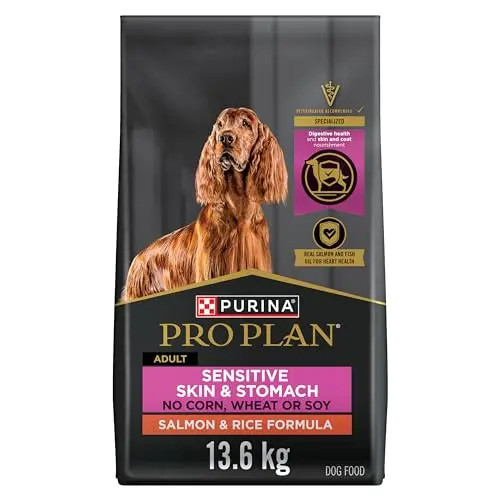
Sensitive Skin & Stomach Salmon & Rice Formula – Gentle Digestion Support
A salmon-first recipe that pairs highly digestible oat meal with omega-rich fish and sunflower oils. It’s our top pick for Dobermans because it checks every box: real salmon as the single protein, no artificial colours or flavours, and a prebiotic fibre blend that feeds healthy gut bacteria. The formula is soy-free and wheat-free, which matters for dogs with ingredient sensitivities, and the antioxidant boost supports a busy Doberman’s immune system.
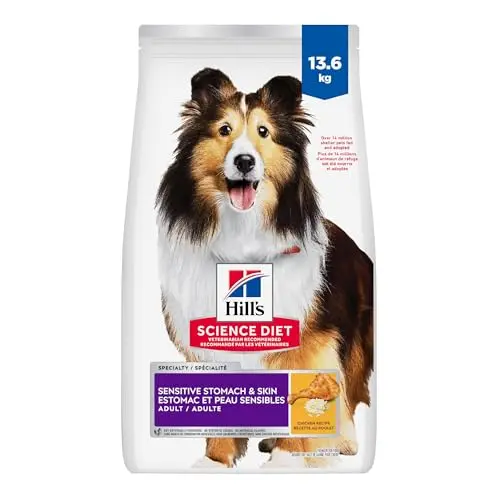
Adult Sensitive Stomach & Skin Chicken Recipe – Vet-Recommended Digestive Care
If your vet has a dog in the fight, it’s probably eating this. Hill’s Sensitive Stomach & Skin leans hard into digestibility – beet pulp prebiotic fibre, highly bioavailable chicken protein, and omega-6s for the coat. It’s the brand most often recommended by Canadian veterinarians for their own pets, and the formula is backed by rigorous AAFCO feeding trials. For Dobermans that need a trusted, no-surprises baseline, this is it.
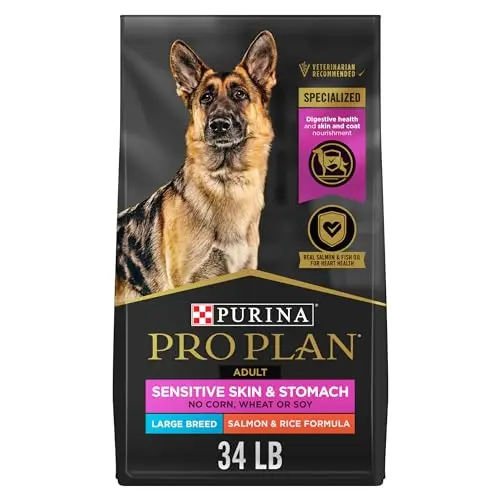
Large Breed Sensitive Skin & Stomach Salmon & Rice – Joint & Digestive Health
This formula takes the salmon-oat foundation of our top pick and builds in everything a big-bodied Doberman needs: glucosamine and EPA for joint mobility, plus a kibble size that slows down fast eaters. If your dog is on the larger end of the breed standard or you’ve noticed joint stiffness alongside tummy trouble, this is the tailored upgrade.
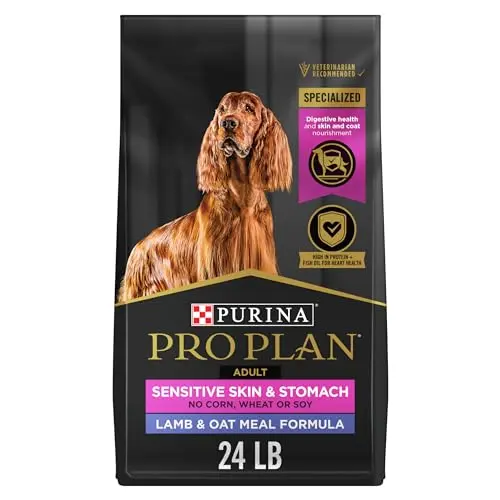
Focus Sensitive Skin & Stomach Lamb & Oat Meal – Novel Protein Alternative
Switching proteins can be the key for dogs who don’t do well on chicken or fish. This lamb-based formula uses real lamb as the #1 ingredient and leans on oat meal for digestible energy. It’s a solid rotation option for Dobermans that need variety without upset.
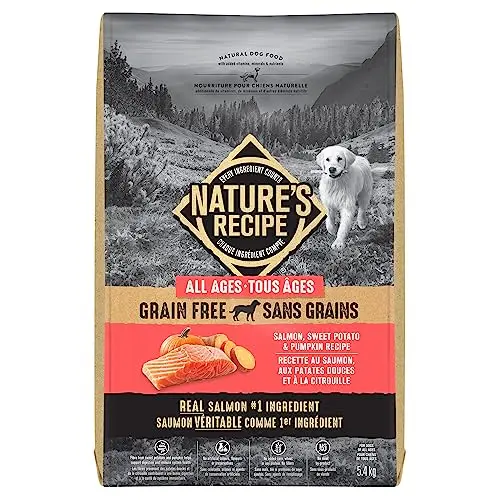
Grain-Free Salmon, Sweet Potato & Pumpkin – Clean Ingredient Budget Pick
A straightforward, grain-free recipe that puts salmon first and skips fillers, artificial anything, and common allergens. It’s a clean-label choice for Dobermans with suspected grain sensitivities, and the pumpkin adds a gentle fibre source for digestion.
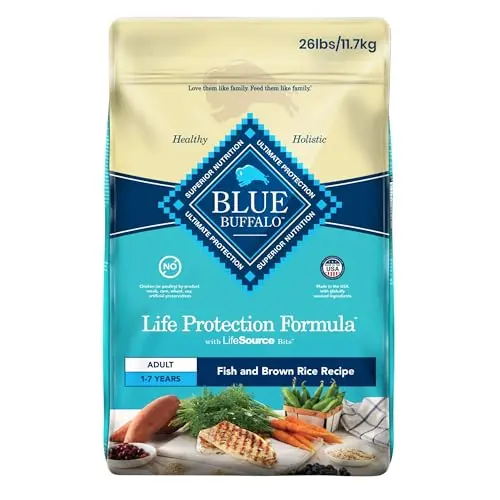
Life Protection Formula Fish & Brown Rice – Everyday Wellness with Grains
For Doberman owners who want grains in the bowl, this whitefish-based recipe combines brown rice with antioxidant-rich LifeSource Bits. It’s not a dedicated sensitive stomach formula, but the limited, fish-forward ingredient list makes it a gentler entry in the Blue Buffalo line-up.
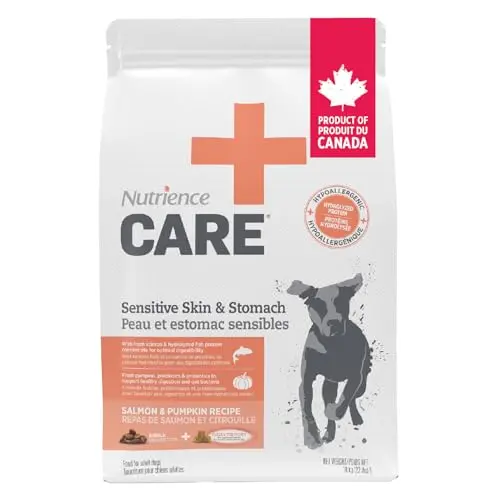
Care Sensitive Skin & Stomach Salmon – Canadian-Made Gut Health Support
A grain- and gluten-free recipe built around fresh Canadian salmon and a Digestiboost blend of pumpkin, chicory root, turmeric, and ginger. It’s purpose-made for dogs with allergies and digestive issues, and the probiotic kick is a standout feature.
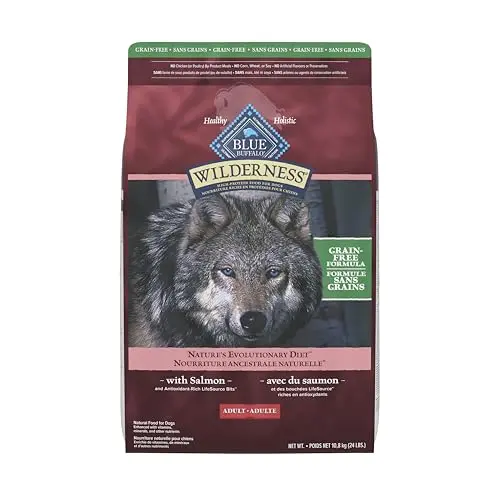
Wilderness Grain-Free High-Protein Salmon – Active Doberman Fuel
A high-octane, grain-free formula with 34% protein to support lean muscle. Salmon is the anchor, and omega fatty acids handle skin and coat. It’s best suited to highly active Dobermans who burn through calories and need the extra protein punch.
How We Evaluated These Dog Foods for Dobermans with Sensitive Stomachs
We didn’t conduct long-term feeding trials or veterinary-supervised stool analysis. What we did: cross-referenced 8 sensitive-stomach formulas from 5 distinct brands across 6 decision axes – protein source and novelty, carbohydrate digestibility, targeted gut-support additives (prebiotics, probiotics, fibre sources), omega fatty acid profile for skin and joint health, kibble size and breed-appropriate design, and ingredient simplicity versus functional complexity. We triangulated published ingredient panels, guaranteed analyses, manufacturer feeding trial data where available, and aggregated owner feedback on digestive outcomes, coat condition, and palatability.
The scoring framework weighted real-world digestive performance (60%) – how reliably each formula eases stomach upset and firms stools in sensitivity-prone dogs – against feature differentiation (40%) – unique functional ingredients like glucosamine, proprietary probiotic blends, or breed-tailored kibble. We have no commercial relationship with any of the brands featured; recommendations track fit and differentiation, not brand preference. If you’re looking for the most broadly tolerated pick that still averages excellent feedback, the Purina Pro Plan Salmon & Rice is your answer. If your Doberman needs explicit joint support alongside digestive care, the Large Breed variant serves you better.
How to Choose the Right Dog Food for a Doberman with a Sensitive Stomach
What Makes a Dog Food Gentle on a Doberman's Stomach?
The single biggest factor is digestibility – how much of the food actually gets absorbed rather than passing through as waste or irritant. Look for a named animal protein as the first ingredient (salmon, lamb, or whitefish often work better than chicken for sensitive Dobermans), paired with a low-residue carbohydrate like rice, oat meal, or sweet potato. Avoid formulas loaded with multiple protein sources, legumes, or hard-to-break-down fibres like cellulose unless they’re specifically formatted for gut health.
Next, scan for targeted digestive aids. Prebiotic fibres (beet pulp, chicory root) feed beneficial bacteria, while probiotics directly add those bacteria to the gut. Pumpkin is a natural soother that can add bulk without spiking fermentation. If a food includes these and owners consistently report firmer stools and less gas, you’re on the right track. For the breed-specific angle, Dobermans with sensitive stomachs often do better on a moderate protein, moderate fat formula rather than an ultra-high-protein or high-fat recipe that can overwhelm the pancreas.
Protein Sources: Salmon vs. Lamb vs. Chicken for Sensitive Dobermans
Protein choice is deeply individual, but patterns emerge. Salmon is a top recommendation because it’s less commonly flagged as an allergen by dogs who’ve been on poultry-based diets, and it brings omega-3 fatty acids (EPA and DHA) that reduce inflammation – a bonus for skin and joints. The Purina Pro Plan Salmon & Rice exemplifies this approach.
Lamb is another frequent “novel” protein – if your dog has been on chicken its whole life, lamb can function as a reset. The Pro Plan Lamb & Oat Meal is a clean execution. Chicken is the most common protein in dog food and, consequently, the most common allergen. If your Doberman has existing skin issues or ear infections, a poultry-free diet is often the first dietary trial veterinarians recommend. Hill’s Science Diet uses chicken but pairs it with highly digestible processing and prebiotics, making it a notable exception – many chicken-reactive dogs tolerate it.
Grain-Free vs. Grain-Inclusive: Does It Matter for Doberman Digestion?
Grain-free diets rose to prominence on the idea that dogs’ ancestors didn’t eat grains. For some Dobermans with true grain allergies, these diets can be life-changing. However, the FDA’s investigation into dilated cardiomyopathy (DCM) and grain-free foods – particularly those high in peas, lentils, and potatoes – has complicated the picture. Dobermans are one of the breeds predisposed to DCM, so the link is worth taking seriously.
If your dog thrives on a grain-free formula and you’ve ruled out heart issues via a cardiologist, options like the Nature’s Recipe Salmon or Nutrience Care use clean ingredient panels without the legume overload. For most sensitive Dobermans, though, a grain-inclusive food with a gentle grain like oat meal or brown rice is the safer, lower-controversy path – and it tends to produce more consistent stool quality.
Large Breed Kibble and Joint Extras: Why They Matter for Your Doberman
Dobermans aren’t giants, but at 27-45 kg they’re solidly in the large breed category. That means kibble size shouldn’t be an afterthought. Large breed specific formulas, like the Pro Plan Large Breed Salmon, feature bigger pieces that encourage chewing, which can reduce the risk of bloat – a real danger for deep-chested Dobermans. Chewing also slows eating, giving the stomach more time to signal fullness.
Joint support is another area where large breed formulas earn their keep. Glucosamine and chondroitin, often included in large breed recipes, support cartilage health in a breed prone to hip dysplasia. Even if your dog isn’t showing joint issues now, the anti-inflammatory effect of high-EPA fish oil (also common in large breed sensitive stomach foods) pays dividends down the road.
Pro Plan Salmon vs. Hill's Sensitive Stomach: Which Is Better for Dobermans?
This is the head-to-head we hear most often. Purina Pro Plan Salmon & Rice wins on protein novelty – salmon is less likely to trigger an existing poultry sensitivity, and the omega-3s give it a joint and skin edge. It’s also soy-free and wheat-free, and the prebiotic fibre comes from beet pulp. Hill’s Science Diet Sensitive Stomach counters with chicken-based digestibility and a stronger prebiotic focus – it’s the formula most vets reach for first, particularly when the dog’s primary issue is loose stools without skin problems. If your Doberman has both stomach and coat issues, the Pro Plan Salmon is often the better one-two punch. If the stomach is the sole concern and you trust chicken, Hill’s is nearly foolproof.
How to Transition Your Doberman to a New Sensitive Stomach Food
A rushed switch can undo all the good of a new formula. Plan for a 7- to 10-day transition: start with 25% new food mixed with 75% old for two days, then 50/50 for two days, then 75% new for two days, and finally 100% new. Watch for loose stool, increased gas, or decreased appetite – if you see a regression, hold at the current ratio for an extra day or two. Adding a probiotic supplement during the transition can smooth the bacterial shift. For Dobermans with a history of bloat, feed smaller, more frequent meals during the switch rather than one large meal.
Frequently Asked Questions
What's the difference between Purina Pro Plan Sensitive Skin & Stomach Salmon and Lamb formulas?
The salmon formula (Pro Plan Salmon & Rice) relies on fish oil for omega-3s and uses rice and oat meal as carbohydrates, with a calorie density of 508 kcal/cup. The lamb formula (Pro Plan Lamb & Oat Meal) substitutes lamb meal as the primary protein and leans on sunflower oil for omega-6s rather than fish oil. Both include the same prebiotic fibre. Practically, the salmon tends to be the better pick for dogs with skin redness or ear issues (omega-3s are anti-inflammatory), while lamb often works well for poultry- and fish-allergic dogs who still need a high-quality named protein.
Is grain-free better for a Doberman with a sensitive stomach?
Not necessarily – and for Dobermans, there’s an extra reason for caution. Grain-free diets have been statistically associated with nutritional dilated cardiomyopathy (DCM), and Dobermans are genetically prone to DCM. If your dog has a confirmed grain allergy (rare, but diagnosed by a veterinary dermatologist), a grain-free diet like Nature’s Recipe Salmon or Nutrience Care might be medically appropriate. For most sensitive-stomach Dobermans, a food built around a highly digestible grain – like oat meal or rice – is actually preferable because these carbs bind stool and feed gut bacteria without the heavy legume load of many grain-free foods. The top picks in this review are grain-inclusive for exactly that reason.
How do Nutrience Care and Nature's Recipe compare for Doberman gut health?
Both are grain-free, salmon-first formulas with added digestive supports, but the approaches differ. Nutrience Care (Salmon 10 kg) takes a functional-medicine angle with its Digestiboost blend: pumpkin, chicory root, turmeric, and ginger alongside direct probiotics. It’s a more therapeutic formulation aimed at dogs with confirmed food sensitivities. Nature’s Recipe (Salmon, Sweet Potato & Pumpkin) keeps the ingredient list shorter and cleaner, with pumpkin as the main gut soother. Nature’s Recipe is the more affordable, widely available pick; Nutrience Care is the one you reach for when you want multi-pronged gut support and are willing to spend more for it.
Can I just feed my Doberman a regular large breed food if it has a sensitive stomach?
You can, but it’s a bit of a gamble. Most general large breed foods are formulated with chicken or beef as the base protein, which are two of the most common canine allergens. They also typically prioritise joint support (glucosamine) over digestive ease, so you’ll miss out on the prebiotic fibres and highly digestible carb sources that keep sensitive stomachs steady. The one exception in this review is the Purina Pro Plan Large Breed Sensitive Skin & Stomach formula, which bridges both worlds – it has the joint extras and the gut-friendly design. If you want a single bag that does everything, that’s the pick.
What if my Doberman refuses to eat sensitive stomach food?
Palatability is a common hurdle with limited-ingredient or sensitive stomach foods because they often lack the sprayed-on fats and flavour enhancers of mainstream kibbles. Start by warming the food slightly (add a splash of warm water or low-sodium bone broth) to release aromas. Mixing in a small amount of a topper they love – plain pumpkin, boiled salmon, or even a spoonful of wet food from the same product line – can bridge the transition. If refusal persists, the lamb-based Pro Plan tends to be the most enthusiastically eaten in this lineup. For extreme cases, Hill’s Science Diet offers a 100% satisfaction guarantee, so you’re not stuck with a bag your dog won’t touch.
Final Verdict
For most Dobermans with sensitive stomachs, the Purina Pro Plan Sensitive Skin & Stomach Salmon & Rice is the answer – it nails the protein-novelty and gut-support fundamentals that settle finicky digestions, and it does it with the bonus of skin-soothing omega-3s and broad owner satisfaction. If your dog is towards the heavier end of the breed standard or you’re already seeing early joint stiffness, spring for the Large Breed variant; the glucosamine and EPA are worth the upsell. For those who prefer a vet-endorsed, chicken-based option with a rock-solid satisfaction guarantee, Hill’s Science Diet Sensitive Stomach & Skin is a near-bulletproof fallback. And if you’re grain-free curious and want to keep costs down, Nature’s Recipe Grain-Free Salmon is the clean eat that won’t break the bank.