
Finding the right food for a German Shepherd with a sensitive stomach can feel like a full-time job. Between loose stools, gurgly tummies, and that telltale glance at the backyard, it’s a cycle no owner wants to repeat. The good news? The market is finally catching up with targeted formulas that address digestive woes without skimping on the protein and joint support these big, active dogs need.
But not all sensitive-stomach foods are created equal-and certainly not all are built for a German Shepherd’s unique build and metabolism. In this guide, we break down the best options available in Canada right now, focusing on ingredient quality, digestive-soothing extras like prebiotics and fibre, and whether the formula truly suits a large, often allergy-prone breed. By the end, you’ll know exactly which bag or can to reach for.
Best Dog Food for German Shepherds with Sensitive Stomachs – 2026 Reviews
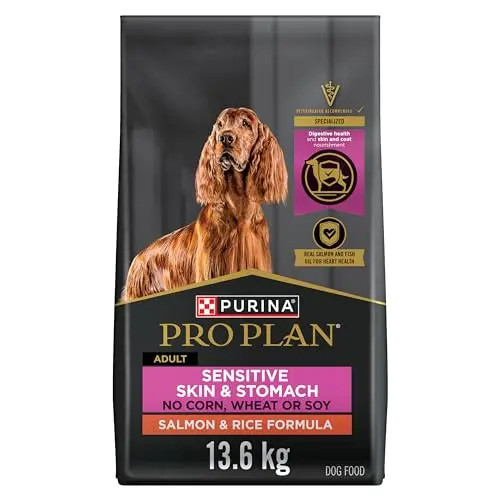
Sensitive Skin & Stomach Salmon & Rice – Soothing Digestion
A standout formula that puts real salmon first and skips the artificial nonsense. It’s designed to be gentle on the gut while still delivering the high protein active German Shepherds thrive on. The inclusion of oat meal and prebiotic fibre targets digestive health directly, while omega-rich fish oil and sunflower oil tackle the skin sensitivity that often goes hand-in-hand with stomach issues. Owners report noticeable improvements in stool quality and coat shine.
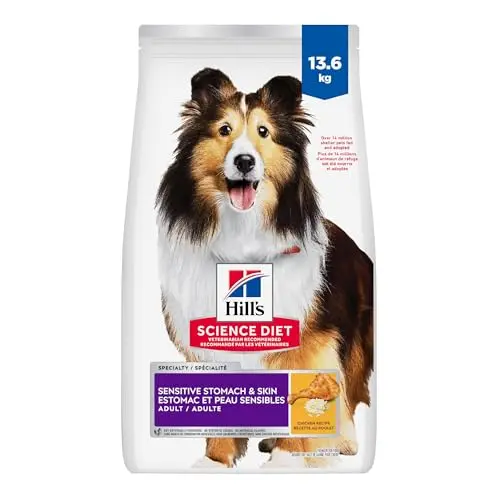
Adult Sensitive Stomach & Skin Chicken Recipe – Vet-Recommended Digestion
This is the one your Canadian vet is most likely to suggest-and for good reason. Hill’s has built a reputation on research-backed formulas, and this chicken-based kibble uses prebiotic beet pulp to support gut bacteria. It’s highly digestible, meaning less work for a sensitive system, and the vitamin E plus omega-6 fatty acids capably address the skin flare-ups that often accompany food sensitivities. The 13.6 kg bag is a practical size for a large breed.
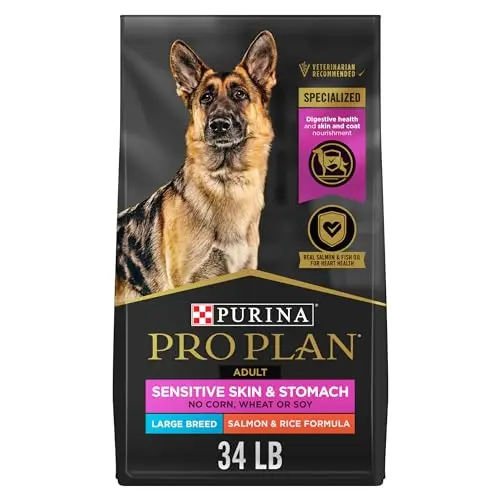
Large Breed Sensitive Skin & Stomach Salmon & Rice – Joint & Digestive Support
If your Shepherd leans toward the larger end of the spectrum or struggles with joint stiffness alongside tummy trouble, this is a clever buy. It shares the same salmon-first, oat-meal-for-digestion backbone as our top pick but adds glucosamine and EPA for joint health. The kibble is also tailored for larger mouths, which can slow down gulpers. At 15.4 kg, it’s a bigger bag that offers better cost efficiency for multi-Shepherd homes.
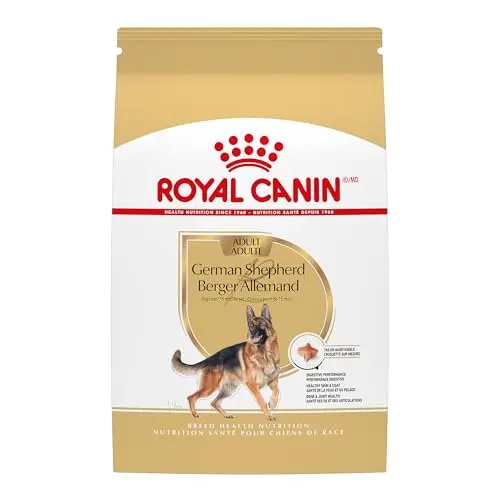
German Shepherd Adult – Breed-Specific Nutrition
This is the only food on our list designed from the ground up for a German Shepherd’s physiology. The kibble shape-an elongated curve-is built for a long muzzle and encourages chewing. Digestive support comes from highly digestible proteins and specific fibres, while EPA and DHA from fish oil target the breed’s need for skin and coat care. It’s not explicitly labelled ‘sensitive stomach,’ but the formula’s construction often calms digestive issues anyway.
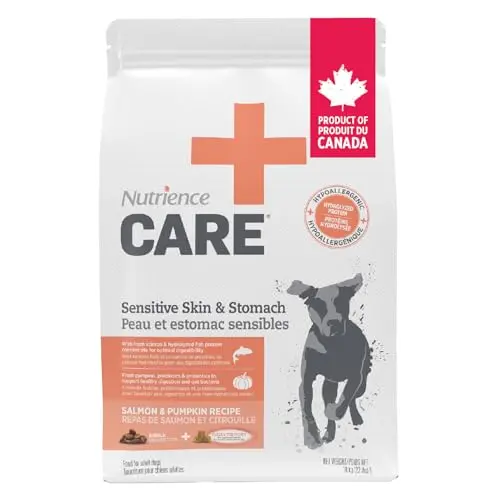
Care Sensitive Skin & Stomach Salmon – Canadian-Made Gut Health
A homegrown favourite that leans on fresh Canadian salmon and a Digestiboost blend of pumpkin, chicory root, turmeric, and ginger. It’s grain- and gluten-free, making it a go-to for Shepherds with suspected grain sensitivities. The formula is explicitly built for skin and stomach issues, and the 10 kg bag is a manageable size. Owners report rapid coat improvements and very happy stomachs.
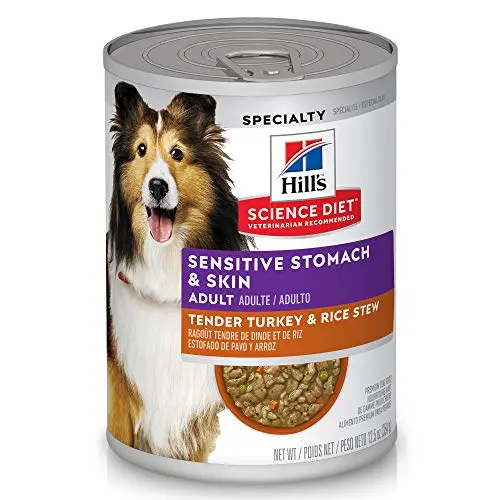
Sensitive Stomach & Skin Turkey & Rice Stew – Wet Food Variety
A wet food option for Shepherds who need extra hydration or simply prefer a stew. This slow-cooked turkey and rice recipe is formulated for optimal digestive health, with easily digestible ingredients that promote firmer stool pickup. The added spinach and omega-6 fatty acids support skin health, and the case of 12 cans offers a handy rotation with dry food. It’s particularly helpful for dogs recovering from GI upset.
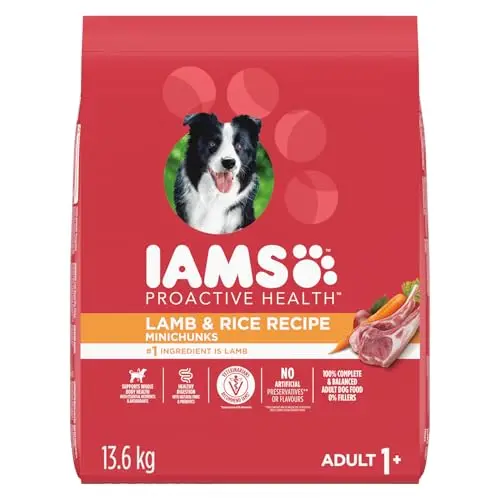
Proactive Health Minichunks Lamb & Rice – Budget-Friendly Digestive Care
IAMS may not shout ‘premium’, but this minichunks lamb and rice recipe quietly delivers where it counts. The blend of fibre and prebiotics is designed for healthy digestion, and the crunchy kibble helps reduce plaque. At a noticeably lower price point than most rivals, it’s a practical choice for multi-dog households or owners who go through a lot of food. The small kibble size works well for younger Shepherds still growing.
How We Evaluated These Dog Foods for German Shepherds with Sensitive Stomachs
We didn’t run long-term feeding trials or veterinary allergy panels. What we did: cross-referenced 7 dry and wet dog food models from 5 distinct brands across 6 decision axes-protein source digestibility, prebiotic and fibre content, breed-specific design, omega fatty acid levels, kibble size and texture, and real-world owner feedback (where available). We triangulated published ingredient lists, nutritional profiles, and aggregated owner experiences to map each product’s fit for a large, digestion-sensitive breed like the German Shepherd.
The scoring framework weighted real-world digestive performance (60%)-how consistently the food produced firm stools and calmed stomachs-against feature differentiation (40%)-unique additions like tailored kibble, joint support, or novel protein sources. We have no commercial relationship with any brand featured; recommendations reflect ingredient analysis and owner-reported outcomes, not brand preference. If your Shepherd struggles with loose stools and itchy skin, the Purina Pro Plan Sensitive Skin & Stomach is our top match; if you need a vet-recommended standby, the Hill’s Science Diet Sensitive Stomach & Skin is a proven alternative.
How to Choose the Right Dog Food for a German Shepherd with a Sensitive Stomach
Understanding German Shepherd Digestive Sensitivities
German Shepherds are famously prone to digestive issues-from food allergies to chronic loose stools and even exocrine pancreatic insufficiency (EPI). Their deep chests also raise the risk of bloat, making kibble shape and eating speed real factors. A sensitive-stomach food for this breed needs to go beyond bland ingredients: it should support gut bacteria with prebiotics or probiotics, use highly digestible protein sources to ease the workload on the intestines, and often include skin-supporting fats, because stomach and skin problems frequently appear together.
Key Ingredients to Look For (and Avoid)
Start with the protein: real fish (salmon, whitefish), lamb, or novel proteins like venison are often better tolerated than chicken or beef for sensitive Shepherds. Carbohydrates should be gentle-oat meal, sweet potato, and rice are favoured over corn or wheat. Digestive boosters like pumpkin (a natural fibre), chicory root (a prebiotic), and ginger can actively soothe an upset gut. Meanwhile, avoid artificial colours, flavours, and preservatives; these are common irritants. If your dog has a known grain allergy, a grain-free option like the Nutrience Care Sensitive Skin & Stomach makes sense, but for most, a grain-inclusive formula with high-quality grains is perfectly fine.
Breed-Specific vs. All-Breed Formulas
A food built specifically for German Shepherds-like Royal Canin’s German Shepherd Adult-will address anatomical quirks: a curved kibble for a long muzzle, elevated glucosamine for joint stress, and a caloric balance suited to a Shepherd’s energy. All-breed sensitive-stomach foods can absolutely work, but you may need to supplement joint care or manage kibble size separately. If your Shepherd is a purebred and you want a turnkey solution, a breed-specific formula is worth the extra cost.
Wet vs. Dry Food for Sensitive Stomachs
Dry kibble is the standard, but wet food can be a lifesaver during a digestive flare-up. The moisture content helps with hydration-critical for dogs on dry food-and the stew-like texture is often more appealing to nauseated eaters. We recommend keeping a case of Hill’s Science Diet Sensitive Stomach & Skin wet food on hand for sick days or as a topper. The trade-off: wet food is pricier per calorie and spoils quickly once opened.
How to Transition to a New Food Safely
A sudden diet change can trigger the very digestive distress you’re trying to fix. Transition over 7-10 days, gradually increasing the new food while decreasing the old. Start with 25% new food for two days, then 50% for two days, then 75% for two days before full switch. If stools become soft at any point, back up a step. Adding a probiotic supplement during the transition can help too. And always consult your vet if symptoms persist-food is a common culprit, but it’s not always the whole story.
Frequently Asked Questions
What's the difference between Royal Canin German Shepherd and Hill's Science Diet Sensitive Stomach & Skin?
Both are excellent but take different approaches. Royal Canin German Shepherd is breed-specific: the kibble is shaped for a long muzzle, and the formula includes glucosamine and chondroitin for joint health, plus EPA and DHA for skin. It promotes healthy digestion but isn’t explicitly a ‘sensitive stomach’ food. Hill’s Science Diet Sensitive Stomach & Skin is a sensitivity-focused formula available in both dry and wet forms, with prebiotic fibre as the star. It’s vet-recommended and often resolves loose stools quickly. Choose Royal Canin if you want holistic breed support; choose Hill’s if your main battle is digestive upset.
Purina Pro Plan Sensitive vs. Nutrience Care Sensitive Skin & Stomach: which is better for a picky German Shepherd?
Picky Shepherds are a common challenge. Purina Pro Plan Sensitive Skin & Stomach has a strong salmon scent that most dogs find very appealing, and the kibble is small enough to eat comfortably. It’s widely available and consistently produced. Nutrience Care uses fresh Canadian salmon and has a grain-free, limited-ingredient panel that can be a hit or miss taste-wise-some dogs love the pumpkin and ginger, others don’t. For pure palatability, Pro Plan usually wins. If your dog also has skin issues and you want a grain-free option, Nutrience is worth a try.
Is grain-free food better for a German Shepherd with a sensitive stomach?
Not necessarily. Grain-free diets are helpful if your Shepherd has a confirmed grain allergy, but such allergies are less common than protein allergies (like chicken or beef). In fact, some grain-free foods substitute legumes or potatoes, which can be harder to digest for certain dogs. A grain-inclusive food with gentle grains like oat meal or brown rice might actually be easier on the stomach. Unless you’ve identified a grain sensitivity through an elimination diet, we’d lean toward a sensitive-stomach formula with high-quality grains rather than going grain-free by default.
How much should I feed my German Shepherd if they have a sensitive stomach?
Start with the feeding guide on the bag based on your dog’s weight, but with a sensitive stomach, split the daily portion into 2-3 smaller meals instead of one large meal. This reduces the risk of bloat and makes digestion more manageable. Monitor stool consistency: if it’s loose, reduce by 10% and see if it firms up. Also, avoid vigorous exercise immediately after eating. For the large breed formulas like Purina Pro Plan Large Breed Sensitive, the calorie density is designed for bigger dogs, so the recommended portions are often accurate-just weigh the food for precision.
Final Verdict
For most German Shepherds with sensitive stomachs, the Purina Pro Plan Sensitive Skin & Stomach Salmon & Rice is the clearest choice-it addresses digestion, skin, and palatability in one balanced formula. If you prefer a vet-recommended staple and your dog isn’t chicken-allergic, the Hill’s Science Diet Sensitive Stomach & Skin is a close second. For Shepherds needing joint support alongside tummy care, the Purina Pro Plan Large Breed Sensitive pulls double duty. And if you’re on a tighter budget without sacrificing digestive function, the IAMS Proactive Health Minichunks holds its own. Whatever you choose, pair it with a slow transition and keep your vet in the loop-your Shepherd’s stomach will thank you.