
Raising a large breed puppy is like watching a furry freight train in fast-forward. One day they’re tripping over their own paws; the next, they’re tall enough to counter-surf. That growth spurt isn’t just adorable – it’s a nutritional high-wire act. Feed them the wrong food, and you risk skeletal problems that can last a lifetime. The right large breed puppy food balances calcium and phosphorus for steady bone development, delivers joint-supporting nutrients like glucosamine, and packs enough DHA to fuel that lightning-fast brain. Get it right, and you’ll have a healthy giant who’s as sound in body as they are in goofy spirit.
But walk down the pet food aisle and the options are overwhelming. Purina, Royal Canin, Hill’s, Blue Buffalo – each brand promises the world. How do you cut through the marketing? We cross-referenced ingredient lists, nutritional profiles, and aggregated owner feedback to identify the formulas that actually deliver. Whether you’re on a budget, managing a sensitive stomach, or raising a future giant like a Great Dane, we’ve got a pick for you. Let’s find the fuel that keeps that big puppy engine running smoothly.
Best Dog Food for Large Breed Puppies – 2026 Reviews
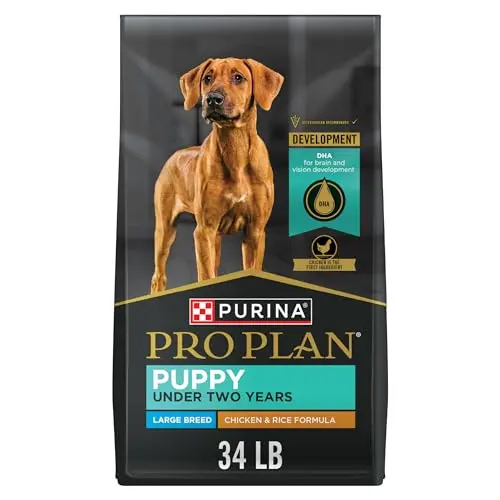
Development Chicken & Rice – Brain & Vision Support
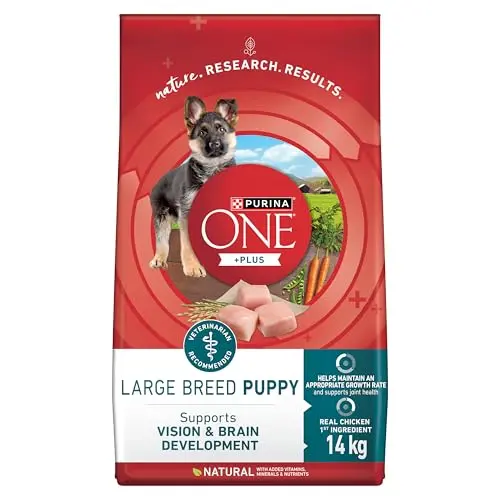
ONE +Plus Large Breed Puppy – Joint & Immune Support
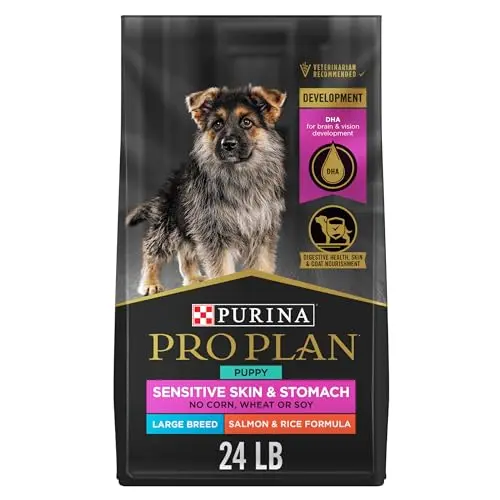
Development Sensitive Skin & Stomach – Gentle Nutrition
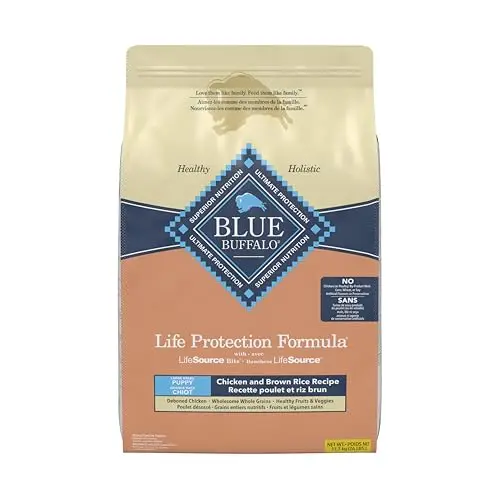
Life Protection Formula Chicken & Brown Rice – Immune & Bone Support
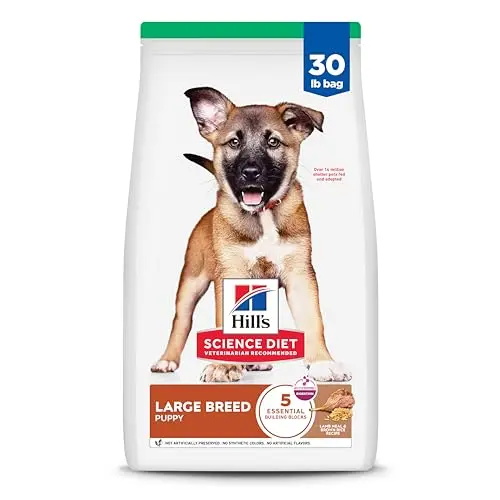
Lamb Meal & Brown Rice Recipe – Balanced Bone Growth
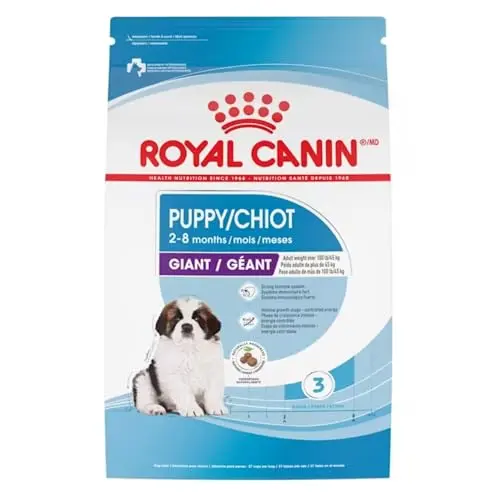
Giant Puppy Formula – Extra-Large Breed Support
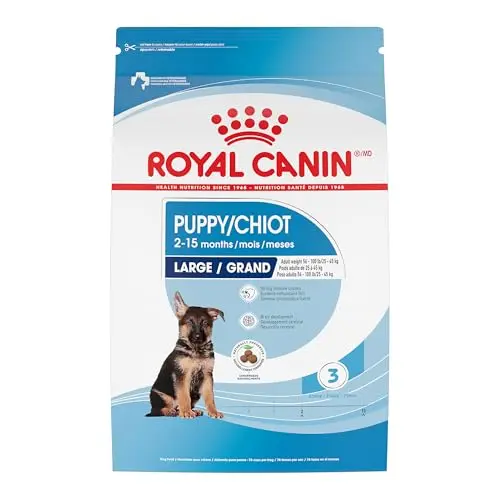
Large Puppy Formula – Joint & Immune Support
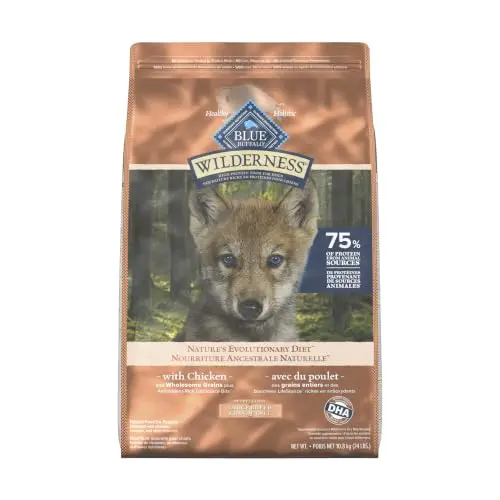
Wilderness High Protein – Muscle & Joint Support
How We Evaluated These Dog Foods for Large Breed Puppies
We didn’t run long-term growth trials or veterinary feeding studies. What we did: cross-referenced 8 large breed puppy foods from 5 distinct brands across 6 critical decision axes – protein quality and source, joint support (glucosamine/chondroitin), DHA and omega fatty acid levels for brain development, calcium-to-phosphorus balance for safe bone growth, digestive health ingredients (prebiotics/probiotics), and formula transparency. We triangulated published nutritional analyses, ingredient lists, and aggregated owner feedback where available to build a comprehensive picture of how each food performs in real homes.
The scoring framework weighted real-world performance (60%) – reflected in owner-reported digestibility, coat condition, growth consistency, and stool quality – against formulation precision (40%) – how well the nutrient profile targets large breed requirements, including tailored kibble design and breed-size targeting. We have no commercial relationship with any of the brands featured; recommendations track nutritional fit and owner outcomes, not brand loyalty. If you’re looking for a reliable all-rounder, the Pro Plan Development Chicken & Rice is our top pick; if budget is your priority, Purina ONE +Plus delivers exceptional value without significant compromise.
How to Choose the Right Dog Food for Large Breed Puppies
Why Large Breed Puppy Food Matters
Large and giant breed puppies aren’t just bigger versions of small dogs – they’re biologically different when it comes to growth. Their bones grow faster and remain soft longer, making them susceptible to developmental orthopedic diseases like hip dysplasia and elbow dysplasia if calcium and phosphorus aren’t balanced right. Standard puppy food often contains too much calcium, which can accelerate bone growth and cause permanent skeletal problems. Large breed formulas keep calcium around 1.2% and phosphorus around 0.9%, promoting steady, controlled growth rather than a fast track to joint trouble. They also tend to have a lower calorie density to prevent rapid weight gain that stresses growing bones.
The other big difference is joint support. Glucosamine and chondroitin – often included in large breed recipes – help build strong cartilage, while DHA (an omega-3 fatty acid) supports brain and eye development. These aren’t marketing gimmicks; they’re backed by decades of veterinary nutrition research. So when you see ‘large breed puppy” on the bag, know it’s not just a label – it’s a formula built for a different growth curve.
Key Nutrients for Healthy Growth
The four heavy hitters in any large breed puppy food are protein, calcium/phosphorus, DHA, and antioxidants. Protein from named animal sources (chicken, lamb, salmon) builds lean muscle, with large breed puppies needing at least 22-26% protein on a dry matter basis. Calcium and phosphorus must be tightly controlled – look for the AAFCO statement confirming the food is for growth of large breed dogs. DHA, often sourced from fish oil, is vital for cognitive development during the first year. Antioxidants like vitamins E and C, plus minerals like selenium, support a developing immune system that’s working overtime as the puppy encounters new environments.
Beyond the big four, fibre and digestibility matter massively. Oatmeal, rice, and barley are gentle carb sources that help form firm stools. Prebiotics (like chicory root) and probiotics (live microorganisms) foster a healthy gut microbiome, which influences everything from nutrient absorption to immune function. This is especially important because large breed puppies have sensitive stomachs prone to diarrhea during transitions. A food that includes these digestive aids can save you a lot of sleepless nights.
Sensitive Stomachs and Skin: What to Consider
If your puppy has an upset stomach or itchy skin, the culprit is often a protein source or a filler ingredient. Chicken is the most common allergen, so switching to salmon, lamb, or a novel protein can work wonders. Many large breed puppy foods now offer sensitivity formulas with limited ingredients and a single protein source. The Purina Pro Plan Sensitive Skin & Stomach recipe, for example, uses salmon and oatmeal to tackle both issues simultaneously. Look for formulas that explicitly state “no artificial colours, flavours, or preservatives,” as these additives can trigger reactions in sensitive dogs.
Grain-free diets exploded in popularity a few years ago, but for most large breed puppies, wholesome grains like brown rice and barley are beneficial. They provide energy and fibre without the potential risks linked to grain-free diets (like dilated cardiomyopathy). Unless your puppy has a diagnosed grain allergy, stick with a quality grain-inclusive formula. The current consensus among veterinary nutritionists is that grains are not the enemy; unbalanced recipes and exotic ingredients are.
Comparing Top Brands: Purina Pro Plan vs Royal Canin
Two of the most recommended large breed puppy foods come from Purina Pro Plan and Royal Canin, but they take different approaches. Purina Pro Plan focuses on high protein (often 28-30%) with specific functional blends – probiotics for digestion, DHA for brain development, and either chicken or salmon as the anchor. Their Development Chicken & Rice is a universal crowd-pleaser, while the Sensitive Skin & Stomach variant tackles specific health challenges. Royal Canin, on the other hand, leans heavily on kibble design (shape, size, texture) and breed-size targeting. Their Large Puppy and Giant Puppy formulas have different kibble shapes to encourage chewing, plus precise mineral profiles for different adult weight ranges. If your puppy is a picky eater or a gulper, Royal Canin’s engineering might win. If you want proven, no-nonsense nutrition with strong digestive support, Pro Plan is hard to beat.
How to Transition Your Puppy to a New Food Safely
Switching foods too quickly is the #1 cause of diarrhea in puppies. A gradual transition over 7-10 days gives your puppy’s digestive system time to adjust. Start with 25% new food mixed with 75% old food for 2-3 days, then go 50/50 for another 2-3 days, then 75/25, and finally 100% new. Monitor stool consistency throughout – if stools get very loose, slow the transition. It helps to reserve a small amount of the old food in case you need to back up a step. Puppies prone to digestive upset may benefit from a probiotic supplement during the switch (though many large breed formulas already include them). Never mix two dry foods long-term; pick one and commit, as mixing can upset the delicate nutrient balance.
Frequently Asked Questions
What's the difference between Purina Pro Plan and Royal Canin for large breed puppies?
Purina Pro Plan emphasizes high-protein, functional formulas with specific health focuses like probiotics for digestion and sensitive skin solutions. Their Development Chicken & Rice is an all-purpose, research-backed foundation. Royal Canin takes a breed-centric, kibble-engineering approach – their Giant Puppy kibble is massive to encourage chewing, while Large Puppy has a wavy shape to slow eating. Royal Canin’s mineral ratios are slightly more tailored to specific adult weights, but both brands meet AAFCO standards. Choose Pro Plan for stronger digestive support and value; choose Royal Canin for kibble design and breed-size precision.
Is grain-free food better for large breed puppies?
For most large breed puppies, grain-free is unnecessary and potentially risky. Wholesome grains like brown rice, barley, and oatmeal provide easily digestible energy and fibre, supporting stable blood sugar and healthy digestion. The FDA has linked some grain-free diets (especially those containing peas, lentils, or potatoes as main ingredients) to an increased risk of dilated cardiomyopathy (DCM) in dogs. While research is ongoing, veterinary nutritionists currently recommend grain-inclusive formulas for large breed puppies unless there’s a confirmed grain allergy. The Purina Pro Plan and Hill’s Science Diet lines both use gentle, nutritious grains without fillers like corn or wheat.
When should I switch my large breed puppy to adult food?
Large breed puppies mature more slowly than smaller dogs, so they typically need puppy food until 12-18 months (and up to 24 months for giant breeds). The right time depends on the breed and individual growth rate. Signs your puppy is ready: slower growth (they’ve reached most of their adult height), less frantic appetite, and your veterinarian’s assessment that growth plates have closed. Switching too early can deprive them of critical joint-supporting nutrients. Royal Canin, for instance, recommends their Giant Puppy formula until 8 months, then Giant Junior until 24 months. When in doubt, ask your vet for a body condition and growth rate evaluation.
How do I know if my puppy has a sensitive stomach?
Signs of a sensitive stomach include chronic loose stools, frequent vomiting, excessive gassiness, and poor appetite after meals. Sometimes it’s a food intolerance (often to chicken or grains), other times it’s the richness or fat content. Start by ruling out medical causes with your vet, then try a limited-ingredient diet with a novel protein like salmon or lamb. The Pro Plan Sensitive Skin & Stomach salmon formula is popular because it swaps chicken for a gentler protein and adds prebiotic fibre and probiotics. Transition very slowly, and keep a food diary. Most puppies outgrow sensitivities as their gut matures, but finding the right food early prevents growth setbacks.
Can I feed my large breed puppy adult dog food?
In a pinch, for a day or two? Probably fine. Long-term? Absolutely not. Adult dog food lacks the precise nutrient balance that large breed puppies require. It typically has lower protein, different mineral ratios (dangerous calcium levels), and no DHA for brain development. Feeding adult food full-time can lead to skeletal abnormalities, including hip dysplasia and angular limb deformities. If you’re stuck without puppy food, a short-term adult food is safer than starving, but transition back to a large breed puppy formula as soon as possible. The Purina ONE +Plus Large Breed Puppy is a budget-friendly option that makes sticking to proper nutrition affordable.
Final Verdict
For the vast majority of large breed puppy owners, the Purina Pro Plan Development Chicken & Rice is the smartest starting point – it balances high-quality protein, joint support, and brain development in a formula that puppies genuinely love. If your budget is tight, Purina ONE +Plus Large Breed Puppy covers all the bases for noticeably less money. Raising a future gentle giant? Royal Canin Giant Puppy was literally designed for that job. And for pups with touchy tummies, the Pro Plan Sensitive Skin & Stomach salmon recipe brings relief without sacrificing nutrition. No matter which you choose, you’re giving your big puppy the foundation they need for a long, healthy, tail-wagging life.