
Your mixed-breed dog brings a one-of-a-kind personality to your home, and their nutritional needs are just as unique. Whether you’ve got a scrappy terrier mix or a gentle giant, the right food matters – but the sheer number of choices can be dizzying. We cross-shopped the market to find options that work for mixed breeds of all sizes, activity levels, and life stages.
What separates a good dog food from a great one for a mixed-breed dog? Look for high-quality protein sources, adaptable formulas that don’t lock you into a single breed size, and targeted extras like probiotics for digestion or omega fatty acids for a shiny coat. In this guide, we’ll walk through six standout picks, each earning its spot for a different reason – from budget-friendly everyday meals to specialized weight-management formulas.
Best Dog Foods for Mixed Breeds – 2026 Reviews
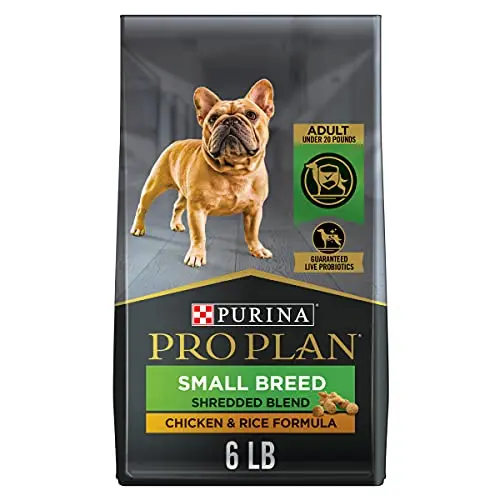
Savor Shredded Blend Small Breed Chicken & Rice – High-Protein with Probiotics
A small-breed formula that punches above its weight class. With real chicken as the first ingredient and guaranteed live probiotics, it delivers digestible, high-energy nutrition for mixed-breeds under 20 lbs. The shredded-and-kibble texture is a hit with picky eaters.
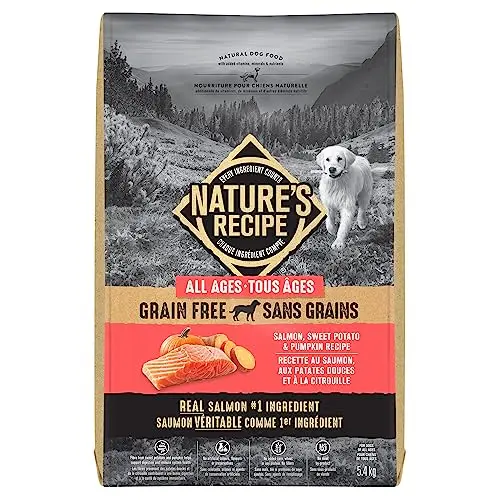
Grain Free Salmon, Sweet Potato & Pumpkin – All-Life-Stage Wellness
A single-protein, grain-free recipe built around salmon as the #1 ingredient. Sweet potato and pumpkin provide gentle fibre, while no artificial colours or preservatives keep the ingredient list clean. Suitable for all life stages and breed sizes – a true mixed-breed champion.
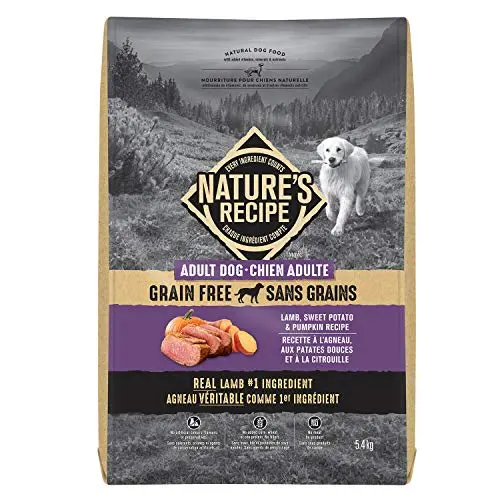
Grain Free Lamb, Sweet Potato & Pumpkin – Limited Ingredient Digestive Support
Another grain-free design, but anchored by lamb as the single animal protein. It’s a limited-ingredient recipe that leans hard into digestive health, with fibre from pumpkin and sweet potato plus added vitamins for immune support.
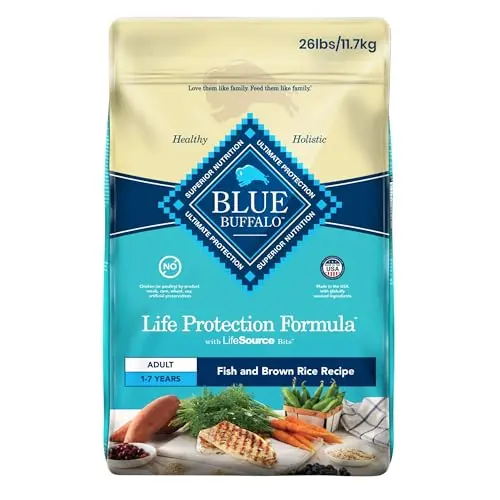
Life Protection Formula Fish & Brown Rice – Omega-Rich Skin & Coat Support
A fish-forward recipe that skips chicken and poultry by-products entirely. Deboned whitefish leads the ingredient panel, backed by brown rice and Blue Buffalo’s signature LifeSource Bits – a cold-formed antioxidant blend. Built for medium breeds but adaptable to most mixed-breed adults.
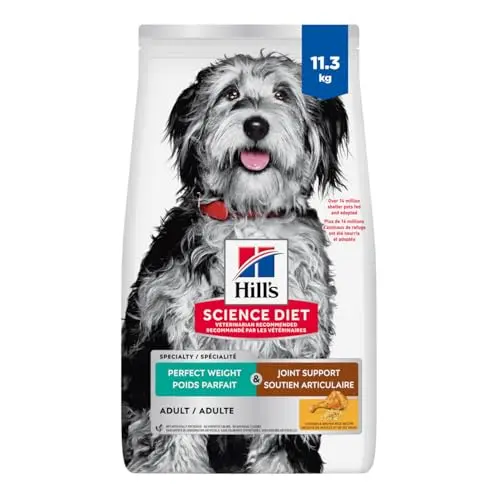
Perfect Weight & Joint Support Chicken – Weight Management for All Sizes
A clinically backed formula targeting safe weight loss within 10 weeks, with added joint support. Designed for all breed sizes, it’s a pick for mixed-breeds carrying extra pounds or dealing with mobility concerns. High in protein to preserve lean muscle during weight reduction.
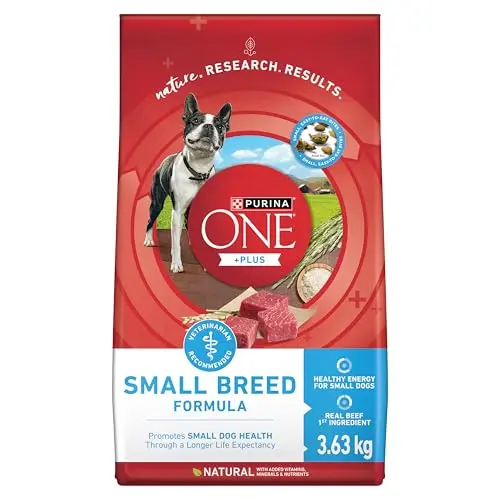
Small Breed Beef Formula – Budget-Friendly High-Protein Option
A wallet-conscious pick that doesn’t sacrifice protein: real beef is ingredient number one. The small, bite-sized kibble is tailored for little mouths, and the formula includes antioxidants for immune support. A straightforward, no-frills daily driver for mixed-breeds under 20 lbs.
How We Evaluated These Dog Foods for Mixed Breeds
We didn’t run long-term feeding trials. What we did: cross-referenced 6 dog food formulas from 5 distinct brands across 7 decision axes – ingredient quality, protein source, breed-size suitability, digestive support, skin & coat benefits, nutritional extras (like probiotics or joint care), and price tier. We triangulated published ingredient lists and guaranteed analyses, aggregated owner feedback signals where available, and mapped each formula against the diverse needs of mixed-breed dogs.
The scoring framework weighted real-world fit for mixed breeds (60%) – how well a formula adapts to different sizes and life stages – against feature differentiation (40%) – unique technical advantages like grain-free recipes, weight management formulas, or probiotic additions. We have no commercial relationship with any of the brands featured; recommendations track fit and differentiation, not brand preference. If your dog is a small mixed-breed, the Savor Shredded Blend Small Breed is your match; if you need an all-size, grain-free daily driver, the Nature’s Recipe Salmon serves you better.
How to Choose the Right Dog Food for Your Mixed Breed
Understanding Mixed-Breed Nutritional Needs
Mixed-breed dogs don’t come with a manual, but their nutritional baseline is the same as any dog: high-quality protein, healthy fats, and essential vitamins. What changes is the caloric density and kibble size. A Chihuahua-terrier cross burns energy differently than a Labrador-hound mix. Look for a formula that lists a named animal protein first (chicken, salmon, lamb) and avoids vague terms like ‘meat meal”. For most adult mixed-breeds, 18-25% protein and 5-15% fat is a solid range – but active dogs or puppies may need more.
Size-Specific vs. All-Breed Formulas: Which Is Right for Your Mixed Breed?
This is the key decision for mixed-breed owners. Size-specific foods tailor nutrient ratios and kibble dimensions – small-breed formulas pack more calories per cup and have tiny kibbles to prevent choking, while large-breed formulas manage calcium for joint health and use bigger pieces to slow eating. All-breed formulas take a middle road and are safer if you’re unsure about your dog’s adult size. Our advice: if your mixed-breed is fully grown and fits neatly into a weight category (under 20 lbs or over 50 lbs), a size-specific food makes sense. Otherwise, an all-life-stage, all-breed option like the Nature’s Recipe Salmon keeps things simple.
Ingredient Quality and What to Look For
Scan the ingredient panel for whole-food sources: deboned chicken, salmon meal, brown rice, sweet potatoes. Avoid foods where fillers like corn gluten meal or wheat middlings crowd the top slots. Animal by-products aren’t automatically bad – organs are nutrient-dense – but the source should be named. Probiotics (like those in the Purina Pro Plan Small Breed) are a genuine bonus for gut health, and omega fatty acids from fish oil or flaxseed keep coats glossy. If your dog has known sensitivities, a limited-ingredient diet like the Nature’s Recipe Lamb is a smart first trial.
Grain-Free vs. Whole-Grain: Does It Matter for Mixed Breeds?
Grain-free diets have surged in popularity, but they’re not automatically healthier. Unless your dog has a diagnosed grain allergy, whole grains like brown rice and oatmeal provide steady energy and fibre. Both the Nature’s Recipe grain-free recipes and the Blue Buffalo with brown rice performed well in our review – the difference often comes down to your dog’s stool consistency and energy levels. If you’re unsure, start with a grain-inclusive food and switch if you see dryness, itching, or loose stools.
Budget-Conscious Picks That Don't Cut Corners
You don’t need to spend high to feed well. Our Purina ONE Small Breed proves that real meat-first recipes exist in the value tier. When comparing prices, look at cost per day rather than per bag – a high-calorie food like this one often requires smaller portions, stretching your dollar. Avoid foods that rely heavily on artificial preservatives or unnamed fats; a little label reading goes a long way.
Frequently Asked Questions
What's the difference between Purina Pro Plan Small Breed and Nature's Recipe Salmon for a mixed-breed?
The essential divide is breed-size targeting vs. universal formulation. Purina Pro Plan Small Breed is built for dogs under 20 lbs – it packs more calories per cup, has smaller kibble, and includes probiotics tuned for small digestive systems. Nature’s Recipe Salmon is all-life-stage, all-breed: softer calorie density, bigger kibble, and a single-protein, grain-free design. If your mixed-breed is definitively small, the Pro Plan maximizes small-dog nutrition. If you’re unsure or your dog could tip the scales both ways, Nature’s Recipe is the safer bet.
How does Hill's Science Diet Perfect Weight compare to Blue Buffalo for weight management?
They take different approaches. Hill’s Perfect Weight is a clinically tested weight-loss formula with added joint support – ideal for overweight mixed-breeds that also need mobility help. It relies on chicken and a precise nutrient blend to trigger safe fat loss. Blue Buffalo Fish & Brown Rice isn’t a weight-management formula per se; it’s a maintenance diet that scores on coat health and ingredient purity. For active weight reduction, Hill’s is the tool; for weight maintenance with skin benefits, Blue Buffalo fits better.
Can a large mixed-breed eat small-breed dog food?
Not recommended long-term. Small-breed formulas are calorie-dense and have tiny kibbles that large dogs can inhale without chewing, risking bloat or choking. They also often lack the precise calcium-to-phosphorus ratio large breeds need for joint safety during growth. If you have a mixed-breed pup of unknown future size, start with an all-breed puppy formula and switch to a size-appropriate adult food once growth plateaus around 12-18 months.
Are grain-free dog foods better for mixed breeds with allergies?
Only if the allergy is to grains, which is rarer than protein allergies. Most food sensitivities in dogs are to animal proteins like chicken or beef. A grain-free food like Nature’s Recipe Lamb can help by eliminating grains *and* sticking to a single protein, but you should work with a vet to confirm the allergen. Switching to grain-free without an identified grain allergy can sometimes cause dilated cardiomyopathy (DCM) concerns in certain breeds, though the link isn’t fully understood. For most mixed-breeds, a grain-inclusive food with a novel protein is a safer first step.
Final Verdict
For the majority of mixed-breed dogs tipping the scales under 20 lbs, the Purina Pro Plan Savor Small Breed is our top recommendation – it nails high-quality protein, digestive care, and palatability in a package small dogs devour. If you’re feeding a mixed-breed of unknown size or want a grain-free, all-stage solution, the Nature’s Recipe Salmon is your match. For budget-conscious homes with small breeds, the Purina ONE Small Breed Beef delivers value without sacrificing protein. And when weight management is non-negotiable, the Hill’s Science Diet Perfect Weight earns its spot.