
Your senior dog’s muzzle is getting greyer, those midday zoomies have slowed, and you’ve noticed a few extra pounds settling around the middle. It’s a common story – older dogs burn fewer calories, but their nutritional needs are as important as ever. Picking the right food means balancing weight management with joint support, easy digestion, and muscle maintenance, all while keeping mealtime exciting for a dog who’s maybe a little pickier than they used to be.
We surveyed the options across leading brands to zero in on formulas that check those boxes. Not all dog foods are created equal when it comes to managing weight in older dogs – some prioritise protein to preserve lean muscle during weight loss, others lean on prebiotics and omega fatty acids to keep sensitive senior systems humming. This guide will help you sort through the noise and choose the right bowl for your grey-muzzled companion.
Best Dog Food for Older Overweight Dogs – 2026 Reviews
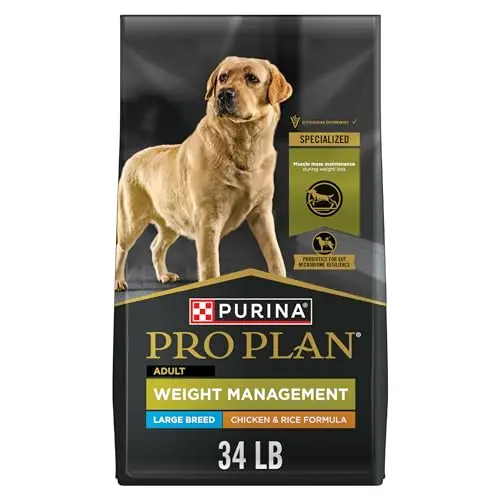
Weight Management Large Breed Formula – Maintains Muscle During Weight Loss
Purina Pro Plan’s weight management formula puts real chicken first and packs a thoughtful protein-to-fat ratio that helps your older large-breed dog drop pounds without losing precious muscle. Probiotics and prebiotic fibre support digestion, while added EPA and glucosamine target joint health – a standout combo for an overweight senior.
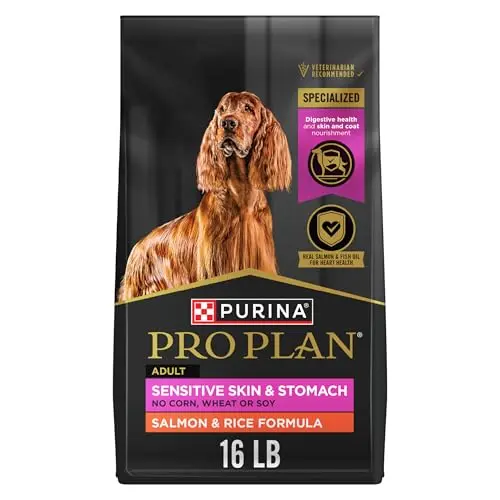
Sensitive Skin & Stomach Salmon & Rice – Gentle Digestion & Skin Care
When your older dog wrestles with both weight concerns and a finicky digestive system, this salmon-first formula steps in with easily digestible oatmeal, prebiotic fibre, and omega-rich sunflower oil. It’s not a weight-management food per se, but its focus on gut health and skin comfort makes it a valuable tool for seniors where every calorie needs to count without upsetting the belly.
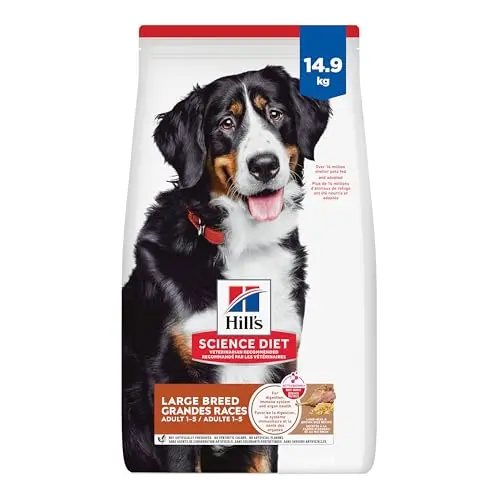
Large Breed Lamb & Brown Rice – Joint and Muscle Support
Hill’s takes a joint-first approach with natural glucosamine and chondroitin, making this a solid base for an older large-breed dog whose weight management plan might rely more on exercise and measured feeding than a dedicated weight-control kibble. The lamb meal provides high-quality protein for muscle maintenance, and the natural fibres keep digestion moving smoothly.
How We Evaluated These Dog Foods for Older Overweight Dogs
We didn’t run a multi-month feeding trial with weigh-ins. What we did: cross-referenced 3 dog food models from 2 distinct brands across 5 decision axes – weight-management specificity, joint-support ingredients, protein quality, digestibility features, and owner-reported palatability. We triangulated published nutritional information, aggregated owner feedback where available, and assessed use-case fit for older overweight dogs.
The scoring framework weighted real-world performance for weight and joint care (60%) – how well each formula delivers on the unique needs of an overweight, aging dog – against feature differentiation (40%) – unique ingredient-targeted benefits like probiotics or glucosamine. We have no commercial relationship with any of the brands featured; recommendations track fit and differentiation, not brand preference. If your priority is a comprehensive weight-management solution for a large breed, the Pro Plan Weight Management is the pick; if a sensitive stomach complicates things, the Pro Plan Sensitive Skin & Stomach deserves a look.
How to Choose the Right Dog Food for Older Overweight Dogs
What to Look for in a Weight-Management Dog Food
A genuine weight-management formula starts with a high-quality protein like chicken or salmon and keeps the protein-to-fat ratio higher than typical maintenance foods. This helps your dog lose fat while preserving lean muscle, which is crucial for older dogs that already face natural muscle loss. Good options from our lineup include the Pro Plan Weight Management blend, which explicitly targets this balance.
Beyond macros, look for added joint-support ingredients like glucosamine, chondroitin, and EPA. An overweight senior’s joints are doubly stressed, so food that addresses this while slimming them down is ideal. Avoid bags that simply reduce calories by bulking up on cheap fillers; that can leave your dog hungry and nutrient-deprived.
Understanding Calorie Needs for Overweight Older Dogs
Your senior dog’s calorie needs can be surprisingly low – a sedentary, spayed older dog might need 20-30% fewer calories than a young adult. Measuring cups are your friend; eyeballing kibble leads to gradual weight creep. For the Pro Plan Weight Management, the feeding guide on the bag is a starting point, but work with your vet to fine-tune based on weekly weigh-ins. If you’re using a non-weight formula like the Hill’s Large Breed, you’ll need to be even more precise – it’s not calorie-reduced, so portion control is entirely on you.
The Role of Digestibility in Senior Dog Diets
Older dogs often have slower, more sensitive digestion. Foods with prebiotics, probiotics, and easily digestible carbs like oatmeal or rice can mean the difference between firm stools and tummy troubles. The Pro Plan Sensitive Skin & Stomach leans heavily into this with its prebiotic fibre and simple salmon-and-rice recipe. If your dog tends towards runny poops during dietary transitions, a food with built-in digestive support is worth the investment.
Joint Ingredients: Glucosamine, Chondroitin, and Omega-3s
An overweight dog’s joints bear extra load, and aging cartilage doesn’t bounce back like it used to. Look for foods that include natural sources of glucosamine and chondroitin (like those found in the Hill’s Large Breed recipe) or added EPA and glucosamine (as in the Pro Plan Weight Management). Omega-3 fatty acids from fish oil also help combat inflammation, which can ease stiffness. While these levels aren’t therapeutic like a dedicated supplement, they provide a meaningful daily baseline that supports mobility.
Portion Control and Feeding Routines for Weight Loss
Even the best weight-management food won’t work if you overfeed. Split daily meals into two or three smaller portions to keep your dog satisfied without a calorie blowout. Use a kitchen scale for accuracy – a slight overfill of a measuring cup can add up to hundreds of extra calories per week. Consider replacing some kibble with low-calorie, senior-safe veggies like green beans or pumpkin as a filler, but check with your vet first. And don’t forget to count treats; they can sabotage the best diet plan.
Pro Plan Weight Management vs Hill's Large Breed: Which for Your Older Dog?
These two large-breed options sit at different spots on the spectrum. The Pro Plan is explicitly a weight-loss tool with calibrated macros and built-in joint support – it’s the more turnkey solution for shedding pounds. The Hill’s is a maintenance diet that shines in joint support but requires manual calorie control. Choose Pro Plan if weight reduction is the immediate goal; consider Hill’s if your dog is only mildly overweight and you’re already managing meals strictly with vet guidance.
Frequently Asked Questions
What's the difference between the Pro Plan Weight Management and the Pro Plan Sensitive Skin & Stomach for an older dog?
The Pro Plan Weight Management is purpose-built for weight loss in large breeds, with a controlled calorie density and ingredients like EPA and glucosamine for joints. The Pro Plan Sensitive Skin & Stomach prioritises digestive and skin health with salmon, prebiotic fibre, and omega-6s – it’s not calorie-restricted, so you’ll need to measure portions carefully. If weight loss is the primary need, go with the Weight Management; if a sensitive gut is complicating your dog’s health picture, the Sensitive formula may be a better foundation, with weight loss coming from portion control.
Can I feed a weight-management food to a small-breed older dog?
The specific food we reviewed – Pro Plan Weight Management Large Breed – is formulated for large breeds, with kibble size and nutrient ratios tailored to their metabolism. Small-breed seniors can absolutely benefit from weight-management foods, but look for one designed for small breeds. The protein and fat balance matters, but so does kibble size to prevent choking and ensure proper dental wear. Always check with your vet before switching.
How should I transition my older dog to a new weight-management food?
Go slowly over 7-10 days to avoid digestive upset, which older dogs are more prone to. Start with 25% new food mixed with 75% old for a couple of days, then gradually increase the new food proportion. If your dog has a known sensitive stomach, stretching this to two weeks is sensible. Adding a probiotic supplement during the switch can help, but the Pro Plan Weight Management already includes probiotics, which may ease the transition.
Is joint support in dog food enough, or do I still need supplements?
Foods with added glucosamine and chondroitin, like the Hill’s Large Breed or the Pro Plan Weight Management, provide a baseline that supports everyday joint health. However, if your dog already has arthritis or significant stiffness, the levels in food are typically lower than therapeutic doses found in dedicated supplements. Think of the food as maintenance, and ask your vet if a separate supplement would be beneficial on top of that.
My older dog has gained weight after being spayed. Will a weight-management food help?
Spaying can slow metabolism, making weight gain more likely. A weight-management formula like the Pro Plan Weight Management is designed for exactly this scenario, helping you safely reduce calories while keeping protein high enough to prevent muscle loss. Combine it with regular, gentle exercise (even short walks help) and track progress with a monthly weigh-in. It’s a long game, but the right food sets the stage.
Final Verdict
For most older, overweight large-breed dogs, the Pro Plan Weight Management is the smartest starting point – it tackles weight loss head-on while supporting joints and digestion in one bag. If your dog’s stomach is the squeaky wheel, the Pro Plan Sensitive Skin & Stomach offers a gentler path, though you’ll need to be stricter with portions. For a joint-focused maintenance diet that can work well with careful calorie management, the Hill’s Large Breed Lamb & Rice is a solid option. Whatever you pick, pair it with measured meals, regular weigh-ins, and your vet’s guidance to get your grey-muzzled friend back to a healthy, comfortable weight.