
Your senior golden retriever has been by your side through thick and thin, and now, at seven or older, he deserves a little extra attention at mealtime. The right food can mean the difference between achy morning walks and a dog who still bounds after tennis balls with puppy-like enthusiasm. But with so many brands promising the world, picking one that actually delivers for an aging golden can feel overwhelming.
Golden retrievers are large, active dogs with a breed tendency toward joint issues and weight gain as they age. That means their senior diet needs to pull double duty: preserving lean muscle while easing stress on aging hips and elbows. We dug into the formulas that matter most-joint-supporting nutrients like glucosamine and chondroitin, digestible proteins, and targeted antioxidant blends-to surface the foods that meet the unique demands of your greying best friend. This guide breaks down what to look for and which picks rise to the top, so you can spend less time reading labels and more time tossing his favourite ball.
Best Dog Food for Senior Golden Retrievers – 2026 Reviews
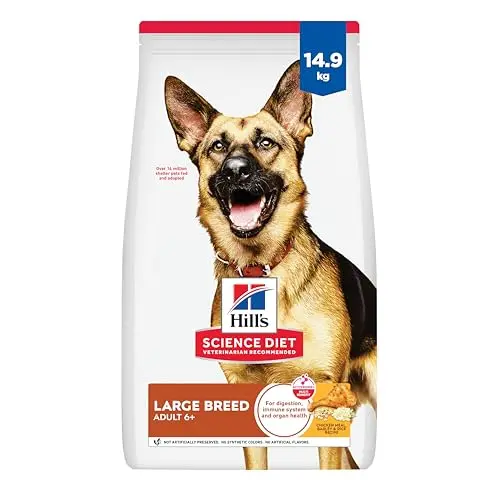
Senior Large Breed Chicken & Barley – Joint and Heart Health
Purpose-built for large breed seniors 6+, this Hill’s recipe zeroes in on joint, heart, and kidney health with balanced minerals and natural glucosamine. The high-quality protein keeps lean muscle intact, while natural fibres support digestion-a smart choice for aging goldens.
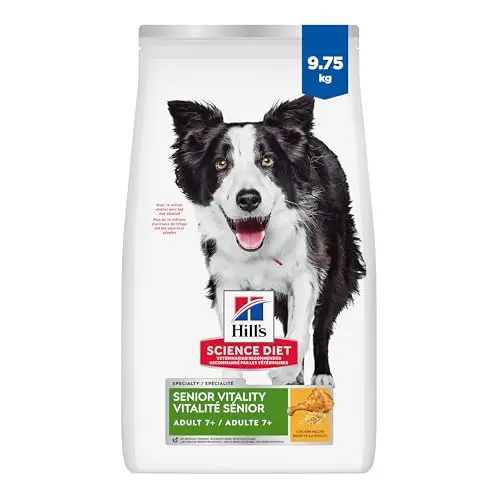
Senior Vitality Chicken & Rice – Brain & Energy Boost
If your senior dog has slowed down mentally, this vitality-focused formula uses a proprietary antioxidant blend to support brain health and everyday energy. It’s an all-breed recipe with easy-to-digest ingredients, making it a solid pick for any aging golden showing signs of cognitive decline.
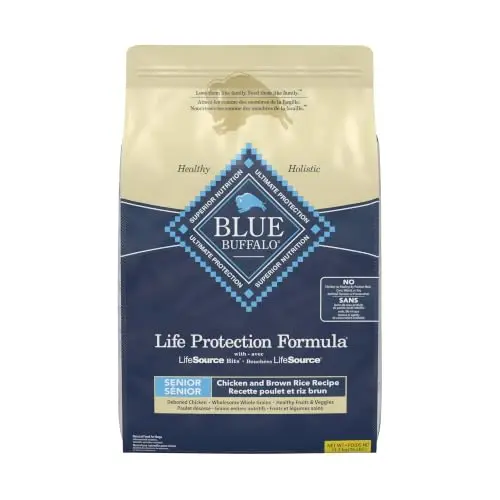
Life Protection Senior Chicken & Brown Rice – Immunity & Joint Care
Blue Buffalo packs its senior formula with antioxidant-rich LifeSource Bits and joint-supporting glucosamine, all built around real chicken. It’s a grain-inclusive recipe that prioritizes whole ingredients and omits common allergens like corn, wheat, and soy.
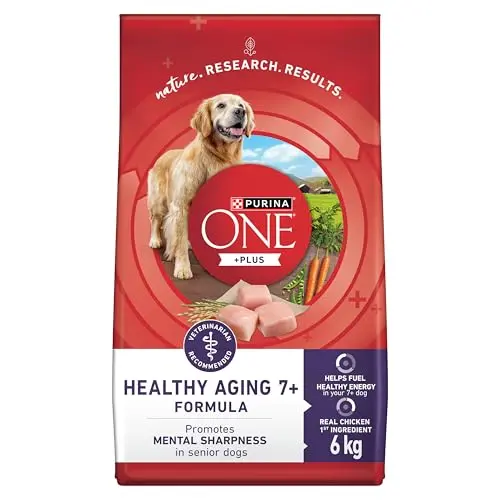
+Plus Healthy Aging 7+ Chicken – Affordable Senior Support
Purina ONE proves you don’t have to break the bank to feed your senior dog well. Real chicken leads the ingredient list, and the tender-crunchy mix appeals to older dogs who appreciate texture variety. It’s formulated to support mental sharpness and energy levels.
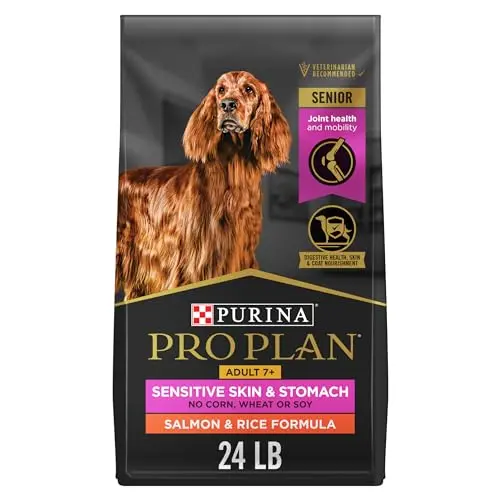
Senior Sensitive Skin & Stomach Salmon – Soothing Digestion
When your senior golden’s tummy is finicky, this salmon-based formula from Pro Plan steps in with easily digestible oatmeal and rice. It’s rich in omega fatty acids for skin health and includes glucosamine for joint care-all while being gentle on digestion.
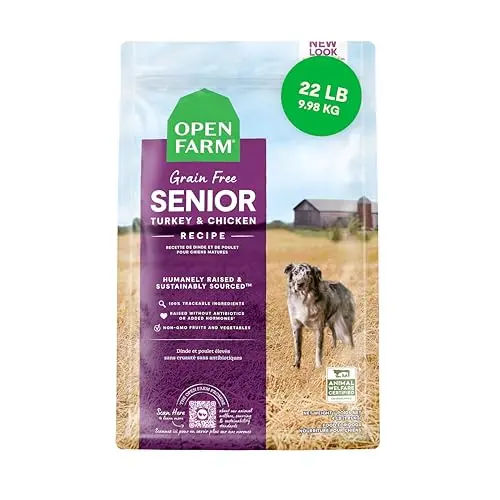
Grain-Free Senior Chicken & Turkey – Ethical Joint Care
Open Farm combines ethically sourced proteins with functional ingredients like glucosamine and chondroitin for senior dogs. The grain-free recipe skips corn, wheat, and soy in favour of superfoods like pumpkin and coconut oil, appealing to owners who prioritise ingredient transparency.
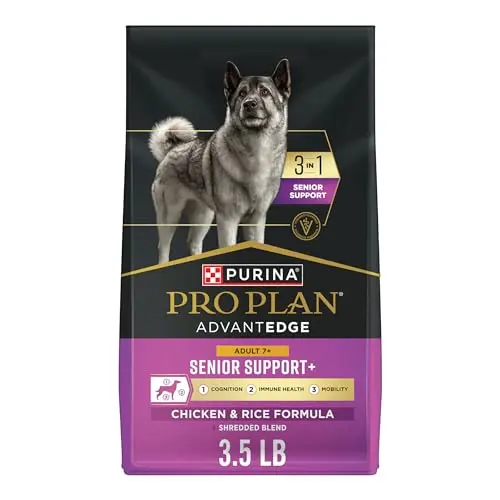
AdvantEDGE Senior Support+ Chicken – Advanced Cognitive Care
Pro Plan’s AdvantEDGE line is a 3-in-1 triple-action formula targeting immunity, cognition, and joint health. Backed by over a decade of research, it uses Bright Mind technology to promote mental sharpness-a boon for goldens showing signs of doggy dementia.
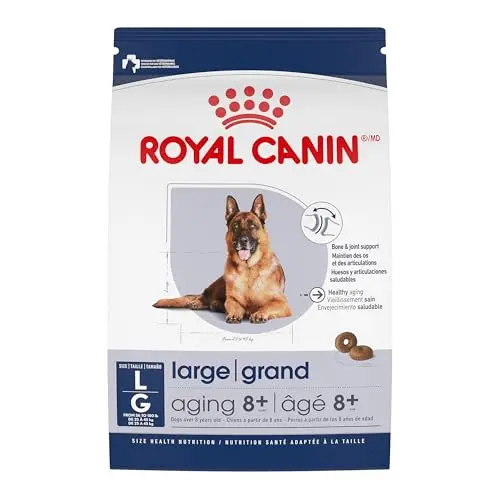
Large Aging 8+ – Easy-Chew Joint Support
Specially designed for large senior dogs 8+, Royal Canin’s formula focuses on long-life vitality with an exclusive antioxidant blend. The rehydratable kibble is easy on aging teeth, and the joint support package stands out for dogs with mobility challenges.
How We Evaluated These Dog Foods for Senior Golden Retrievers
We didn’t run a controlled feeding trial with a pack of senior golden retrievers. What we did: cross-referenced 8 senior dog food formulas from 6 distinct brands across 5 key decision axes-joint-supporting ingredients (glucosamine, chondroitin, EPA), protein quality and digestibility, breed-specific tailoring (large breed vs. all), kibble texture and size for aging mouths, and owner-reported outcomes around mobility, coat, and digestion. We triangulated published nutritional specifications, aggregated owner feedback where available, and use-case fit for the typical golden retriever-a large, active breed prone to joint issues and weight gain as he ages.
The scoring framework weighted real-world performance for senior dogs (60%) against feature differentiation within the senior category (40%). We have no commercial relationship with any of the brands featured; recommendations track fit and differentiation, not brand preference. If your golden needs broad-spectrum senior support, the Hill’s Science Diet Senior Large Breed is the standout pick. For dogs showing cognitive slowdown, the Hill’s Senior Vitality offers a compelling alternative.
How to Choose the Right Dog Food for Your Senior Golden Retriever
What Makes a Dog Food Great for Senior Golden Retrievers?
Senior dog foods aren’t just smaller portions of adult formulas-they’re rebalanced to support aging organs and joints. For a golden retriever, look for high-quality protein to maintain muscle mass (chicken, salmon, or turkey as the first ingredient is a good sign), controlled fat levels to avoid weight gain, and added glucosamine and chondroitin for joint cushioning. Antioxidants like vitamin E and C help combat cellular aging, and omega fatty acids keep that iconic golden coat shiny. The best foods also avoid fillers like corn, wheat, and soy, which can trigger sensitivities in older dogs.
The Non-Negotiable: Joint Health for Your Senior Golden Retriever
Golden retrievers are poster dogs for joint issues-hip dysplasia and arthritis are extremely common. That’s why glucosamine and chondroitin should be on the label. These compounds help repair cartilage and reduce inflammation. Some foods source them naturally from chicken meal or fish, while others add them as supplements. Look for EPA (eicosapentaenoic acid), an omega-3 fatty acid often found in fish-based formulas, which has strong anti-inflammatory properties. If your golden already shows signs of stiffness, a food that packets all three-glucosamine, chondroitin, and EPA-into every bowl can make a visible difference.
Large Breed vs. All Breed: Does It Matter for a Golden?
Yes, it matters. Large breed-specific senior foods are calibrated for bigger frames: they have controlled calcium and phosphorus levels to avoid stressing the kidneys, and they often contain higher levels of joint supplements. Foods labeled for ‘all breeds’ can still work, but you’ll need to be more diligent about portion sizes (large dogs need fewer calories per pound) and may want to supplement with additional joint chews if the food’s glucosamine content is low. For a golden retriever, a large breed formula is generally the safer, more targeted choice.
Kibble Size and Texture: Small Comforts for Aging Teeth
Dental health declines with age, and many senior goldens have worn, sensitive, or missing teeth. Kibble size and hardness can make or break mealtime. Smaller or softer kibble allows dogs to chew without pain, while some formulas are even rehydratable-add water and they turn into a porridge. If your dog takes longer to finish meals or avoids hard kibble, consider a food with a softer texture or a ‘small bites’ option. The Royal Canin Large Aging 8+ explicitly markets its rehydratable kibble, and many owners rely on it for dogs with dental challenges.
Grain-Free vs. Grain-Inclusive for Senior Goldens
The grain-free debate is alive and well. Some owners prefer grain-free foods to avoid potential allergens or because they believe it’s more natural. However, recent research has raised concerns about a link between certain grain-free diets and dilated cardiomyopathy (DCM) in dogs, especially large breeds. Many veterinarians now recommend grain-inclusive foods that use wholesome grains like brown rice, oatmeal, or barley, which provide easily digestible energy and fibre. For a senior golden retriever without a diagnosed grain allergy, a high-quality grain-inclusive formula is typically the safer bet. If you do choose grain-free, look for a brand that includes taurine and consult your vet.
Reading the Label: What to Look For and What to Avoid
A good senior dog food starts with a named protein source (chicken, salmon, turkey) as the first ingredient. Avoid vague terms like ‘meat meal’ or ‘poultry by-product meal.’ Natural preservatives like mixed tocopherols are better than artificial ones (BHA, BHT). Check for probiotics or prebiotic fibre-they support the gut, which often becomes more sensitive with age. And skip foods with added sugars, dyes, or excessive salt. The ingredient list should read like a recipe, not a chemistry experiment.
Frequently Asked Questions
What's the difference between Hill's Science Diet Senior Large Breed and Royal Canin Large Aging 8+?
Both are excellent, but they shine in different scenarios. Hill’s Senior Large Breed is designed for dogs 6+ and puts a stronger emphasis on heart and kidney health with balanced minerals. It uses natural sources of glucosamine and chondroitin, and owner feedback frequently mentions improved mobility and coat quality. Royal Canin Large Aging 8+ is tailored for dogs 8 and older, with a focus on very senior vitality. Its standout feature is the rehydratable kibble, which is a game-changer for dogs with dental issues-just add water to create a soft mash. Royal Canin also includes a specialized antioxidant blend to support aging at the cellular level. If your golden is 6-7 and still has strong teeth, Hill’s may be the better starting point. If they’re 8+ and struggling with meals, Royal Canin’s texture advantage can be a decider.
How does Purina Pro Plan Senior Sensitive Skin & Stomach compare to Blue Buffalo Life Protection Senior?
These two target slightly different needs. Purina Pro Plan Sensitive Skin & Stomach uses a salmon-first recipe that’s especially gentle on digestion, with prebiotic fibre and omega-rich sunflower oil. It’s ideal if your golden has chronic itching, loose stools, or food sensitivities. The glucosamine and EPA cover joint health too. Blue Buffalo Life Protection Senior is a more general senior formula built around chicken and brown rice, with its antioxidant-rich LifeSource Bits providing immune support. It’s grain-inclusive and free of corn, wheat, and soy, making it a solid all-rounder for goldens without specific sensitivities. If skin or tummy issues are the main complaint, go with Pro Plan. If you’re looking for everyday immune and joint care with wholesome grains, Blue Buffalo is the safer broad-spectrum choice.
Should I choose a grain-free food for my senior golden retriever?
Not necessarily. While grain-free diets were trendy, recent veterinary research has linked some grain-free foods to dilated cardiomyopathy (DCM) in dogs, and large breeds like golden retrievers may be at higher risk. Grain-free foods often replace grains with peas, lentils, or potatoes, which can affect taurine absorption. Unless your dog has a confirmed grain allergy, a grain-inclusive senior food that uses wholesome sources like brown rice, oatmeal, or barley is typically the safer and more nutritionally balanced option. If you do opt for grain-free (like the Open Farm formula we reviewed), choose a brand that adds taurine and discusses the DCM concern transparently, and keep your vet in the loop.
How often should I feed my senior golden retriever, and in what quantities?
Most senior goldens do well on two meals per day to avoid bloat and regulate energy. The feeding quantity depends on the food’s calorie density and your dog’s activity level, but as a starting point, a typical 70-80 lb senior golden might eat 3-4 cups of dry food per day, split into two servings. Always check the bag’s feeding guide and adjust based on your dog’s body condition-you should be able to feel his ribs without pressing hard. Senior dogs burn fewer calories, so it’s common to reduce portions slightly compared to the adult feeding chart. Adding warm water or low-sodium broth can make meals more enticing and aid hydration, especially for dogs on dry kibble.
Final Verdict
For most senior golden retrievers, the Hill’s Science Diet Senior Large Breed is the best answer. It nails the trifecta of joint support, large-breed-specific nutrition, and real-world palatability-and it’s backed by a brand Canadian vets trust most. If your golden has plateaued mentally or seems a step slower, the Hill’s Senior Vitality brings a cognitive boost that owners notice almost immediately. For budget-conscious households, the Purina ONE +Plus Healthy Aging covers the senior basics without straining the wallet. And when a sensitive stomach is the flashpoint, the Purina Pro Plan Sensitive Skin & Stomach Salmon soothes digestion while keeping joints mobile. Your golden’s golden years deserve the right fuel-pick the one that fits his personality and let the tail wags do the talking.