
Bringing home a new puppy means a flurry of decisions – and what you pour into that little bowl three times a day sits at the top of the list. A high-quality dry kibble doesn’t just fill a belly; it builds bones, fuels a developing brain, and sets the stage for a lifetime of good health. The right formula can mean fewer digestive upsets, a glossy coat, and that bouncy energy you expect from a growing pup.
But the pet food aisle is a sea of claims about DHA, probiotics, and breed-specific formulations. Our guide cuts through the noise to compare the most popular dry puppy kibbles across major brands. We zeroed in on what really matters: protein quality, kibble size for tiny teeth, digestive health ingredients, and the targeted nutrition that meets a puppy’s unique needs. Whether you’re raising a teacup breed or a future gentle giant, there’s a kibble here that fits.
Best Dry Kibbles for Puppies – 2026 Reviews
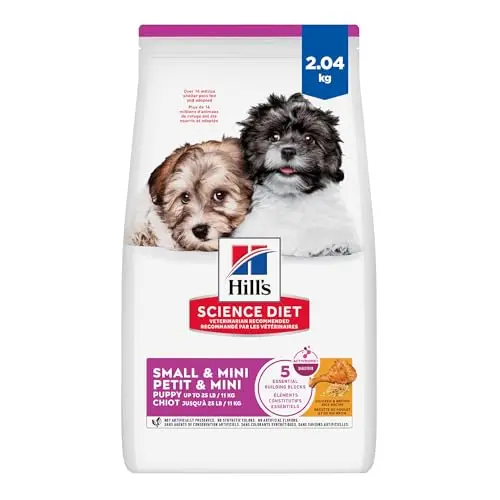
Small & Mini Chicken & Brown Rice – Balanced Nutrition for Little Pups
Hill’s Science Diet Small & Mini sticks the landing for most small-breed puppy owners. It packs DHA from fish oil for cognitive development, an antioxidant blend to support a growing immune system, and high-quality protein for those little muscles. The crunchy kibble is perfectly sized for mini mouths, and the prebiotic fiber blend keeps digestion on track. It’s a no-drama daily driver that pleases picky eaters while hitting all the nutritional marks.
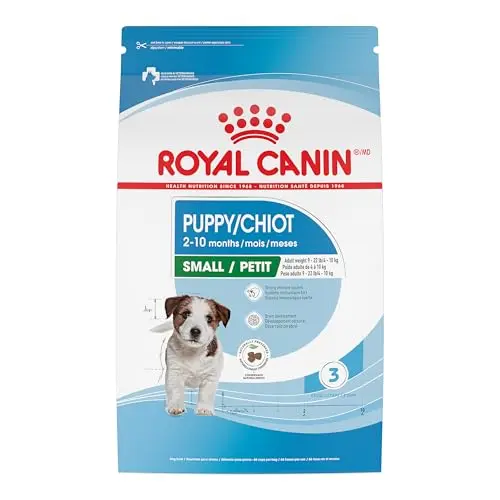
Small Puppy Chicken – Precise Nutrition for Young Small Breeds
Royal Canin’s Small Puppy formula brings laser focus to the 9-22 lb expected adult weight range. The crunchy kibble texture promotes dental health, and a blend of prebiotics, proteins, and antioxidants supports digestive and immune health simultaneously. Chock-full of DHA from fish oil and omega-3s, it’s engineered for optimal brain development during the 2-10 month window. A fantastic pick if you want breed-specific precision without the guesswork.
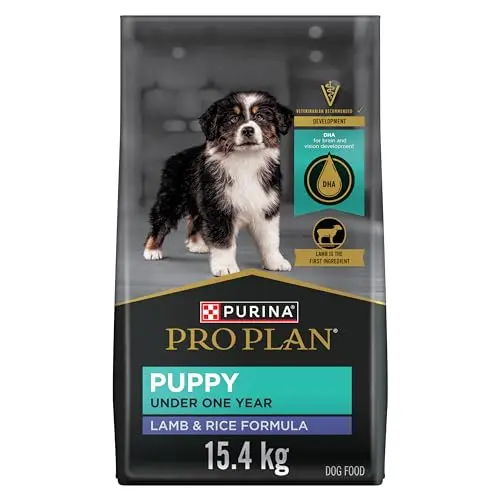
Development Lamb & Rice – Gentle Protein for Growing Pups
Purina Pro Plan’s Lamb & Rice formula swaps chicken for lamb as the first ingredient, making it an excellent alternative for puppies with poultry sensitivities. Fortified with guaranteed live probiotics and DHA from fish oil, it supports both gut health and brain development. The 15.4 kg bag offers bulk-buy convenience, and the nutrient-rich formula suits all breed sizes, from small to large.
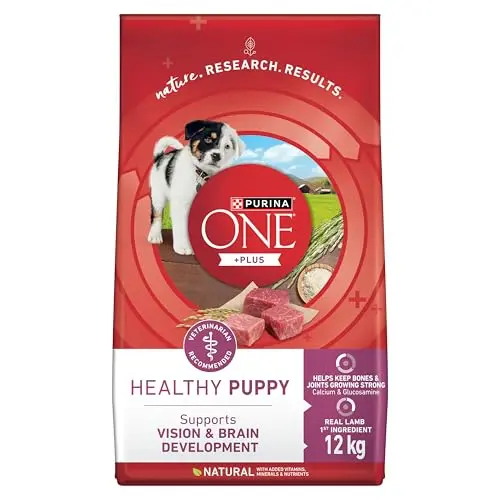
+Plus Healthy Puppy Lamb – Sensitive Stomach Friendly
Purina ONE’s Lamb formula takes direct aim at delicate puppy tummies with easily digestible rice and oatmeal. Real lamb leads the ingredient list, supported by DHA for brain development and antioxidants for immune health. The SmartBlend recipe avoids fillers and artificial flavors, delivering 100% complete nutrition in a kibble size that works for medium-sized pups.
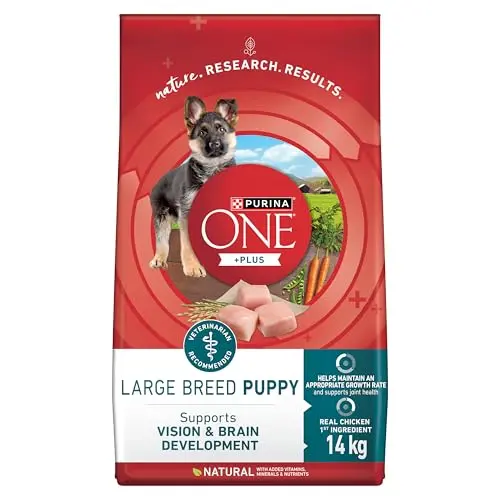
+Plus Large Breed Chicken – Joint Support for Big Pups
Purina ONE’s Large Breed Puppy formula tackles the unique challenges of raising a big dog – from joint health to steady growth. Real chicken leads, backed by rice for easy digestion and natural sources of glucosamine. The dual-defense antioxidant blend and DHA round out a complete diet tailored to large-breed puppies through weaning and beyond.
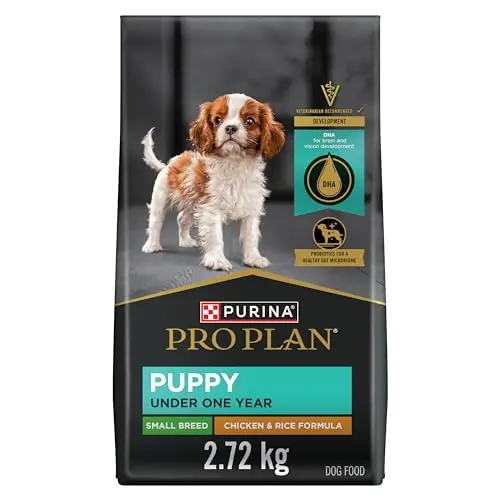
Development Small Breed Chicken & Rice – Tiny Kibble for Tiny Tummies
Purina Pro Plan’s Small Breed formula delivers concentrated nutrition in a pellet size engineered for toy and small breed puppies. Real chicken leads, and the inclusion of guaranteed live probiotics and DHA from fish oil addresses the two biggest puppy owner concerns: digestive health and brain development. The 2.72 kg bag is a manageable starter size.
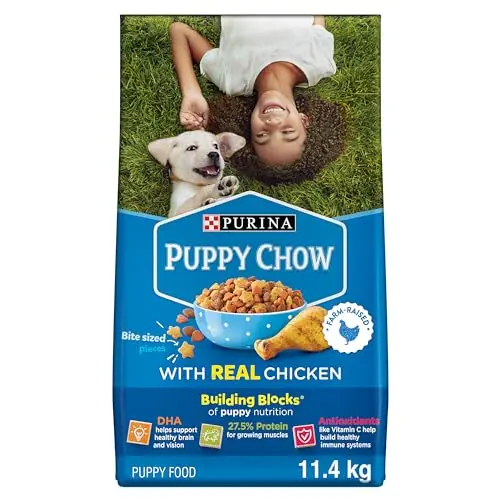
Complete Chicken – Nutritious Start Without Breaking the Bank
Purina Puppy Chow proves you don’t need a premium price tag to get scientifically backed puppy nutrition. Real farm-raised chicken delivers 27.5% protein for growing muscles, and DHA supports healthy brain and vision. Antioxidants like Vitamin C round out an immune-boosting recipe that’s an accessible, everyday option.
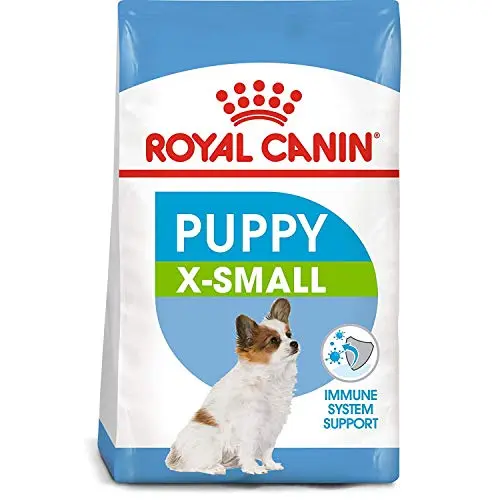
X-Small Breed Chicken – Microscopic Kibble for Miniature Mouths
Royal Canin’s X-Small Breed recipe is engineered for puppies with an expected adult weight under 8 lbs. The micro-kibble is tiny enough for the most delicate teeth, while antioxidants, prebiotics, and highly digestible proteins ensure immune support and digestive health. A specialized formula that addresses the rapid metabolism of teacup breeds.
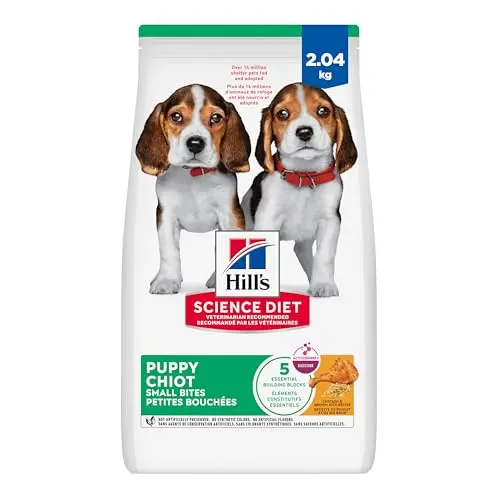
Small Bites Chicken & Brown Rice – Extra-Crunchy for Tiny Chewers
Hill’s Science Diet Small Bites offers the same trusted nutrition as the small breed formula but in a slightly larger, crunchier kibble. Still small enough for most toy breeds, it emphasizes DHA, balanced minerals, and a prebiotic fiber blend. A solid alternative if your pup prefers a more pronounced crunch.
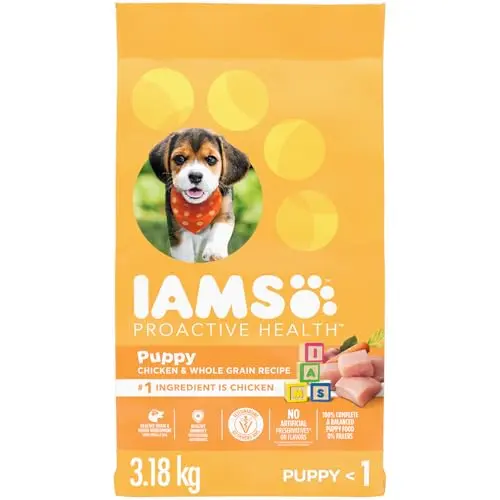
Proactive Health Chicken & Whole Grain – Budget Essentials with DHA
IAMS Proactive Health is a straightforward entry-level puppy food. Chicken and whole grains deliver easily digestible energy, while omega-3 DHA supports brain development. The large 3.18 kg bag provides a cost-effective solution for owners who want the basics covered without frills.
How We Evaluated These Dry Kibbles for Puppies
We didn’t run controlled feeding trials in a kennel. What we did: cross-referenced 10 dry kibble models from 6 distinct brands across 7 decision axes – protein source and quality, DHA content, probiotic and prebiotic inclusion, kibble size and texture, breed-specific targeting, digestive health support, and ingredient transparency. We triangulated published specifications, aggregated owner feedback where available, and use-case fit against representative puppy profiles (extra-small, small, medium, and large breeds).
The scoring framework weighted real-world performance and nutritional fit (60%) – how well each kibble delivers on puppy growth needs – against feature differentiation (40%) – unique health-addressing ingredients and breed-specific tailoring. We have no commercial relationship with any of the brands featured; recommendations track fit and differentiation, not brand preference. If you’re feeding a small breed like a Mini Poodle, the Hill’s Science Diet Small & Mini is your match; if your pup falls in the 9-22 lb expected adult range, the Royal Canin Small Puppy serves you better.
How to Choose the Right Dry Kibble for Puppies
Key Nutrients Every Puppy Needs
Puppies aren’t just miniature dogs – they’re rapidly growing organisms that need a different nutrient profile than adults. Look for high-quality animal protein as the first ingredient (chicken, lamb, or fish) to fuel muscle development. DHA, an omega-3 fatty acid found in fish oil, is non-negotiable for brain and eye development; it’s often compared to the DHA naturally present in mother’s milk. Calcium and phosphorus must be balanced in precise ratios for proper bone growth – too little or too much can lead to skeletal issues. Antioxidants like vitamins C and E bolster the developing immune system, while probiotics and prebiotics support a healthy gut microbiome, reducing those all-too-common puppy digestive upsets. The best dry kibbles pack all of these into a single, convenient form.
Kibble Size Matters: Matching the Bite to the Breed
The right kibble size isn’t just about convenience – it’s about safety and dental health. Extra-small breeds like Chihuahuas and Yorkies can struggle with kibble that’s too large, risking choking, while large breed pups may swallow tiny kibble whole without chewing, losing out on dental abrasion. Brands like Royal Canin and Hill’s Science Diet offer specific kibble dimensions for toy, small, and large breeds. If you have a mixed litter or an in-between size, the Purina Pro Plan Small Bites or IAMS options offer middle-ground sizing. Pay attention to the crunchiness too – a harder kibble encourages chewing and can reduce tartar buildup.
Digestive Health: Probiotics, Prebiotics, and Fiber
Puppies have sensitive stomachs, and a quality dry kibble should actively promote digestive wellness. Guaranteed live probiotics (like those in Purina Pro Plan formulas) introduce beneficial bacteria, while prebiotic fibers (such as beet pulp or fructooligosaccharides used by Royal Canin) feed that good bacteria. A digestible protein source – like lamb for sensitive pups or rice-based recipes – can reduce the likelihood of loose stools and gas. If your puppy seems gassy or has inconsistent bowel movements, switching to a formula with these digestive aids can make a noticeable difference. Both the Pro Plan Lamb & Rice and Purina ONE Lamb are excellent starting points for digestion-sensitive pups.
Difference Between Hill's Science Diet and Royal Canin for Puppies
Both Hill’s Science Diet and Royal Canin are veterinary-recommended brands, but they approach puppy nutrition with different philosophies. Hill’s emphasizes clinical nutrition with a focus on natural ingredients and broad life-stage formulas; their puppy recipes are less granular but still include targeted options like Small & Mini. Royal Canin invests heavily in precise breed-size tailoring – their X-Small and Small Puppy formulas are calibrated to expected adult weight brackets, with kibble shape and nutrient density adjusted accordingly. If your priority is a simpler, natural-ingredient-led diet, Hill’s is a strong pick. If you want surgical precision for a specific weight class, Royal Canin’s tailored formulas are worth the premium.
Budget vs. Premium: What's Worth Paying For
Not every puppy parent needs to spend a fortune on food, but understanding the trade-offs helps. Budget-friendly options like Purina Puppy Chow and IAMS cover essential DHA and protein requirements but may use more grain fillers and by-product meals. They’re perfectly adequate for many puppies, but may lack the probiotic guarantees or breed-specific kibble sizes of pricier lines. Mid-tier picks like Purina ONE and Pro Plan add live probiotics and avoid artificial additives, offering a strong middle ground. Premium formulas from Hill’s and Royal Canin invest in precise kibble engineering, veterinary backing, and ingredient quality – valuable if your pup has specific health needs or you simply want peace of mind. For the best value without sacrificing digestive support, the Purina Puppy Chow Complete is hard to beat.
Frequently Asked Questions
What's the difference between Royal Canin X-Small and Royal Canin Small Puppy food?
The key distinction lies in the expected adult weight of your puppy. The X-Small Breed formula is designed for puppies that will weigh under 8 lbs as adults – think toy breeds like Chihuahuas, Maltese, and Yorkies. Its kibble is extra-small and its nutrient density is calibrated for extremely high metabolisms. The Small Puppy formula targets puppies expected to reach 9-22 lbs, such as Miniature Schnauzers, Pugs, and Cocker Spaniels. Both include DHA, prebiotics, and antioxidants, but the Small Puppy kibble is slightly larger and the energy content adjusted for a less frantic metabolism. If your pup is in that narrow weight window, the X-Small is the right pick; otherwise the Small Puppy offers more flexibility.
Is dry kibble as nutritious as wet food for puppies?
High-quality dry kibble is equally nutritious as wet food when it meets AAFCO standards for growth. In fact, dry kibble has some advantages: the crunchy texture promotes dental health by reducing plaque, it’s easier to store and portion, and it often costs less per serving. Wet food is higher in moisture (which can help with hydration) and can be more palatable for picky eaters, but it doesn’t inherently provide better nutrition. Many breeders and vets recommend dry kibble as the foundation, optionally mixed with a bit of wet food for variety. The dry formulas we reviewed – from Hill’s to Purina – all provide complete and balanced nutrition for puppies.
At what age can puppies start eating dry kibble?
Most puppies can begin softened dry kibble during weaning, around 3-4 weeks old. Soak the kibble in warm water or puppy milk replacer to create a gruel. By 6-8 weeks, they can typically handle dry kibble without soaking, provided the kibble is appropriately sized. Extra-small breeds might need a slightly longer transition or smaller pieces like those in Royal Canin X-Small. Look for formulas labeled for ‘puppy’ as they have the higher nutrient density needed. The Purina Pro Plan Development and Royal Canin Small Puppy are both safe to feed from as early as 6 weeks.
Is Purina Pro Plan or Purina ONE better for my puppy?
Both are excellent, but they prioritize slightly different things. Purina Pro Plan is positioned as the more advanced line, often with guaranteed live probiotics, specialized breed-size options, and higher protein levels – the Development Lamb & Rice is a top pick for sensitive stomachs. Purina ONE focuses on natural ingredients and SmartBlend technology to deliver nutrition without fillers, at a more moderate price point. For a puppy with no known allergies, the +Plus Healthy Puppy Lamb is a compelling value. If you have a specific breed size or are dealing with early digestive sensitivity, Pro Plan’s specialized formulas are worth the extra cost.
How do I transition my puppy from one dry kibble to another?
Abrupt changes can trigger diarrhea, so follow a 7-day transition schedule: Days 1-2, mix 25% new food with 75% old; Days 3-4, 50/50; Days 5-6, 75% new with 25% old; Day 7, 100% new. Monitor your puppy’s stool – a little softness is normal, but if diarrhea persists, slow the transition further. Adding a probiotic supplement or using a formula with built-in probiotics (like Pro Plan) can smooth the shift. Always ensure fresh water is available. The antioxidants and digestive fibers in most quality kibbles help minimize gastrointestinal upset.
Final Verdict
For the vast majority of small to medium breed puppies, the Hill’s Science Diet Small & Mini Chicken & Brown Rice is our top pick – it balances precise nutrition, palatability, and digestive support in a kibble size that works for most little mouths. If your pup falls into the 9-22 lb window and you value breed-specific precision, the Royal Canin Small Puppy is a spectacular alternative. For puppies with poultry sensitivities or those needing a gentle protein source, the Purina Pro Plan Lamb & Rice has the digestive edge. And if budget is the top concern, the Purina Puppy Chow Complete Chicken delivers solid growth without the premium spend. Whichever you choose, you’re setting your pup up for a strong, healthy start.