
Watching your dog wolf down an entire meal in seconds can be concerning-and messy. Whether you’re dealing with a speed-eating pup, an older dog with joint pain, or a messy drinker, the right bowl makes mealtime healthier and calmer. We’ve surveyed feeding bowls across the market, from puzzle designs that slow eating to adjustable raised stands that protect necks and spines.
The choice often comes down to how your dog eats-slow feeders for gulpers, elevated stands for comfort or arthritis, and flat bowls for puppies and steady eaters. Our guide compares materials, heights, cleaning ease, and stability so you can find the best fit for your dog’s needs.
Below you’ll find thorough reviews of our top picks, followed by a brand-agnostic buying guide, answers to common cross-brand questions, and our final verdict. Let’s dig in.
Best Feeding Bowls for Dogs – 2026 Reviews
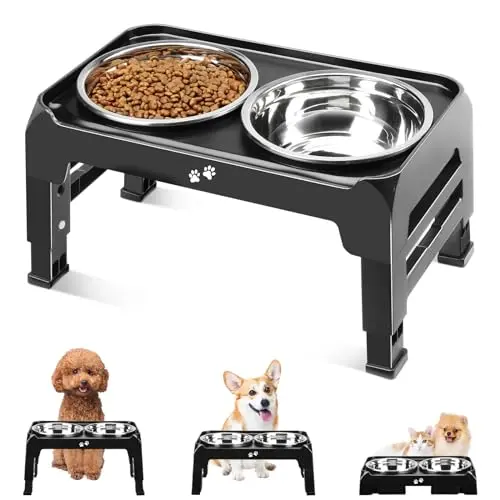
Elevated Dog Bowls – Adjustable 3-Height Feeding Station
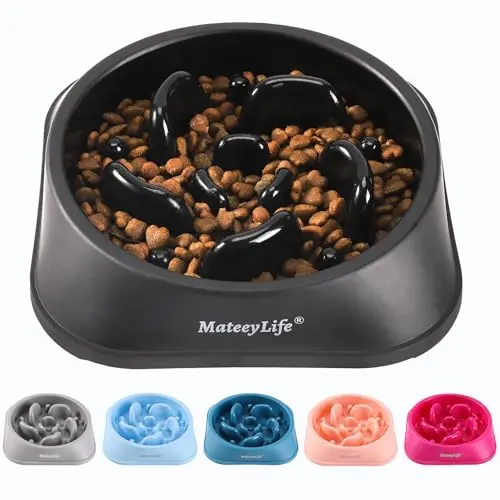
Slow Feeder Dog Bowl – Anti-Choking Puzzle Design
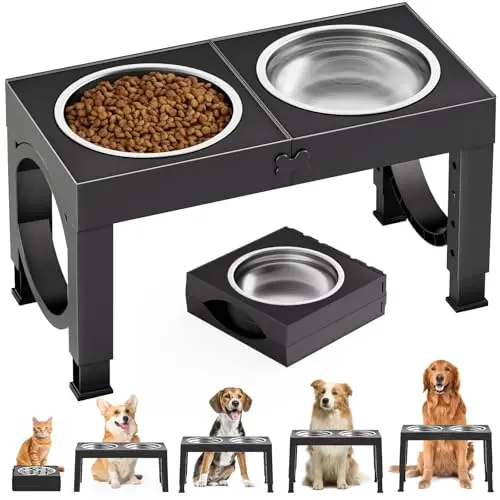
Elevated Dog Bowls – 5-Height Large Breed Stand
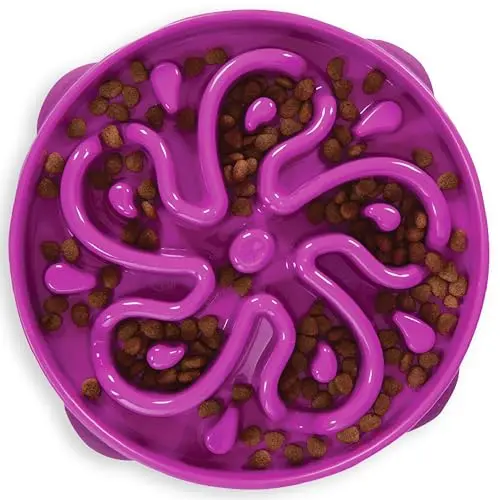
Fun Feeder Slo Bowl Large – Most Challenging Slow Feeder
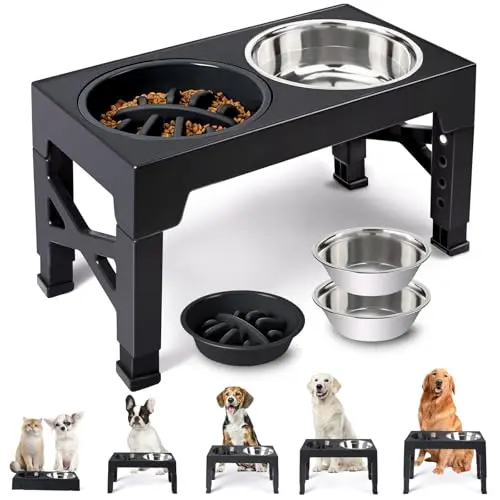
Elevated Dog Bowls with Slow Feeder Insert – All-in-One Feeding Station
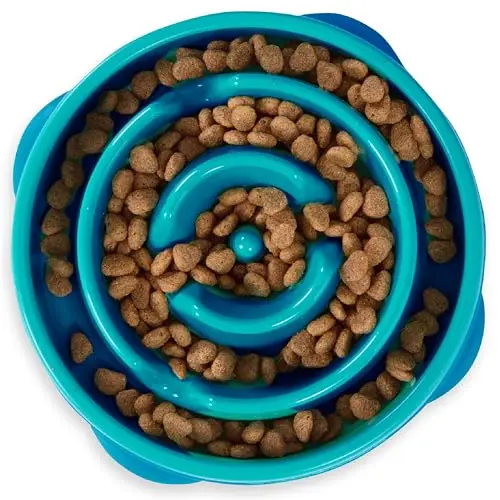
Fun Feeder Slo Bowl Medium – Deep Maze for Smaller Dogs
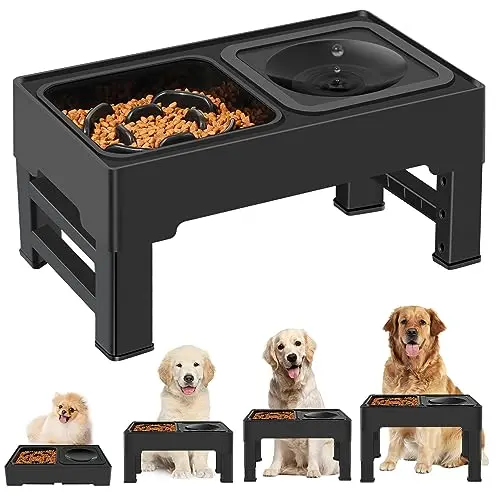
2-in-1 Elevated Slow Feeder with No-Spill Water Bowl
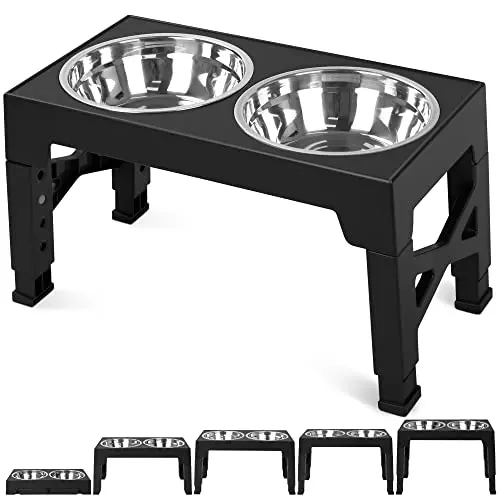
Elevated Dog Bowls – 5-Height Adjustable Stand with Two Bowls
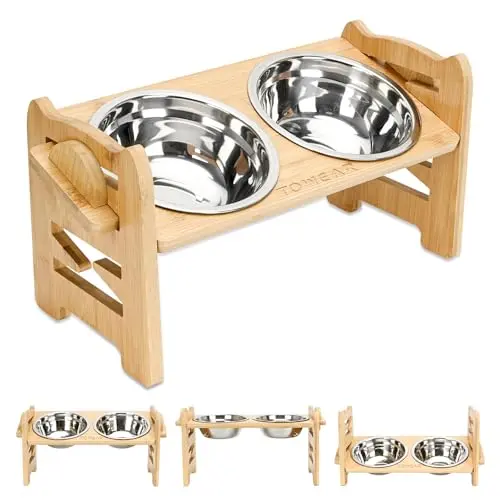
Bamboo Elevated Dog Bowls – Tilted 3-Height Feeding Station
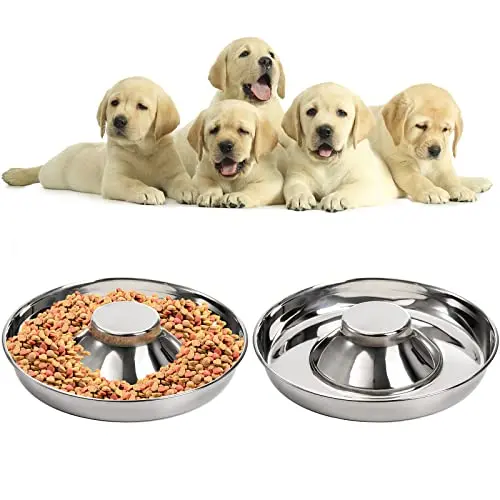
Stainless Steel Puppy Bowls – Low-Edge Weaning Set (2-Pack)
How We Evaluated These Feeding Bowls for Dogs
We didn’t run lab wear-and-tear trials or measure exact eating time with stopwatches. What we did: cross-referenced 10 distinct bowl products from 9 brands across 7 decision axes – material durability, ease of cleaning, stability, height adjustability, slow-feeding effectiveness, bowl capacity, and suitability for different breeds and life stages. We triangulated published specifications, aggregated owner feedback where available, and use-case fit against representative dog profiles (puppies, seniors, speed eaters, large breeds).
The scoring framework weighted real-world usability (60%) – how well each bowl solves the primary feeding challenge it targets – against feature differentiation (40%) – design uniqueness, adjustability range, and included accessories. We have no commercial relationship with any of the brands featured; recommendations track fit and differentiation, not brand preference. If your dog eats too fast, the MateeyLife Slow Feeder is a top choice; if joint comfort is the priority, the COMESOON elevated stand leads the pack.
How to Choose the Right Feeding Bowl for Your Dog
Elevated vs. Floor Bowls: What's Best for Your Dog?
The first fork in the road is whether to raise your dog’s bowls. Elevated feeders bring food and water closer to mouth level, reducing the need to stoop. This can ease pressure on the neck, shoulders, and spine, making them a favourite for senior dogs with arthritis or larger breeds who naturally stand taller. Many models allow you to adjust the height as your dog grows, offering a longer usable lifespan.
Floor-level bowls work fine for most healthy dogs, especially those who eat at a relaxed pace. However, if your dog tends to vomit after meals or has a condition like megaesophagus, an elevated bowl might be a game-changer. The general guideline is to set the bowl height at the level of your dog’s lower chest to keep the oesophagus aligned.
Slow Feeder Bowls: When, Why, and Which Maze Pattern
If your dog inhales food in under a minute, a slow feeder bowl with ridges and mazes can extend mealtime by 5-10 times. This reduces the risk of bloat, regurgitation, and obesity by forcing nibbling and licking. Maze complexity varies: shallow, wide patterns suit beginners and flat-faced breeds, while deep, intricate mazes challenge determined gulpers. The MateeyLife and Outward Hound Fun Feeder lines are excellent examples of the latter.
When choosing a slow feeder, consider cleaning effort-deep crevices trap kibble dust and need a brush or dishwasher. Also, supervise initial use; some dogs attempt to chew the plastic edges. For puppies and small breeds, start with a less intimidating pattern to build confidence.
Bowl Material Face-Off: Stainless Steel vs. Plastic vs. Bamboo
Stainless steel is the gold standard for hygiene: it’s non-porous, odour-resistant, dishwasher safe, and nearly indestructible. Many elevated stands include stainless bowls. Plastic bowls are lightweight, affordable, and can be moulded into complex slow-feeder designs, but they can develop scratches that harbour bacteria over time-look for food-grade, BPA-free PP or ABS plastic. Bamboo stands offer a warm aesthetic and are eco-friendly, but require more careful cleaning and aren’t dishwasher safe. For bowls that contact food directly, stainless steel or high-quality plastic remain the safest bets.
Size, Capacity, and Bowl Depth: Matching Your Dog's Meal Size
Bowl size should hold your dog’s entire meal with some room to spare, preventing overflow and mess. Small breeds might need only 1-2 cups, while large breeds can consume 4 cups or more per meal. Bowl depth matters too: shallow bowls are gentler for puppies and flat-faced dogs, while deeper bowls contain kibble and water better for long-nosed breeds. Elevated stands often come with two bowls, so you can use one for food and one for water-just check the diameter fits your dog’s muzzle width comfortably.
Stability and Non-Slip Features: Keeping Mealtime Clean
Nothing frustrates owners more than a bowl that slides across the floor during eating. Non-slip bases-whether rubber rings, silicone pads, or grippy feet-keep bowls stationary. Elevated stands should have level feet and a low centre of gravity to prevent tipping. Read owner feedback for real-world stability reports; some stands at full height can wobble with an enthusiastic eater. If your dog is a pusher, a bowl with a wide, heavy base or a stand with locking feet will save your floors.
Cleaning and Maintenance: Dishwasher Safety and Daily Care
Feeding bowls need frequent cleaning to prevent bacterial build-up and odours. Most stainless steel and plastic bowls are labelled dishwasher safe (top rack recommended). Bamboo stands require hand washing and drying to avoid warping. Slow feeders with deep channels may need a small brush to reach all crevices-if you dread scrubbing, stick to simpler patterns or stainless inserts. Daily rinse with warm, soapy water and a weekly sanitize cycle keep your dog’s food station hygienic.
Frequently Asked Questions
What's the difference between the Outward Hound Fun Feeder and the MateeyLife Slow Feeder?
Both are maze-style slow feeders that aim to extend mealtime, but the Outward Hound Fun Feeder Large (SLOWEST level) has a deeper, more complex pattern with taller ridges, making it more challenging. It holds 4 cups and suits large breeds. The MateeyLife holds 2 cups and uses a slightly wider maze pattern that’s easier for first-time puzzle feeders but still slows eating significantly. MateeyLife’s non-slip base is particularly grippy on hard floors. If your dog is a frantic eater and large, the Outward Hound may slow them down more; for medium breeds or dogs new to puzzles, MateeyLife is a friendlier entry point.
Are elevated dog bowls safe for all breeds?
Elevated bowls are generally safe and can benefit large breeds, seniors, and dogs with arthritis or neck issues by reducing strain. However, there has been some debate in veterinary circles about whether elevated feeding increases bloat risk in certain deep-chested breeds like Great Danes. The evidence isn’t conclusive, but if you’re concerned, feed smaller meals more frequently and ensure the bowl height aligns with your dog’s lower chest-not too high. For most dogs, a properly adjusted elevated feeder improves posture and digestion.
Can I use a slow feeder for wet food or raw diets?
Yes, most slow feeder bowls work with wet food, raw, or rehydrated kibble, though the paste-like texture can get stuck in deep crevices more than dry kibble. Choose bowls with wider grooves if you feed mostly wet food. Stainless steel slow feeders (like the insert in the Heeyoo kit) are easier to clean after raw meals. Always wash immediately to prevent bacterial growth, as raw food residue lingers more than dry crumbs.
What height should an elevated dog bowl be for my dog?
A good rule of thumb: measure from the floor to the top of your dog’s front legs (the withers) and subtract about 6 inches. For a 24-inch tall dog, an 18-inch bowl height would be ideal. Many adjustable stands like the XiaZ and Niubya cover a wide range (9-14 inches and 3-12 inches respectively), so you can experiment to see what posture looks most comfortable. Your dog should be able to eat without lowering its head below chest level or craning its neck upward.
How do I clean a slow feeder bowl with lots of crevices?
Dishwasher (top rack) is the easiest if the bowl is labelled safe. For hand washing, fill the bowl with warm soapy water and let it soak for 5-10 minutes, then use a bottle brush or an old toothbrush to scrub inside each ridge. Pay special attention to corners where saliva and food debris accumulate. Rinse thoroughly and air dry. The Outward Hound bowls, while effective, are known for needing a bit more scrubbing; the MateeyLife’s wider gaps are slightly easier to clean by hand.
Final Verdict
For most dogs who would benefit from a raised feeding position, the COMESOON Elevated Dog Bowls is the best overall pick-its three-height adjustability, thick stainless bowls, and rock-solid stability at a reasonable price make it a standout. If slowing down a speed eater is your priority, the MateeyLife Slow Feeder adds brain work to mealtime and significantly reduces gulping. Large-breed owners should take a serious look at the XiaZ five-height stand, which handles tall dogs and folds up for travel. Finally, if you’re raising a litter, the SOUJOY puppy bowls are purpose-built for the weaning stage. Whatever your dog’s eating style, there’s a bowl here to make mealtime safer and cleaner.