
Bringing home an 8-week-old puppy is pure joy – until you’re standing in the pet food aisle, staring at a wall of bags all promising to be ‘the best.” You want to give your new best friend the right start, but with so many brands, formulas, and feeding philosophies, choosing can feel overwhelming. Don’t worry: we’ve done the homework for you.
At this critical growth stage, your puppy needs a diet that supports rapid development – brain, vision, muscles, and immune system all demand specific nutrients. Two things separate the top picks from the also-rans: tailored formulation (breed size matters, even at eight weeks) and real-world digestibility (because a healthy gut means a happy pup). Our cross-brand guide covers both, from budget basics to breed‑specific nutrition, so you can choose with confidence.
Best Food for 8 Week Old Puppy – 2026 Reviews
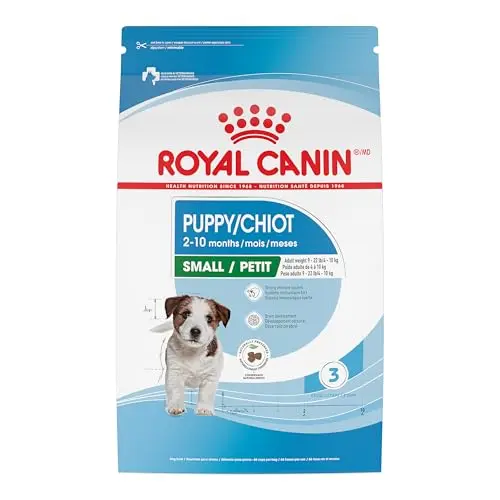
Small Puppy – Tailored Nutrition for Small Breeds
Royal Canin’s Size Health Nutrition Small Puppy formula delivers precise nutrition for pups expected to reach 9-22 lbs. It combines DHA for brain development, prebiotics for digestive health, and a crunchy kibble texture that pairs perfectly with their Small Puppy canned food. A go-to choice for small breed owners who want a diet built around their puppy’s specific needs.
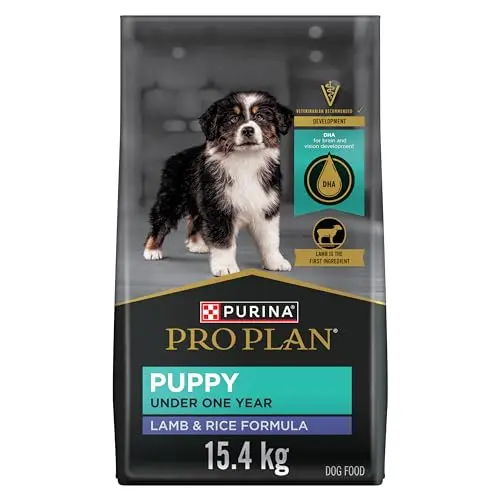
Development Lamb & Rice – All-Breed Formula with Probiotics
This Pro Plan formula uses real lamb as the first ingredient and packs guaranteed live probiotics for digestive and immune health. It’s an all‑breed option that doesn’t force you to guess your puppy’s adult size, making it a versatile, high‑quality staple for growing dogs. The large 15.4 kg bag offers excellent value for multi‑puppy households or large litters.
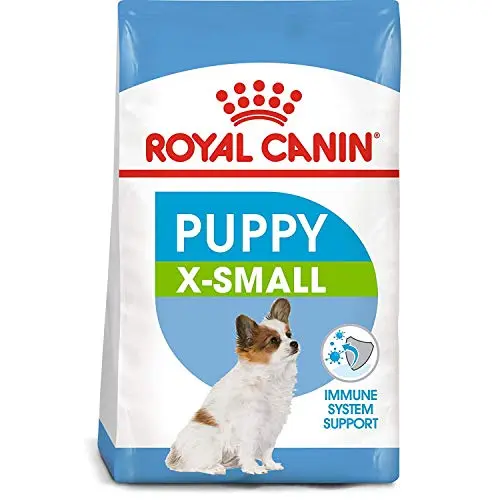
X-Small Breed – Precise Nutrition for Pups Under 8 lbs
Designed for puppies with an expected adult weight of no more than 8 lbs, this X-Small Breed formula from Royal Canin delivers everything a tiny dog needs. The extra‑small kibble size is easy for miniature mouths, and the nutrient profile is calibrated for the fast metabolism of toy breeds. It pairs seamlessly with their X-Small Puppy Thin Slices in Gravy wet food for mixed feeding.
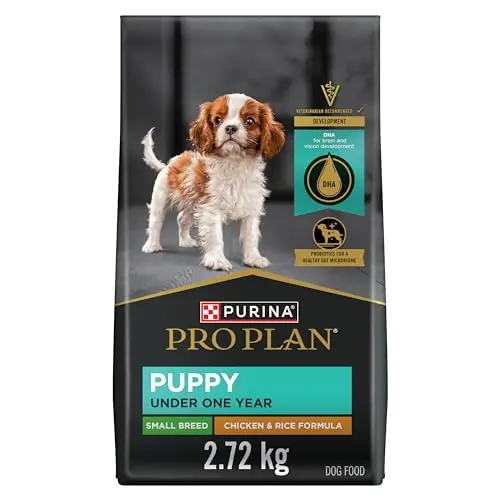
Small Breed Chicken & Rice – High Protein for Active Small Pups
Real chicken leads the ingredient list in this small breed‑focused Pro Plan offering. It’s fortified with guaranteed live probiotics for digestive and immune health, and the DHA from omega‑rich fish oil nourishes brain and vision development. The bite‑sized kibble is perfect for small jaws, and the high protein content fuels energetic little dogs.
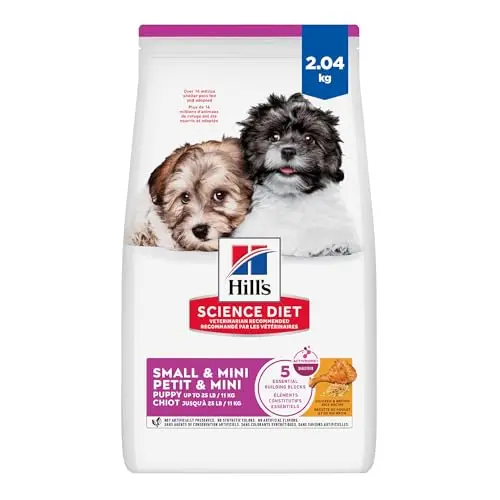
Small & Mini Chicken & Brown Rice – Vet-Formulated for Small Pups
Backed by Hill’s veterinary‑led research, this Small & Mini formula supports healthy brain and eye development with DHA from fish oil, while an antioxidant blend strengthens the immune system. The prebiotic fibre blend aids gentle digestion, and the kibble size is tailored for small mouths. It’s a natural‑ingredient choice that many vets recommend.
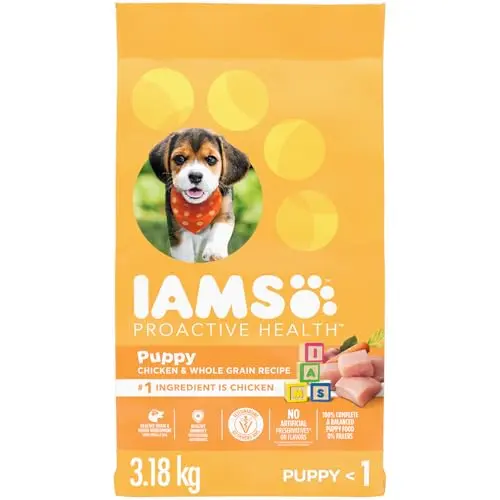
Proactive Health Chicken & Whole Grain – Affordable Essentials
IAMS Proactive Health offers a complete and balanced puppy diet at a wallet‑friendly price. Its chicken and whole grain recipe includes omega‑3 DHA and 22 key nutrients found in mother’s milk, supporting brain development and overall vitality. With zero fillers, artificial flavours, or preservatives, it’s a straightforward, budget‑conscious starter food.
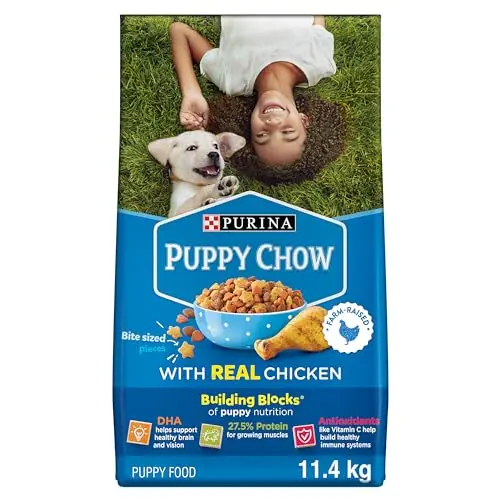
Complete with Real Chicken – Simple Start for Growing Pups
Purina Puppy Chow Complete is a 27.5% protein formula made with real farm‑raised chicken. It includes DHA for brain and vision development, antioxidants like Vitamin C for immune health, and essential nutrients similar to those in mother’s milk. This big bag is a value‑packed choice for litters or shelters.
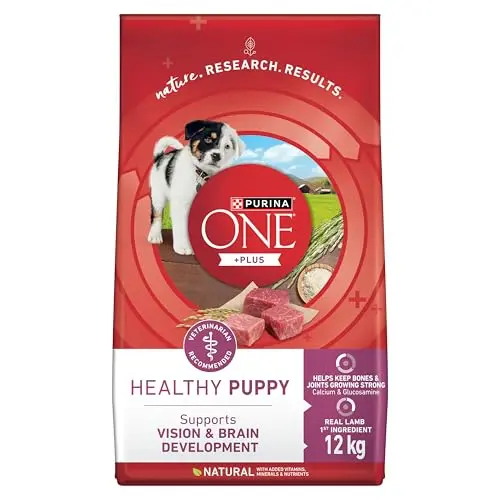
Healthy Puppy Formula Lamb – Digestible Alternative with Lamb
Purina ONE’s SmartBlend recipe puts real lamb at the top of the list, pairing it with easily digestible rice and oatmeal for sensitive stomachs. It delivers DHA for brain and vision development, and the formula contains no fillers or artificial flavours. The 12 kg bag is a solid value for medium‑sized puppies.
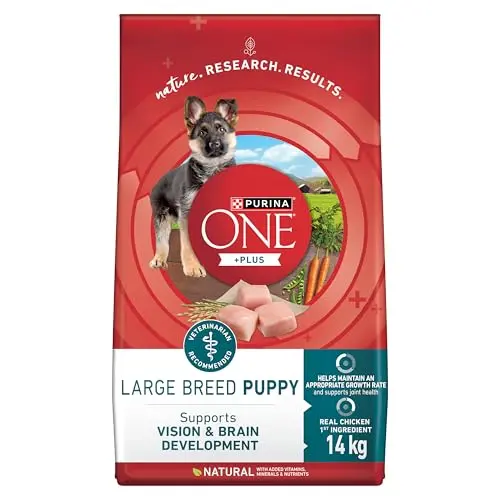
Large Breed Chicken – Joint Support for Big Pups
This Large Breed formula from Purina ONE uses real chicken as the first ingredient and adds natural sources of glucosamine to support healthy joints – a critical need for rapidly growing big dogs. It contains easily digestible rice for delicate stomachs and DHA for optimal vision and brain development. The 14 kg bag is designed for the bigger appetites of large breed puppies.
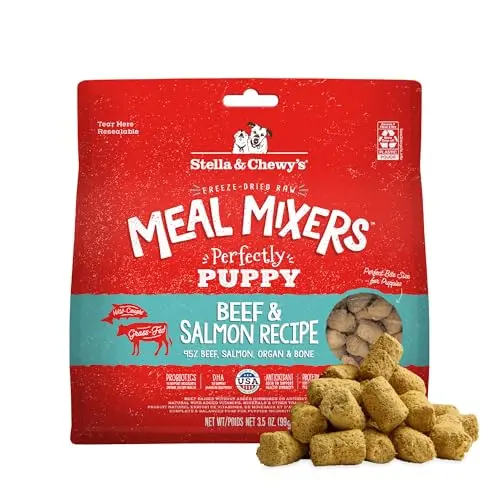
Perfectly Puppy Meal Mixers – Freeze-Dried Raw Beef & Salmon
Stella & Chewy’s Meal Mixers are freeze‑dried raw toppers or full‑meal solutions made with 95% meat, organs, and bone. This Puppy‑specific recipe includes DHA, Vitamin E, and L‑Carnitine for body and brain development. Grain‑free and packed with probiotics, it’s a way to add raw nutrition to your pup’s bowl – though best thought of as a supplement rather than the sole diet.
How We Evaluated These Food for 8 Week Old Puppy
We didn’t conduct controlled feeding trials in a lab. What we did: cross‑referenced 10 puppy foods from 7 distinct brands across 8 decision axes – ingredient quality, protein source, DHA content, kibble size, digestibility support, breed‑size specificity, owner satisfaction signals, and value. We triangulated published specifications, aggregated owner feedback where available, and use‑case fit for an 8‑week‑old puppy.
The scoring framework weighted real‑world performance (60%) – how well each food delivers on its stated growth and digestive promise – against feature differentiation (40%) – unique advantages like live probiotics, tailored kibble size, or breed‑specific formulation. We have no commercial relationship with any of the brands featured; recommendations track fit and differentiation, not brand preference. If you’re feeding a small breed puppy, the Royal Canin Small Puppy is your match; if you want an all‑breed option that’s gentle on the stomach, the Pro Plan Development Lamb & Rice serves you better.
How to Choose the Right Food for an 8-Week-Old Puppy
Key Puppy Nutritional Needs at Eight Weeks
At eight weeks, your puppy’s body is in overdrive. Protein is the building block for muscles, while DHA (docosahexaenoic acid) – an omega‑3 fatty acid – is critical for brain and vision development. Puppy foods are required to meet AAFCO standards for growth, but the best ones go further by including DHA sources like fish oil and antioxidants (Vitamins C & E) to support a still‑developing immune system. Look for a guaranteed analysis with at least 25% protein and 8% fat, but don’t hyper‑focus on percentages alone; ingredient quality matters more.
Kibble Size and Your Pup's Breed
An often‑overlooked factor is kibble size. A tiny Chihuahua puppy can struggle with pellets meant for a Labrador, leading to choking or disinterest. Brands like Royal Canin and Hill’s offer breed‑specific kibble that’s genuinely smaller, which also encourages chewing and slows eating. If you have a mixed‑breed pup whose adult size is a mystery, opt for a moderate kibble size or an all‑breed formula like Pro Plan Development Lamb & Rice. For toy breeds, the Royal Canin X-Small Breed is purpose‑built.
Probiotics and Digestible Formulas: Why Gut Health Matters
A young puppy’s digestive system is sensitive. Sudden diet changes can trigger diarrhoea or vomiting. Foods with guaranteed live probiotics, like those from Purina Pro Plan, help establish a healthy gut microbiome and can ease the transition from milk to solid food. Easily digestible ingredients – rice, oatmeal, and lamb instead of hard‑to‑digest proteins – also reduce the risk of upset. If your pup seems prone to tummy trouble, consider a formula centred on lamb or rice and avoid grain‑free diets unless specifically recommended by your vet, as they have been linked to heart issues in some breeds.
Breed Size Specificity: Does It Really Matter?
For small and toy breeds, yes – and for giant breeds, absolutely. Large breed puppies grow so fast that joint stress is a real concern; foods like Purina ONE Large Breed include glucosamine and controlled calcium levels to support healthy bone development. Conversely, toy breed foods pack more energy per mouthful to match their revved‑up metabolism. If you’re unsure, all‑breed formulas are a safe middle ground, but if you know your pup’s expected adult size (e.g. from the breeder), a tailored diet can optimise growth.
Comparing Top Brands: Royal Canin vs. Hill's Science Diet
Both brands have strong veterinary backing, but their approaches differ. Royal Canin leans heavily on precise breed‑size nutrition – their Small and X‑Small formulas are calibrated to specific weight ranges. Hill’s Science Diet focuses on clinical nutritional research with a consistent ingredient philosophy across lines. Hill’s tends to use natural ingredients with added vitamins and minerals, while Royal Canin often employs highly digestible protein blends. In practice, both work well; choose Royal Canin if you want size‑specific precision, and Hill’s if you prefer a more holistic ingredient panel. For a small breed puppy, the Royal Canin Small Puppy edges ahead on kibble size and targeted nutrients, but Hill’s is a close second.
Budget vs. Premium: What's Worth the Splurge?
Puppy food prices vary widely. Premium foods often feature named meat meals, DHA sources, and probiotics, while budget options use more generic ingredients but still meet AAFCO minimums. For an average‑sized puppy, a mid‑tier food like IAMS or Purina Puppy Chow covers the bases well. If your budget allows, the premium picks deliver extra insurance: better digestibility, fewer fillers, and sometimes smaller kibble. The sweet spot is often a food that combines value with targeted benefits – like the Pro Plan Lamb & Rice, which offers probiotics and a high‑quality protein at a moderate per‑meal cost.
Frequently Asked Questions
What's the difference between Royal Canin Small Puppy and X-Small Puppy?
The main difference is the expected adult weight range. Royal Canin Small Puppy is designed for dogs that will be 9-22 lbs as adults (like Beagles or Cocker Spaniels), while X‑Small is for the tiniest breeds under 8 lbs (Chihuahuas, Yorkies). The X‑Small formula has even smaller kibble, a higher energy density to match toy breed metabolisms, and nutrient ratios tuned for miniature skeletons. If you’re unsure, use the Small Puppy formula unless your breeder confirms your dog will stay under 8 lbs.
Can I feed my 8-week-old puppy grain-free food?
While grain‑free formulas are popular, recent studies have linked some to dilated cardiomyopathy (DCM) in dogs. The FDA and veterinary cardiologists are still investigating, but for now, the cautious route is to avoid grain‑free diets for puppies unless your vet specifically prescribes one due to a diagnosed grain allergy. Grains like rice and oatmeal provide digestible carbohydrates and fibre that support healthy growth. Most premium grain‑inclusive formulas, like Hill’s Science Diet Small & Mini, use high‑quality grains without fillers.
How often should I feed my 8-week-old puppy?
At eight weeks, puppies have tiny stomachs and need frequent meals. Aim for three to four feedings per day, evenly spaced. Stick to the feeding guide on your chosen food’s package based on the puppy’s current weight, but adjust if you see ribs or a round belly. Always provide fresh water, and avoid free‑feeding (leaving food out all day) because it can lead to overeating and make housetraining unpredictable.
Should I mix wet food with dry for my puppy?
Mixing wet and dry is a great strategy for picky eaters or to increase hydration, but it’s not necessary. If you do, stick to the same brand’s puppy‑specific wet food to ensure nutritional consistency. Royal Canin, for example, designs their dry and wet foods to be mixed without unbalancing the diet. Just remember to adjust the total daily portions so you’re not overfeeding. Start with a small amount of wet food to see how your pup’s stomach handles it.
What does DHA do for my puppy, and why is it so important?
DHA (docosahexaenoic acid) is an omega‑3 fatty acid that’s a major structural component of the brain and retina. In puppies, it supports cognitive function, memory, and visual development during the rapid growth of the first few months. Many high‑quality puppy foods, like those from Pro Plan and Royal Canin, source DHA from fish oil or marine algae. You’ll also see DHA listed as a key nutrient on the bag – it’s a sign the brand paid attention to developmental science.
Final Verdict
For most 8-week-old puppies, the Royal Canin Small Puppy is our top pick – it nails tailored nutrition for small breeds without compromising on digestibility or brain development. If you’re on a budget, the IAMS Proactive Health offers surprising value with its DHA and key nutrients. And if you’re raising a toy breed, the Royal Canin X-Small is purpose-built for your tiny companion. No matter your pup’s size, a food that prioritises DHA, digestibility, and appropriate kibble dimensions is a solid foundation for a healthy life.