
Bringing a West Highland White Terrier puppy into your home is a whirlwind of excitement, tiny barks, and more energy than you’d think possible in a bundle of white fluff. But before you get too far into training and cuddles, there’s one decision that sets the foundation for everything: what you’re going to feed that little Westie.
Westie puppies have their own set of nutritional needs – small mouths that demand appropriately sized kibble, developing brains that thrive on DHA, and sensitive stomachs that can rebel against the wrong ingredients. The right food can make the difference between a glossy coat and steady growth versus tummy troubles and picky eating. That’s why we’ve pored over the options from leading brands, zeroing in on formulas that cater specifically to small breed puppies – or at least deliver the right mix of nutrients in a Westie-friendly format.
In this guide, we aren’t just recommending the top seller; we’ve compared kibble size, ingredient quality, breed-specific tailoring, and real-world feedback to help you choose the food that sets your Westie up for a healthy, happy puppyhood. Whether you’re after a premium small-breed recipe, a budget-friendly staple, or something for a sensitive stomach, we’ve got a pick for you.
Best Food for Westie Puppies – 2026 Reviews
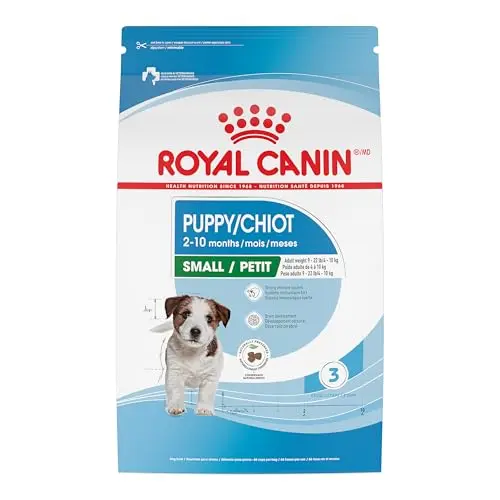
Small Puppy Chicken Recipe – Tailored growth support for Westies
Royal Canin’s Small Puppy formula is purpose-built for breeds like Westies, with a kibble size and nutrient profile designed for small jaws and rapid growth. It blends high-quality chicken, DHA from fish oil, and prebiotics for digestive health, supporting everything from brain development to immune function. The formula is backed by veterinary expertise and tailor-made for the unique needs of small breed puppies.
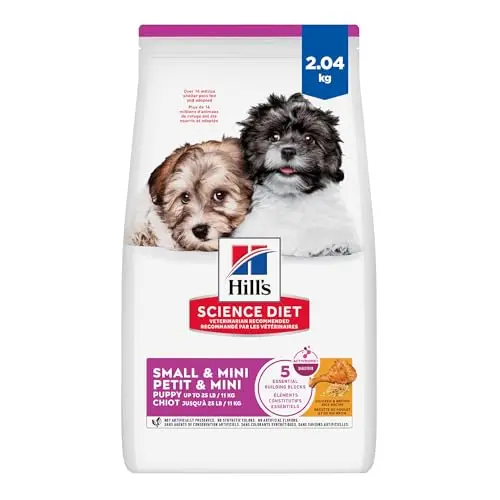
Small & Mini Chicken & Brown Rice Recipe – Veterinary-recommended for tiny pups
Hill’s Science Diet Small & Mini is formulated with the specific needs of small and toy breeds in mind, delivering balanced minerals for bone growth, DHA for brain and eye development, and a high-quality protein source. The antioxidant blend supports the developing immune system, and the prebiotic fibre aids digestion, making it a well-rounded option for Westie puppies.
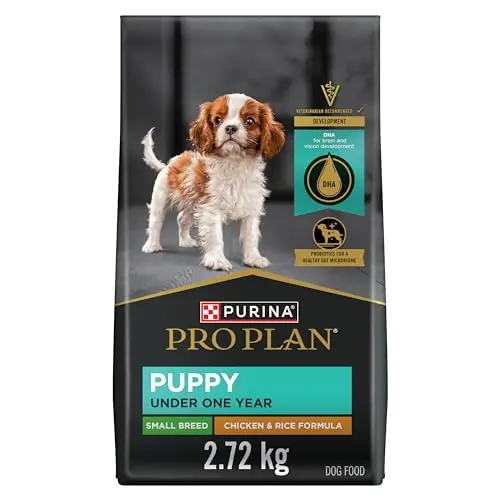
Small Breed Chicken & Rice Formula – High-protein, DHA-rich for brain development
Purina Pro Plan’s Small Breed formula is a high-protein option that puts real chicken first, packing in DHA from fish oil and live probiotics for digestive and immune health. The bite-sized kibble is designed for small mouths, and the antioxidants help fortify your Westie’s natural defences during a critical growth period.
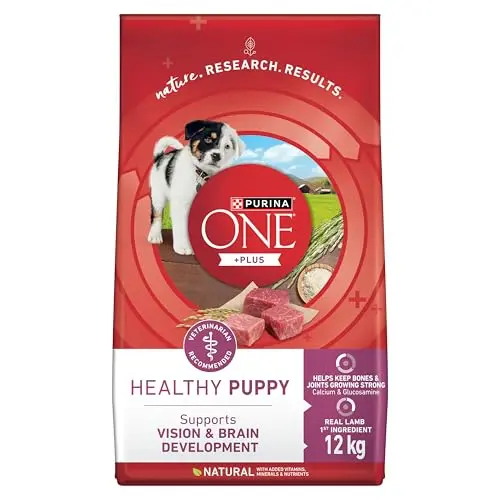
Healthy Puppy Lamb & Rice Formula – SmartBlend nutrition with real lamb
Purina ONE’s +Plus Healthy Puppy Formula uses real lamb as the top ingredient, paired with easily digestible rice and oatmeal to be gentle on delicate stomachs. It includes DHA for brain development and antioxidants for immune support, all without artificial flavours or fillers.
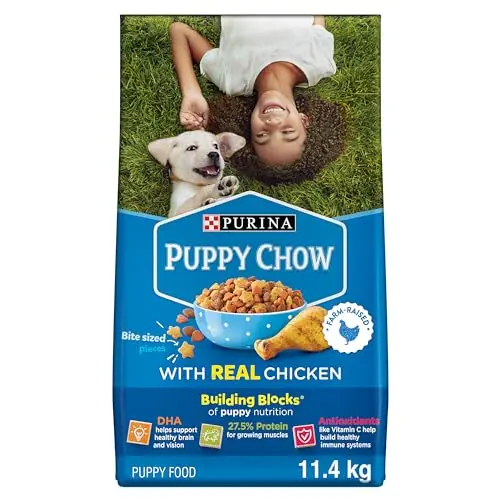
Complete Chicken Recipe – Budget-friendly balanced nutrition
Puppy Chow Complete is a wallet-friendly option that doesn’t skimp on essentials: real chicken provides muscle-building protein, DHA supports brain development, and antioxidants like vitamin C help the immune system. It’s a straightforward, no-frills formula that covers the nutritional bases for growing Westies.
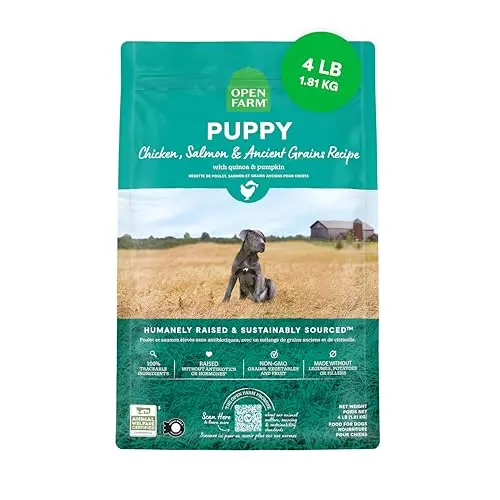
Ancient Grains Chicken & Salmon Recipe – Wholesome grains for sensitive stomachs
Open Farm’s Ancient Grains Puppy formula combines humanely raised chicken and wild-caught salmon with non-GMO ancient grains like oats and quinoa. It’s free from peas, potatoes, and legumes, making it a smart pick for Westies prone to digestive issues, and every ingredient is traceable back to its source.
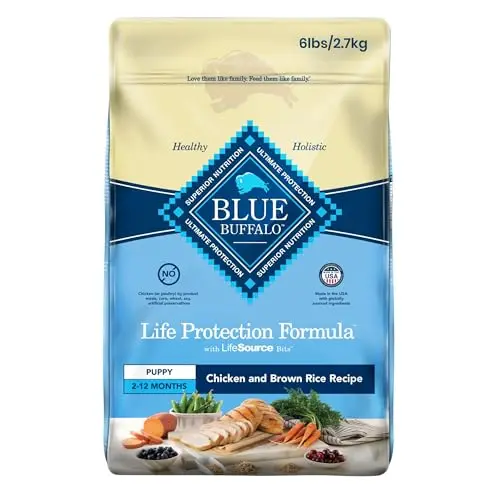
Life Protection Chicken & Brown Rice – LifeSource Bits for immune health
Blue Buffalo’s Life Protection Formula uses real chicken as the first ingredient and adds their unique LifeSource Bits – a blend of antioxidants, vitamins, and minerals cold-formed to preserve potency. It includes DHA and ARA for brain and eye development, along with calcium and phosphorus for strong bones.
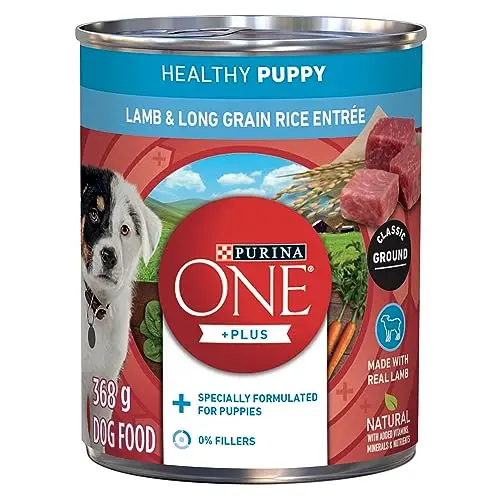
Classic Ground Lamb & Rice Entree – Wet food option for picky eaters
This canned formula provides a soft, pâté texture that’s easy for young Westies to eat. Made with real lamb and free of poultry by-products, it’s a good source of hydration and can be mixed with dry kibble or served alone for a complete meal.
How We Evaluated These Foods for Westie Puppies
We didn’t run controlled feeding trials or long-term health monitoring. What we did: cross-referenced 8 puppy foods from 6 distinct brands across 5 decision axes – kibble size and texture, ingredient quality and protein sources, breed-specific formulation, DHA/ARA content for brain development, and digestive tolerance reported by owners. We triangulated published specifications, aggregated owner feedback where available, and use-case fit against what a growing Westie actually needs.
The scoring framework weighted real-world suitability for Westie puppies (60%) – how well each food matches the size, dietary sensitivities, and nutritional demands of the breed – against feature differentiation (40%) – unique advantages like tailored LifeSource Bits, traceable ingredients, or guaranteed probiotics. We have no commercial ties to any brand featured; picks are strictly based on how well they serve the Westie puppy’s unique needs. If you want a no-compromise small-breed formula, the Royal Canin Small Puppy is your top match; if you’re looking for an excellent alternative with a similar focus, Hill’s Science Diet Small & Mini is a worthy runner-up.
How to Choose the Right Food for Your Westie Puppy
Small Breed Formulas: Why They Matter for Westies
When you see ‘small breed’ on a bag of puppy food, it’s not just marketing. These formulas are designed with a few key differences that matter a lot for Westies. First, the kibble size is smaller and easier for tiny mouths to pick up and chew – Westie puppies can struggle with standard-sized pieces. Second, the nutrient density is higher: small breeds have faster metabolisms and need more calories per pound, so the food is packed with energy and essential nutrients in a smaller volume. Finally, the mineral balance – especially calcium and phosphorus – is calibrated for a small dog’s bone growth rate, helping to prevent developmental issues. While all-breed puppy foods can work, a small-breed formula takes the guesswork out of feeding your Westie.
Both Royal Canin Small Puppy and Hill’s Science Diet Small & Mini are purpose-built for small breeds, and it shows in the kibble size and tailored nutrition. If you’re considering a non-small-breed option, make sure the pieces are still manageable and the calorie content matches your pup’s energy levels.
DHA and Brain Development: The Puppy Must-Have
DHA (docosahexaenoic acid) is an omega-3 fatty acid that’s crucial for puppy brain and vision development. It’s found in mother’s milk and in ingredients like fish oil and marine microalgae. During the first few months of a Westie’s life, their brain is growing rapidly, and DHA helps support that growth. Most high-quality puppy foods now include DHA, but the source and amount can vary. Look for foods that list a specific DHA source high on the ingredient panel, like fish oil or algal oil.
The Royal Canin Small Puppy and Hill’s Science Diet both use fish oil as a DHA source, while Blue Buffalo includes both DHA and ARA, another fatty acid found in mother’s milk. If brain development is a top priority for you, these formulas deliver.
Ingredients Decoded: What's in the Bag?
Reading a dog food label can feel like decoding a puzzle, but a few rules of thumb simplify it. First, real meat should be the first ingredient – whether it’s chicken, lamb, or salmon. Avoid foods where a grain or ‘meal’ appears first. Second, whole grains like brown rice, oatmeal, and barley are generally well-tolerated and provide slow-release energy; gimmicky grain-free trends aren’t necessary for most Westies. Third, watch out for artificial colours, flavours, and preservatives – they don’t add nutrition and can trigger sensitivities. Finally, consider whether your Westie has any known protein sensitivities; lamb or salmon can be good alternatives to chicken.
If ingredient transparency matters to you, Open Farm’s Ancient Grains recipe lets you trace every component back to its source. For a classic, no-nonsense list, Purina ONE Lamb & Rice keeps it simple with real lamb and digestible grains.
Wet vs. Dry Food: Which Is Better for Westie Puppies?
There’s no single right answer, but understanding the pros and cons helps. Dry kibble is convenient, helps clean teeth through chewing, and is usually more calorie-dense. For Westies, a small, crunchy kibble can be great for dental health. Wet food, on the other hand, has a high moisture content – beneficial for hydration, especially if your pup doesn’t drink enough water. It’s also softer and more aromatic, which can entice picky eaters. Many Westie owners find a mix of both works best: dry food as the staple and a spoonful of wet as a topper to keep mealtimes exciting.
If you’re looking for a quality wet option, the Purina ONE Lamb & Rice entree is a straightforward pâté that’s easy to serve alongside dry kibble. For all-dry feeding, any of our top picks will serve you well.
Royal Canin vs. Hill's Science Diet: Which is Right for Your Westie?
These two are neck-and-neck, and for good reason. Royal Canin Small Puppy offers a highly tailored approach: the kibble is specifically designed for the jaw shape of small breeds, and the nutrient profile is fine-tuned for the Westie’s growth rate. It leans heavily on veterinary research and breed-specific science. Hill’s Science Diet Small & Mini, meanwhile, is also vet-recommended but with a slightly more general small-breed focus. It brings a prebiotic fibre blend that’s great for digestion and a taste that many puppies love. In practice, both are excellent; the choice often comes down to which one your Westie prefers and what fits your budget. If you want the most custom fit, Royal Canin edges ahead. If you’re looking for a slightly more affordable premium pick, Hill’s is a fantastic runner-up.
Frequently Asked Questions
What's the difference between Royal Canin Small Puppy and Hill's Science Diet Small & Mini?
Royal Canin Small Puppy is designed with a slightly more breed-specific approach, taking into account the Westie’s jaw shape and growth curve; the kibble is uniquely shaped, and the formula includes DHA from fish oil and marine microalgae. Hill’s Science Diet Small & Mini is equally vet-recommended and focuses on small/toy breed nutrition with a prebiotic fibre blend for digestion. Both are excellent choices; if you want the most tailored option, Royal Canin is our top pick. If budget is a concern, Hill’s offers a comparable foundation at a slightly lower cost per meal.
Is wet or dry food better for Westie puppies?
Both have their place. Dry food is convenient, helps with dental health, and is calorie-dense – perfect for keeping a Westie’s energy up. Wet food adds moisture to the diet, which can help with hydration and can be more appealing to picky eaters. Many Westie owners opt for a combination: a high-quality dry kibble as the base, with a spoonful of wet food mixed in. For a reliable wet option, the Purina ONE Lamb & Rice entree is a soft pâté that works well as a topper or occasional meal.
Can I feed my Westie puppy a food that's not specifically for small breeds?
Yes, but with caveats. All-breed puppy foods can absolutely meet a Westie’s nutritional needs if they provide high-quality protein, DHA, and appropriate calorie density. The main concern is kibble size: if the pieces are too large, your Westie might struggle to chew them, potentially leading to choking or disinterest. Also, non-small-breed formulas may have mineral ratios more suited to larger breeds, which could affect bone development. If you go this route, look for a food with smaller kibble and check that the calcium/phosphorus levels align with small-breed recommendations. Purina ONE Lamb & Rice has reasonably small kibble and is a good all-breed option, but always monitor your puppy’s eating habits.
How often should I feed my Westie puppy?
Westie puppies under six months typically need three meals a day, spaced evenly to keep their blood sugar stable and energy levels consistent. After six months, you can transition to twice daily feedings. Portion sizes depend on the food’s calorie density and your puppy’s weight; always follow the feeding guidelines on the bag as a starting point, and adjust based on your vet’s advice and your pup’s body condition. Foods like Royal Canin Small Puppy have feeding charts tailored to expected adult weight, which is especially helpful for Westies.
What ingredients should I avoid in puppy food?
Steer clear of foods that list corn, wheat, or soy as the primary ingredients, as these are common allergens and provide less bioavailable protein. Avoid artificial colours, flavours, and preservatives (like BHA, BHT, and ethoxyquin). Also, be wary of vague meat meals where the source isn’t specified. Instead, look for whole protein sources like chicken, lamb, or salmon, and whole grains or legumes for carbohydrates. Open Farm Ancient Grains and Blue Buffalo Life Protection are both free from artificial additives and use named meat meals, making them safer bets for sensitive Westies.
Final Verdict
After comparing kibble size, ingredient quality, and breed-specific nutrition, the Royal Canin Small Puppy stands out as the best overall food for Westie puppies. It’s the most finely tuned to the breed’s unique needs, from the tiny kibble to the DHA-rich formula. If you’re looking for a more affordable premium option that’s still small-breed focused, the Hill’s Science Diet Small & Mini is a fantastic alternative. For budget-conscious owners, Purina Puppy Chow Complete covers the essentials without the premium price tag. And if your Westie has a sensitive stomach, don’t overlook Open Farm Ancient Grains – its gentle, traceable ingredients can make all the difference. No matter which you pick, you’re giving your Westie a solid nutritional start. Just remember to transition slowly and watch for your pup’s cues – they’ll let you know what works best.