
Your chocolate lab greets you with that unstoppable tail wag and a face that says ‘food-now.” But beneath that shiny coat and boundless enthusiasm, chocolate labs face a set of breed-specific nutritional challenges: a tendency to pack on extra kilos, joints that take a beating from all that bounding, and a digestive system that sometimes grumbles at the wrong ingredients. Choosing the right food isn’t just about filling a bowl; it’s about setting up your lab for years of healthy, happy retrieves.
The dog food aisle is a maze of breed-specific formulas, large-breed kibbles, and sensitive-stomach options. Some lean hard into joint support and weight management, while others promise skin and coat miracles. We sorted through them all to find the standout performers that actually align with a chocolate lab’s needs-not just clever marketing. Whether you’re managing a picky eater, a dog with allergies, or simply want to keep your lab in top form, this guide lays out the best options available.
Best Dog Food for Chocolate Labs – 2026 Reviews
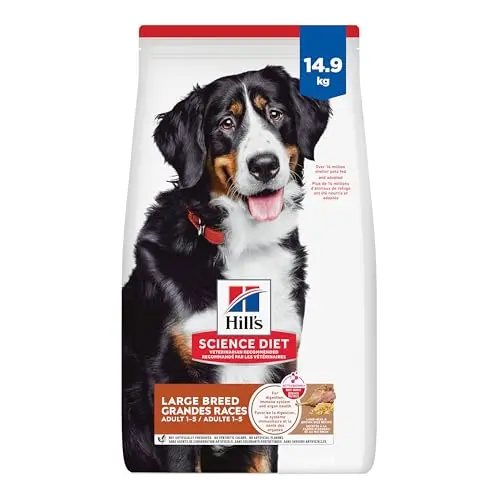
Adult Large Breed Lamb Meal & Brown Rice – Tailor-Made for Big Paws
A large breed formula that checks all the boxes for chocolate labs: high-quality lamb protein to maintain lean muscle, natural glucosamine and chondroitin for joint support, and omega-6 fatty acids for a gleaming coat. It’s built around the nutritional demands of dogs over 55 pounds, making it a natural fit for your lab.
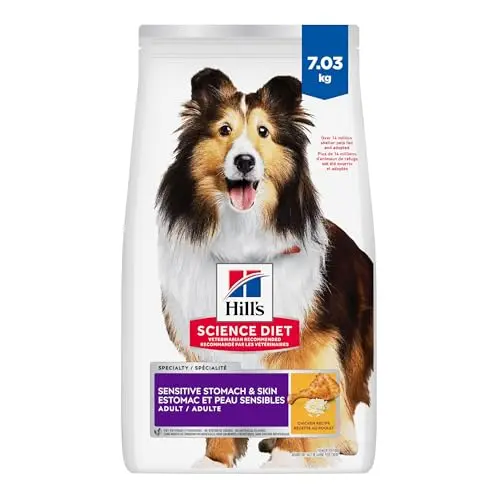
Adult Sensitive Stomach & Skin Chicken Recipe – Gentle Digestion, Happy Pup
When your lab’s tummy gets rumbly or their skin flares up, this formula steps in with prebiotic fibre and easily digestible chicken. It’s a vet-recommended option that targets the root of digestive and dermatological discomfort, making mealtime worry-free.

True Instinct Beef & Salmon – Lean Muscle Fuel
Packing 32% protein from real beef and salmon, this high-octane formula is built for labs that live in the fast lane. It’s ideal if your chocolate lab is especially active, needs muscle support, or just thrives on a protein-rich diet.
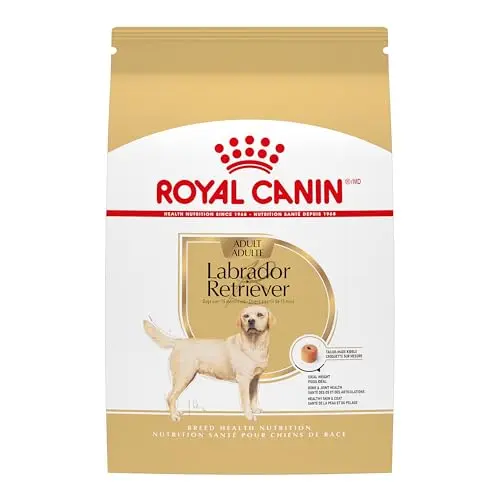
Labrador Retriever Adult – Precision Nutrition for Purebreds
The only food on our list designed exclusively for Labrador Retrievers. From the donut-shaped kibble that slows down fast eaters to the calibrated calorie and joint support, everything about this formula is tuned to the quirks of the breed.
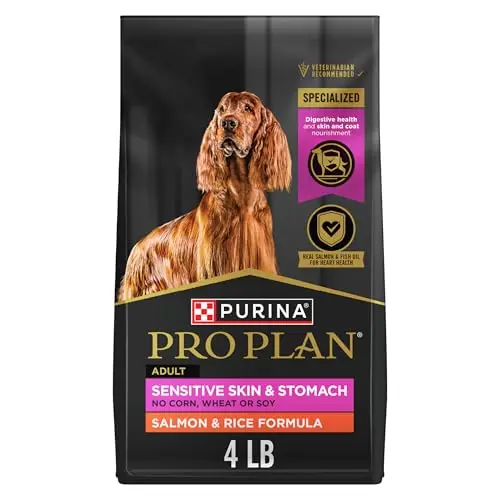
Sensitive Skin & Stomach Salmon & Rice – Allergy Relief in a Bowl
Salmon is the star here, paired with easily digestible oatmeal and prebiotic fibre. It’s a go-to for labs struggling with food sensitivities, offering both omega-3s for skin health and a gentle protein source that rarely triggers reactions.
How We Evaluated These Dog Foods for Chocolate Labs
No long-term feeding trial or vet-supervised taste test happened here. What we did: cross-referenced 5 dog food formulas from 4 distinct brands against 5 critical decision axes – breed-specific tailoring, joint support, digestive health, skin and coat benefits, and protein quality. We triangulated published nutritional profiles, ingredient lists, and aggregated owner feedback where available to assess real-world fit for chocolate labs.
The scoring framework weighted real-world performance (60%) – how well a formula addresses the joint, weight, and sensitivity issues common to the breed – against feature differentiation (40%) – unique technical advantages like kibble design, prebiotic inclusion, or protein sourcing. We have no commercial relationship with any of the brands featured; recommendations track fit and differentiation, not brand preference. If you’re looking for a single, all-around performer, the Hill’s Science Diet Large Breed Lamb Meal & Brown Rice is your match; if your lab battles skin or stomach reactivity, the Hill’s Sensitive Stomach & Skin serves you better.
How to Choose the Right Dog Food for Chocolate Labs
What Should Chocolate Labs Eat?
Chocolate labs need a diet that hits three key targets: high-quality animal protein to maintain that muscular frame, controlled fat and calories to keep off the extra pounds, and joint-supporting nutrients like glucosamine and chondroitin. Look for formulas where meat (like lamb, chicken, or salmon) is the first ingredient, and avoid vague by-products. Labs are notorious for eating too fast, so larger kibble sizes or shapes that encourage chewing are a bonus-they can help prevent bloat and improve digestion.
Joint Support: Glucosamine and Chondroitin
Every lab owner worries about hips and elbows. Glucosamine and chondroitin are the heavy hitters here, often sourced from natural ingredients like chicken meal or added as supplements. While all foods on our list support joint health, the Royal Canin Labrador Retriever dials it up with EPA and DHA, while Hill’s Large Breed relies on naturally occurring glucosamine from its lamb meal. If your lab already shows stiffness, prioritise a formula that fronts joint nutrients.
Weight Management for Labradors
Obesity is the number one health threat for labs. A food with moderate calorie density and lean protein helps maintain an ideal body condition without constant hunger. The Royal Canin Labrador formula specifically calibrates its calorie and fat content for the breed, while Hill’s Large Breed uses L-carnitine to support metabolism. Avoid free-feeding-stick to measured portions based on your dog’s ideal weight, not the chow hound staring at you.
Sensitive Stomachs and Food Allergies
Itchy skin, ear infections, and loose stools often point to food sensitivities. Novel proteins like salmon or lamb, combined with easily digestible carbs like rice or oatmeal, can calm an inflamed system. The Pro Plan Sensitive Skin & Stomach and Hill’s Sensitive Stomach & Skin both excel here, packing prebiotic fibres that feed good gut bacteria. If you suspect a grain allergy, note that true grain allergies are rare in dogs-often the protein source is the culprit-so a limited-ingredient diet may be more effective than going grain-free.
Breed-Specific vs. Large Breed Formulas
Do you really need a food labelled ‘Labrador Retriever” or does any large breed formula suffice? The truth is that while large breed formulas already address joint and weight concerns, a breed-specific formula like Royal Canin’s goes a step further with specially shaped kibble and a nutrient profile dialled in for lab metabolism. The Hill’s Large Breed is a fantastic crossover-it works for any big dog but hits all the right notes for labs. If you want that extra layer of customisation and don’t mind the price, the breed-specific option is worth it.
Grain-Free vs. Whole Grains: Does It Matter?
The grain-free trend has been linked to dilated cardiomyopathy (DCM) in some dogs, but the science is still evolving. For most chocolate labs, whole grains like brown rice and oatmeal are perfectly healthy and provide steady energy. All our top picks include grains unless specified otherwise. If your vet recommends a grain-free diet due to a confirmed allergy, options like Nature’s Recipe Grain Free (not featured in our lineup but widely available) exist, but for the vast majority of labs, sticking with trusted grain-inclusive formulas is the safer bet.
Frequently Asked Questions
What is the best dog food for a chocolate lab with allergies?
Food allergies in dogs often manifest as skin issues or digestive upset. For chocolate labs, starting with a limited-ingredient diet that uses a novel protein like salmon or lamb is a smart move. The Pro Plan Sensitive Skin & Stomach features salmon as the sole animal protein and is free from common allergens like chicken. Similarly, the Hill’s Sensitive Stomach & Skin uses a single chicken source and includes prebiotic fibre to soothe the gut. Always consult your vet for an elimination trial to pinpoint the exact trigger.
How does the Royal Canin Labrador Retriever formula compare to the Hill's Science Diet Large Breed formula?
Both are excellent choices for chocolate labs, but they take different approaches. The Royal Canin Labrador Retriever is hyper-tailored: its donut-shaped kibble physically slows down fast eaters, and its calorie content is specifically calibrated for the Lab’s tendency to gain weight. It also leans heavily on EPA and DHA for joint and brain health. The Hill’s Large Breed Lamb Meal & Brown Rice is a more general large-breed formula that delivers natural glucosamine from lamb meal and supports lean muscle with high-quality protein. The Hill’s option is often more budget-friendly and works for any big dog in the house, while the Royal Canin feels like a bespoke solution. If you have a purebred lab or a speed-eater, Royal Canin’s design is worth the premium; for a multi-dog home with different large breeds, Hill’s is the versatile pick.
What's the difference between the Hill's Sensitive Stomach & Skin and the Pro Plan Sensitive Skin & Stomach?
Both target digestive and skin issues, but their protein sources and fibre strategies differ. The Hill’s recipe uses chicken and includes beet pulp as its prebiotic fibre, focusing on gentle digestion and a robust skin barrier via vitamin E and omega-6s. The Pro Plan formula relies on salmon as its first ingredient, delivering a hefty dose of omega-3 fatty acids from fish oil, which directly reduces inflammation. Its oatmeal-based prebiotic tends to be even easier on the stomach for some dogs. If your lab has a suspected poultry allergy, Pro Plan’s salmon is the clear winner; if not, both work well, but the Pro Plan often yields faster skin improvements according to owner feedback, while the Hill’s is more widely available.
How much should I feed my chocolate lab?
Portions depend on age, activity level, and the specific food’s calorie density. Always start with the feeding guide on the bag, but adjust based on your dog’s body condition-you should be able to feel their ribs with a light fat covering. For an average 70-pound adult chocolate lab with moderate activity, most of these formulas recommend around 3 to 4 cups per day, split into two meals. Labs are notorious beggars that will convince you they’re starving, so use a measuring cup and avoid free-feeding. Regular weigh-ins and vet check-ups help fine-tune portions.
Final Verdict
For the typical chocolate lab, the Hill’s Science Diet Large Breed Lamb Meal & Brown Rice is the no-compromise champion-it balances joint support, weight management, and coat health without overthinking it. If your lab struggles with tummy troubles or itchy skin, swap it for the Hill’s Sensitive Stomach & Skin, a proven soother for digestive drama. Active labs that burn through calories will thrive on the Purina ONE True Instinct, and if you want the closest thing to a custom formula, the Royal Canin Labrador Retriever is worth every penny. Choose based on your lab’s biggest need-and watch that tail wag.