
Managing EPI in a German Shepherd is a daily balancing act – you’re constantly tweaking meals, monitoring stool quality, and watching for signs of discomfort. When your dog’s pancreas isn’t producing enough enzymes, every bite matters. The right food won’t cure EPI, but it can make a dramatic difference in how your GSD feels day to day by reducing digestive strain and maximizing nutrient absorption. With so many options on the shelf, though, it’s tough to know which ones are truly easy on the stomach and which will just add to the chaos.
The best dog foods for EPI are highly digestible, with moderate fat levels and beneficial fibre like prebiotics to support gut health. You’ll also want to consider protein sources and whether a breed‑specific formula adds value. In this guide, we’ve cross‑shopped the market to help you pick a food that works with your dog’s EPI management plan, not against it. We’ll walk you through what to look for, what to avoid, and why a few standouts have earned our strongest recommendations.
Best Dog Food for EPI German Shepherds – 2026 Reviews
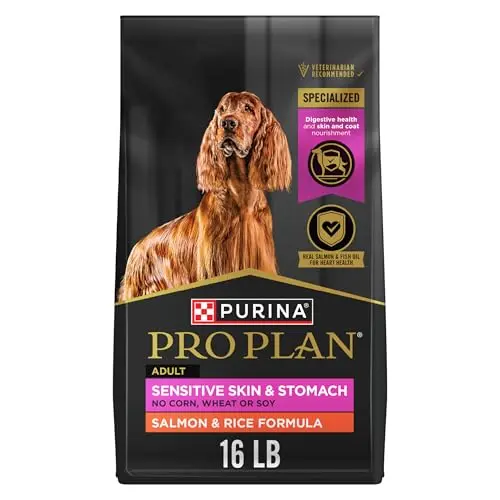
Sensitive Skin & Stomach Salmon & Rice – A Gentle, Highly Digestible Foundation for EPI Dogs
Purina Pro Plan’s Sensitive Skin & Stomach formula is built around digestibility – exactly what an EPI‑affected GSD needs. Salmon is the first ingredient, oatmeal provides easily digestible carbohydrates, and natural prebiotic fibre nourishes beneficial gut bacteria. It’s a straightforward, no‑fuss option that prioritizes digestive health without skimping on joint‑supporting omega‑3s or skin‑nourishing omega‑6s. The moderate protein and fat levels make it a safer choice when you’re trying to keep food moving smoothly through your dog’s system.
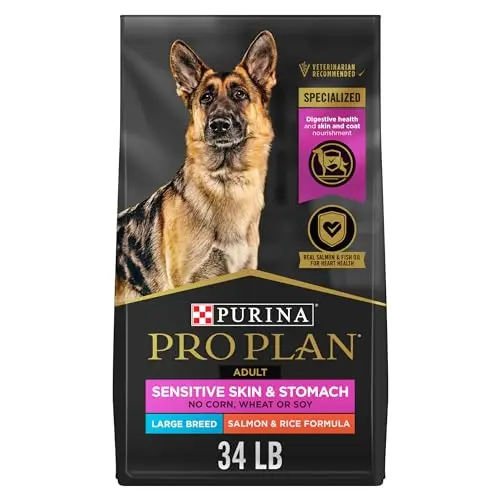
Large Breed Sensitive Skin & Stomach Salmon & Rice – Joint‑Focused Digestion for Bigger German Shepherds
A close cousin of our top pick, this version is scaled up for large breeds – and that matters for a German Shepherd. It retains the salmon‑first, prebiotic‑rich formula but adds glucosamine and a higher EPA level for joint health. The larger kibble promotes chewing, which can aid in enzyme predigestion, and the overall nutrient profile is tuned for big dogs that need extra structural support while dealing with a touchy gut.
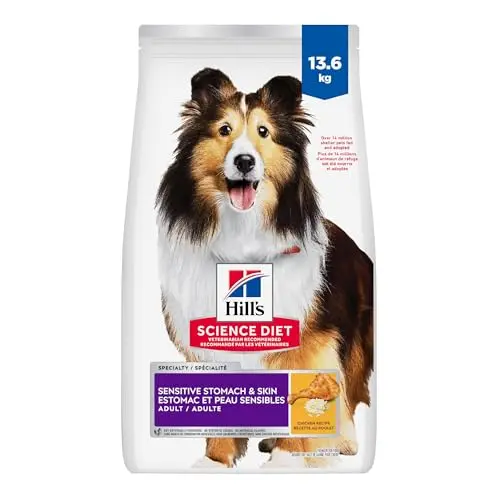
Adult Sensitive Stomach & Skin Chicken – Veterinarian‑Endorsed Digestive Reliability
Hill’s brings serious veterinary credibility to the sensitive‑stomach game. This chicken‑based formula leans on beet pulp prebiotic fibre and a highly digestible ingredient list to keep things moving smoothly. It’s the brand most recommended by Canadian vets for their own dogs, and the consistent feedback suggests it handles chronic digestive grumbles well – from loose stools to gurgly tummies.
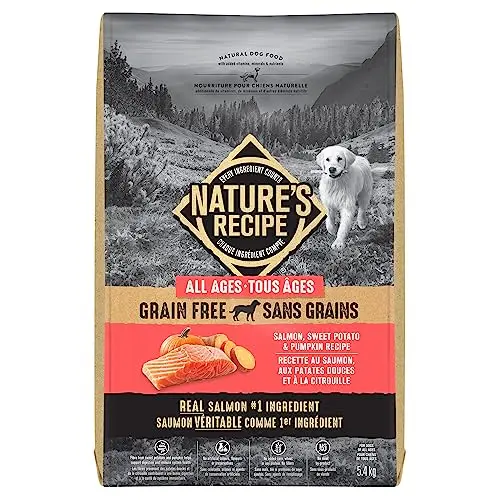
Grain Free Salmon, Sweet Potato & Pumpkin – Limited-Ingredient Support for Sensitive Systems
If you’re exploring grain‑free diets to see if they help your German Shepherd’s digestion, this Nature’s Recipe formula is a clean, limited‑ingredient option. Salmon leads the pack, while sweet potato and pumpkin bring natural fibre for stool quality. It’s free from artificial colours, flavours, and preservatives – a streamlining that can make a difference for dogs with multiple sensitivities.
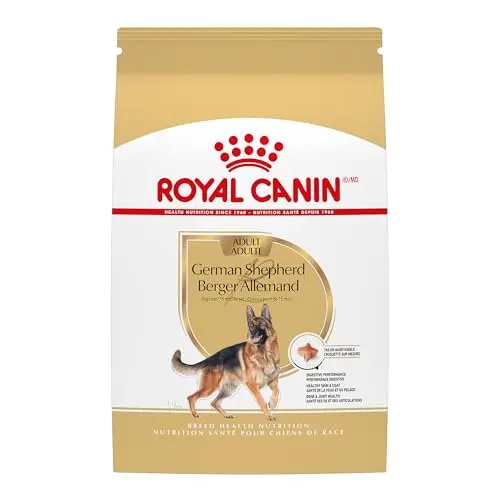
German Shepherd Adult – Anatomy‑Optimized Nutrition for Purebred GSDs
Royal Canin went all‑in on the German Shepherd with a kibble shape designed specifically for a long muzzle and a nutrient mix tailored to breed‑typical challenges. It emphasises highly digestible proteins and specific fibres to promote optimal stool quality – a crucial factor for any EPI dog – while also addressing joint and skin support through EPA/DHA and glucosamine.
How We Evaluated These Dog Foods for EPI German Shepherds
We didn’t run clinical digestibility trials or enzyme activity testing. What we did: cross‑referenced 5 dog food formulas from 4 distinct brands across 6 decision axes – protein source and quality, fibre type and prebiotic content, fat level and fatty acid profile, breed‑specific ingredient tailoring, owner‑reported digestive outcomes, and ingredient list transparency. We triangulated published nutritional specifications, aggregated owner feedback where available, and use‑case fit against the unique demands of EPI in German Shepherds.
The scoring framework weighted real‑world digestive performance (60%) – based on how well each recipe supports enzyme‑compromised digestion and maintains stool quality – against feature differentiation (40%) – such as breed‑specific kibble design, joint‑health add‑ons, or limited‑ingredient simplicity. We have no commercial relationship with any of the brands featured; recommendations track digestive suitability and practical fit, not brand preference. If you’re looking for the most broadly reliable starting point, the Pro Plan Sensitive Skin & Stomach is your best bet; if joint support is high on your list, the Large Breed variant earns its place.
How to Choose the Right Dog Food for EPI German Shepherds
Why Digestibility Is the North Star for EPI
With exocrine pancreatic insufficiency, your dog’s body struggles to break down food, so every calorie needs to be as easy to process as possible. Look for highly digestible proteins like salmon, whitefish, or chicken meal, and simple, well‑cooked carbohydrates such as oatmeal or rice. Fibre should come from prebiotic sources like chicory root or beet pulp – these feed the good gut bacteria without adding roughage that can irritate an already sensitive GI lining. Avoid foods with long lists of legumes, which can be harder to digest and contribute to gas.
A good test of digestibility is stool quality: an EPI dog on the right food should produce firm, well‑formed stools within two to three weeks of transitioning. If you’re still seeing undigested food or loose stools, the digestibility of the formula may not be sufficient for your particular dog.
Protein and Fat: Finding the Right Balance
Protein is critical for maintaining muscle in a breed as active as the German Shepherd, but the source matters. Many EPI dogs do best on novel or single‑source proteins like salmon, which are less likely to trigger sensitivities. Aim for a moderate fat level – typically around 12‑16% on a dry matter basis – because high fat can overwhelm a compromised pancreas. The fatty acids that are present should skew toward omega‑3s (EPA and DHA) for their anti‑inflammatory benefits, both in the gut and in joints.
If your dog has historically had issues with chicken or beef, rotate to a fish‑based food and watch for improvement in itching and stool consistency. It can take a full bag to see the full picture, so don’t abandon a food too quickly unless you see a clear negative reaction.
The Role of Fibre and Prebiotics in Gut Stability
Fibre is a double‑edged sword for EPI dogs. Insoluble fibre (like cellulose) can speed up transit time and lead to loose stools, while soluble, fermentable fibres – think beet pulp, chicory root, or pumpkin – can regulate moisture and feed beneficial bacteria. Prebiotics specifically encourage the growth of good bacteria, which is essential when the digestive environment is under constant strain. In our lineup, formulas with beet pulp (Hill’s) and chicory root (Pro Plan) are explicitly leveraging this science.
Avoid foods where fibre comes primarily from generic ‘plant fibre” or tomato pomace, as these are less predictable. And always introduce fibre‑rich foods slowly over 7-10 days, even if you’re switching from another high‑fibre diet.
Breed‑Specific vs. All‑Breed Diets: Does It Matter?
German Shepherds have breed‑specific quirks – a deep chest (bloat risk), a long muzzle, and a predisposition to joint issues. Breed‑oriented foods like Royal Canin’s GSD formula tailor kibble shape to encourage chewing, which may stimulate saliva and enzyme production, and often include glucosamine and chondroitin at levels suited for big dogs. That said, a top‑notch all‑breed sensitive‑stomach food can deliver equally good digestive support. The question is whether you value the anatomical‑specific extras enough to pay the premium.
For many EPI dogs, the priority is digestibility first; the breed‑specific bonuses are a nice‑to‑have, not a must‑have. If you’re already achieving good stool quality on an all‑breed formula, there’s little reason to switch.
Grain‑Free vs. Grain‑Inclusive in an EPI Context
The grain‑free trend can be confusing. Some EPI dogs do perfectly well on grain‑inclusive foods with oatmeal or rice; others seem to react to gluten or certain grains. Grain‑free options like Nature’s Recipe swap grains for sweet potato and pumpkin, which provide soluble fibre without gluten. However, grain‑free does not automatically mean ‘more digestible” – the overall ingredient quality and fat level are far more impactful. We generally recommend starting with a grain‑inclusive, high‑digestibility food and only moving to grain‑free if you see persistent issues that might be tied to grains.
Be cautious of grain‑free diets that rely heavily on peas and lentils, as these have been subject to ongoing FDA investigation regarding heart health – a risk not to be taken lightly in a breed already prone to cardiac issues.
Pro Plan vs. Hill's Science Diet: Which Is Easier on Digestion?
Both lines are heavyweight champions in the sensitive‑stomach category, but they go about it differently. Pro Plan uses salmon as a first ingredient and leans on oatmeal and chicory root for fibre, while Hill’s sticks with chicken and gets its prebiotic punch from beet pulp. Owner feedback suggests Pro Plan has an edge in palatability and stool consistency for EPI dogs, possibly due to the fish‑based protein and omega‑3 profile. Hill’s, on the other hand, has a longer track record of veterinary endorsement and a wealth of clinical research behind its fibre blend.
If your GSD has never shown a chicken sensitivity, Hill’s is a safe, evidence‑backed bet. If you suspect poultry might be a trigger, or your dog simply turns up its nose at chicken‑based kibble, Pro Plan’s salmon recipe is the smarter starting point.
Frequently Asked Questions
What should I look for in a dog food for EPI?
Prioritize high digestibility, a moderate fat content (ideally under 15% on a dry matter basis), and a quality protein source that your dog tolerates – salmon or a novel protein often works best. Look for prebiotic fibres like chicory root or beet pulp, which support gut bacteria without overloading the system. Avoid foods with generic meat meals, excessive fibre from legumes, or artificial additives that can irritate an already sensitive GI tract. Transition slowly, over two weeks, and monitor stool quality; the right food should produce consistently firm stools and a brighter, more energetic dog.
What's the difference between Royal Canin German Shepherd and Hill's Science Diet Sensitive Stomach?
Royal Canin’s formula is breed‑specific, with a kibble shape engineered for a GSD’s muzzle and added joint support through glucosamine and chondroitin. Hill’s is a condition‑specific food – its primary aim is digestive soothing, using chicken, beet pulp prebiotics, and omega‑6 for skin. Stool quality can be excellent on both, but Royal Canin may shine if your dog needs the chewing stimulus or structural joint care, while Hill’s is a stronger choice if you want a vet‑centric, research‑backed approach focused purely on digestion. Palatability and price also differ: Royal Canin is pricier and can be hit‑or‑miss on taste, whereas Hill’s tends to be well‑accepted but costs similarly at large bag sizes.
How does Pro Plan's Sensitive Skin & Stomach compare to their Large Breed formula?
The core recipe is the same: salmon first, oatmeal, prebiotic fibre, and omega fatty acids. The large breed version raises the glucosamine and EPA levels and offers a larger kibble that encourages chewing. For an EPI German Shepherd, both work – the decision comes down to whether you want the joint‑health boost for a larger‑framed dog. The large breed bag is also heavier (15.4 kg vs. 7.26 kg), so you’re committing to a longer trial. Price per meal is roughly comparable, but the upfront cost differs significantly.
Can a grain‑free diet help my German Shepherd with EPI?
It can, but it’s not a guaranteed solution. Some EPI dogs do better without grains because they have co‑existing sensitivities to gluten or corn. Grain‑free diets like Nature’s Recipe replace grains with sweet potato and pumpkin, which are gentle, soluble fibres that firm stools. However, if your dog tolerates grains like oatmeal or rice – which are highly digestible and provide a good energy source – there’s no need to go grain‑free. Focus on the overall digestibility and fat level rather than grain presence alone. And avoid grain‑free foods heavy in peas or legumes, which can interfere with digestion and have been linked to heart concerns.
Final Verdict
For most EPI‑diagnosed German Shepherds, the Pro Plan Sensitive Skin & Stomach Salmon & Rice is the smartest starting point – it delivers dependable digestibility, a protein source that rarely triggers issues, and a proven track record of improving stool quality. If your GSD is large‑framed and you want to get ahead of joint wear, upgrading to the Large Breed version folds in glucosamine at a reasonable cost per meal. For those who prefer a breed‑specific, anatomy‑focused approach, Royal Canin’s GSD formula remains a compelling niche pick, while the Nature’s Recipe Grain‑Free offers a budget‑friendly way to explore a limited‑ingredient, grain‑free path. Pick the food that best matches your dog’s protein tolerance and your budget, and transition slowly – your GSD’s digestive system will thank you.