
Bringing home a new puppy is equal parts joy and responsibility – and getting their nutrition right from day one shapes everything from brain development to lifelong vitality. You’ll face a wall of brightly labelled bags, each promising perfect growth, but not all puppy foods are created equal. Some prioritize DHA for cognitive development, others pack in probiotics for sensitive tummies, and a surprising number hide fillers behind a premium-looking label.
We focused specifically on food that fuels the rapid growth puppies experience in their first year – when their bones, muscles, and immune systems are building at a breakneck pace. You need a formula rich in high-quality protein, brain-supporting omega-3s, and digestible carbohydrates that won’t upset a still-developing gut. Our cross-brand survey pulls together the market’s standout puppy formulas so you can choose with confidence, whether you’re feeding a tiny toy breed or a giant-breed pup with a very different growth curve.
No one brand won every category, and your final pick will pivot on breed size, ingredient sensitivities, and whether you prefer kibble, wet, or both. In this guide, we’ll walk you through the nutrient must-haves, the red flags on ingredient panels, and the specific formulas that impressed us most. By the end, you’ll know exactly which bag to grab – and why it’s the right fit for your growing sidekick.
Best Dog Food for Growing Puppies – 2026 Reviews
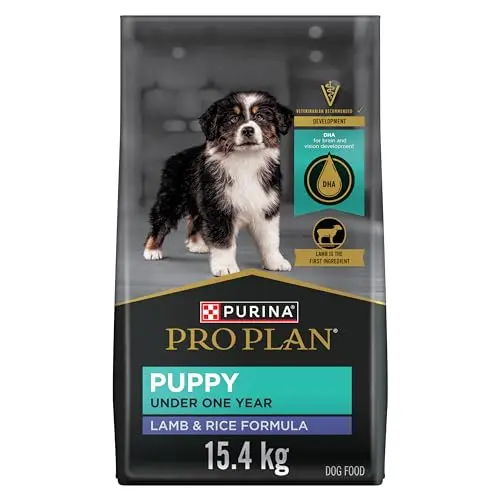
Development Lamb & Rice – Lean Muscle & Digestive Health
A protein-rich dry formula with real lamb as the first ingredient, fortified with DHA and live probiotics for whole-body growth. Suitable for all breed sizes.
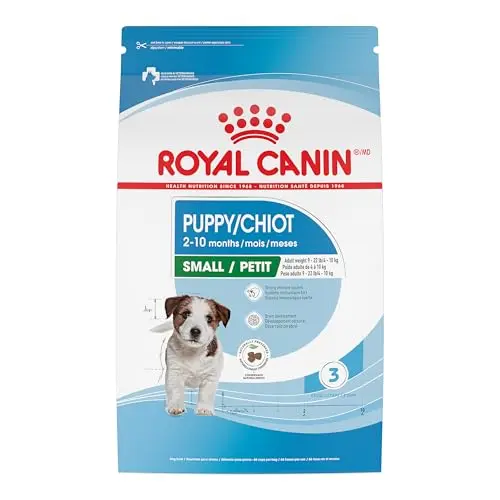
Small Puppy – Tailored Nutrition for Toy Breeds
Designed specifically for small breed puppies 2-10 months old, this tiny kibble combines immune-boosting antioxidants with brain-nourishing DHA.
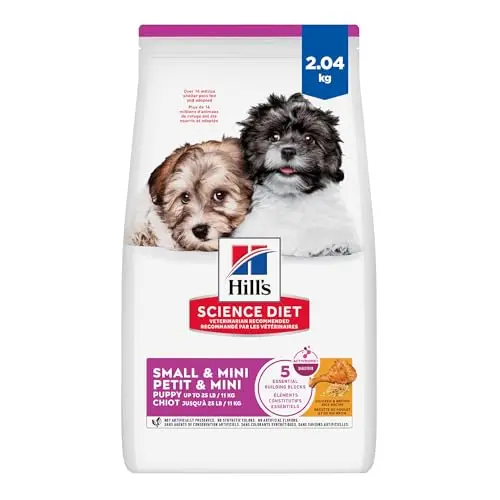
Small & Mini – Immune & Brain Development
Kibble sized for tiny mouths, this chicken & brown rice formula leans on a prebiotic fibre blend and DHA to support gut health and cognition in small breeds.
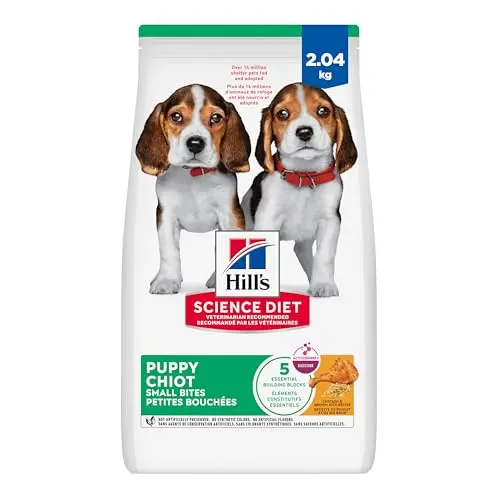
Small Bites – DHA for Brain & Eye Development
Similar nutritional DNA to the Small & Mini but with slightly larger kibble suited for small- to medium-breed puppies.
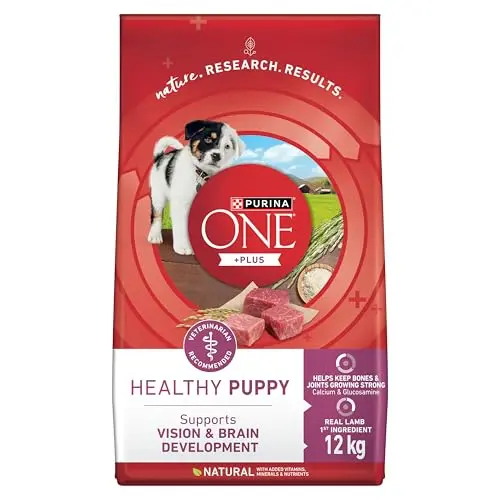
Healthy Puppy Formula Lamb – Easily Digestible Nutrition
Real lamb drives the protein in this SmartBlend formula, with easily digestible rice and oatmeal for sensitive stomachs.
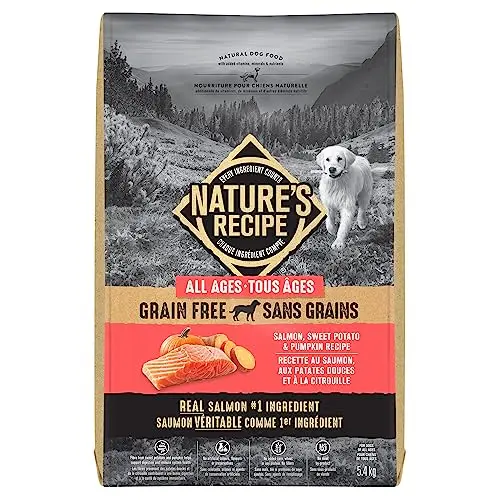
Salmon, Sweet Potato & Pumpkin – Grain-Free Digestive Support
A grain-free, limited-ingredient formula led by real salmon, designed for all life stages – including growing puppies.
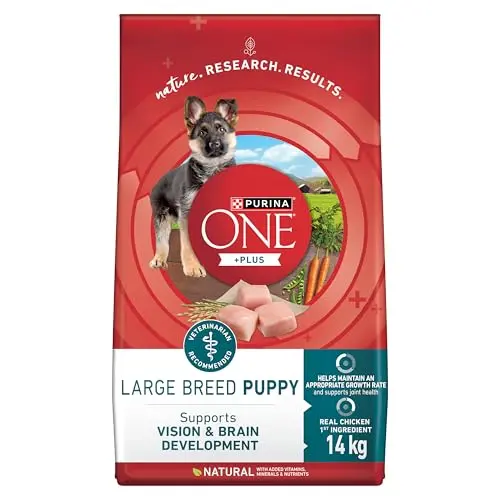
Large Breed – Chicken & Rice with Glucosamine
Designed for big-pawed puppies, this chicken-and-rice blend adds natural glucosamine sources for joint support.
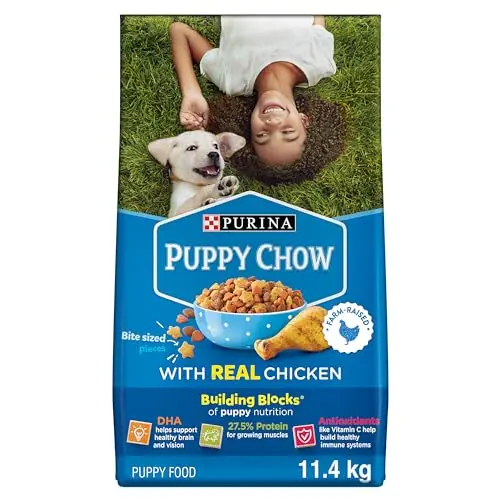
Complete with Real Chicken – Budget-Friendly Growth
A no-frills, high-protein dry food with 27.5% protein and DHA, priced for budget-conscious puppy parents.
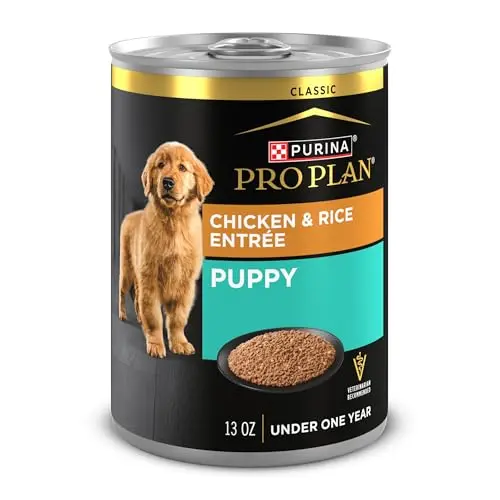
Chicken & Rice Entree – Wet Food Topper or Meal
A pâté-style wet food with DHA and high-quality chicken, ideal as a topper or standalone meal for texture-loving pups.
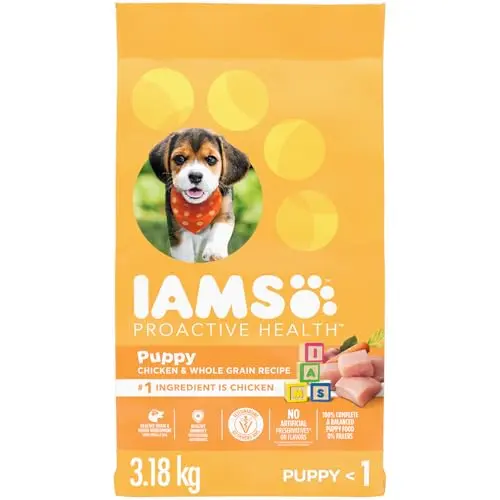
Proactive Health – Chicken & Whole Grain for Everyday
An entry-level dry food with omega-3 DHA and 22 key nutrients, targeting small-to-medium breeds at an accessible price point.
How We Evaluated These Dog Food for Growing Puppies
We didn’t run long-term feeding trials or veterinary health monitoring. What we did: cross-referenced 10 dry and wet puppy foods from 7 distinct brands across eight decision axes – nutritional completeness (DHA, protein, probiotics), ingredient quality (real meat as #1 ingredient, absence of fillers), kibble size and form (dry vs. wet, breed suitability), digestibility and stool quality signals, owner-reported palatability and coat condition, weight and life-stage specificity, transparency of labelling, and qualitative value. We triangulated published product information, nutrient profiles, and aggregated puppy-owner feedback where available, mapping each formula’s features against representative growth needs – from a 2-month-old Chihuahua to a 6-month-old Great Dane.
The scoring framework weighted real-world performance (60%) – how well each food delivers nutrients critical for rapid growth – against feature differentiation (40%) – unique strengths like live probiotics, breed-specific kibble engineering, or grain-free formulations. We have no commercial relationship with any of the brands featured; recommendations track fit and differentiation, not brand preference. If you’re looking for a broadly applicable, protein-packed dry food that supports the widest range of puppies, the Purina Pro Plan Development Lamb & Rice earned our top spot – but if you’ve got a tiny toy breed, the Royal Canin Small Puppy is purpose-built.
How to Choose the Right Dog Food for Growing Puppies
Key Nutrients Every Growing Puppy Needs
Puppies pack a lifetime of development into their first year, and their food must supply the building blocks for brain, bones, and immunity. DHA (docosahexaenoic acid), an omega-3 fatty acid, is non-negotiable – it’s concentrated in neural tissues and directly influences cognitive and visual sharpness. Look for fish oil, marine microalgae oil, or specific DHA guarantees on the label. High-quality animal protein (chicken, lamb, salmon) should lead the ingredient list, providing amino acids for muscle and organ growth. Calcium and phosphorus must be balanced – especially in large-breed puppies – to support bone density without accelerating growth plates too fast. Prebiotics and probiotics foster a stable gut microbiome, which reduces the diarrhoea episodes common in transitions. Finally, antioxidants (vitamins E, C, beta-carotene) buffer the immature immune system against environmental stress.
Wet vs. Dry: Which Is Better for Your Puppy?
There’s no universal winner – it’s about hydration, dental health, and convenience. Dry kibble is convenient, cost-effective, and the crunchy texture may help reduce tartar buildup. Many of our top picks – like the Pro Plan Lamb & Rice – are dry formulas with live probiotics that survive processing. Wet food contains higher moisture content, which can be a lifesaver for puppies who don’t drink enough water or those with urinary concerns. It’s also easier to chew for teething pups or tiny breeds. The Pro Plan Chicken & Rice Entree pâté, for instance, works brilliantly as a topper to entice picky eaters or as a standalone meal for small-breed puppies. Many owners find that a mixed feeding approach – mostly kibble with a spoonful of wet – gives the best of both worlds.
How to Read a Puppy Food Label
Pet food labels follow a legal hierarchy, but the details matter. Ingredients are listed by weight before cooking, so a fresh meat like chicken or lamb should sit in the first slot. Beware of ingredient splitting – when a low-quality grain appears multiple times under different names to push meat higher. Look for a nutritional adequacy statement from AAFCO (Association of American Feed Control Officials) confirming the food is formulated for growth or all life stages. The guaranteed analysis shows minimum protein and fat, maximum fibre and moisture. Puppy foods typically need 22-28% protein and 8-15% fat on a dry matter basis. If the label says ‘with” a specific ingredient (e.g., ‘with chicken”), the required percentage drops significantly – choose foods that name the protein outright.
What to Look for in a Dog Food for Growing Puppies
Prioritise named animal proteins – chicken, lamb, salmon – not vague ‘meat meal.” Avoid artificial colours, flavours, and preservatives (BHA, BHT, ethoxyquin) that add nothing nutritional. A little whole grains or grain-free carbohydrates (sweet potato, peas) provide energy, but the trend toward grain-free isn’t inherently healthier unless your puppy has a diagnosed sensitivity. For large breeds, seek out controlled calcium and phosphorus ratios and glucosamine or chondroitin for joint health – the Purina ONE Large Breed formula includes natural glucosamine sources. For small breeds, kibble size matters enormously: the Royal Canin Small Puppy and Hill’s Small & Mini are engineered specifically for tiny mouths. If your puppy has a sensitive stomach, prebiotic fibres and easily digestible rice (as in the Purina ONE Lamb formula) can stabilise digestion.
Hill's Science Diet vs. Purina Pro Plan: Which Puppy Food Is Right for Your Dog?
Both are veterinarian-recommended, but they approach puppy nutrition from slightly different angles. Hill’s Science Diet leans hard into clinical research and prebiotic fibre blends – the Small & Mini formula, for instance, uses a distinctive fibre mix to promote stool consistency, a key indicator of gut health. Purina Pro Plan emphasises high-protein, sport-level nutrition with live probiotics – the Development Lamb & Rice is essentially a performance-grade puppy food that supports all breed sizes with robust muscle-building protein. For toy breeds under 10 lbs, Hill’s kibble size and antioxidant profile make it the safer choice; for medium-to-large, active breeds, Pro Plan’s higher calorie density and probiotic support give it the edge. Both deliver DHA for brain development, so it comes down to breed size and digestive sensitivity.
Grain-Free Puppy Food: Is It Necessary?
Most puppies digest grains without issue. However, a small subset – particularly certain small breeds or dogs with confirmed grain allergies – thrive on grain-free formulas. The Nature’s Recipe Salmon, Sweet Potato & Pumpkin recipe swaps grains for complex carbohydrates that are gentle on the gut. Pumpkin adds soluble fibre, which soothes diarrhoea and constipation. But grain-free does not mean low-carb: these foods often use potatoes, peas, and lentils to meet energy needs. If your puppy has recurrent ear infections, itchy paws, or chronic loose stools, a grain-free trial under veterinary supervision could be worthwhile. Otherwise, the DHA levels in a well-rounded grain-inclusive puppy food – like our Best Overall pick – already cover growth needs without the premium cost.
When to Switch from Puppy to Adult Food
The rule of thumb is breed-size dependent. Small breeds mature faster – you can switch as early as 8-10 months once adult teeth are in and vertical growth slows. Medium breeds (20-50 lbs) typically transition around 12 months. Large and giant breeds (over 50-100+ lbs) may need puppy food until 18-24 months to protect developing joints; many large-breed-specific formulas, like the Purina ONE Large Breed, are designed to be fed well into the second year. Signs your puppy is ready: slowing growth, stable weight, and a full set of adult teeth. Switch gradually over 7-10 days to avoid digestive upset. And remember – adult food has different calcium-to-phosphorus ratios and lower fat, so don’t jump too early.
Frequently Asked Questions
What's the difference between Hill's Science Diet and Royal Canin for puppies?
Both are vet-endorsed, science-backed brands, but Royal Canin is obsessively breed- and size-specific. Its Small Puppy formula is engineered for dogs expected to weigh 9-22 lbs as adults, with tiny kibble, tailored calcium levels, and marine-source DHA. Hill’s Science Diet casts a slightly wider net – the Small & Mini targets toy to small breeds but uses a prebiotic fibre blend as its gut-health signature. If your puppy falls cleanly into the 4-10 lb adult range, Royal Canin’s precision is hard to beat; for pups closer to 15-20 lbs, Hill’s offers comparable nutrition with broader shelf availability. Both deliver strong immune support, so it’s a question of how perfectly the kibble fits your pup’s mouth.
How does Purina Pro Plan compare to Purina ONE for growing puppies?
Purina Pro Plan sits in the premium performance tier, while Purina ONE is the advanced nutrition line for everyday value. Pro Plan Development Lamb & Rice includes guaranteed live probiotics and DHA from omega-rich fish oil, plus a protein hit that builds lean muscle efficiently – it’s built like a sport formula. Purina ONE Lamb & Rice also uses real lamb as #1 and adds DHA, but skips the live probiotics and focuses on SmartBlend digestibility. For active, large-breed puppies or those with sensitive digestion, Pro Plan’s extras justify the cost; for a typical medium-breed puppy, Purina ONE delivers 90% of the benefits at a friendlier price. Both are complete and balanced, so you’re not short-changing growth either way.
What nutrients are most important for a growing puppy?
Protein is the headliner – it must be high-quality (chicken, lamb, salmon) to supply amino acids for muscle and organ development. DHA is critical for brain and retinal tissue; foods that cite fish oil, marine microalgae, or an omega-3 guarantee are ideal. Calcium and phosphorus must be balanced: too much calcium can deform large-breed joints, while too little weakens bones. Prebiotics and probiotics build a resilient gut microbiome, reducing diarrhoea. Antioxidants (vitamins E, C, selenium) fill the gap until the pup’s own immune system matures. And omega-6 fatty acids keep skin and coat healthy. The best puppy foods package all of this into a single formula – like our Pro Plan Lamb & Rice – so you aren’t supplementing separately.
Is it okay to feed my puppy grain-free food?
Yes, if your puppy has a diagnosed grain sensitivity or you’re working with a vet on an elimination diet. The Nature’s Recipe Salmon & Sweet Potato formula, for example, uses complex carbs like sweet potato and pumpkin that are gentle on the stomach. But for most puppies, grains like rice and oatmeal provide cost-effective, digestible energy and are not inherently harmful. Recent FDA investigations have flagged a potential link between grain-free diets and dilated cardiomyopathy (DCM) in some dogs, though research is ongoing. Unless your puppy shows clear allergic signs – persistent ear infections, itchy skin, chronic diarrhoea – sticking with a reputable grain-inclusive puppy food like Hill’s Science Diet or Purina ONE is both safe and nutritionally complete.
How long should I feed my puppy puppy food?
It depends on breed size. Small breeds (adult weight under 20 lbs) usually switch to adult food around 10-12 months. Medium breeds (20-50 lbs) are ready by 12-15 months. Large and giant breeds (over 50 lbs) may need puppy food until 18-24 months because their skeletal growth plates take longer to close. The Purina ONE Large Breed formula is specifically designed to be fed well into the second year, with controlled calcium and joint-supporting glucosamine. Watch for stabilised weight gain, adult teeth, and a less gangly appearance – then transition gradually over a week to avoid digestive upset.
Final Verdict
For the broadest swath of puppies – from growing Golden Retrievers to energetic terrier mixes – the Purina Pro Plan Development Lamb & Rice earned our top spot. It nails protein quality, adds DHA and live probiotics for gut health, and comes in a cost-effective large bag. If you’ve got a tiny toy breed, the kibble size and breed-specific engineering of the Royal Canin Small Puppy are purpose-built for their needs. For those on a tight budget, the IAMS Proactive Health covers the essential nutrients – DHA, 22 key nutrients, and complete balance – without the premium price tag. Whichever you choose, transitioning slowly and watching for firm stools will set your puppy up for a healthy first year.