
Bringing home a large-breed puppy is equal parts joy and responsibility – especially when it comes to what lands in their bowl. Those first months are a whirlwind of rapid growth, and the food you choose can shape everything from joint health to lifelong vitality.
We surveyed the top large-breed puppy foods across five major brands, comparing protein quality, DHA for brain development, and the digestive support that growing pups need. Whether you’re raising a gentle giant or an energetic working breed, the right nutrition now pays dividends later.
This guide breaks down the best options for your large puppy, with balanced insights to help you decide – no brand loyalty, just the facts.
Best Dog Food for Large Puppies – 2026 Reviews
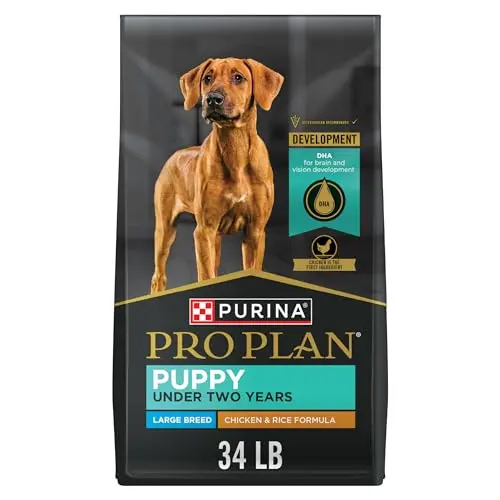
Development Large Breed Chicken & Rice – Probiotic-Rich Growth Formula
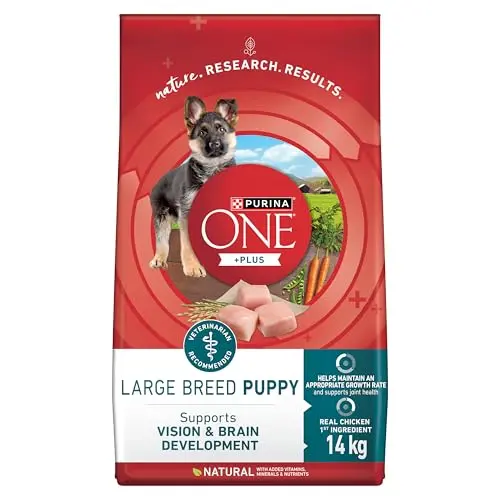
Large Breed Chicken & Rice – SmartBlend Joint & Brain Support
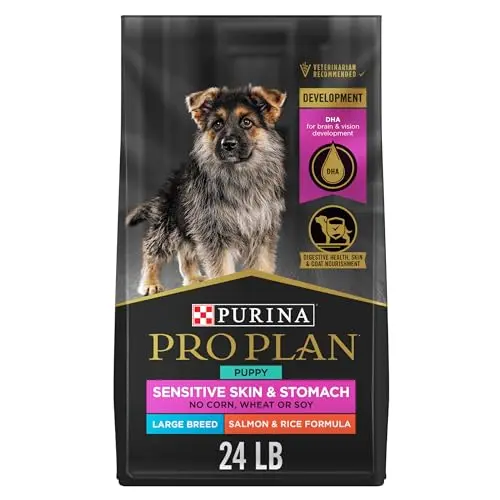
Sensitive Skin & Stomach Large Breed Salmon & Rice – Gentle Digestion Formula
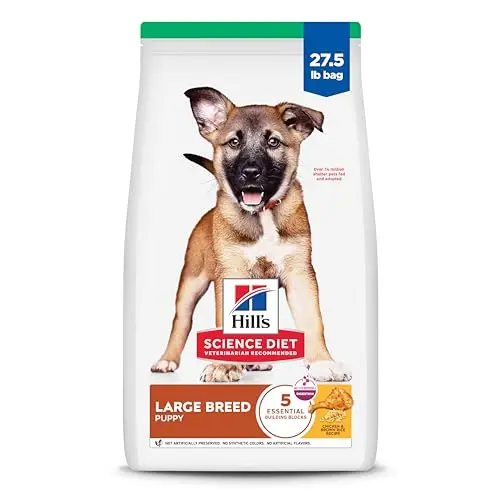
Large Breed Chicken & Brown Rice – Controlled Growth & Bone Support
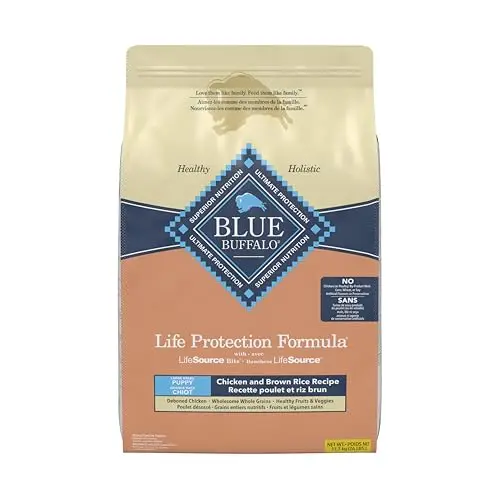
Life Protection Large Breed Chicken & Brown Rice – LifeSource Bits for Immunity
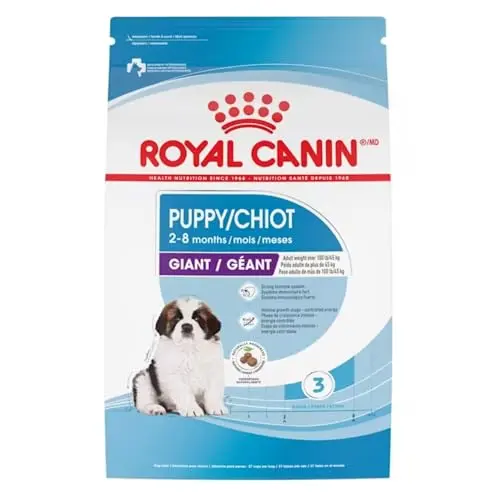
Giant Puppy Chicken – Extra-Large Breed Growth Formula
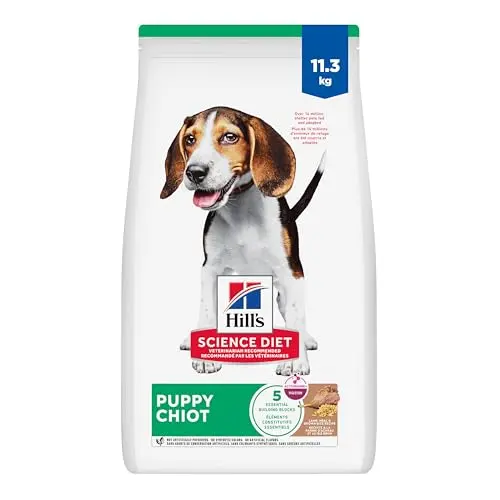
Puppy Lamb & Brown Rice – Gentle Protein & Prebiotic Fibre
How We Evaluated These Dog Foods for Large Puppies
We didn’t conduct long-term feeding trials or measure individual growth rates in a controlled kennel environment. What we did: cross-referenced 7 large-breed puppy foods from 5 distinct brands across six key decision axes – protein quality, DHA and ARA content, joint support compounds (glucosamine and chondroitin), digestive health features (probiotics and prebiotics), ingredient integrity (avoidance of fillers and by-products), and owner satisfaction signals. We audited published nutritional profiles, ingredient decks, and aggregated owner feedback where available.
The scoring framework weighted real-world growth support and digestibility (60%) – how well each formula fuels steady, controlled development – against feature differentiation (40%) – unique advantages like probiotics, novel proteins, or breed-specific tailoring. We have no commercial relationship with any of the brands featured; recommendations track fit and differentiation, not brand preference. If you’re looking for an all-around champion, the Pro Plan Development Large Breed Chicken & Rice is our top pick; for budget-conscious buyers, the Purina ONE Large Breed Chicken & Rice delivers exceptional value.
How to Choose the Right Dog Food for Large Puppies
What Makes Large Breed Puppy Food Different?
Large-breed puppies grow at a breakneck pace, and their nutritional needs differ from smaller dogs. The key is controlled growth: too-rapid development can strain developing joints and lead to lifelong orthopedic issues. Formulas for large pups typically have lower calorie density and carefully balanced calcium-to-phosphorus ratios (often around 1.2:1) to promote strong bones without spurring excessive growth. Look for foods that explicitly state they’re formulated for large breeds – they’ll help your puppy reach their full size safely, not quickly.
Protein and DHA: The Building Blocks
Protein builds muscle, and for large-breed puppies, it should come from high-quality animal sources like chicken, salmon, or lamb. Aim for a food with a named meat as the first ingredient. DHA (docosahexaenoic acid), an omega-3 fatty acid found in fish oil, is critical for brain and eye development – it’s a nutrient also present in mother’s milk. Many top foods, like the Pro Plan Development Chicken & Rice, fortify their recipes with DHA. ARA (arachidonic acid) sometimes accompanies DHA for comprehensive cognitive support.
Joint Support: Glucosamine and Chondroitin
Hip and elbow dysplasia are real concerns for large breeds. While genetics play a major role, nutrition can help. Many large-breed puppy foods include natural sources of glucosamine (often from chicken meal or cartilage) to aid cartilage development and joint health. The Purina ONE Large Breed is a solid example of glucosamine-inclusive formula. Look for these joint-friendly compounds on the ingredient list or guaranteed analysis.
Digestive Health: Probiotics and Prebiotics
Puppy tummies can be temperamental, and large breeds often have sensitive digestive systems. Probiotics – live beneficial bacteria – help maintain a healthy gut flora, improving stool quality and nutrient absorption. Prebiotics, like beet pulp or chicory root, feed those good bacteria. The Pro Plan line uses guaranteed live probiotics, a standout feature. If your pup struggles with loose stools, a probiotic-rich food could make a noticeable difference.
Ingredient Quality: What to Avoid
Not all puppy foods are created equal. Steer clear of formulas with unnamed meat meals (e.g., ‘meat meal”), artificial colours, flavours, or preservatives, and excessive fillers like corn or wheat – often used to bulk up cheaper kibble but offering little nutritional value. Brands like Blue Buffalo (with its Life Protection formula) build their reputation on avoiding poultry by-products and artificial additives. Whole grains like brown rice and oatmeal are generally well-tolerated and provide steady energy.
How to Transition Your Puppy to a New Food
A sudden switch can upset your puppy’s stomach. Mix the new food with the old over 7-10 days, gradually increasing the proportion of the new food. Start with 25% new, 75% old for a couple of days, then move to 50/50, then 75/25, before going full new. Watch for stool consistency; a little looseness is normal at first, but prolonged diarrhoea warrants a slower transition or a different formula. Always provide plenty of fresh water.
Frequently Asked Questions
What's the difference between Purina Pro Plan and Royal Canin for large puppies?
Both are excellent, but they take slightly different approaches. Purina Pro Plan emphasizes probiotics and a shredded-texture kibble, with natural glucosamine for joints and DHA for brain development. It’s widely available and often more budget-friendly. Royal Canin offers breed-specific and size-specific formulas (like their Giant Puppy food), with a focus on precise nutrient profiles, antioxidant complexes, and kibble design for jaw structure. Royal Canin tends to be pricier but may be worth it for giant-breed owners who want a tailored growth plan, especially with their staged Junior formulas.
Is Blue Buffalo or Hill's Science Diet better for my large puppy?
It depends on what you value most. Blue Buffalo prides itself on natural ingredients and LifeSource Bits – a cold-pressed blend of vitamins and antioxidants – and avoids poultry by-products, corn, wheat, and soy. Hill’s Science Diet leans on veterinary research and clinical testing, with precisely balanced minerals for controlled bone growth and a focus on digestive health through prebiotic fibres. If you prefer a clean label, Blue Buffalo is appealing; if you want a science-backed, clinic-tested diet, Hill’s is a strong choice. Both have large-breed puppy options that perform well.
When should I switch my large breed puppy to adult dog food?
Large and giant breeds typically need to stay on puppy food longer than smaller dogs – usually until 12-18 months of age, or even 24 months for giant breeds. The switch should happen when your puppy has reached about 90% of their expected adult height. Switching too early can deprive them of essential growth nutrients; too late can lead to excessive weight gain. Some brands, like Royal Canin, offer a junior formula as an intermediate step. Always consult your veterinarian for a timeline tailored to your puppy’s breed and growth curve.
Are grain-free diets safe for large breed puppies?
Grain-free diets have become popular, but for large-breed puppies, most veterinary nutritionists recommend grain-inclusive formulas. The FDA has been investigating potential links between grain-free diets and dilated cardiomyopathy (DCM) in dogs. Whole grains like rice, barley, and oatmeal provide digestible carbohydrates for sustained energy. Unless your puppy has a confirmed grain allergy (rare), there’s no demonstrated benefit to going grain-free, and the risk may outweigh any perceived advantage. All of our top picks are grain-inclusive.
Can I give my large puppy supplements in addition to their food?
In most cases, no – a high-quality puppy food is already balanced. Over-supplementing, especially with calcium or vitamin D, can interfere with proper bone development and lead to skeletal abnormalities. Joint supplements like glucosamine or chondroitin might be considered for breeds predisposed to dysplasia, but only under veterinary guidance. If you’re feeding a complete and balanced large-breed puppy food, your pup shouldn’t need extras. Focus on choosing the right food rather than adding pills.
Final Verdict
For the vast majority of large-breed puppies, the Pro Plan Development Large Breed Chicken & Rice is our top pick – it balances high-quality protein, DHA, and probiotics in a palatable formula that supports healthy growth. If budget is top of mind, the Purina ONE Large Breed Chicken & Rice delivers joint and brain nutrients at a friendlier price. Pups with delicate stomachs or skin issues will thrive on the Pro Plan Sensitive Skin & Stomach Salmon & Rice, a targeted solution that calms digestive upset. And for owners who prefer a veterinary-backed, controlled-growth approach, the Hill’s Science Diet Large Breed Chicken & Brown Rice offers science you can trust. Whichever you choose, you’re giving your big pup the foundation they deserve.