
Mini Australian Shepherds pack the intelligence and drive of a full-sized herder into a compact, agile frame. Their boundless energy and eager-to-please nature mean they thrive on high-quality nutrition that fuels muscle maintenance, supports joint health, and keeps that signature coat gleaming. Whether you have a playful puppy or an active adult, feeding a Mini Aussie isn’t just about filling a bowl-it’s about choosing a formula built around their breed-specific needs.
Across the market, you’ll find dozens of options claiming to be the best, but a handful of key factors separate a solid daily diet from a bag of filler. Kibble size, protein quality, digestive support, and life-stage targeting all matter more than flashy marketing. In this guide, we break down the top contenders across four trusted brands, comparing ingredient transparency, real-world palatability, and how well each formula aligns with the unique demands of a Mini Aussie. Whether you’re dealing with a sensitive stomach, a picky eater, or simply want a no-fuss everyday staple, there’s a clear match here.
Best Dog Food for Mini Aussies – 2026 Reviews
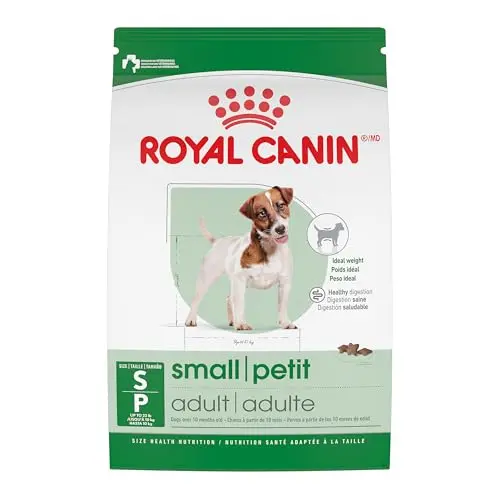
Size Health Nutrition Small Breed Adult – Precise Nutrition for Miniature Jaws
Royal Canin’s Small Breed Adult formula is purpose-built for dogs between 9 and 22 lb, making it a natural fit for most Mini Aussies. The recipe focuses on three pillars: a specialised kibble design adapted for miniature jaws, a blend of fatty acids like EPA and DHA to nourish the skin and coat, and L-carnitine to help maintain a healthy weight-important for a breed prone to packing on extra pounds if activity dips. Enhanced palatability tackles fussy appetites, while optimal fibre supports digestion. It’s a holistic, vet-developed diet that leaves little to chance.
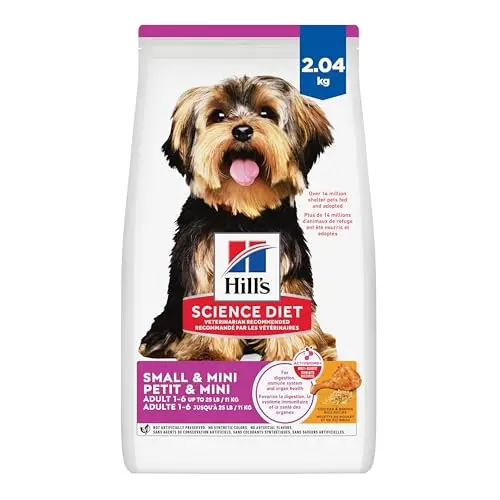
Science Diet Adult Small & Mini – Balanced Everyday Nutrition
Hill’s Science Diet Adult Small & Mini offers a well-rounded daily diet centred on high-quality chicken meal and easy-to-digest ingredients like pumpkin. The small kibble size is a natural fit for Mini Aussie mouths, while the precise balance of protein, fats, and carbohydrates supports steady energy without overloading calories. It’s designed to maintain ideal body weight and lean muscle, with added antioxidants for immune support.
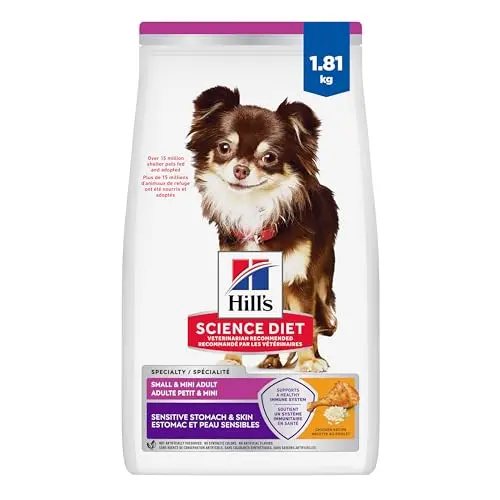
Science Diet Sensitive Stomach & Skin Small & Mini – Gentle Digestion & Coat Care
This formula targets the two most common trouble spots in Mini Aussies: digestive upset and skin irritation. A highly digestible recipe with prebiotic fibre supports optimal nutrient absorption while being gentle on the stomach. It’s fortified with Vitamin E, omega-3 and omega-6 fatty acids for skin health, and clinically proven antioxidants for immune resilience.
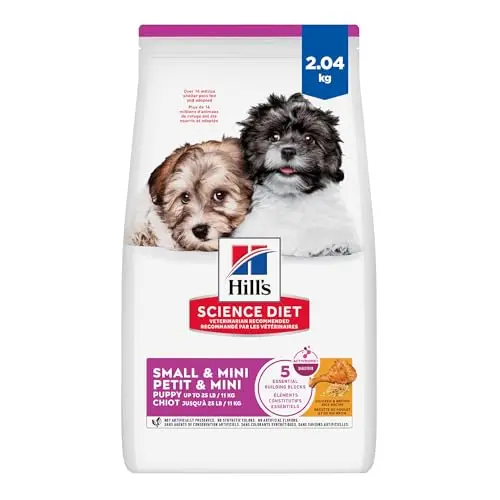
Science Diet Puppy Small & Mini – Growth Support for Small Breeds
Designed for the rapid growth phase of small breed puppies, this recipe fuels developing bones, muscles, and cognitive function. DHA from fish oil supports brain and eye development, balanced minerals strengthen teeth and bones, and an antioxidant blend bolsters the immature immune system.
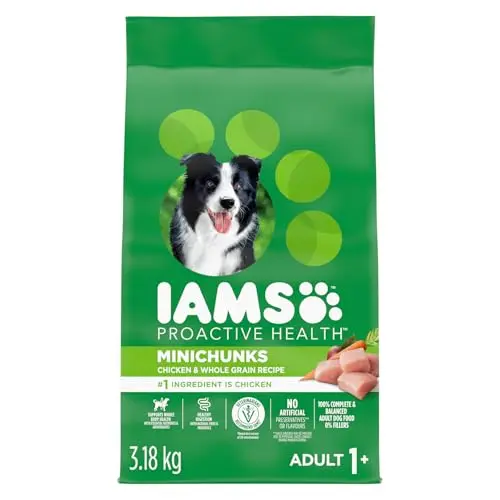
Proactive Health Minichunks – Small Bites for Small Mouths
IAMS Proactive Health Minichunks delivers complete and balanced nutrition in a smaller kibble size that works for small and medium dogs alike. The chicken and whole grain recipe focuses on digestibility, with a fibre and prebiotic blend that supports healthy stools, and crunchy texture to help reduce plaque.
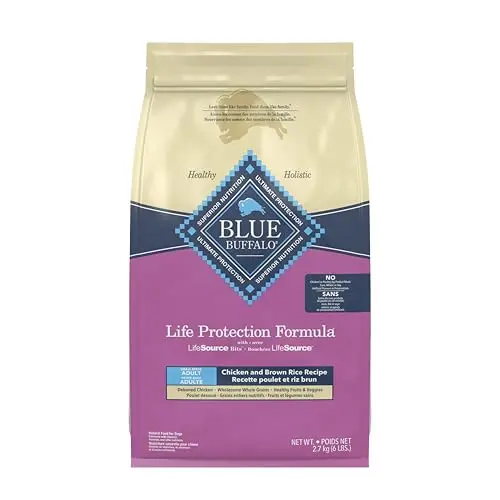
Life Protection Small Breed – Natural Ingredients with LifeSource Bits
Blue Buffalo’s Small Breed formula leads with real deboned chicken and avoids poultry by-product meals, corn, wheat, or soy. The standout feature is the LifeSource Bits-cold-formed pellets of antioxidants, vitamins, and minerals that support immune health-paired with glucosamine for joint support and omega fatty acids for skin and coat.
How We Evaluated These Dog Foods for Mini Aussies
We didn’t run controlled feeding trials or nutritional analysis in a lab. What we did: cross-referenced 6 dog food formulas from 4 distinct brands across 5 key decision axes-protein quality, kibble size, digestive support, life-stage targeting, and breed-specific wellness add-ons (like skin and joint care). We triangulated published ingredient lists, nutritional profiles, and aggregated owner feedback where available against the real-world demands of an active Mini Australian Shepherd.
The scoring framework weighted real-world performance and use-case fit (60%)-how well each food actually delivers on its stated purpose-against feature differentiation (40%)-unique formulation advantages, ingredient transparency, and targeted health solutions. We have no commercial relationship with any of the brands featured; recommendations track actual fit and owner-reported outcomes, not brand preference. If you want a one-stop, breed-attuned adult diet, the Royal Canin Small Breed Adult is our top pick; if your Mini Aussie battles tummy troubles, the Hill’s Science Diet Sensitive Stomach & Skin is a smarter match.
How to Choose the Right Dog Food for Mini Aussies
The Nutritional Demands of a Mini Australian Shepherd
Mini Aussies are compact athletes, not couch potatoes. Their daily diet must support sustained energy output without overloading on calories that lead to weight gain-a common issue in less active periods. Look for a protein-first ingredient panel (chicken, chicken meal, or lamb) to maintain lean muscle mass, paired with moderate fat levels (ideally 12-16%) for endurance. Omega fatty acids are non-negotiable for that signature merle coat, while glucosamine and chondroitin (often naturally occurring in high-quality chicken meal) help protect joints during agility work, herding, or endless games of fetch. Avoid formulas heavy on fillers like wheat middlings or excessive soybean meal-they add bulk without functional nutrition.
Kibble Size Matters: Why Small Bites Suit Small Mouths
A Mini Aussie’s muzzle is smaller than a standard Australian Shepherd’s, and the wrong kibble shape can cause frustration, slow eating, or even choking. Small, dense kibble designed for miniature or small breeds encourages proper chewing, which aids digestion and supports dental health through mechanical scrubbing. Royal Canin’s specialized kibble geometry for small jaws and IAMS Minichunks’ bite-sized pieces are excellent examples of this tailoring. Avoid ‘large breed” or ‘all breed” formulas with larger pellets, unless you’re willing to pre-soak or break them-an extra step most owners would rather skip.
Puppy vs. Adult Formulas: What's Right for Your Mini Aussie?
Mini Aussie puppies grow fast and hit their adult frame between 10 and 14 months. During this window, puppy-specific formulas are crucial: they contain higher levels of DHA for brain development, controlled calcium-to-phosphorus ratios for bone growth, and higher calorie density to fuel rapid expansion. Once your dog reaches about 80-90% of their expected adult weight (usually around 10-12 months), transition to an adult maintenance food to prevent excessive weight gain. If you’re unsure, split the difference with an ‘all life stages” food, but dedicated stage-specific options like the Hill’s Science Diet Puppy Small & Mini remove the guesswork.
Addressing Sensitive Stomachs and Skin in Mini Aussies
Mini Aussies can be prone to digestive upsets and skin sensitivities-manifesting as loose stools, gas, itching, or hot spots. If your dog shows these signs, a limited-ingredient or sensitive-system formula is the prudent choice. Look for prebiotic fibres (like beet pulp or pumpkin), easily digestible protein sources (single animal protein), and omega fatty acids for skin barrier repair. The Hill’s Science Diet Sensitive Stomach & Skin Small & Mini is built entirely around this nexus, combining gentle prebiotics with targeted omegas. Adding a probiotic supplement on top of a sensitive diet can also accelerate improvement-many owners see firmer stools within a week of switching.
Grain-Free vs. Whole Grains: Which Is Better?
The grain-free trend has cooled as research linked some such diets to canine dilated cardiomyopathy (DCM), but the decision isn’t black and white. For most Mini Aussies, wholesome grains like brown rice, barley, and oatmeal provide steady energy and natural fibre without triggering allergies. If your dog has a confirmed grain sensitivity (rare) or you simply prefer a grain-free recipe, options like Nature’s Recipe Grain Free can work, but they should still be vetted for complete amino acid profiles. Unless your vet specifically recommends going grain-free, a formula with high-quality grains is generally safer and more cost-effective. Blue Buffalo’s inclusion of brown rice and oatmeal, for example, supports gentle digestion without corn or wheat.
Our Formula Face-Off: Hill's Science Diet vs. Royal Canin for Mini Aussies
These two brands dominate the small-breed space, and for good reason. Hill’s Science Diet leans heavily on clinically backed health benefits-their ActivBiome+ blend and sensitive-stomach focus are data-driven and widely vet-recommended. Royal Canin, meanwhile, obsesses over physical attributes: kibble shape, density, and palatability, all while maintaining solid nutritional profiles. For an everyday adult Mini Aussie without special issues, either the Hill’s Science Diet Adult Small & Mini or the Royal Canin Small Breed Adult will excel-the deciding factor often boils down to whether your dog prefers a slightly softer or crunchier bite. If digestive woes or skin trouble enter the picture, Hill’s Sensitive formula pulls ahead; if appeal and precise kibble design matter most, Royal Canin takes the crown.
Frequently Asked Questions
What's the difference between Hill's Science Diet Small & Mini and Royal Canin Small Breed Adult?
Both are excellent for Mini Aussies, but they prioritise different strengths. Hill’s focuses on digestive and immune health via its ActivBiome+ blend, with pumpkin for gentle fibre. The kibble is small but somewhat softer. Royal Canin dials in on physical design-their kibble shape and texture are engineered for miniature jaws, and the formula includes L-carnitine for weight management. Ingredient-wise, Royal Canin uses poultry by-product meal alongside corn and wheat, while Hill’s leans on chicken meal and barley. Owner feedback suggests Royal Canin is often more palatable for picky eaters, while Hill’s garners praise for stool quality and coat improvements. If your Mini Aussie has no special sensitivities, it’s a coin toss based on kibble preference; if digestion is a priority, the Hill’s Sensitive formula (a variant within the line) is a smarter pick than either of these standard options.
Is grain-free food better for Mini Aussies?
Not inherently. While some Mini Aussies with confirmed grain allergies may benefit, most do perfectly fine on high-quality whole grains like brown rice or oatmeal. In fact, the FDA’s investigation into grain-free diets and dilated cardiomyopathy (DCM) suggests caution with legume-heavy grain-free formulas. Unless your vet recommends otherwise, a diet with wholesome, gluten-containing grains is usually safer and more balanced. If you do opt for grain-free, look for one that includes taurine and avoids excessive peas or lentils, and monitor your dog’s cardiac health during annual check-ups.
When should I switch my Mini Aussie puppy to adult food?
Most Mini Aussies are ready to transition between 10 and 12 months of age, when they’ve reached about 80-90% of their expected adult size. For a breed that tops out around 20-30 lb, this is usually a reliable window. Start by mixing 25% adult food with 75% puppy food for a few days, then gradually increase the adult proportion over 7-10 days to avoid digestive upset. If you’re using a dedicated puppy formula like Hill’s Science Diet Puppy Small & Mini, switching to the adult version of the same brand can make the transition smoother.
My Mini Aussie has a sensitive stomach-which formula is gentlest?
The Hill’s Science Diet Sensitive Stomach & Skin Small & Mini is purpose-built for exactly this scenario. It combines prebiotic fibre, easy-to-digest chicken, and omega fatty acids in a formula that’s gentle on the gut while actively soothing skin irritation-two issues that often travel together. Owners consistently report firmer stools within days and reduced scratching. If you’ve ruled out underlying health conditions with a vet, this is our top recommendation for turning around tummy troubles.
Final Verdict
For the typical adult Mini Aussie, the Royal Canin Small Breed Adult earns our top spot with its breed-savvy kibble design and well-rounded nutritional profile. If your dog struggles with digestive sensitivity or skin flare-ups, the Hill’s Science Diet Sensitive Stomach & Skin is a targeted solution that actually works. Puppy owners should look to the Hill’s Science Diet Puppy Small & Mini for that critical first year, and if you’re watching your wallet, the IAMS Proactive Health Minichunks delivers dependable daily nutrition at a fraction of the cost. Whichever you choose, pair it with fresh water and regular activity, and your Mini Aussie will thrive.