
Rottweiler puppies grow at an astonishing pace – one minute they’re a handful of fluff, the next they’re a powerhouse of muscle and bone. That rapid development demands a diet that’s not just ‘puppy food,’ but one tuned to the unique needs of large breeds. The wrong formula can lead to joint problems, digestive upset, or uneven growth. We’ve cross-shopped the category to help you zero in on the right kibble.
Large-breed puppy foods balance calcium and phosphorus for steady bone development, pack DHA for brain and vision, and often include glucosamine for joint health. But not every bag is created equal. In this guide, we’ve compared six standout options across four brands, weighing everything from ingredient sourcing to real-world owner impressions. Whether you’re after a premium formula or a wallet-friendly staple, you’ll find clear, honest picks ahead.
Best Dog Food for Rottweiler Puppies – 2026 Reviews
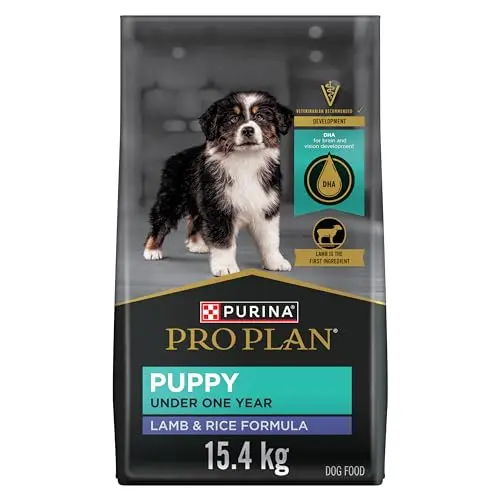
Development Lamb & Rice – Nutrient-Dense Puppy Food
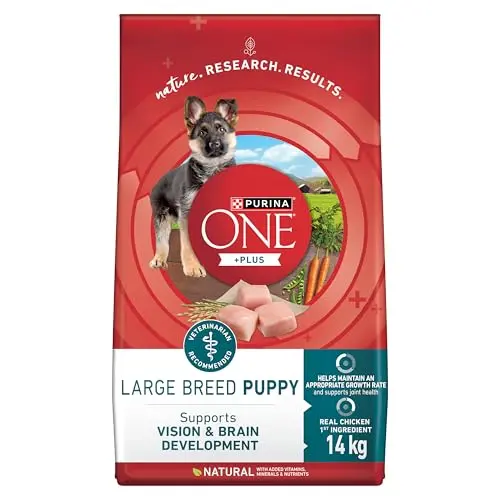
+Plus Large Breed Chicken – Joint & Brain Support
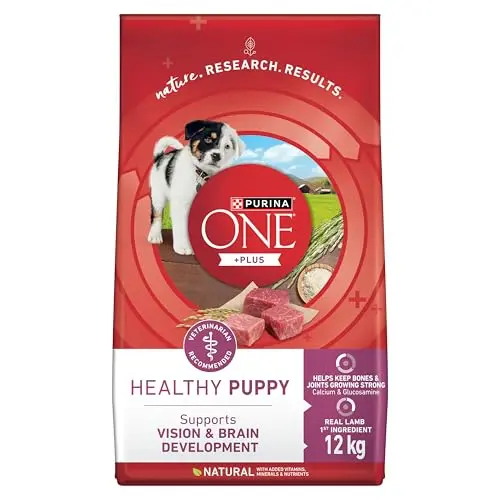
+Plus Healthy Puppy Lamb – Gentle Digestion Formula
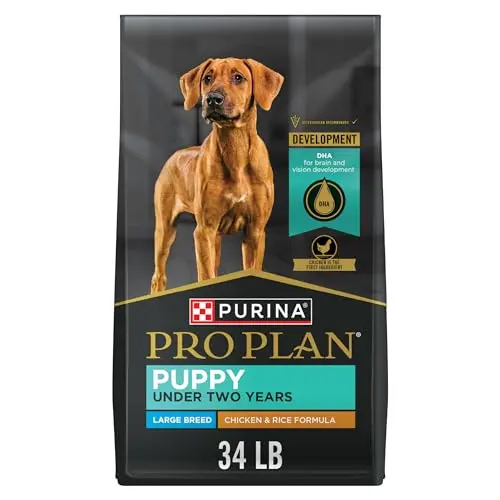
Development Large Breed Chicken & Rice – Joint & Brain Support
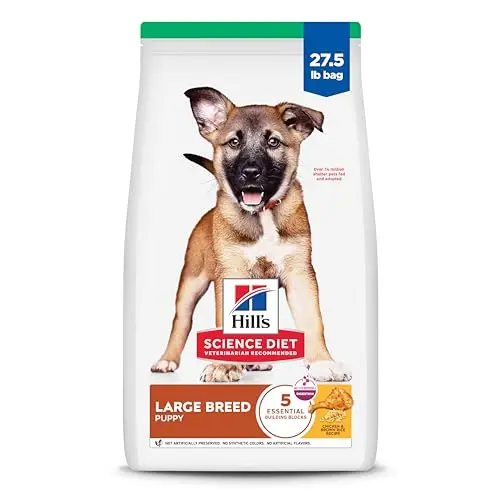
Large Breed Chicken & Brown Rice – Controlled Bone Growth
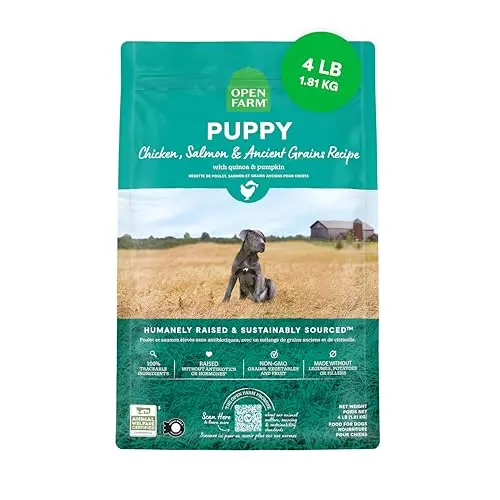
Ancient Grains Chicken & Salmon – Transparent Ingredient Sourcing
How We Evaluated These Dog Foods for Rottweiler Puppies
We didn’t run laboratory nutrient analyses or multi‑month feeding trials. Instead, we cross‑referenced 6 dry puppy foods from 4 distinct brands across 7 decision axes – large‑breed suitability, DHA content, joint support (glucosamine), protein quality, digestibility, ingredient transparency, and aggregated owner impressions where available. We triangulated published specifications, manufacturer formulation details, and real‑world feeding feedback to map each product against the needs of a rapidly growing large‑breed puppy.
The scoring framework weighted real‑world performance (60%) – how well a food delivers on growth support and owner satisfaction – against feature differentiation (40%) – unique nutritional add‑ons like probiotics, novel proteins, or controlled mineral profiles. Our recommendations track fit and differentiation, not brand loyalty. If you’re looking for a foolproof all‑arounder, the Pro Plan Lamb & Rice is our top pick; if your focus is a budget‑friendly large‑breed formula with joint support, the Purina ONE Large Breed steps up.
How to Choose the Right Dog Food for Rottweiler Puppies
Why Large Breed Formulas Matter for Rottweiler Puppies
Rottweilers are a large breed, and their growth plates take up to 18 months to close. Standard puppy foods often contain too much calcium and energy, causing rapid growth that stresses developing joints and raises the risk of hip dysplasia. Large‑breed formulas carefully balance calcium and phosphorus to promote slow, steady bone development. They also tend to include natural glucosamine sources (from chicken meal or added supplements) to support cartilage and joint health. If your pup is a Rottweiler, steer toward foods labelled ‘large breed’ – they’re engineered to keep that powerful frame growing correctly.
Key Nutrients: DHA, Glucosamine, and More
Puppy brains are wiring at lightning speed, and DHA (docosahexaenoic acid), an omega‑3 fatty acid found in fish oil and mother’s milk, is vital for cognitive and visual development. Look for it prominently on the label. Glucosamine, often paired with chondroitin, helps cushion joints as your puppy’s weight increases. Antioxidants like vitamins C and E support a developing immune system, while high‑quality animal proteins (chicken, lamb, salmon) provide the amino acids for muscle growth. Don’t overlook probiotics – a healthy gut means better nutrient absorption and fewer digestive issues, a common concern in Rottweilers.
Protein Sources: Chicken vs Lamb vs Salmon
The first ingredient should always be a named meat – chicken, lamb, salmon, or a meal version. Chicken is lean, widely available, and well‑tolerated by most dogs. Lamb can be a good novel protein for puppies with sensitivities to poultry, and it’s rich in iron. Salmon provides natural DHA and a different fatty acid profile that’s excellent for skin and coat. For Rottweiler puppies, there’s no single ‘best’ protein; the choice often comes down to your dog’s individual digestion and palate. The Purina ONE Lamb formula (reviewed above) excels for sensitive stomachs, while chicken‑based options like Pro Plan Large Breed are highly palatable.
Digestibility and Probiotics
A food’s nutritional value is only as good as what your puppy can absorb. Look for easily digestible carbohydrates like rice, oatmeal, or barley, and avoid fillers such as corn, wheat, or soy if your dog shows sensitivities. Several of our top picks include guaranteed live probiotics – beneficial bacteria that colonize the gut and aid in breaking down food. This can mean less gas, firmer stools, and a happier pup. The Pro Plan formulas and Purina ONE both highlight probiotics, which is a meaningful advantage for a breed that can be prone to bloat or digestive upset.
Grain‑Inclusive vs Grain‑Free: What's Best?
Grain‑free diets gained popularity, but recent research has linked some to canine dilated cardiomyopathy (DCM) in breeds not typically prone to it. For a Rottweiler puppy, a grain‑inclusive formula with wholesome grains like brown rice, oats, or quinoa is generally the safer, vet‑recommended bet. Grains provide energy, fiber, and essential nutrients. All the foods we evaluated (except Open Farm, which uses ancient grains) are grain‑inclusive. If you’re considering grain‑free, consult your vet – but for most large‑breed puppies, sticking with a high‑quality grain‑inclusive diet is wise.
How to Read Dog Food Labels for Puppies
Label lingo can be confusing. Start with the guaranteed analysis – for a Rottweiler puppy, aim for a minimum of 26‑28% protein and 12‑15% fat. Check the ingredient list: meat should be first, followed by whole grains or named meat meals. Avoid vague terms like ‘meat meal’ or ‘animal fat.’ Look for the AAFCO statement confirming the food is ‘complete and balanced’ for growth and reproduction. Large‑breed specific foods will often note ‘formulated to meet the nutritional levels established by the AAFCO Dog Food Nutrient Profiles for growth of large‑breed puppies.’ This matters more than fancy marketing claims.
Frequently Asked Questions
What's the difference between Purina Pro Plan Large Breed and Hill's Science Diet Large Breed for puppies?
Both are excellent large‑breed choices. The Purina Pro Plan Large Breed emphasizes natural glucosamine from chicken meal for joints and includes guaranteed live probiotics for digestion. Its kibble‑and‑shreds texture is very palatable. Hill’s Science Diet Large Breed focuses on controlled calcium levels for slow bone growth and adds a unique antioxidant blend for immunity. Hill’s is often recommended by vets, while Pro Plan may appeal to dogs needing extra digestive support. Both provide DHA, but Pro Plan’s probiotic component gives it a slight edge for gut health. If your budget allows, choose based on your puppy’s specific needs – joint‑prone family history might tip toward Pro Plan, while a vet‑preferred formula might lean Hill’s.
Is Purina ONE Lamb Formula suitable for Rottweiler puppies?
It can be, especially if your Rottweiler puppy has a sensitive stomach or poultry intolerance. The real lamb is a gentle novel protein, and the easily digestible rice and oatmeal help firm up stools. However, this is an all‑breed formula, not large‑breed specific, meaning it lacks added glucosamine and doesn’t have the controlled calcium/phosphorus ratio that large‑breed foods do. If your puppy doesn’t have known joint issues and you’re primarily managing digestive sensitivity, it’s a solid choice. Otherwise, you might want to pair it with a joint supplement or opt for a large‑breed formula like the Purina ONE Large Breed.
How can I tell if a puppy food is truly 'large breed'?
Look for an AAFCO statement on the package that explicitly says ‘formulated for growth of large‑breed puppies’ or ‘for all life stages including growth of large‑breed dogs.’ This means the calcium and phosphorus levels are tightly controlled – typically 1.2‑1.5% calcium on a dry matter basis. Also scan the ingredient list for natural glucosamine sources like chicken meal or added supplements. The kibble size is often larger to encourage chewing, but that’s secondary. Our top large‑breed picks (Pro Plan Large Breed, Purina ONE Large Breed, Hill’s Science Diet Large Breed) all carry this designation and therefore are formulated to protect your Rottweiler’s developing skeleton.
Can I feed my Rottweiler puppy an all‑life‑stages food instead of a puppy formula?
It’s possible, but you need to be careful. An ‘all life stages’ food must meet the nutrient requirements for growth, but it might not be calibrated for large‑breed growth. Many such foods have higher calcium and calorie levels that could lead to rapid growth in a Rottweiler. If you choose one, check that it has an AAFCO statement for large‑breed growth, and watch your puppy’s body condition closely. The Pro Plan Lamb & Rice is an all‑breed formula but still worked well for many large‑breed owners in our research. In general, a dedicated large‑breed puppy food is safer and simpler for the first 12‑18 months.
Final Verdict
For most Rottweiler puppies, the Pro Plan Lamb & Rice earns our Best Overall pick – it’s a nutrient‑dense, highly rated formula with brain‑boosting DHA and gut‑friendly probiotics, and owners consistently report healthy, happy pups. If you’re budget‑conscious but still want a dedicated large‑breed food, the Purina ONE Large Breed is the standout value, offering glucosamine for joints without the premium price. Dealing with a sensitive stomach? The Purina ONE Lamb calms digestion admirably. And for those who want the absolute best in large‑breed research, the Pro Plan Large Breed Chicken is a premium investment in your pup’s lifelong health.