
Your senior dog still bounds to the door when you grab the leash, but you’ve noticed a little more time between walks, a little more effort climbing stairs. Slower metabolisms come with the territory for dogs seven and older – and it can show up as unwanted weight gain, lower energy, or stiffer joints. What you put in the bowl matters more than ever.
The best dog food for senior dogs with slower metabolisms isn’t just about fewer calories. It’s about packing every meal with quality protein to maintain aging muscle, ingredients like L-carnitine to nudge a sluggish metabolism, and joint-supporting nutrients that help your companion keep moving. We compared weight-management formulas and balanced senior recipes across major brands to help you find the right match for your older dog’s changing needs.
Best Dog Foods for Senior Dogs with Slower Metabolisms – 2026 Reviews
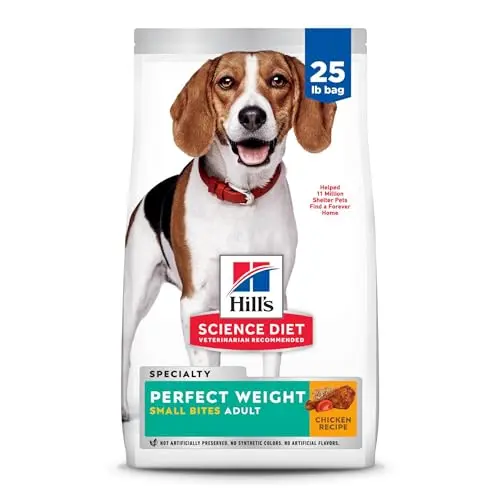
Adult Perfect Weight Small Bites – Clinically Proven Weight Management
Hill’s Science Diet Perfect Weight stands out as the most targeted option for senior dogs wrestling with a slowing metabolism. It’s clinically proven for weight management – over 70% of dogs lost weight within 10 weeks in feeding trials – and the small-bite kibble makes it easy on older teeth. With L-carnitine to help convert fat to energy and a focus on lean-muscle maintenance, this formula addresses the metabolic slowdown head-on while keeping portions satisfying.
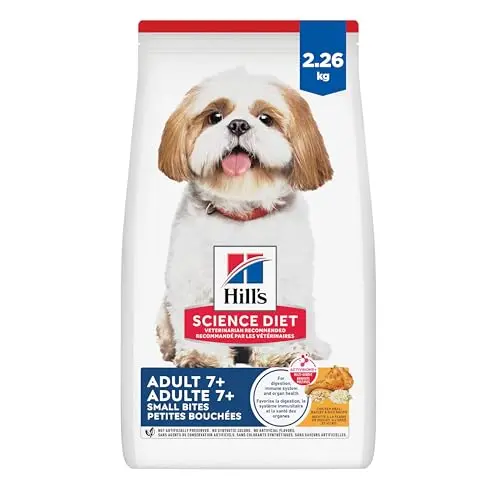
Senior 7+ Small Bites – Balanced Nutrition for Aging Dogs
For the senior dog who doesn’t need aggressive weight control but still deserves a diet dialled for maturity, Hill’s Senior 7+ Small Bites covers the bases. It’s built around high-quality chicken protein and a unique ActivBiome+ blend that supports digestive, immune, and organ health – three systems that can falter with age. The small kibble size is a practical win for older mouths, and the balanced mineral formula supports heart and kidney function, which are top-of-mind for senior-pet parents.
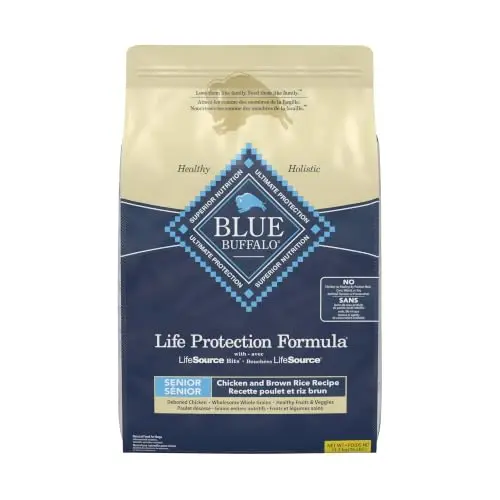
Life Protection Formula Senior – Joint & Immune Support
Blue Buffalo’s Life Protection Senior recipe brings wholesome grains and joint-supporting glucosamine to the bowl without artificial additives. Real chicken leads the ingredient panel, followed by brown rice, barley, and oatmeal for steady energy. LifeSource Bits – a cold-formed blend of antioxidants, vitamins, and minerals – are designed to support immune health, and the formula avoids corn, wheat, soy, and poultry by-products.
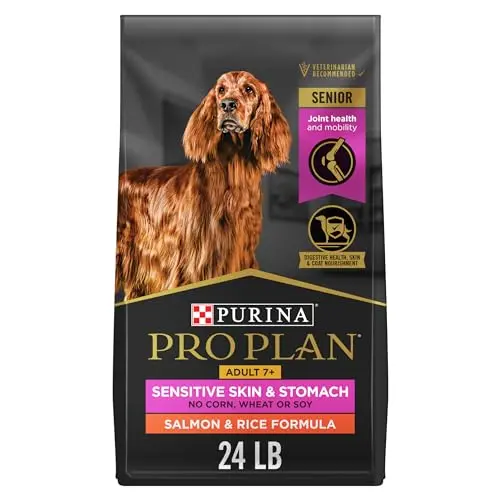
Senior Sensitive Skin & Stomach – Salmon & Rice for Easy Digestion
Purina Pro Plan’s Senior Sensitive Skin & Stomach formula steps up when your older dog’s gut is as touchy as their metabolism. Salmon – a novel protein for many dogs – leads the ingredient list, paired with easily digestible oatmeal and rice. With glucosamine and EPA for joint care, omega-rich sunflower oil for coat health, and natural prebiotic fibre, it addresses multiple senior pain points in one recipe.
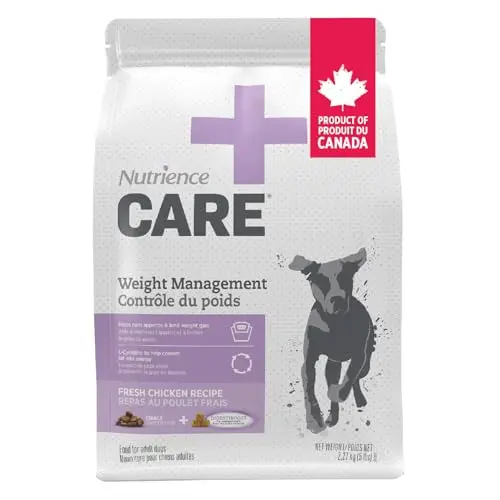
Care Weight Management – Canadian-Made Low-Calorie Formula
Nutrience Care Weight Management proves you don’t need to overspend to support your senior dog’s metabolic health. Made in Canada with fresh chicken, this grain-free recipe uses L-carnitine to assist fat metabolism and a Digestiboost blend of pumpkin, chicory root, turmeric, and ginger for digestive wellness. At a lower price point than many competitors, it’s a practical entry into targeted weight control for older dogs.
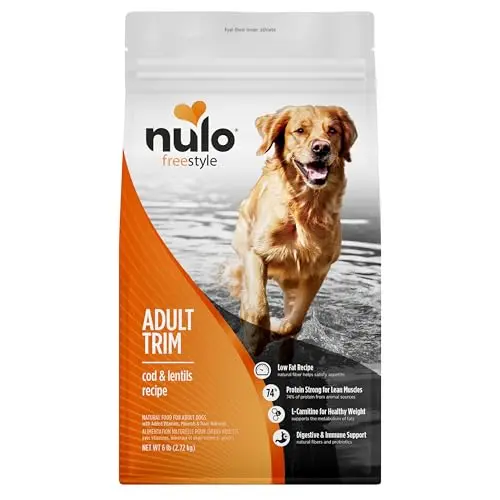
Freestyle Adult Trim – Weight Control with Probiotic
Nulo Freestyle Adult Trim takes a high-protein, low-carb approach to weight management, with 74% of its protein coming from animal sources. Deboned cod provides a novel, lean protein, while the patented BC30 probiotic supports digestive health and metabolism. L-carnitine helps burn fat for energy, and the grain-free recipe avoids common fillers like corn, wheat, and soy.
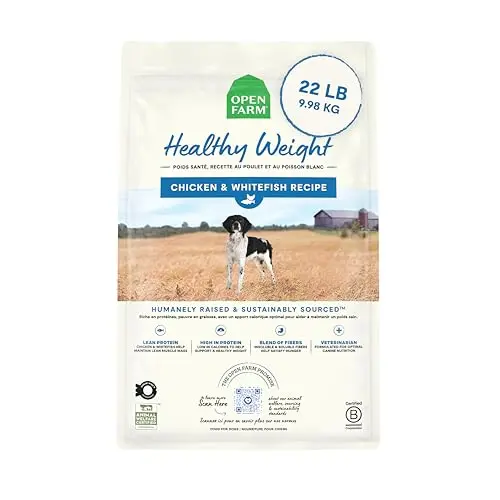
Healthy Weight – Veterinarian-Formulated for Lean Muscle
Open Farm Healthy Weight brings a veterinarian-formulated, high-protein, low-calorie recipe to the weight-management conversation. Real chicken and whitefish supply lean protein, while L-carnitine supports metabolism and omega-3 fatty acids aid joint mobility. The brand’s commitment to ethically sourced, traceable ingredients adds a layer of trust for conscious pet parents.
How We Evaluated These Dog Foods for Senior Dogs with Slower Metabolisms
We didn’t run controlled feeding trials with a panel of senior dogs. What we did: cross-referenced 7 weight-management and senior dog foods from 6 distinct brands across 5 key decision axes – calorie density and macronutrient profile, presence of metabolism-supporting ingredients (L-carnitine, fibre), joint-health nutrients (glucosamine, chondroitin, omega-3s), digestive aids (probiotics, prebiotics, grain inclusion), and ingredient transparency. We triangulated published nutritional specifications, ingredient decks, and owner feedback where available, mapping each formula against the real needs of a dog over seven with a slowing metabolism.
The scoring framework weighted real-world metabolic support (60%) – how effectively each food addresses weight management, lean-muscle preservation, and satiety – against feature differentiation (40%) – unique additives like probiotics, ethically sourced ingredients, or clinical weight-loss validation. We have no commercial relationship with any of the brands featured; recommendations track fit and differentiation, not brand loyalty. If your senior dog is actively gaining weight and needs a proven solution, the Hill’s Science Diet Perfect Weight is your match; if you’re looking for comprehensive everyday senior nutrition without strict calorie restriction, the Hill’s Science Diet Senior 7+ may serve you better.
How to Choose the Right Dog Food for a Senior Dog with a Slower Metabolism
Understanding a Slower Metabolism in Senior Dogs
Around age seven, many dogs experience a natural metabolic decline. Cellular processes that once converted food into ready energy slow down, and if caloric intake doesn’t adjust accordingly, your dog can gain weight even on the same portions. This isn’t just a cosmetic issue – extra pounds strain aging joints and can unmask or worsen conditions like arthritis or diabetes. A food that supports a slower metabolism targets this from two angles: fewer empty calories, and ingredients that actively help the body convert fat to energy, like L-carnitine.
Key Nutrients That Support Weight Management in Older Dogs
Look beyond the calorie-count label. A high-quality weight-management dog food for seniors typically includes L-carnitine, an amino acid that shuttles fatty acids into mitochondria to be burned as fuel. This directly addresses sluggish metabolism. Protein should be elevated but lean – think chicken, salmon, or turkey – to preserve muscle mass that naturally declines with age. Fibre sources (like pumpkin, beet pulp, or oat fibre) add bulk without calories, helping your dog feel full. And don’t sleep on joint support: glucosamine, chondroitin, and omega-3 fatty acids keep your dog mobile, which in turn burns more calories.
Dry vs. Wet Food: Which Is Better for a Senior Dog's Metabolism?
Both formats have a place. Dry kibble tends to be more calorie-dense, which means you feed smaller volumes – a benefit if your dog needs to lose weight but still feels satisfied. It also helps scrape teeth, though many seniors with dental issues may struggle. Wet food has high moisture content (70-80%), so it’s less calorie-dense per gram, which can be helpful if you want to feed larger portions without overloading calories. For dogs with dental pain, the soft texture is easier. A mix can work: a calorie-controlled dry food base with a spoonful of wet as a topper can boost palatability without blowing the calorie budget. In our lineup, the Blue Buffalo Wilderness Senior canned option is an excellent wet-food companion.
Ingredients to Prioritize – and Avoid – in Senior Dog Foods
Prioritize: named animal proteins first (chicken, salmon, turkey); whole grains like brown rice or oatmeal if your dog tolerates them; omega-3 fatty acids from fish oil or flaxseed; and naturally sourced antioxidants (blueberries, cranberries). Avoid: added sugars or propylene glycol; artificial colours, flavours, or preservatives; and generic ‘meat meal” from unnamed sources. For dogs with grain sensitivities, grain-free options like Nutrience Care or Nulo Adult Trim are available, but recent FDA investigations into dilated cardiomyopathy (DCM) have made some owners cautious – discuss with your vet if grain-free is appropriate long-term.
Managing Joint Health Alongside Weight Control
A slower metabolism and weight gain form a vicious cycle with joint pain: extra weight stresses joints, which makes movement uncomfortable, which reduces activity, which further slows metabolism. That’s why the best senior weight-management foods include glucosamine and chondroitin. In our comparison, Blue Buffalo Life Protection Senior and Purina Pro Plan Senior Sensitive stand out for their joint-support levels. If your chosen weight-management formula doesn’t include these (like Nulo Adult Trim), consider adding a separate joint supplement. Always look for EPA and DHA from fish oil – they reduce inflammation and keep your senior moving.
Transitioning Your Senior Dog to a New Food Without Digestive Upset
Older digestive systems can be less forgiving of abrupt dietary changes. Plan for a 7-10 day transition: start with 25% new food mixed with 75% old for two days, then 50/50 for two days, then 75% new food for two days, and finally 100%. Watch for stool quality and appetite. If your dog has a sensitive stomach, lean toward easily digestible grains and single-source proteins like the salmon and oatmeal in Purina Pro Plan Senior Sensitive. Adding a spoonful of pure pumpkin (not pie filling) can soothe the gut during the switch. And if weight loss is the goal, make sure that new, lower-calorie food is still delivering enough volume so your dog doesn’t feel hungry all day – small, frequent meals can help.
Frequently Asked Questions
What's the difference between Hill's Science Diet Perfect Weight and Hill's Senior 7+?
The Perfect Weight formula is designed specifically for weight management – it’s clinically proven for weight loss, includes L-carnitine, and has a lower fat content. It’s marketed for adults but fits older dogs well. The Senior 7+ is a comprehensive aging formula – it doesn’t target weight loss but instead supports digestive, immune, and organ health through ActivBiome+. If your senior needs to lose pounds, choose Perfect Weight. If they’re holding steady but you want premium everyday nutrition, go Senior 7+.
How does Nutrience Care Weight Management compare to Open Farm Healthy Weight?
Both use L-carnitine, but they differ in philosophy and price. Nutrience Care is made in Canada with fresh chicken, is grain-free, and includes a Digestiboost blend of pumpkin, turmeric, and ginger. It’s the budget-friendly pick in our lineup. Open Farm Healthy Weight is pricier, veterinarian-formulated, and uses chicken and whitefish with a traceable, ethically sourced ingredient chain. Open Farm avoids peas and legumes, which some owners prefer post-DCM concerns. If budget and grain-free matter, Nutrience wins. If ethics and vet backing matter more, Open Farm is the call.
Is grain-free food better for senior dogs with slower metabolisms?
Not necessarily – and in some cases, it may be riskier. Grain-free foods often replace grains with legumes (peas, lentils) or potatoes, which can be calorie-dense and have been investigated in potential links to dilated cardiomyopathy. For a senior dog whose primary concern is a slowing metabolism, whole grains like brown rice or oatmeal provide gentle, sustained energy and digestive regularity, as seen in Blue Buffalo Life Protection Senior. Grain-free can still work, as with Nulo Adult Trim, but it’s not inherently better for weight loss. Prioritize high protein, low calories, and joint support first.
Can I feed my senior dog a weight management food that isn't labelled 'senior'?
Usually, yes. Many weight-management formulas like Hill’s Science Diet Perfect Weight or Nulo Adult Trim are labelled ‘adult’ but provide nutrient profiles (high protein, L-carnitine, joint-supporting ingredients) that align well with senior needs. The key is to check for senior-specific deficits: some senior foods add more glucosamine or lower phosphorus for kidney health. If the weight-management food lacks those, you can supplement. But for the core goal – addressing a slower metabolism – a well-formulated adult weight food can be an excellent and often more researched choice.
What's the best way to tell if my senior dog's metabolism is really slowing down?
You’ll observe clinical signs: weight gain even on the same diet and exercise routine, lower energy levels, and maybe a coarser coat. A vet can run a thyroid panel to rule out hypothyroidism, which mimics metabolic slowdown. If labs are normal and your dog is over seven, it’s likely age-related. Then, start measuring portions with a scale, move to a calorie-controlled food (like those included here), and incorporate gentle exercise – even a five-minute extra walk matters. Many owners in our research saw results within 8-10 weeks on a dedicated weight formula.
Final Verdict
For most senior dogs facing a slower metabolism, the Hill’s Science Diet Perfect Weight is the answer – it’s clinically proven, metabolism-focused, and satisfying enough that your dog won’t feel deprived. If your older dog hasn’t gained weight but you want a rock-solid everyday senior formula, the Hill’s Science Diet Senior 7+ covers all the aging bases beautifully. For budget-conscious homes, the Nutrience Care Weight Management delivers core metabolic support at a friendlier price. And if your senior’s tummy is as sensitive as their metabolism, the Purina Pro Plan Senior Sensitive Skin & Stomach is purpose-built to soothe while they slim down. Every dog ages differently – but the right food can put energy back into those slower days.