
If your dog’s been dealing with loose stools, gas, or occasional vomiting, you know the stress of trying to settle their stomach. The right diet can make a huge difference – but with so many formulas on the market labelled ‘sensitive’ or ‘digestive health’, it’s easy to feel overwhelmed. We’ve surveyed the top options across four major brands to cut through the noise.
For stomach issues, you’ll want a food with highly digestible proteins, strategic prebiotic or probiotic support, and limited filler ingredients that could trigger sensitivities. We zeroed in on recipes purpose-built for gentle digestion – not just general wellness – to help your pup get back to feeling their best without the guesswork.
Best Dog Foods for Stomach Issues – 2026 Reviews
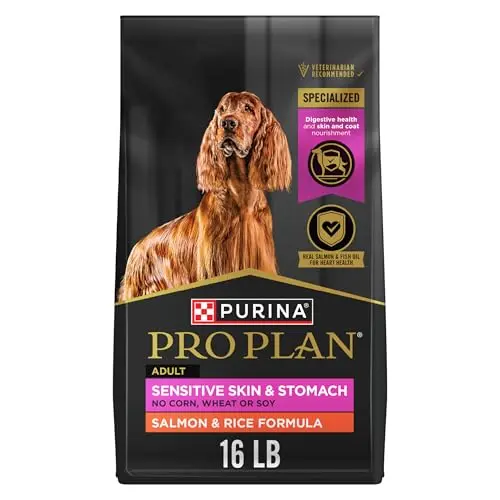
Sensitive Skin & Stomach Salmon & Rice – Highly Digestible for Tummy Troubles
The top performer in our roundup, Pro Plan’s Sensitive Skin & Stomach formula puts salmon first for easy digestibility and adds prebiotic fibre to actively support gut health. It’s the most complete package for both skin and stomach relief without veering into niche territory.
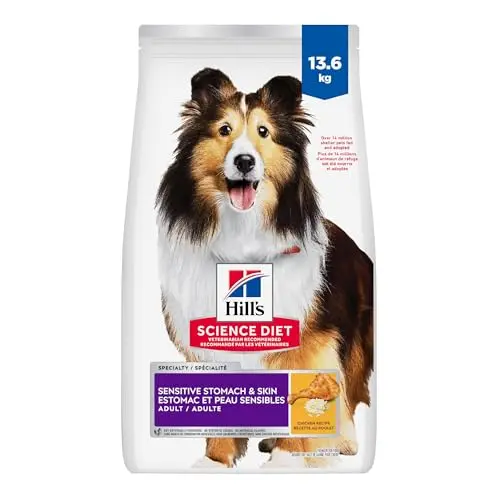
Adult Sensitive Stomach & Skin Chicken Recipe – Vet-Backed Gentle Nutrition
Hill’s has long been a veterinarian favourite, and this formula lives up to that trust with clinically proven digestibility. It uses chicken as a familiar protein, plus beet pulp prebiotic to soothe the gut, making it a safe starting point for dogs with recurring tummy trouble.
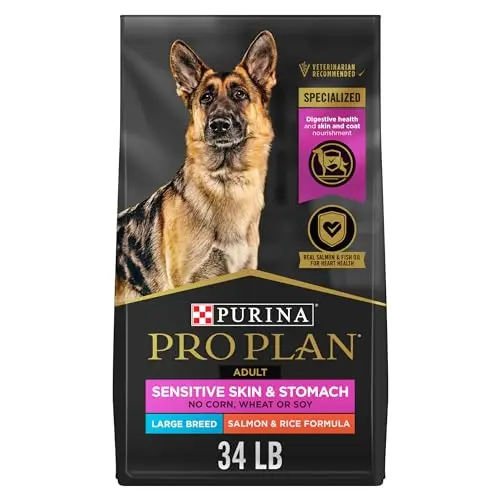
Large Breed Sensitive Skin & Stomach Salmon & Rice – Joint + Digestive Support
Big dogs with big stomach issues need extra support. This formula builds on the regular Sensitive Skin & Stomach recipe by adding glucosamine and EPA for joint health – a critical bonus for larger frames prone to mobility issues.
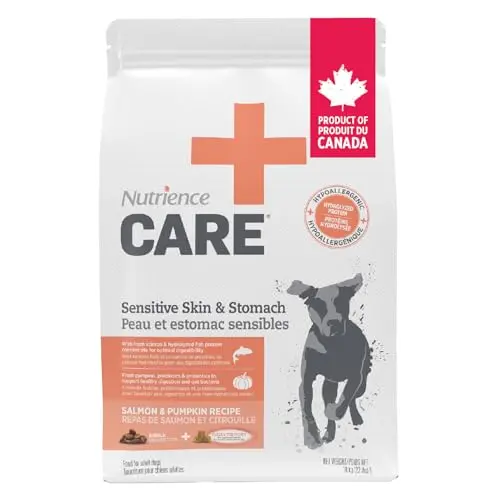
Care Sensitive Skin & Stomach Salmon – Grain-Free & Hypoallergenic
Nutrience’s Care line goes all-in on limited ingredients and allergen avoidance. With fresh Canadian salmon as a novel protein and a grain-free, soy-free recipe, it’s built for dogs who react to common fillers as well as stomach triggers.
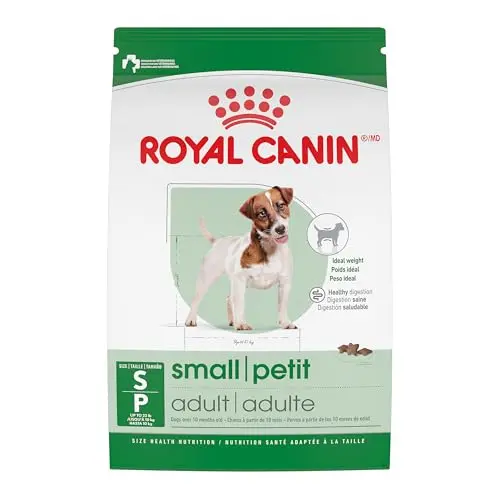
Small Breed Adult – Digestive & Skin Health for Tiny Jaws
Royal Canin’s small breed formula doesn’t say ‘sensitive stomach’ on the bag, but its focus on digestive health – with L-carnitine for metabolism and EPA/DHA for skin – makes it a solid everyday option for tiny dogs with occasional tummy grumbles.
How We Evaluated These Dog Foods for Stomach Issues
We didn’t run long-term feeding studies in a veterinary lab. What we did: cross-referenced 5 dry dog foods from 4 distinct brands – Pro Plan, Hill’s Science Diet, Nutrience, and Royal Canin – across 6 decision axes: primary protein source, prebiotic/probiotic content, omega fatty acid profile, kibble size, targeted health claims, and real-world owner feedback on digestive outcomes. We triangulated published ingredient panels, guaranteed analyses, and aggregated owner feedback where available to map each formula against the needs of a dog with recurring stomach issues.
The scoring framework weighted real-world digestive performance (60%) – how consistently owners reported firmer stools, reduced gas, and improved appetite – against feature differentiation (40%) – unique additions like joint support for large breeds or limited-ingredient kits for allergy-prone dogs. We have no commercial relationship with any of the brands featured; recommendations track fit and differentiation, not brand preference. If your dog struggles with chronic loose stools, the Pro Plan Sensitive Skin & Stomach is the most universally effective pick. For large breeds needing joint care alongside digestion, the large-breed variant is the smarter route.
How to Choose the Right Dog Food for Stomach Issues
What to Look for in a Sensitive Stomach Dog Food
Not all ‘sensitive’ labels are created equal. Start with the protein source: a single, novel animal protein like salmon or lamb is often easier on the gut than blends or common triggers like chicken. Then check for prebiotic fibres – ingredients like beet pulp, chicory root, or oatmeal feed the good bacteria in your dog’s colon. Avoid artificial colours, flavours, and bulky fillers like corn or soy that can inflame a sensitive system. Finally, look for omega fatty acids (especially omega-3s from fish oil) which reduce inflammation not just in the skin but throughout the digestive tract.
Is Grain-Free the Answer for Dog Stomach Issues?
It can be, but it’s not automatic. Some dogs genuinely struggle to digest grains like wheat or corn, and a grain-free formula may bring quick relief – Nutrience Care is a good example with its grain- and gluten-free recipe. However, recent research has linked some grain-free diets to canine dilated cardiomyopathy (DCM), so the decision shouldn’t be taken lightly. For many dogs, a easily digestible grain like oatmeal or rice – found in Pro Plan and Hill’s – actually helps bind stool and provide stable energy without irritation. Unless you’ve identified a specific grain allergy, we lean toward grain-inclusive first.
Kibble Size Matters More Than You Think
A food that’s hard to chew is hard on the stomach. Small breeds and older dogs benefit from petite, easy-to-crunch kibble that encourages thorough chewing – Royal Canin’s tiny, X-shaped pieces are a perfect example. Large breeds, meanwhile, need larger kibble to prevent gulping and bloat. Pro Plan’s large-breed variant addresses this with a bigger, crunchier bite. The right size not only slows eating but also increases saliva contact, kick-starting carbohydrate digestion before the food hits the stomach.
Probiotics vs. Prebiotics: Which Does Your Dog Need?
Think of prebiotics as fertilizer for healthy gut bacteria – they’re non-digestible fibres that feed the good microbes already in your dog’s system. Oat fibre, beet pulp, and chicory root all serve this role. Probiotics are live bacteria that you’re adding directly; they can help after a course of antibiotics or during a flare-up. Most sensitive stomach formulas rely on prebiotics (Hill’s and both Pro Plans use them), but if you’re looking for an extra gut-reseeding boost, Nutrience Care includes a probiotic Digestiboost blend. A combination is ideal, but consistent prebiotic support is the backbone of daily digestive health.
When to Consult Your Vet Instead of Switching Food
While a diet change resolves many cases of loose stool or occasional vomiting, some red flags demand professional input. If your dog has persistent bloody diarrhoea, unexplained weight loss, or chronic vomiting, don’t experiment with over-the-counter food – these could signal pancreatitis, IBD, or parasites. Similarly, if you’ve tried a sensitive-stomach recipe for a month with zero improvement, a prescription gastrointestinal diet from your vet may be necessary. These formulas use hydrolyzed proteins or ultra-low-fat profiles that aren’t available in retail bags.
Frequently Asked Questions
What's the difference between Hill's Science Diet Sensitive Stomach and Pro Plan Sensitive Skin & Stomach?
Both use a single animal protein (chicken vs. salmon) and build in prebiotic fibre, but the protein and fat sources differ. Hill’s relies on beet pulp for prebiotics and chicken meal, making it a great baseline for dogs without poultry allergies. Pro Plan uses salmon and oatmeal – salmon provides natural omega-3s that may further reduce inflammation, and oatmeal is a soothing, digestible grain. Owner feedback suggests Pro Plan often works faster on skin-related itching alongside stomach upset, while Hill’s has a slight edge for dogs with purely gastrointestinal issues. Both are excellent; your dog’s protein tolerance should steer the choice.
How does Nutrience Care compare to Royal Canin for sensitive stomachs?
They serve different niches. Nutrience Care is a limited-ingredient, grain-free formula with a novel protein (salmon) and a robust probiotic/pumpkin blend – ideal for dogs with suspected allergen-triggered stomach and skin issues. Royal Canin’s small breed adult is not a designated ‘sensitive’ line; it’s a breed-specific digestive maintenance food that focuses on kibble size, palatability, and a balanced nutrient profile. It works well for small dogs with occasional soft stool, but it doesn’t pack the same prebiotic or hypoallergenic punch. For diagnosed allergies or chronic inflammation, Nutrience Care is the stronger pick; for a shiny coat and consistent but not clinical digestive support in a tiny dog, go Royal Canin.
Can I switch my dog's food if they have stomach issues?
Absolutely, but you must transition slowly. Start by mixing 25% new food with 75% old for two to three days, then go to half-and-half for another few days, then 75% new, and finally 100%. A gradual switch gives the gut microbiome time to adapt and reduces the risk of diarrhoea. If your dog is currently in the middle of a vomiting or diarrhoea episode, wait until they’re stable before starting the switch. Adding a probiotic supplement during the transition can also help. Most dogs will show improved stool consistency within 7-10 days on a well-chosen sensitive stomach formula like the Pro Plan Sensitive Skin & Stomach.
Are expensive sensitive-stomach dog foods worth the cost?
Often yes, but it depends on the underlying issue. Premium foods like Hill’s and Nutrience use higher-quality protein sources, targeted prebiotics, and no cheap fillers – ingredients that directly impact digestibility. If your dog’s stomach problems are mild, a mid-range option like Pro Plan still delivers excellent results because it uses salmon and oatmeal effectively. The real value comes in reduced vet visits and chronic medication costs when the diet resolves the problem. That said, price doesn’t guarantee success: always look at the first five ingredients and choose a food that matches your dog’s specific sensitivity, rather than assuming priciest equals best.
Final Verdict
For most dogs, the Pro Plan Sensitive Skin & Stomach Salmon & Rice is the clear winner – it starts with an easily digestible protein, packs prebiotic fibre that owners say firms stools fast, and costs less than many vet-recommended alternatives. If you’re looking for the peace of mind that comes with decades of clinical research, the Hill’s Science Diet Sensitive Stomach & Skin is a premium choice that consistently calms chronic digestive upset. Large-breed owners will want to opt for the Pro Plan Large Breed variant for that added joint protection. And for a dog whose tummy trouble seems tied to broader food reactivity, the Nutrience Care Sensitive Skin & Stomach – grain-free, limited-ingredient, and probiotic-rich – is purpose-built for the job.