
Golden retrievers have a way of becoming family quickly – but their nutritional needs are as big as their hearts. These friendly, active dogs face breed-specific challenges: they’re large, prone to joint issues, and often deal with sensitive skin and weight gain. A one-size-fits-all kibble rarely cuts it. The right dry dog food needs to support strong joints, a glossy coat, healthy digestion, and lean muscle – all while keeping the inevitable shedding manageable.
We’ve dug into the ingredient lists, nutritional profiles, and real-world owner feedback to find the best dry dog foods for golden retrievers. Whether you’re raising a puppy, managing an adult’s sensitivities, or simply trying to give your golden the healthiest diet, our roundup covers breed-specific formulas, large-breed options, and budget-conscious picks that still deliver. Let’s find the right match for your dog.
Best Dry Dog Foods for Golden Retrievers – 2026 Reviews
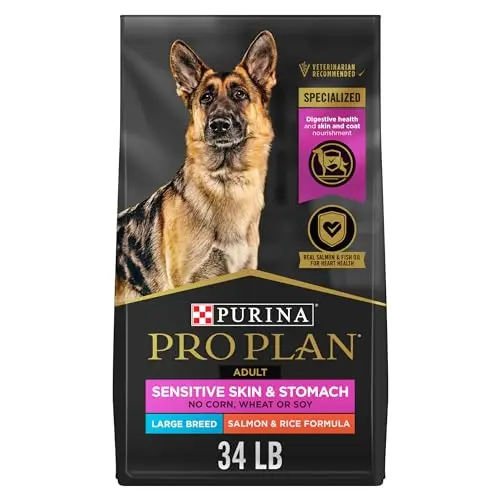
Large Breed Sensitive Skin & Stomach – Joint and Skin Support
A large-breed focused formula that puts salmon first, this food tackles skin sensitivities and joint health in one bag. It’s designed specifically for bigger dogs like golden retrievers, with glucosamine for mobility and easily digestible oatmeal for gentle nutrition. Sunflower oil adds omega-6 fatty acids for a healthy coat, making it a strong all‑around choice for adult goldens.
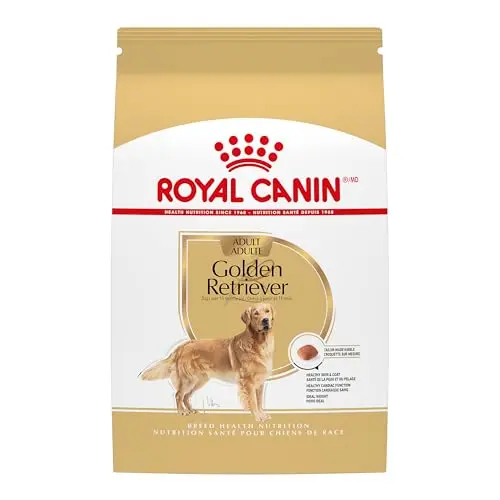
Golden Retriever Adult – Breed-Specific Kibble & Heart Support
There’s no mistaking this is built for golden retrievers – right down to the unique kibble shape designed for a straight muzzle and scissor bite. The formula focuses on skin barrier reinforcement, cardiac health, and weight management, with a precise calorie-to-fat ratio that helps keep goldens lean. It’s a highly targeted option for owners who want a food that considers every breed quirk.

+Plus Large Breed with Chicken – Joint Health & Value
A wallet‑friendly large‑breed formula that doesn’t skimp on joint support. Real chicken leads the ingredient list, and natural sources of glucosamine help maintain mobility – a must for golden retrievers. Antioxidants from multiple sources support immune health, and the recipe avoids common fillers. It’s a practical, everyday choice for owners who want solid nutrition without the premium price tag.
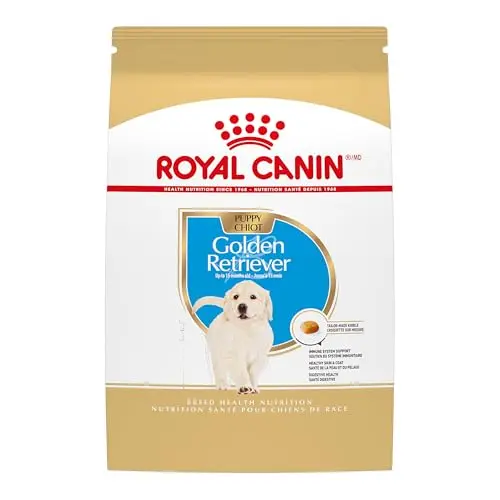
Golden Retriever Puppy – Breed-Specific Growth & Immune Support
Tailored for golden retriever puppies from 8 weeks to 15 months, this formula focuses on steady, healthy growth. The kibble is designed for a puppy’s developing bite, and antioxidants including vitamin E support the budding immune system. Prebiotics and high‑quality proteins aid digestion, while omega‑3s from fish oil lay the foundation for a healthy coat and heart.
How We Evaluated These Dry Dog Foods for Golden Retrievers
We didn’t run long‑term feeding trials or subject these foods to veterinary check‑ups. What we did: cross‑referenced 4 dry dog food formulas from 3 distinct brands across 5 decision axes – targeted breed support, joint‑health nutrients, skin and coat conditioning, ingredient quality, and overall value. We triangulated published ingredient lists, nutritional profiles, and owner feedback where available, then benchmarked each product against the specific needs of adult golden retrievers.
The scoring framework weighted real‑world performance for the breed (60%) – how well each food addresses joint, skin, weight, and digestive concerns common in goldens – against feature differentiation (40%) – unique advantages like breed‑specific kibble or added glucosamine. We have no commercial relationship with any of the brands featured; recommendations track fit and differentiation, not brand preference. If your golden struggles with sensitive skin and stomach, the Pro Plan Large Breed Sensitive Skin & Stomach is your match; if you’re after a budget‑conscious large‑breed food, the Purina ONE +Plus Large Breed serves you well.
How to Choose the Right Dry Dog Food for Golden Retrievers
Why Golden Retrievers Need Specialized Nutrition
Golden retrievers aren’t just smaller Labradors – they have a unique genetic profile that predisposes them to hip dysplasia, elbow issues, skin allergies, and certain heart conditions. A standard adult dog food may meet basic requirements but won’t address these breed‑specific risks. Look for formulas that include glucosamine and chondroitin for joint health, omega‑3 fatty acids for skin and inflammation control, and controlled fat levels to prevent obesity – a heavy golden is a recipe for more joint stress. Protein quality also matters: real meat as the first ingredient helps maintain lean muscle without unnecessary fillers.
Key Nutrients for Joint Health in Large Breeds
Joint support is non‑negotiable for a breed that can reach 34 kg or more. The most critical nutrients are glucosamine, chondroitin, and omega‑3s (EPA and DHA). Glucosamine helps maintain cartilage, while EPA has anti‑inflammatory properties that can ease aching joints. Some foods, like the Pro Plan Large Breed Sensitive Skin & Stomach, list these directly; others rely on natural sources like fish meal. When comparing labels, check for specific mentions of these ingredients rather than vague ‘joint support” claims. If your golden is already showing stiffness, a higher concentration may be worth the investment.
Managing Skin Sensitivities – It's a Breed Thing
Goldens are notorious for hot spots, dry skin, and seasonal scratching. The right diet can calm the skin from the inside out. Salmon‑based foods often work wonders because of the high omega‑3 content, but even chicken‑based recipes can succeed if they include omega‑6 fatty acids from sunflower oil and a robust mix of vitamins. Avoid common allergens like corn, wheat, and soy if your dog shows signs of intolerance. The Pro Plan Large Breed Sensitive takes this a step further by adding prebiotic fibre for gut health, which is often linked to skin condition.
Large‑Breed vs. All‑Breed Formulas: What's Best for Your Golden?
Not all ‘large‑breed” labels are created equal, but they generally provide adjusted calcium and phosphorus levels to support bone development in growing puppies and maintain adult bone density. An all‑breed food may work, but it rarely addresses the slower metabolism of large dogs, which can lead to weight gain. For golden retrievers, a large‑breed formula is almost always the safer bet – it accounts for their size and helps prevent the rapid growth that exacerbates joint problems. If you do go with an all‑breed option, monitor calorie intake and consider supplementing with joint nutrients.
Royal Canin vs. Pro Plan: Which Brand Suits Your Golden Better?
Both brands offer strong options, but they take different paths. Royal Canin’s breed‑specific formula is engineered for golden retrievers’ physical traits – think kibble shape, bite encouragement, and a precise nutrient profile that targets heart health and weight management. It’s a safe, tailored choice. Pro Plan’s large‑breed sensitive formula, on the other hand, puts more emphasis on functional ingredients like glucosamine and prebiotics, making it a better fit if your dog has active joint issues or a finicky stomach. There’s no wrong answer here: if your golden is generally healthy, Royal Canin’s breed focus is compelling; if they’re already showing sensitivity, Pro Plan’s targeted support often wins.
Budget Considerations Without Sacrificing Quality
Feeding a large dog can get expensive, but you don’t have to break the bank. The Purina ONE +Plus Large Breed proves that quality and affordability can coexist – real chicken, natural glucosamine, and a respectable antioxidant blend without the premium‑tier markup. When comparing prices, look at cost per day rather than cost per bag, and check if the formula includes joint support so you’re not supplementing separately. If you’re feeding a younger, healthy golden, a mid‑range food like this can be a perfectly adequate choice.
Frequently Asked Questions
What's the difference between Royal Canin Golden Retriever Adult and Pro Plan Large Breed Sensitive Skin & Stomach?
Royal Canin’s food is breed‑specific – it’s designed around the golden retriever’s jaw shape, bite pattern, and known health tendencies like cardiac issues. It uses chicken as the primary protein and includes taurine for heart health. Pro Plan Large Breed Sensitive, on the other hand, is condition‑specific: salmon‑based, with added glucosamine for joints and prebiotic fibre for digestion. It’s the better choice if your golden has skin allergies or a sensitive stomach, while Royal Canin is a more holistic breed approach. Both are excellent, but the decision really comes down to whether your dog needs extra support for sensitivities or a more generalized breed‑tailored diet.
Is Purina ONE Large Breed a good budget option for golden retrievers?
Yes, particularly for healthy adult goldens without severe allergies. It delivers real chicken as the #1 ingredient, naturally occurring glucosamine for joints, and a decent antioxidant mix – all at a noticeably lower cost than breed‑specific formulas. It doesn’t include skin‑specific add‑ons like extra omega‑6s or prebiotics, so if your dog scratches a lot or has loose stools, you may still need to look at the Pro Plan sensitive formula. But for a no‑frills, solid large‑breed food, it’s a fantastic value that keeps joint health at the forefront.
When should I switch from puppy food to adult food for my golden retriever?
Golden retrievers are usually considered adults around 15 months, though larger individuals may continue filling out until 18 months. Royal Canin’s puppy formula is designed for 8 weeks to 15 months, making that a logical switch point. You’ll know it’s time when your dog’s growth plateaus and you’re no longer seeing rapid weight or height changes. Transition slowly over 7-10 days by mixing the new adult food with the puppy food to avoid digestive upset. If you’re using a large‑breed puppy food, you can sometimes stretch it a bit longer, but avoid keeping a golden on puppy food past 18 months to prevent excess calorie intake.
Do golden retrievers really need a breed‑specific food?
Not necessarily, but it can help. Breed‑specific foods consider the physical and health tendencies of the breed – for goldens, that means kibble shape for their mouth, controlled calories for weight management, and nutrients like taurine for heart health. However, many high‑quality large‑breed or sensitive‑stomach formulas cover the same bases. A golden with no known health issues can thrive on a well‑chosen large‑breed food like Purina ONE or Pro Plan. If you’re breeding or showing, or if your dog has a family history of cardiac problems, the extra tailoring of Royal Canin’s formula might offer more peace of mind.
Final Verdict
For the vast majority of golden retrievers, the Pro Plan Large Breed Sensitive Skin & Stomach is our top pick. It nails the essentials: salmon‑driven omega‑3s, glucosamine for lifelong joint care, and a gentle formula that calms both skin and stomach. If you’re drawn to a food engineered specifically for the breed’s anatomy, the Royal Canin Golden Retriever Adult is a fantastic alternative with its unique kibble shape and heart‑health focus. On a tighter budget? The Purina ONE +Plus Large Breed delivers solid large‑breed nutrition without the premium cost. And if you’re starting from square one with a puppy, the Royal Canin Golden Retriever Puppy lays a healthy foundation for growth. Whichever you choose, feeding your golden right is one of the best ways to keep them bounding through life.