
Your Saint Bernard just polished off the last of his kibble, and you’re already dreading the 6 a.m. wake-up call. For large-breed owners, feeding isn’t just a chore – it’s a logistics problem. That’s where an extra-large automatic dog feeder earns its keep. These big-capacity dispensers hold enough food for days or even weeks, so you aren’t constantly refilling, measuring, or worrying whether your gentle giant got his afternoon meal.
But ‘extra-large” means different things to different manufacturers. A feeder that works flawlessly for a Labrador might clog for a Newfoundland’s larger kibble, and a gravity-fed hopper that’s fine for a mellow senior dog could be knocked over by an exuberant young Rottweiler. We looked across the market to find the models that actually deliver on capacity, reliability, and ease of use – so you can spend less time scooping and more time with your dog.
Best Extra-Large Automatic Dog Feeders – 2026 Reviews
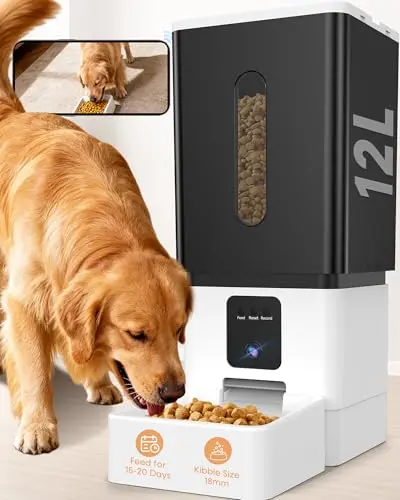
D-01 – Smart, Anti-Clog Feeding with HD Camera
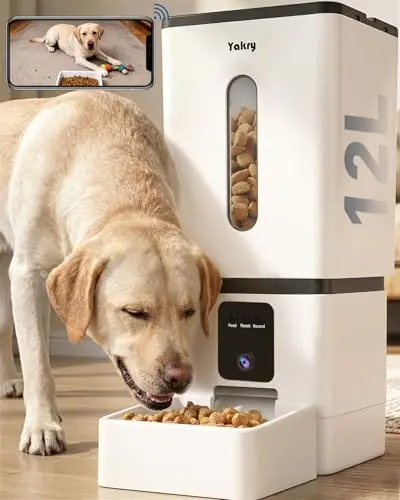
Q01 – Camera Feeder with Dual-Band Wi-Fi
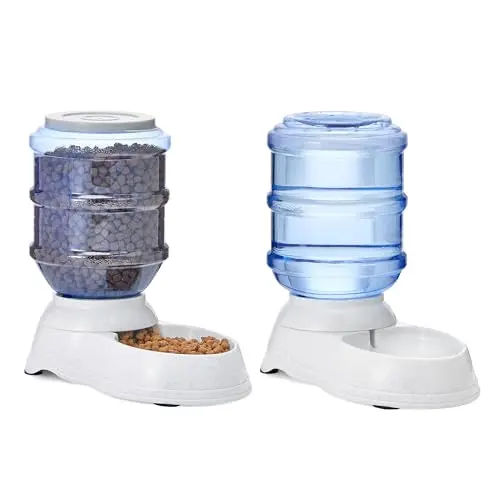
11021/11022-APL – Huge-Capacity Food & Water Station
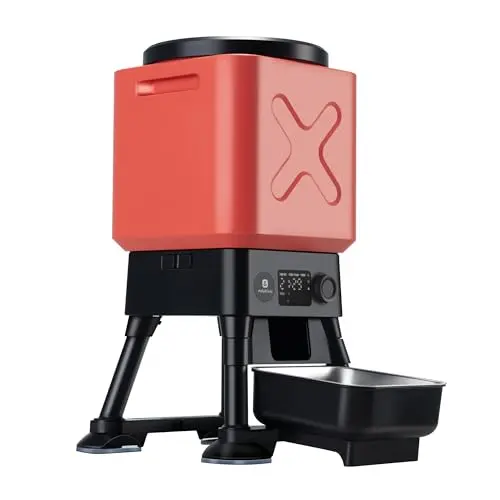
FT-11 – Reliable, Anti-Blockage Large-Breed Feeder
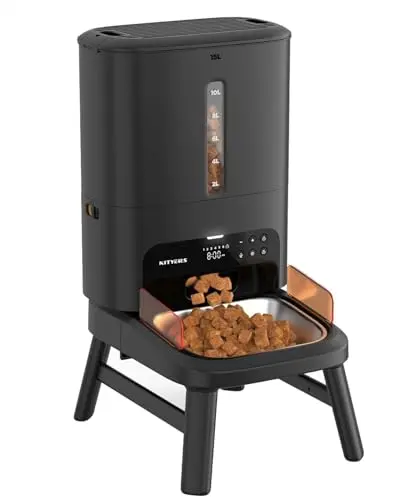
TT01 – Monster Capacity and Anti-Clog for Giant Breeds
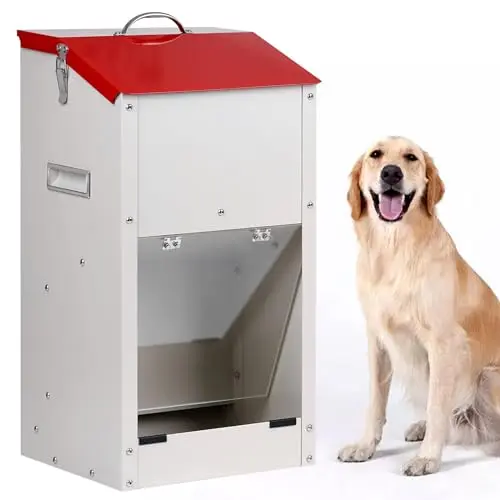
Large – Galvanized Steel Outdoor Gravity Feeder
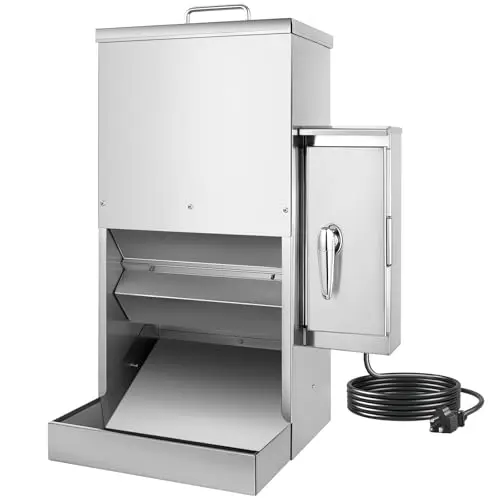
Stainless Steel – 16L Programmable Feeder
How We Evaluated These Extra-Large Automatic Dog Feeders
No controlled lab kibble-drop tests here. What we did: cross-referenced 7 extra-large automatic feeders from 7 distinct brands across 6 decision axes – capacity, kibble-size compatibility, dispensing mechanism reliability, programmability, build durability, and ease of cleaning. We triangulated published specifications, aggregated owner feedback where available, and use-case fit against representative profiles for large-breed households.
The scoring framework weighted real-world feeding performance (60%) – how consistently each model delivers the right portion without jamming – against feature differentiation (40%) – unique strengths like camera connectivity, outdoor construction, or oversized-kibble support. We have no commercial relationship with any of the brands featured; recommendations track fit and differentiation, not brand preference. If you want the best blend of smart features and reliability, the UTCG D-01 is our top pick; if you prefer a massive gravity-fed setup, the Amazon Basics set delivers weeks of hands-off feeding.
How to Choose the Right Extra-Large Automatic Dog Feeder
What Size Feeder Do You Really Need for an Extra-Large Dog?
Not all ‘extra-large” labels are created equal. For a single Labrador, a 12L hopper might last 10-14 days; for a 150 lb Mastiff, you’ll want 15L or more to avoid weekly refills. Also consider how many dogs share the feeder. A multi-pet household with two large breeds can empty a feeder fast, so aim for 14L+ capacities. Gravity feeders like the Amazon Basics set hold a lot but don’t limit portions; programmable feeders like the Nityers TT01 let you control intake precisely. Match capacity to your refill tolerance – if you hate scooping, go bigger.
What Makes a Feeder Genuinely 'Extra-Large"?
True extra-large feeders go beyond a big hopper. They must handle large kibble sizes – many standard dispensers clog on pieces over 15 mm. Look for anti-clog systems like oversized outlets, stirring paddles, or reinforced motors. The physical build matters too: a lightweight plastic unit can be tipped by a determined dog, so check for sturdy bases, suction cups, or wall‑mount options. The KHEARPSL galvanized feeder is practically tip‑proof and weatherproof, while the UTCG D-01 uses a weighted base and locking lid to thwart clever noses.
Gravity vs. Programmable Feeders: Which Fits Your Routine?
Gravity feeders work on a simple principle: as your dog eats, more kibble slides down. They’re plug‑and‑play, require no programming, and suit free‑feeders. But they lack portion control, so they’re better for dogs that self‑regulate. Programmable feeders let you set precise meal times and amounts – ideal for weight management or dogs prone to bloat. The MOLLY&CODY FT‑11 and Nityers TT01 offer intuitive button‑based programming without needing a phone, while the Yakry Q01 and UTCG D-01 add app control. Think about your day: if you’re always home at meal times, a simpler feeder may suffice; if you work late or travel, a smart programmable model buys peace of mind.
Smart Feeders with Cameras: Are They Worth It?
Built‑in cameras let you visually confirm your dog ate and can catch early signs of trouble – an anxious dog, a feeder jam, or a sibling stealing food. The Yakry Q01 streams crisp 1080P video with two‑way audio, so you can soothe your pup mid‑day. But these features add cost and require a stable Wi‑Fi connection. If you’re tech‑phobic or your internet drops often, a non‑Wi‑Fi feeder like the ChiPak or Nityers might be more reliable. However, for anxious owners who want to check in, the camera models provide unmatched transparency.
Materials and Durability for Large Breeds
Large dogs can be tough on gear. Stainless steel hoppers, like those on the ChiPak and the MOLLY&CODY FT-11’s bowl, resist rust, odours, and chewing better than plastic. If your feeder lives outdoors, galvanized steel (KHEARPSL) is the way to go. For indoor use, BPA‑free ABS plastic is common and generally durable, but check for chew-resistant cords and locking lids. A desiccant compartment or airtight seal, present on the Nityers TT01 and Yakry Q01, keeps kibble fresh, especially in humid environments.
Don't Overlook Cleaning and Maintenance
A feeder that’s a nightmare to clean will be neglected, and stale residue can harbour bacteria. Look for removable hoppers, bowls, and rotors that are dishwasher‑safe or easy to hand‑wash. The Nityers TT01’s hopper is designed to contain kibble during removal, minimizing mess. Gravity feeders with wide mouths (Amazon Basics) are easier to scrub than narrow‑necked bottles. Also factor in battery replacement or backup power: models with dual power (AC + batteries) won’t skip a meal during an outage – a crucial point for medical diets.
Frequently Asked Questions
What's the difference between the Nityers TT01 and the ChiPak 16L feeder?
The Nityers TT01 is purpose‑built for giant breeds and oversized kibble, handling pieces up to 23 mm with its patented silicone rotor. It offers an adjustable raised stand and simple LCD programming. The ChiPak uses a stainless steel hopper and a time‑based dispensing mechanism (you set how many seconds it runs) – which can be less precise but excels in hygiene and durability. If your dog eats very large, irregular kibble, the Nityers is the safer bet; if you prioritize a rust‑proof hopper and are willing to calibrate portions, the ChiPak holds its own.
How do the Yakry Q01 and UTCG D-01 camera feeders compare?
Both hold 50 cups and feature 1080P cameras with night vision, but there are subtle differences. The Yakry Q01 supports dual‑band Wi‑Fi (2.4 GHz and 5 GHz), which can improve stability in busy networks, and its anti‑clog outlet handles kibble up to 20 mm. The UTCG D-01 uses a silicone stirring paddle to prevent jams and has a slightly simpler app interface. Both deliver reliable remote feeding; choose Yakry if dual‑band Wi‑Fi is a priority, or UTCG if you like the paddle‑based anti-clog design.
Are all "extra-large" automatic feeders actually large enough for Great Danes or Mastiffs?
Not always. Many feeders labelled extra-large top out at 12L, which a 150 lb dog can empty in a week. For giant breeds, look for 14L+ capacity and verify the kibble-size limit – giants often eat large‑breed formulas with chunks over 18 mm. Feeders like the Nityers TT01 (15L, 23 mm kibble) and the MOLLY&CODY FT-11 (14L, 18 mm) are designed with these extremes in mind. Also check bowl width: a 9‑inch bowl prevents snout crowding and encourages relaxed eating.
Can a gravity feeder handle large kibble, or will it clog?
It depends on the design. The Amazon Basics gravity feeder has a wide chute that usually passes large kibble, but it can occasionally jam if the pieces are very large or oddly shaped. The KHEARPSL outdoor feeder uses a push‑door gravity mechanism that generally works well with standard large‑breed kibble, but very powdery or sticky food may compact. If you’re set on gravity feeding, choose a model with a wide mouth and test it with your usual kibble before leaving town.
Do I really need Wi‑Fi in an automatic dog feeder?
Not necessarily. Wi‑Fi models add remote programming and cameras, which are valuable if you’re away from home frequently or want to visually check on your dog. However, they’re also more expensive and depend on a stable network. If your schedule is predictable and you’re fine with setting meal times manually, a non‑Wi‑Fi programmable feeder like the MOLLY&CODY FT-11 or Nityers TT01 will work reliably and often with fewer tech headaches.
Final Verdict
For most large‑breed owners, the UTCG D-01 hits the sweet spot: ample 50‑cup capacity, reliable anti‑clog dispensing, and a sharp camera so you never miss a meal. If your main priority is sheer hopper size and you don’t need a camera, the Nityers TT01 gives you 63 cups and handles the chunkiest kibble. For an outdoor setup, the KHEARPSL is built like a tank. Whichever you choose, an extra‑large automatic feeder turns feeding duty from a daily grind into a set‑it‑and‑(mostly)‑forget‑it affair – so you can focus on the belly rubs.