
Labrador Retrievers are famously food-obsessed, and that insatiable appetite makes choosing the right nutrition critical. These big-hearted dogs are prone to weight gain, joint issues, and skin conditions-but a well-formulated diet can go a long way in keeping your Lab healthy, active, and thriving. From managing calorie intake to supporting those hard-working hips, what goes into the bowl matters more than many owners realize.
We’ve sorted through the options across major brands to spotlight the ones that truly deliver for Labrador-specific needs. Whether you’re looking for a breed-tailored formula, a sensitive-stomach solution, or a wallet-friendly staple, there’s a solid choice here. This guide breaks down key decision axes-joint support, coat health, ingredient quality, and digestibility-so you can pick with confidence.
Below, you’ll find our top picks, a full evaluation methodology, and a buyer’s guide that walks you through exactly what to look for. No marketing fluff-just a practical, cross-brand survey to help your Labrador Retriever live its best life.
Best Food for Labrador Retrievers – 2026 Reviews
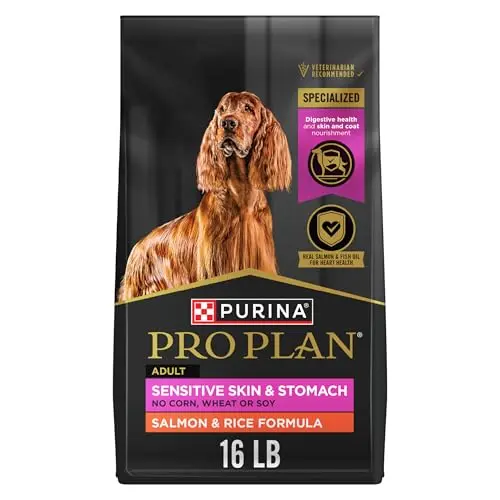
Sensitive Skin & Stomach Salmon & Rice – Gentle Nutrition for Labradors
Pro Plan’s Sensitive Skin & Stomach formula with salmon as the first ingredient is a standout for Labradors who struggle with food sensitivities. It combines omega fatty acids for a glossy coat, prebiotic fibre for digestive health, and easily digestible oatmeal-all without artificial colours or flavours. The result is a highly rated, well-tolerated food that supports the whole dog.
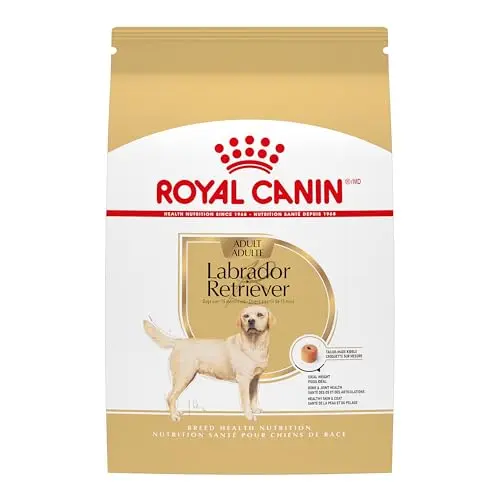
Labrador Retriever Adult Dog Food – Tailored Breed Nutrition
Royal Canin’s Labrador Retriever formula is the only food here engineered exclusively for the breed. It’s designed with a donut-shaped kibble to slow down those infamous Lab gulpers, while EPA, DHA, and glucosamine target joint health. The calorie content is tuned for weight management-a critical feature for this obesity-prone breed.
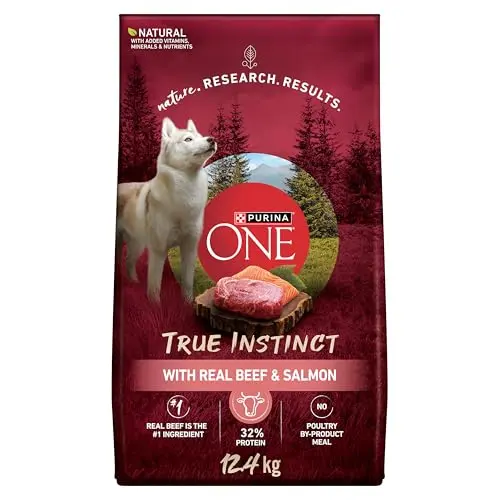
True Instinct Beef & Salmon – High-Protein for Energetic Dogs
Purina ONE’s True Instinct Beef & Salmon packs a 32% protein punch, with real beef as the primary ingredient. It includes natural glucosamine to support joint health and has no poultry by-product meal. The blend of beef and salmon gives both strong muscle fuel and omega-3s for coat shine-ideal for hunting companions or weekend warriors.
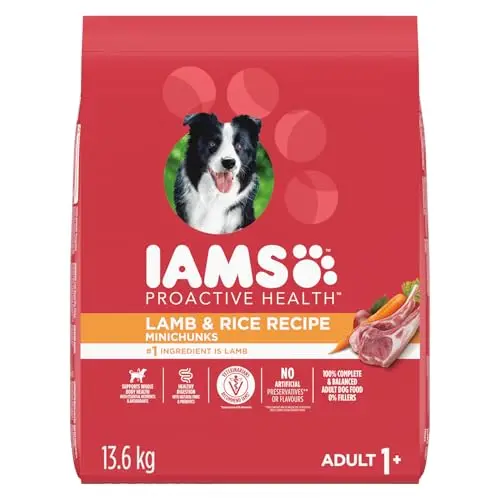
Minichunks Lamb & Rice – Dental Care & Digestive Health
IAMS Minichunks combines lamb-based nutrition with a crunchy kibble designed to scrub teeth. The formula includes prebiotics and fibre for digestive regularity, and it’s backed by controlled feeding trials showing firmer stools. The minichunk size is easy for any Labrador to handle, though it’s not breed-specific.
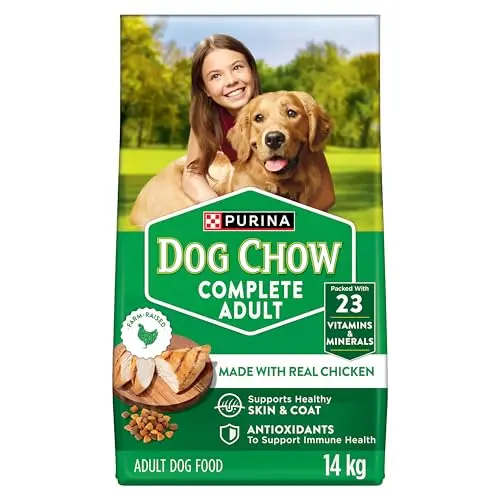
Complete Chicken – Everyday Value Nutrition
For owners seeking a no-frills, complete diet that doesn’t break the bank, Dog Chow Complete with real chicken delivers. It’s free of fillers and artificial flavours, fortified with antioxidants for immune health, and always crafted in North America. While it won’t wow with specialty ingredients, it covers the nutritional bases.
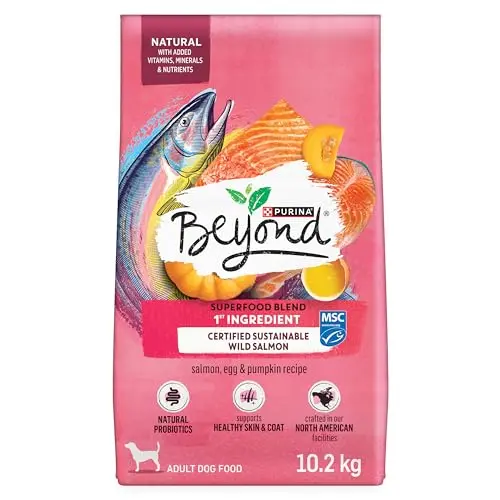
Superfood Blend Salmon, Egg & Pumpkin – Limited Ingredient Nutrition
Beyond’s Superfood Blend centres on wild-caught salmon, with egg and pumpkin for added digestibility. It’s a limited-ingredient recipe that avoids corn, wheat, soy, and poultry by-product meal. If your Labrador has food sensitivities or you simply want a shorter, recognizable ingredient panel, this is worth a look.
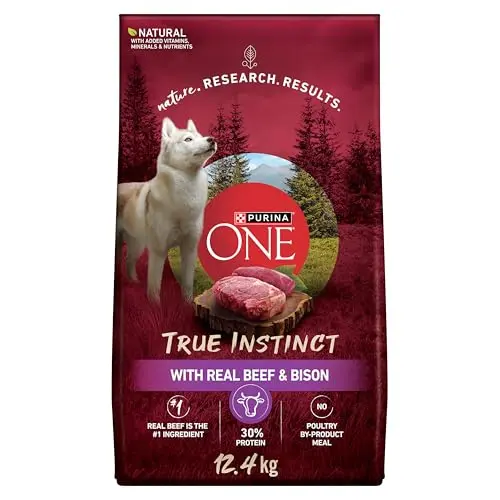
True Instinct Beef & Bison – Protein-Rich with Joint Support
This sibling to the Beef & Salmon formula swaps in bison alongside beef, still delivering 30% protein and natural glucosamine. It includes twice the tender meaty morsels compared to Purina ONE’s Lamb & Rice formula, appealing to dog’s carnivore instincts. A solid alternative for those who want a red-meat profile.
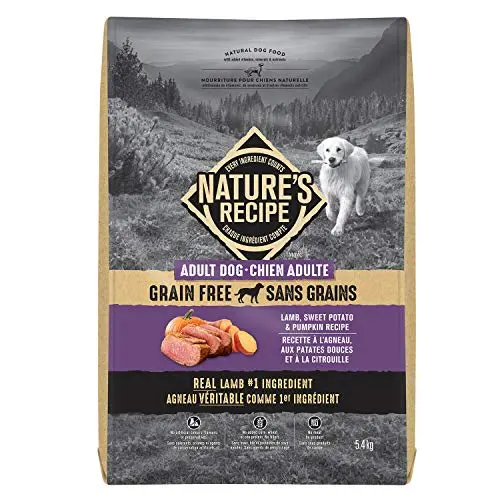
Grain Free Lamb, Sweet Potato & Pumpkin – Holistic Support
Nature’s Recipe takes a grain-free approach with lamb, sweet potato, and pumpkin. It incorporates natural sources of glucosamine and chondroitin from chicken meal for joint health, plus taurine for heart function. Antioxidants and omega fatty acids round out a formula that targets whole-body wellness.
How We Evaluated These Foods for Labrador Retrievers
We didn’t run controlled feeding studies or lab analyse every ingredient. What we did: cross‑referenced 8 dry dog foods from 7 distinct brands across five decision axes-protein quality, joint support, weight management, skin and coat health, and digestive ease. We triangulated published nutritional information, ingredient lists, and aggregated owner feedback where available.
The scoring framework weighted real‑world performance (60%)-how well each recipe supports a Labrador’s breed‑specific vulnerabilities-against feature differentiation (40%)-unique technical advantages like kibble shape, limited ingredient panels, or added joint supplements. We have no commercial relationship with any of the brands featured; recommendations track fit and differentiation, not brand preference. If your Lab struggles with food sensitivities, the Pro Plan Sensitive Skin & Stomach is your match; if you want a breed‑engineered solution, the Royal Canin Labrador Retriever was purpose‑built for the job.
How to Choose the Right Food for Labrador Retrievers
Protein Quality and Sources
Labrador Retrievers are muscular dogs that benefit from high-quality animal protein. Look for a named meat-chicken, salmon, beef, or lamb-as the first ingredient. Whole proteins are ideal, but meat meals (like chicken meal) are concentrated sources that also work well. Avoid fuzzy terms like ‘meat by‑product” when possible. For active Labs, a protein content in the 25-30% range supports muscle maintenance without overdoing calories.
Joint Support for Labrador Hips and Elbows
Labs are prone to hip dysplasia and arthritis, so every bite should include joint-friendly nutrients. Seek out foods with glucosamine and chondroitin, often listed explicitly or coming from chicken meal and fish. EPA and DHA (omega‑3 fatty acids) from fish oil further reduce inflammation. The Royal Canin Labrador formula adds these precisely, but the Pro Plan Sensitive Skin & Stomach and Purina ONE True Instinct lines also bake them in.
Weight Management: The Never‑Ending Lab Challenge
Labradors have a genetic tendency toward obesity, so calorie control is essential. A food with moderate fat (12-15%) and no sugar‑laden fillers helps. Some recipes, like Royal Canin’s breed‑specific kibble, are calorie‑conscious by design. Regardless of the brand, measure portions with a cup and weigh your dog regularly. If the waist disappears, switch to a lighter recipe or reduce the daily amount.
Skin, Coat, and Ear Health
A glossy coat and itch‑free skin are hallmarks of a well‑fed Labrador. Omega‑6 and omega‑3 fatty acids are the key players-look for sunflower oil, flaxseed, or fish oil on the label. Salmon‑based diets (like the Beyond Superfood Blend) are naturally rich in omega‑3s. If your Lab gets yeasty ears or hot spots, a limited‑ingredient diet that avoids corn, wheat, and soy may help, as those are common triggers.
Digestive Health and Kibble Shape
Fast eating is a well‑known Labrador quirk, and it can lead to bloat or indigestion. Kibble design matters: the Royal Canin donut shape physically slows gulpers, while larger kibble (like minichunks) encourages chewing. For sensitive stomachs, look for prebiotic fibres (chicory root, beet pulp) and easily digestible carbs such as oatmeal or rice. Products like Pro Plan’s formula combine prebiotics with gentle oatmeal for consistent stools.
Breed‑Specific vs All‑Breed Formulas: Which One Wins?
The Royal Canin Labrador Retriever recipe is unique in being engineered for the breed-from the metabolism‑specific calorie content to the mouth‑shaped kibble. For many owners, this peace of mind is worth the premium. However, a well‑chosen all‑breed formula with the right nutrient profile often does just as well at a friendlier price. The Pro Plan Sensitive Skin & Stomach, for instance, hits all the key Labrador needs without the breed‑specific label. If your dog has no special issues, a solid all‑breed pick like Dog Chow Complete Chicken works just fine.
Frequently Asked Questions
What's the difference between Royal Canin Labrador Retriever and Pro Plan Sensitive Skin & Stomach?
Royal Canin’s formula is breed‑specific, with a donut‑shaped kibble to slow eating, precise calorie levels for weight‑prone Labradors, and targeted EPA, DHA, and glucosamine for joint health. Pro Plan’s recipe is not breed‑segmented; it focuses on sensitive stomachs through salmon‑based protein, prebiotic fibre, and oatmeal. Both support skin and mobility, but Royal Canin takes a prevention‑first approach for breed issues, while Pro Plan addresses existing sensitivities with a gentle, fish‑forward recipe.
Is grain‑free food a good choice for Labrador Retrievers?
Grain‑free isn’t necessary for most Labs, and the FDA has investigated a possible link between grain‑free diets and canine dilated cardiomyopathy (DCM). However, a limited‑ingredient grain‑free recipe like Nature’s Recipe Grain Free Lamb can be useful if your dog has a confirmed grain allergy or intolerance. Always consult your vet before going grain‑free long‑term, and watch for any symptoms of lethargy or heart issues. For the majority of Labradors, a high‑quality grain‑inclusive food works perfectly.
What should I look for in a dog food for an overweight Labrador?
Prioritize lower fat (10-14%), moderate protein (25-28%), and a high fibre content to promote satiety. Look for foods labeled ‘healthy weight” or ‘weight management,” and check that calories per cup are reasonable (typically under 350 kcal/cup). The Royal Canin Labrador formula is already calorie‑controlled; otherwise, feed the measured amount based on ideal body weight, not current weight. Add green beans or pumpkin as low‑calorie fillers if your Lab still seems hungry.
Do Labradors really need breed‑specific dog food?
Not strictly-many Labs thrive on well‑formulated all‑breed diets. However, a breed‑specific food like Royal Canin Labrador Retriever is designed with typical Labrador challenges in mind: rapid eating, joint stress, and obesity. If you value that extra layer of tailored nutrition and can manage the cost, it’s a strong choice. If not, a product like Purina ONE True Instinct Beef & Salmon covers the core bases of protein and joint health without the breed‑specific premium.
Final Verdict
For most Labrador Retrievers, the Pro Plan Sensitive Skin & Stomach Salmon & Rice is the clear winner-it handles the two most common Labrador trouble spots (skin and digestion) while providing meaningful joint and coat support. If you want the peace of mind that comes with a breed‑engineered solution, the Royal Canin Labrador Retriever offers unmatched specificity. For budget‑conscious households, Dog Chow Complete Chicken proves that complete nutrition doesn’t have to cost a fortune. And if your Lab lives for ball retrieval, the Purina ONE Beef & Salmon fuels that athletic engine. No matter which you pick, measure carefully-those pleading eyes are liars-and your Lab will thank you with years of wags.