
Walking down the pet food aisle at your local grocery store, you’re met with a wall of puppy food options – bulldog-sized bags, tiny kibble, promises of ‘brain development’ and ‘digestive health.’ It’s exciting and a little overwhelming. You want to start your new pup on the right paw, but not every bag on the shelf is created equal. The grocery store brands have to earn their spot by being accessible, trusted, and worth the price, which means you get a mix of reliable industry staples and budget-friendly picks right alongside them.
That convenience is why we focused specifically on grocery store puppy food. We looked at everything from giant bags of Purina Pro Plan to the smaller, specialized boxes of Royal Canin, evaluating them on the things that matter for a growing dog: protein quality, digestive support, breed relevance, and overall value. The result is a guide that helps you pick a food your puppy will thrive on – without having to make a special trip to a boutique pet shop.
Best Grocery Store Puppy Food – 2026 Reviews
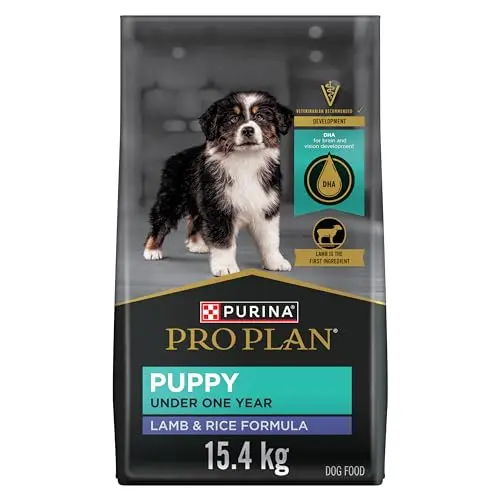
Development Lamb & Rice – High-Protein Formula with Probiotics
Purina Pro Plan’s Development Lamb & Rice is a top-tier grocery store option that covers all the puppy nutrition bases. Real lamb is the first ingredient, supported by DHA for brain and vision development and guaranteed live probiotics for digestive health. It’s a high-protein, nutrient-dense formula that works for most breeds, and the big bag size makes it a practical choice for multi-dog households or anyone who doesn’t want to run out fast.
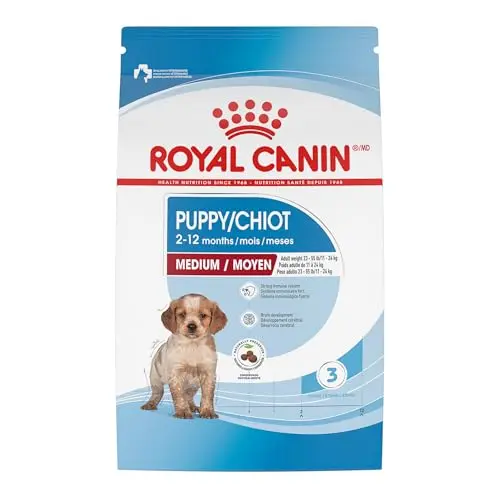
Medium Puppy – Breed-Specific Kibble & Immune Support
Royal Canin’s Medium Puppy formula is engineered for growing dogs expected to weigh 23-55 lbs as adults. The crunchy kibble is designed for medium-sized jaws, and the recipe packs antioxidants, prebiotics, and fish oil to support immune health, digestion, and brain development. If your puppy fits the medium-breed profile, this targeted nutrition is hard to beat in a grocery store aisle.
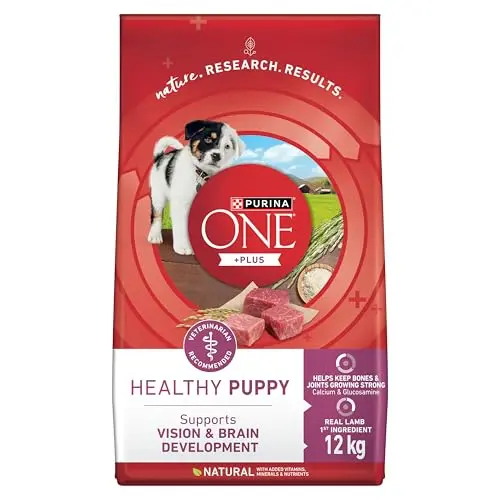
+Plus Healthy Puppy Lamb – Digestible Nutrition with DHA
Purina ONE’s lamb-based puppy formula prioritises easy digestion with rice and oatmeal, making it a gentle option for pups with sensitive systems. Real lamb leads the ingredient list, and DHA supports brain and vision development. It’s a no-frills, complete diet with no artificial flavours or fillers, and the 12 kg bag offers excellent value for the quality.
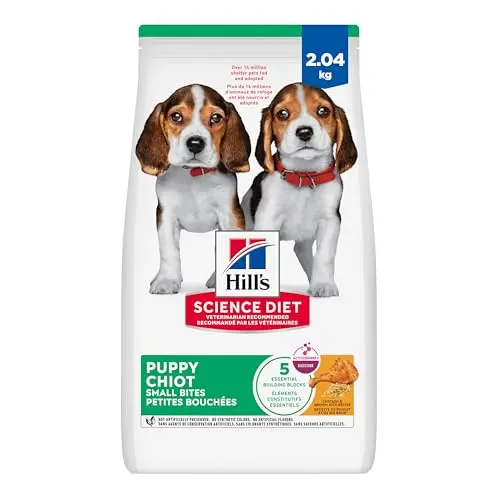
Puppy Small Bites – Chicken & Brown Rice for Small Breed Growth
Hill’s Science Diet Small Bites is specifically for small breed puppies, with kibble sized for tiny mouths and a formula rich in DHA, high-quality protein, and prebiotic fibres. The balanced minerals support strong bones and teeth, and the all-natural ingredients make it a trusted pick for new puppy parents shopping at their neighbourhood grocery store.
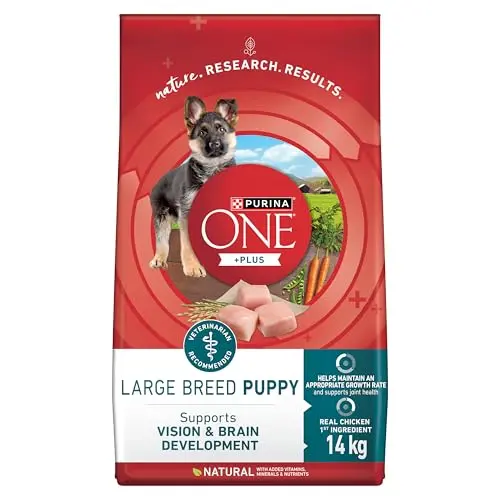
+Plus Large Breed Puppy Chicken – Joint Support with Glucosamine
Purina ONE Large Breed Puppy formula is built for big puppies destined to tip the scales at 50+ lbs. Real chicken is the first ingredient, and natural sources of glucosamine support healthy joints during rapid growth. The dual-defence antioxidant blend and easily digestible rice make it a smart, affordable pick for large breed owners.
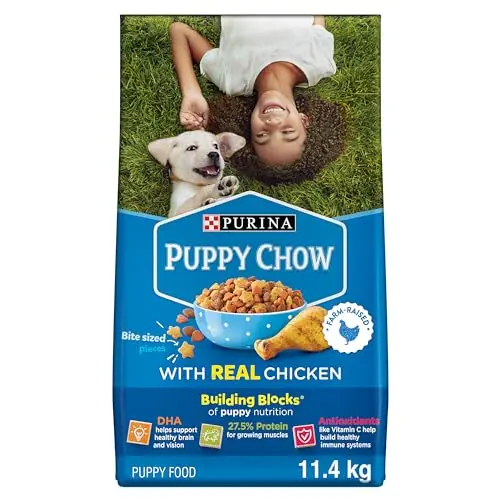
Complete with Real Chicken – Budget-Friendly Essential Nutrition
Purina Puppy Chow delivers foundational puppy nutrition at a price that makes it the most wallet-friendly grocery store option we found. With real farm-raised chicken, 27.5% protein for muscles, and DHA for brain and vision, it covers the basics without loading up on extras. The 11.4 kg bag stretches a long way, making it a practical choice for multi-pup households or anyone on a tight budget.
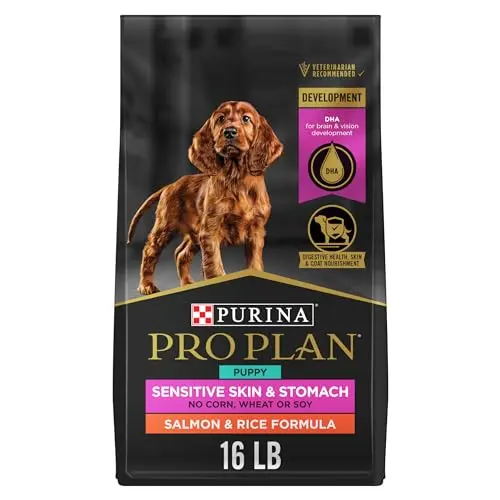
Development Sensitive Skin & Stomach Salmon & Rice – Gentle Formula with Prebiotics
This Pro Plan formula is engineered for puppies with delicate digestion or skin sensitivities. Salmon is the first ingredient, and sunflower oil provides omega-6s for coat health. The recipe includes natural prebiotic fibre for digestive balance, and DHA is still in the mix for brain development. It’s a targeted option for sensitive systems, available right in the grocery store aisle.
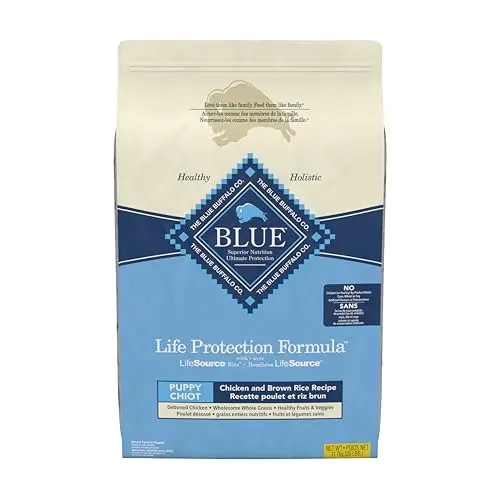
Life Protection Formula Chicken & Brown Rice – Holistic Puppy Nutrition with LifeSource Bits
Blue Buffalo’s Life Protection Formula for puppies starts with real chicken and avoids by-products, corn, wheat, and soy. The trademarked LifeSource Bits deliver a precise blend of antioxidants, vitamins, and minerals for immune support. DHA and ARA support brain and eye development, making this a well-rounded holistic choice you can find in many grocery chains.
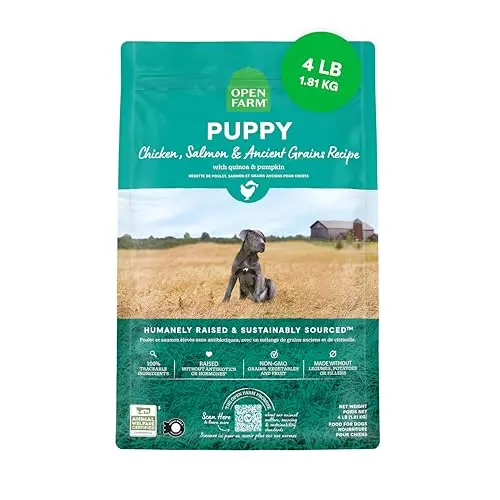
Ancient Grains Puppy Chicken & Salmon – Traceable, Non-GMO Ingredients
Open Farm’s Ancient Grains puppy recipe blends humanely raised chicken and wild-caught salmon with nutrient-dense ancient grains like oats and quinoa. It’s free from peas, potatoes, and legumes, and every ingredient is traceable back to its source. While it’s a more premium grocery store find, it’s available in select chains for those seeking ethical sourcing and transparent nutrition.
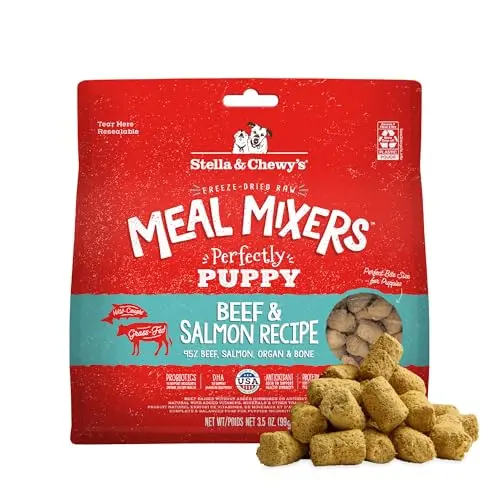
Freeze-Dried Raw Meal Mixers Beef & Salmon – Protein-Rich Puppy Topper
Stella & Chewy’s Meal Mixers are a freeze-dried raw topper designed to boost any puppy diet with high-quality protein and nutrients. Made with 95% beef and salmon, organs, and bone, they add DHA, Vitamin E, and L-Carnitine for body and brain development. This is more of a supplement than a standalone food, but it’s a handy addition for picky eaters or extra nutrition from a grocery store shelf.
How We Evaluated These Grocery Store Puppy Foods
We didn’t conduct veterinarian-supervised feeding trials or lab nutrient testing. What we did: cross-referenced 10 puppy food models from 8 distinct brands against four key decision axes-protein source and quality, digestive support (probiotics, prebiotics, fibre), breed-appropriate kibble size, and ingredient transparency. We triangulated published nutritional specifications, product information, and aggregated owner feedback where available to assess real-world fit for growing puppies.
The scoring framework weighted real-world nutritional performance and digestive outcome (60%) against feature differentiation (40%), including breed-specific formulation and added functional ingredients. We benchmarked everything from protein type to the presence of DHA, antioxidants, and joint-supporting compounds. Recommendations track nutritional fit and accessibility in grocery stores, not brand loyalty-if your puppy is a medium breed, the Royal Canin Medium Puppy is a purpose-built pick, while the Pro Plan Development Lamb & Rice covers the broadest range of needs.
How to Choose the Right Grocery Store Puppy Food
What Does 'Grocery Store' Puppy Food Really Mean?
When we talk about grocery store puppy food, we mean brands you’ll find in major supermarket chains-not just specialty pet retailers. These foods are designed to be accessible and often sit at a sweet spot between budget and premium. You’ll see names like Purina, Hill’s Science Diet, Blue Buffalo, and Royal Canin. They earn shelf space by meeting AAFCO nutrient profiles for growth and appealing to a wide audience of puppy parents. That broad availability means you can compare ingredients, protein sources, and kibble sizes without trekking to a boutique store. For most puppies, the nutritional difference between a good grocery store brand and a premium pet store brand is slim-what matters more is whether the specific formula matches your pup’s breed size, digestive tendencies, and activity level.
Real Meat vs. Meal: Decoding Protein Quality
The first ingredient on the bag tells you a lot. Look for real, named meat-chicken, lamb, salmon-rather than vague ‘meat meal’ or ‘poultry by-product meal.’ Whole meats offer bioavailable amino acids that directly support muscle and tissue development. Meal is a concentrated protein source and isn’t inherently bad, but a whole meat first ingredient generally signals a higher-quality recipe. Our top pick, the Pro Plan Development Lamb & Rice, leads with real lamb, while many budget options still manage real chicken as the first ingredient. Beyond the first ingredient, check the overall protein percentage-puppy foods should hit at least 25% protein. The Purina Puppy Chow delivers 27.5% at a budget price, proving you don’t need to spend a fortune to fuel growth.
Digestive Health: Probiotics, Prebiotics, and Fibre
Puppy tummies are sensitive. A food with live probiotics, prebiotic fibre, or easily digestible grains can mean the difference between solid stools and daily clean-up duty. Probiotics introduce beneficial bacteria to the gut, prebiotics feed those bacteria, and gentle carb sources like rice or oatmeal provide energy without irritation. The Pro Plan Sensitive Skin & Stomach is a standout here, pairing salmon protein with prebiotic fibre specifically selected for digestive balance. If your puppy has shown signs of loose stools or gas, prioritise a formula that includes these gut-friendly ingredients-you’ll see the difference quickly.
Kibble Size and Breed Considerations
Kibble size isn’t just about convenience-it affects how safely and eagerly a puppy eats. Small breed puppies need tiny pellets to avoid choking, so look for foods like Hill’s Science Diet Small Bites. Large breed puppies benefit from larger kibble that encourages chewing, and more importantly, from controlled growth formulas that don’t push rapid weight gain onto developing joints. The Purina ONE Large Breed Puppy adds glucosamine to support those joints. Medium breeds have their own sweet spot; Royal Canin designs kibble specifically for 23-55 lb adult dogs. If you’re unsure of your pup’s adult size, an all-breed formula with medium-sized kibble is a safe bet.
Budget-Friendly vs. Premium: What Are You Paying For?
At the grocery store, you’ll see a range from affordable staples like Purina Puppy Chow to pricier choices like Open Farm. The price differences often come down to ingredient sourcing (non-GMO, humanely raised), inclusion of functional extras (probiotics, superfoods), and brand reputation. But more expensive doesn’t always mean better for your pup. The Purina ONE lamb formula delivers a clean, digestible diet without the premium markup, while a splurge on Stella & Chewy’s freeze-dried topper adds raw nutrition but isn’t a complete meal. Consider your budget and how long a bag will last: a big bag of Purina Pro Plan might cost more upfront but be more economical per day than a tiny bag of Open Farm.
Ingredients to Watch Out For
Even in grocery store brands, scan the ingredient list for artificial colours, flavours, and preservatives-they’re unnecessary. Many formulas now avoid corn, wheat, and soy, which can be common allergens, though whole corn can be fine for non-sensitive dogs. The Blue Buffalo line explicitly excludes these, while Purina ONE uses limited fillers. Also check for DHA-an omega-3 fatty acid critical for brain and vision development-it’s present in most of our picks. If your puppy has specific sensitivities, you’ll want a single-protein, limited-ingredient diet like the Pro Plan Salmon option, but for most healthy pups, a well-rounded formula with multiple protein sources works great.
Frequently Asked Questions
What's the difference between grocery store puppy food and pet store brands?
The line is blurrier than you’d think. Many grocery store brands-Hill’s, Royal Canin, Purina Pro Plan-are the same ones vets recommend and that sit on pet store shelves. The main difference is selection: grocery stores carry the highest-volume formulas, while specialty stores offer more niche diet types (like exotic proteins or raw blends). The nutritional foundation is nearly identical; both meet AAFCO standards for growth. So you can confidently feed your puppy from the grocery aisle without guilt-just focus on the label quality markers we’ve highlighted.
How do I know if my puppy has a sensitive stomach?
Signs include frequent loose stools, gas, vomiting, or a lack of appetite. If your puppy seems uncomfortable after meals or has inconsistent digestion, try a formula designed for sensitive systems. Look for easily digestible proteins like lamb or salmon, and added prebiotic fibre or probiotics. The Pro Plan Sensitive Skin & Stomach is our top rec for this scenario. Transition slowly over 7-10 days, and if symptoms persist, consult your vet-there could be an underlying allergy or health issue.
What's the difference between Purina Pro Plan and Purina ONE for puppies?
Both are excellent, but Pro Plan is Purina’s advanced nutrition line-it includes more specialised formulas (breed-specific, sensitive stomach) and often contains higher levels of functional ingredients like guaranteed live probiotics. Purina ONE focuses on simplicity and natural ingredients with no fillers at a more moderate price. The Pro Plan Lamb & Rice is our overall winner for its probiotic boost; the Purina ONE Lamb is a close alternative if you want digestibility without the premium markup.
How do Royal Canin Medium Puppy and Hill's Science Diet Small Bites compare?
They serve opposite breed sizes. Royal Canin Medium Puppy is for dogs expected to reach 23-55 lbs, with kibble shaped for medium jaws and a nutrient profile supporting steady growth. Hill’s Small Bites is explicitly for tiny breeds, with miniature kibble and a higher calorie density to fuel fast metabolisms. If your puppy is a toy or small breed like a Chihuahua, go with Hill’s; if you have a young Beagle, Border Collie, or similar, Royal Canin is tailored to that growth curve. Both are top-quality grocery store options.
Final Verdict
For most puppies, the Pro Plan Development Lamb & Rice is the clear grocery store winner-it combines high-quality lamb protein, digestive probiotics, and brain-building DHA in a widely available package. If you’ve got a medium breed puppy, the Royal Canin Medium Puppy is purpose-built for their growth needs. Budget-conscious buyers can grab the Puppy Chow Complete without sacrificing essential nutrition, and puppies with sensitive stomachs thrive on the Pro Plan Sensitive Skin & Stomach Salmon & Rice. Any of these picks will give your puppy a great start-right from your local grocery store aisle.