
If there’s one thing Lab owners know, it’s that their puppies grow fast-and that rapid growth puts serious demands on their diet. Getting nutrition right during those first 12 to 18 months can mean the difference between a strong, healthy adult and a dog plagued by joint issues down the road. The key? A large breed puppy food that controls bone growth, fuels energy, and supports the developing immune system without excess calories.
Labs are prone to hip and elbow dysplasia, so joint support isn’t optional; it’s a baseline. On top of that, their famously enthusiastic eating can mask digestive sensitivities that only become apparent with loose stools or itchy skin. That’s why we didn’t just rank foods-we cross-referenced protein sources, DHA levels, joint-supporting nutrients, and real-world owner feedback to find the formulas that deliver where it counts. Below, our top picks from across the market to keep your Lab pup thriving.
Best Large Breed Puppy Food for Labs – 2026 Reviews
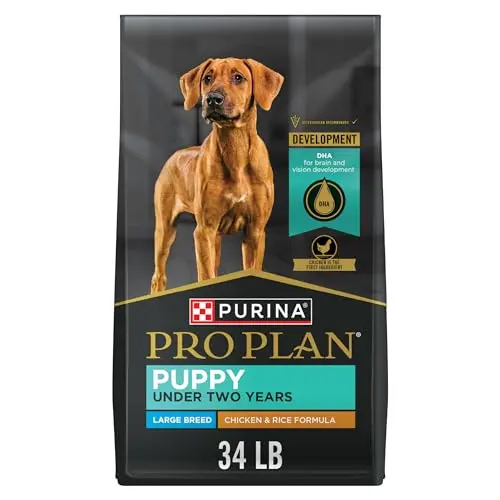
Development Chicken & Rice – Complete Large Breed Nutrition
A market-leading dry food that combines real chicken, live probiotics, and DHA in a formula trusted by breeders and owners alike. The tender meaty shreds mixed with crunchy kibble keep meals interesting for growing Labs.
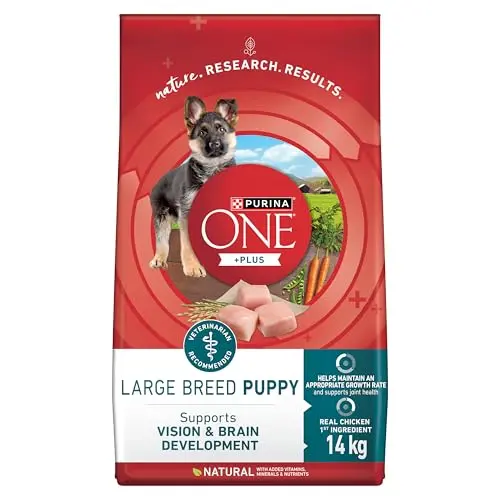
Plus Large Breed Puppy – SmartBlend Chicken
A wallet-friendly option that packs real chicken, glucosamine, and DHA into every bowl. The SmartBlend formula balances protein and antioxidants for steady growth without the sticker shock.
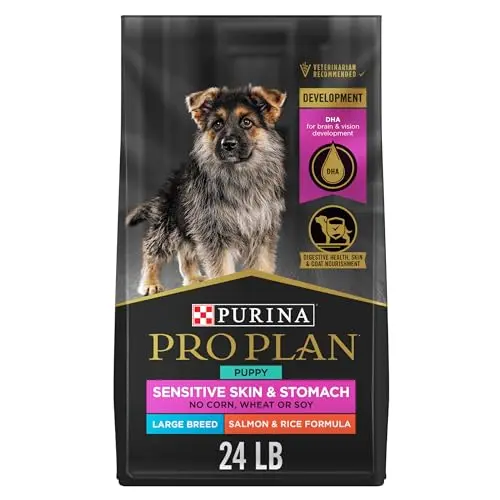
Sensitive Skin & Stomach Salmon – Allergy-Friendly Large Breed
Hypoallergenic salmon as the first ingredient, plus probiotics and prebiotic fiber, make this the go-to for Labs with itchy skin or loose stools. It’s the sensitive system specialist in the lineup.
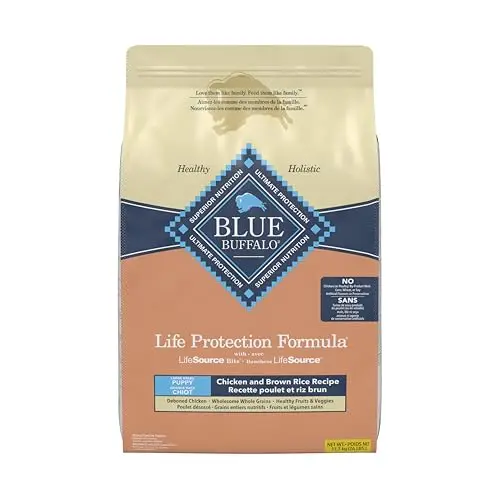
Life Protection Large Breed Chicken & Brown Rice – With LifeSource Bits
Whole grains, real chicken, and those trademark LifeSource Bits deliver antioxidants in a cold-formed nugget. A natural-minded pick for owners avoiding by-products.
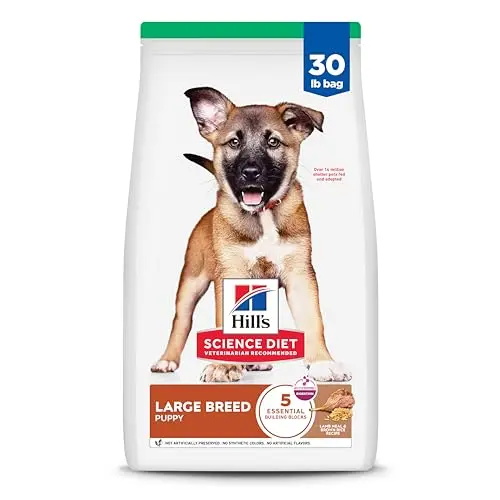
Large Breed Lamb Meal & Brown Rice – Vet-Recommended Growth
Backed by veterinary nutritionists, this lamb-based option provides balanced minerals for controlled bone growth, plus DHA and antioxidants for development.
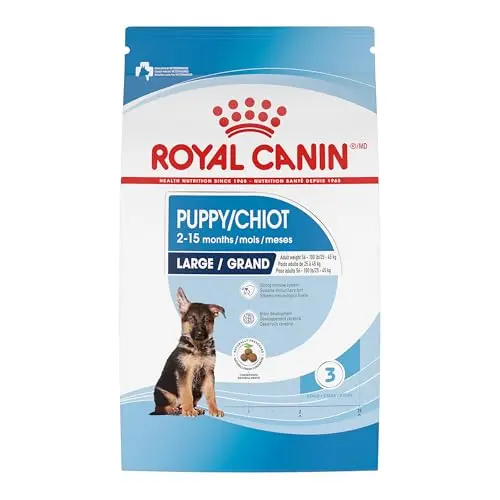
Large Puppy 30 lb – Tailored Joint & Immune Support
Scientifically formulated with cod, prebiotics, and a mineral blend that targets joint and bone health. The crunchy kibble can be served dry or mixed with wet food.
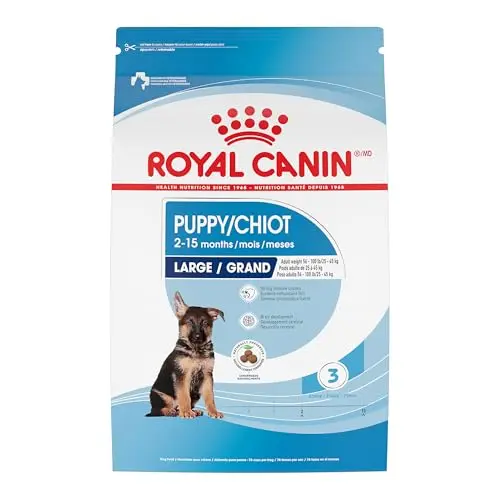
Large Puppy 17 lb – Chicken Recipe for Growing Labs
The chicken version of Royal Canin’s large breed formula, in a smaller bag perfect for trying out. Same tailored nutrition with a more familiar protein source.
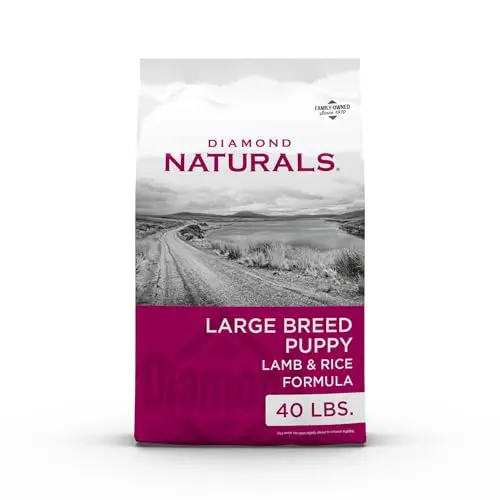
Lamb & Rice Large Breed – DHA & Antioxidant Boost
A budget-friendly lamb and rice formula with a solid nutrient profile, including DHA for brain development and L-carnitine for lean body mass.
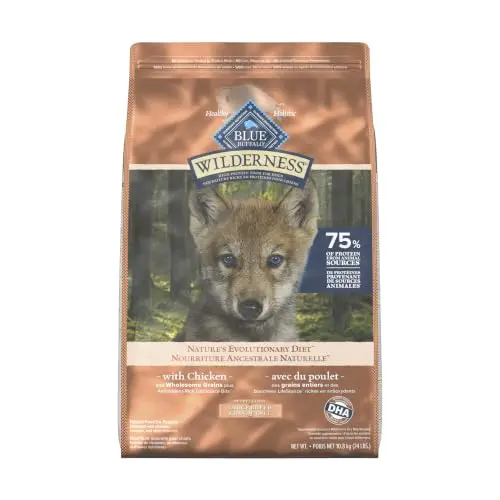
Wilderness Large Breed Chicken – High-Protein Active Formula
Packs 35% protein for muscular growth, with added glucosamine and LifeSource Bits. Best suited for older, very active puppies under close supervision.
How We Evaluated These Large Breed Puppy Foods for Labs
We haven’t raised a litter of Lab puppies on each of these foods. What we did: cross-referenced 9 large breed puppy formulas from 6 distinct brands across five key dimensions-protein quality and source, joint-supporting nutrients (glucosamine, chondroitin, calcium-phosphorus ratio), DHA content for brain development, digestive health support (probiotics and fiber), and owner-reported palatability and stool quality. We triangulated published guaranteed analyses, ingredient decks, and aggregated owner experiences where available to pressure-test how each formula performs in the real world for a breed as active and growth-sensitive as Labs.
The scoring framework weighted real-world performance and formula appropriateness (60%)-how well each food supports controlled growth, joint health, and digestion-against feature differentiation (40%)-unique technical advantages like novel proteins, probiotic inclusion, and specific mineral blends. We have no commercial relationship with any of the brands featured; recommendations track fit and differentiation, not brand preference. If your Lab is a typical, healthy pup, the Pro Plan Development Chicken & Rice is the surest all-rounder. If allergies are already flaring, the Sensitive Skin & Stomach Salmon formula delivers relief without compromise.
How to Choose the Right Large Breed Puppy Food for Labs
Why Large Breed Puppy Food Matters for Labs
Labs grow rapidly-from a 1 lb newborn to 60+ lbs in a year. That speed demands a food engineered to moderate bone growth, not accelerate it. Large breed puppy formulas typically have a calcium-to-phosphorus ratio of about 1.2:1, which helps prevent skeletal malformations. Excess calcium can cause rapid bone growth that the joints can’t support, leading to hip and elbow dysplasia-common in Labs. The right food also controls calories to avoid putting extra strain on developing joints. Look for foods labeled specifically for large breed puppies; generic puppy food often packs too much energy and calcium.
Key Nutritional Components: Protein, DHA, and Minerals
Lab puppies need quality protein from real meat to build muscle, not just any protein from by-products. Chicken, lamb, and salmon are common first ingredients in top-tier foods. DHA (docosahexaenoic acid), an omega-3 fatty acid, is critical for brain and eye development-most large breed formulas include it from fish oil. Minerals like zinc and copper support coat health, while chelated forms improve absorption. Don’t be swayed by sky-high protein percentages; a range of 24-28% is optimal for steady growth. Excessive protein can be just as problematic as too little.
Joint Health: Glucosamine and Chondroitin
Joint support isn’t optional for Labs. Look for foods that naturally contain glucosamine and chondroitin from ingredients like chicken meal, or that supplement them directly. These compounds help maintain cartilage health and reduce inflammation. While many foods now add glucosamine, the base quality of protein sources matters-meals and real meat naturally contribute building blocks. If your Lab’s parents had joint issues, prioritize a formula like the Royal Canin Large Puppy with an explicit joint-focused mineral blend.
Digestive Health and Probiotics
Lab puppies are known for eating anything, but that doesn’t mean they digest everything well. Probiotics (live beneficial bacteria) and prebiotic fibers help maintain a healthy gut flora, leading to firmer stools and better nutrient absorption. The Purina Pro Plan formulas in this guide are fortified with guaranteed live probiotics, which many owners credit for resolving puppy diarrhea. If your puppy has consistent loose stools, switching to a food with added probiotics-or a novel protein like salmon-can make a dramatic difference.
Purina Pro Plan Chicken vs. Purina ONE: Which Is Better for Your Lab?
Both are strong contenders from the same parent company, but they target different budgets. The Pro Plan Development Chicken & Rice includes live probiotics and tender meaty shreds, which often justify its premium for owners prioritizing digestion and picky eating. The Purina ONE Large Breed sacrifices probiotics and some ingredient nuances but keeps the core: real chicken, glucosamine, and DHA. If your Lab has a cast-iron stomach and you want to save, Purina ONE is a logical pick. For peace of mind on stool quality, Pro Plan earns its keep.
Common Pitfalls When Buying Large Breed Puppy Food
Avoid foods that advertise ‘all life stages” unless they explicitly meet large breed growth guidelines. Check that the calcium level is between 1.0% and 1.5% on a dry matter basis, and avoid foods that don’t disclose this information. Grain-free diets have been linked to dilated cardiomyopathy (DCM) in some breeds, and while Labs aren’t the highest risk, the FDA investigation suggests caution. Stick with whole grains like brown rice and oats unless your vet advises otherwise. Finally, don’t be lured by the word ‘natural’; it’s not a regulated term. Focus on the first five ingredients: they should be recognizable meats, whole grains, and fats.
Frequently Asked Questions
What's the difference between Purina Pro Plan Chicken and Purina ONE Large Breed?
The Pro Plan formula includes guaranteed live probiotics and tender meaty shreds for digestive health and palatability, along with a slightly higher protein percentage. Purina ONE uses a SmartBlend of antioxidants and glucosamine from natural sources, but lacks the probiotic guarantee. If your Lab has a sensitive stomach or you’ve struggled with loose stools, the Pro Plan is worth the upgrade. For a healthy puppy on a budget, ONE covers the essentials well.
Royal Canin vs. Hill's Science Diet: which is better for my Lab?
Both are backed by extensive research. Royal Canin’s Large Puppy formula uses an exclusive kibble design and a mineral blend tailored for large breed bone growth, with prebiotics for digestion. Hill’s Science Diet relies on balanced minerals and clinically proven antioxidants, and its lamb recipe may suit Labs with chicken sensitivities. The choice often comes down to whether your Lab prefers chicken, cod, or lamb, and how they react to the different fiber sources. We recommend trying a small bag of each to compare stool quality and enthusiasm at mealtime.
Why do large breed puppies need special food?
Large breed puppies grow at a tremendous rate, and overly rapid bone development can lead to lifelong joint problems. Specialized large breed foods have controlled calcium and phosphorus levels (usually 1.0-1.5% calcium on a dry matter basis) that slow down growth enough for joints to develop properly. They also often include joint-supporting nutrients like glucosamine and chondroitin, and moderate calorie density to prevent excess weight. Feeding a generic puppy food to a Lab can set the stage for hip dysplasia and elbow issues.
My Lab puppy has loose stools-could a sensitive stomach formula help?
Yes, many Lab puppies have delicate digestion. Switching to a food with novel proteins like salmon (instead of chicken) and added probiotics-like the Purina Pro Plan Sensitive Skin & Stomach Salmon-can significantly firm up stools within days. Also ensure you’re transitioning gradually over a week, and avoid giving table scraps that might upset the balance.
Do I need to add joint supplements if my puppy's food already has glucosamine?
Not necessarily, especially if the food provides a meaningful amount of glucosamine and chondroitin. Most large breed puppy foods include them, and supplementing on top could overload your puppy’s system. However, if your Lab’s parents had severe hip dysplasia, your vet may recommend additional support. Let the food do the heavy lifting for the first year, then reassess as your dog transitions to adult food.
Final Verdict
For the vast majority of Labrador puppies, the Purina Pro Plan Development Chicken & Rice is the complete package-real chicken, digestive probiotics, and DHA in a formula that consistently produces healthy growth and solid stools. If you’re watching your budget, the Purina ONE Large Breed strips away the probiotics but keeps the core nutrition at a friendlier price. And for Labs already showing signs of allergies, the Pro Plan Sensitive Skin & Stomach Salmon is a targeted solution that calms both skin and gut. Whichever you choose, pair it with regular vet checks to ensure your pup is gaining weight at a healthy pace-and enjoy the sloppy kisses that come with raising a well-fed Lab.