
If your dog’s nose twitches at the scent of salmon, you’re not alone. Salmon and sweet potato formulas have become a go‑to for owners seeking a grain‑free, novel‑protein option that’s gentle on tummies and rich in omega fatty acids. But not every bag of salmon‑based kibble – or can of wet food – delivers the same nutrition. The difference between a shiny coat and dull fur, or solid stools and digestive drama, often comes down to ingredient quality and formulation philosophy.
We surveyed the market to find standout salmon and sweet potato dog foods across multiple brands, from everyday kibble to limited‑ingredient diets and even a wet entree. The picks below cover different life stages, priorities, and budgets, so you can match the right bowl to your dog – without wading through marketing fluff. Let’s dig in.
Best Salmon and Sweet Potato Dog Food – 2026 Reviews
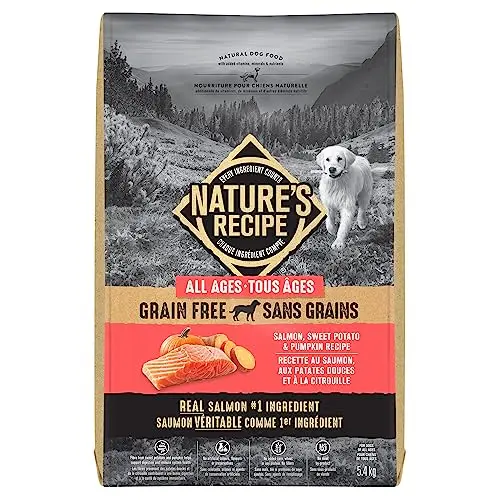
Salmon, Sweet Potato & Pumpkin Recipe – All Life Stages
A well‑rounded grain‑free kibble that puts salmon first, with pumpkin to support digestion and skin/coat health. Suitable for all life stages, it’s a versatile choice for multi‑dog households or owners who want a straightforward, no‑nonsense recipe.
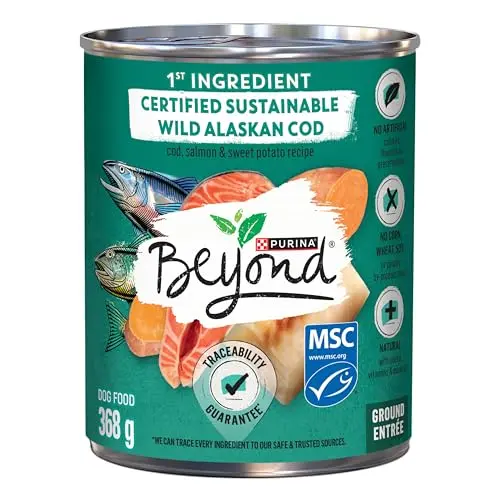
Alaskan Cod, Salmon & Sweet Potato Entree – Palatable Wet Food
For dogs who prefer a moist meal or need extra hydration, this pate‑style wet food uses line‑caught Alaskan cod as the #1 ingredient and skips grains and artificial additives entirely. It’s a flavourful topper or a complete meal on its own.
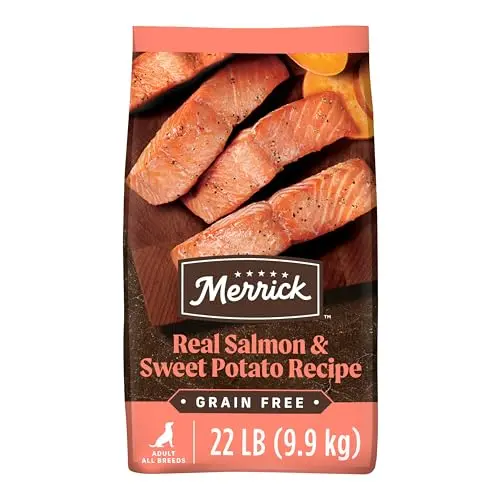
Real Salmon and Sweet Potato Recipe – Joint-Supporting Kibble
A high‑protein, grain‑free kibble with deboned salmon leading the ingredient list. It packs glucosamine and chondroitin for joint health, making it a smart pick for active dogs or aging companions.
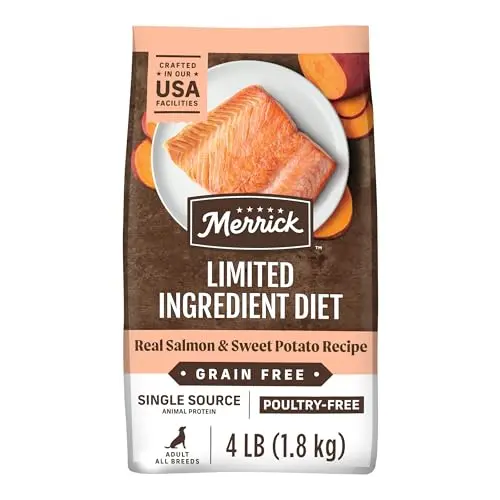
Limited Ingredient Salmon & Sweet Potato – Gentle Recipe
A minimalist formula with only 10 key ingredients, built around a single animal protein. It’s designed for dogs with food sensitivities who still deserve a tasty, coat‑nourishing meal.
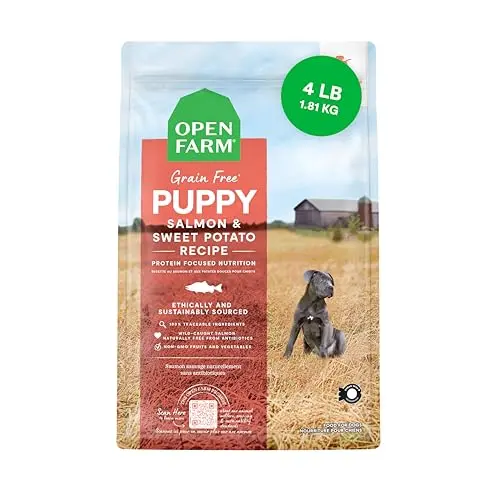
Salmon & Sweet Potato Puppy Recipe – For Healthy Growth
A puppy‑specific formula that uses wild‑caught salmon and non‑GMO produce to fuel brain development and steady growth. Ethically sourced ingredients and a transparent supply chain set it apart.
How We Evaluated These Salmon and Sweet Potato Dog Foods
We didn’t run laboratory nutritional analyses or multi‑month feeding trials. What we did: cross‑referenced 5 salmon‑ and sweet‑potato‑based dog foods from 4 distinct brands across 7 decision axes – ingredient quality, protein source and content, grain‑free vs. limited‑ingredient philosophy, added functional nutrients (like glucosamine or DHA), life‑stage appropriateness, palatability signals, and value relative to bag size. We triangulated published specifications, real‑world owner feedback where available, and use‑case fit against common buyer profiles – from allergy‑prone pups to active adults and growing puppies.
The scoring framework weighted real‑world fit and nutritional integrity (60%) – how well each formula delivers on its stated benefit to the dog – against feature differentiation (40%) – unique technical advantages like sustainability certifications, joint‑support add‑ins, or minimalist ingredient decks. We have no commercial relationship with any of the brands featured; recommendations track fit and differentiation, not brand preference. If your dog needs a reliable all‑rounder, the Nature’s Recipe Salmon, Sweet Potato & Pumpkin Recipe is the pick. If moisture or extreme selectivity is the issue, the Beyond wet food changes the game.
How to Choose the Right Salmon and Sweet Potato Dog Food
What to Look for in a Salmon & Sweet Potato Formula
Not all salmon and sweet potato dog foods are built alike. Start with the ingredient panel: salmon should be the first ingredient, not a meal or by‑product further down the list. Whole deboned salmon or wild‑caught salmon indicates a higher‑quality protein source. Sweet potato serves as a digestible carbohydrate, but check that it isn’t just window dressing – some formulas list it after a parade of fillers. Look for omega fatty acid levels explicitly mentioned; these are the nutrients that turn a dull coat shiny and soothe itchy skin. If your dog has joint concerns, bonus points for glucosamine and chondroitin.
Grain‑Free vs. Limited‑Ingredient: Which Is Better?
Grain‑free formulas like the Merrick and Nature’s Recipe options replace grains with legumes or potatoes. They’re a solid choice for dogs with grain sensitivities, but grain‑free doesn’t automatically mean healthier. A limited‑ingredient diet (LID), like the Merrick Limited Ingredient recipe, goes a step further by reducing the total number of ingredients – often to 10 or fewer – and using a single animal protein. This is ideal if your dog has multiple food allergies. If your dog simply does better without corn or wheat, a standard grain‑free option may be enough; if you’re troubleshooting a mystery allergy, an LID offers a cleaner elimination trial.
Dry Kibble vs. Wet Food: What's the Difference?
The Beyond wet entree brings a different texture and moisture content to the bowl. Wet food is about 75-80% water, so it can help dogs who don’t drink enough or need extra hydration. It’s also often more palatable for picky eaters. Dry kibble, on the other hand, is more calorie‑dense and convenient for free‑feeding or puzzle toys. Many owners combine the two: a base of dry kibble with a spoonful of wet as a topper. If your dog has dental issues or is missing teeth, wet food wins; if you’re budget‑ or storage‑conscious, dry kibble stretches further.
Reading the Ingredient List Like a Pro
Ignore the front‑of‑bag claims for a moment and flip to the ingredient panel. Avoid ambiguous terms like ‘meat meal” or ‘animal fat” – you want species‑specific sources. Watch for artificial colours, flavours, and preservatives (BHA, BHT, ethoxyquin) – none of our top picks contain them. The order matters: ingredients are listed by weight before cooking. Salmon should lead, followed by the carbohydrate source (like sweet potato or peas), then fats and supplements. If a whole, named fish appears third or fourth, the protein content may be inflated by plant‑based sources. Also note the presence of pumpkin – it’s a gentle fibre that can firm up stools, a bonus in many salmon formulas.
Matching the Food to Your Dog's Life Stage
Puppies need DHA for brain and vision development, which is why the Open Farm puppy recipe specifically highlights it. Adult dogs need maintenance protein and joint support; the Merrick grain‑free large bag is a strong match. Seniors may benefit from the wet Beyond entree’s moisture and ease of eating. The Nature’s Recipe formula is labelled for all life stages, so it’s a flexible option in multi‑dog homes – though very young puppies or pregnant dogs might still need an extra calorie boost. Check the guaranteed analysis: puppy formulas typically hover around 30% protein and 16% fat, while adult maintenance formulas are closer to 24-26% protein and 12-14% fat.
How to Transition Your Dog to a New Salmon Diet
A sudden switch can trigger diarrhea, even with a high‑quality food. Plan on a 7-10 day transition. Start with 25% new food mixed with 75% old for two to three days, then move to 50/50, then 75/25, and finally all new. If your dog has a history of food sensitivities, stretch the transition to two weeks. Watch stools: a little softness is normal, but persistent loose stools or vomiting means you should slow down or reconsider. Because salmon is a novel protein for many dogs, it can actually settle sensitive stomachs once adapted – but the transition itself requires patience.
Frequently Asked Questions
What's the difference between the Merrick and Nature's Recipe salmon and sweet potato formulas?
Both are grain‑free and put salmon first, but the Merrick recipe emphasizes joint support with guaranteed glucosamine and chondroitin levels – ideal for active or aging dogs. Nature’s Recipe includes pumpkin for digestive health and is labelled for all life stages, making it more versatile across a household. Merrick’s formula is richer in animal‑source protein (69%), which suits high‑energy dogs, while Nature’s Recipe is a bit more moderate. Pick Merrick if you need explicit joint care; pick Nature’s Recipe if you want a one‑bag solution for multiple dogs.
Is the Beyond wet food as nutritious as the dry kibble options?
Yes – it’s a complete and balanced meal. The moisture content is higher, so you’ll feed more by weight to get the same calories, but the protein and fat levels are still solid. It also uses line‑caught Alaskan cod as the first protein, which is a high‑quality source. The main trade‑off is cost per calorie and storage convenience. Many owners use it as a topper or mix‑in rather than a stand‑alone diet, but it absolutely holds its own nutritionally.
Can I feed the Open Farm puppy recipe to my adult dog?
It’s formulated specifically for growth, with higher calorie and DHA levels, so an adult dog might gain unwanted weight on it long‑term. Puppy formulas are nutrient‑dense by design, and the calcium‑phosphorus ratio is tailored for developing bones. You could use it as a short‑term option for an underweight adult, but for routine feeding, it’s safer to stick with an adult or all‑life‑stages formula like Nature’s Recipe.
My dog has allergies – which of these is safest?
Start with the Merrick Limited Ingredient Salmon & Sweet Potato. With only 10 key ingredients and a single animal protein, it removes common triggers like chicken, beef, dairy, and eggs. If your dog still reacts, the Nature’s Recipe formula is a good next step – it’s grain‑free and free from poultry by‑products, with pumpkin to soothe the gut. Always work with your vet to rule out environmental allergies before cycling through multiple foods.
What are the benefits of sweet potato in dog food?
Sweet potato is a digestible, grain‑free carbohydrate that provides steady energy without spiking blood sugar as quickly as some grains. It’s also high in fibre, vitamin A, and antioxidants – supporting eye health, immune function, and healthy digestion. For dogs with grain intolerances, it serves as a gentle alternative to corn or wheat, and its natural sweetness often makes the food more palatable without any artificial flavouring.
Final Verdict
For most dogs, the Nature’s Recipe Salmon, Sweet Potato & Pumpkin Recipe hits the sweet spot – it’s a clean, grain‑free formula that suits puppies through seniors, with pumpkin to keep digestion on track. If your pup turns up their nose at dry kibble, the Beyond Alaskan Cod & Salmon wet food is a splash of flavour and moisture that even fussy eaters devour. Active dogs or seniors with creaky joints will thrive on the Merrick grain‑free kibble and its built‑in glucosamine. And if allergies have you narrowing ingredients to the essentials, the Merrick Limited Ingredient formula is a safe, soothing reset. Whatever your dog’s needs, there’s a salmon and sweet potato bowl here that delivers.