
Your tiny dog inhales his kibble in 15 seconds flat – then paces, burps, or worse. That frantic gulping isn’t just messy; it can lead to bloat, choking, and long-term digestive issues. A slow feeder dog bowl is the simplest fix, but with so many designs claiming to ‘slow down eating’, finding one that actually works for your small dog’s particular snout and speed can feel like a guessing game.
We’ve sorted through the maze of options – literally – to identify bowls that genuinely extend mealtime without frustrating your pup. The best slow feeders for small breeds combine the right capacity, a thoughtful obstacle pattern, and enough stability to stay put under a determined diner. This guide lays out exactly what to look for and which models deliver across materials, budgets, and feeding styles.
Best Slow Feeder Dog Bowls for Small Dogs – 2026 Reviews
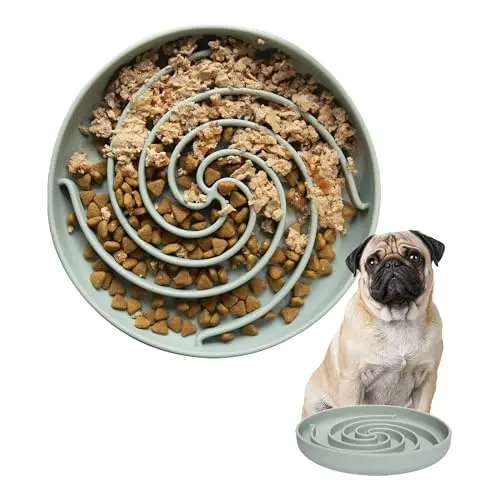
Slow Feeder Dog Bowl – Flexible Silicone Puzzle with Non-Slip Base
The Bifeaw Slow Feeder uses a clever maze to turn mealtime into a brain game, slowing your dog’s eating by up to 10X. Made from flexible food-grade silicone, it suctions firmly to smooth floors – no more chasing bowls around the kitchen. Perfect for small dogs managing 1-2 cup portions.
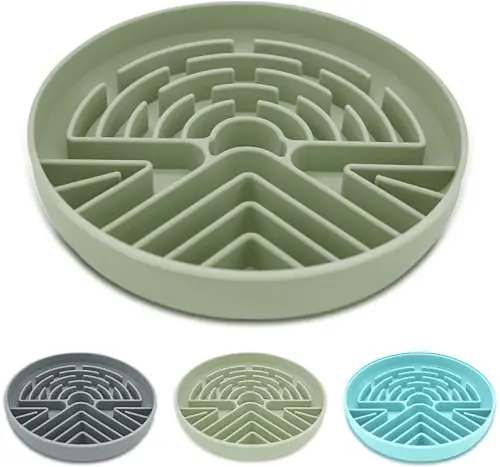
Slow Feeder Bowl – Anti-Choking Maze with Strong Suction
The Zonopy slow feeder uses a uniquely designed maze to prevent gulping and choking, extending mealtime by up to 10x. Made of durable food-grade silicone, it suctions firmly to smooth surfaces and is dishwasher safe. Sized for small and medium dogs, it holds 1-2 cups and can double as a lick mat for anxiety relief.
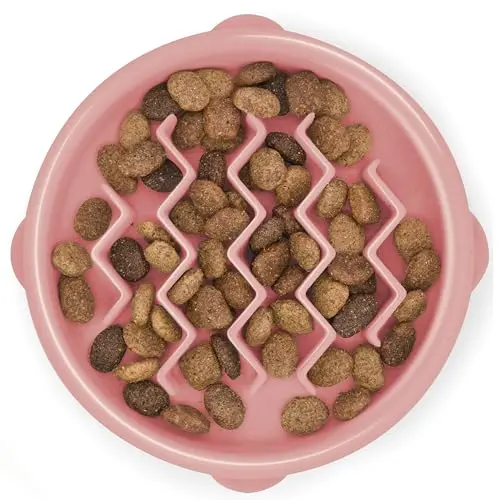
Fun Feeder Slo Bowl – Simple Maze for Ultra-Small Portions
The Outward Hound Fun Feeder Slo Bowl is a classic with a simple maze that’s perfect for extra-small breeds or cats. Holding just 3/4 cups, it’s sized for tiny appetites and helps prevent bloat and obesity. The non-slip base keeps it in place, and it’s top-rack dishwasher safe.
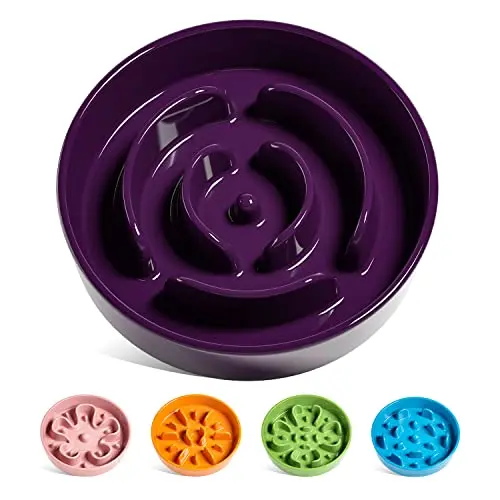
Ceramic Slow Feeder – Heavyweight & Stylish Maze
The LE TAUCI ceramic slow feeder offers a premium alternative to plastic. Its solid weight prevents sliding, and the smooth glaze is gentle on snouts. Holding 1.5 cups, it’s suited for small to medium breeds and is easy to clean in the dishwasher.
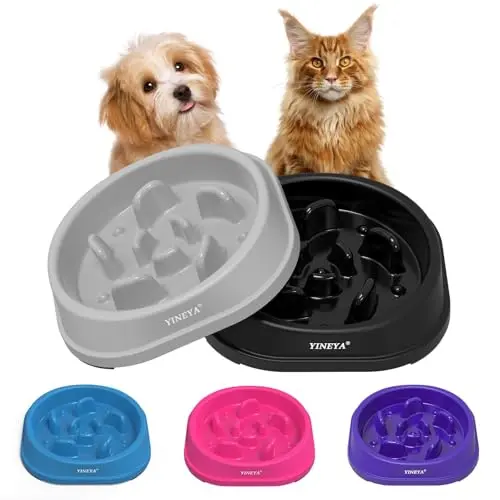
2-Pack Slow Feeder Bowls – Compact & Dishwasher Safe
The YINEYA set includes two small slow feeder bowls, perfect for multi-pet homes or rotation. Each holds 250ml (about 1 cup) and features a safe raised design to prevent tongue scratches. Made of BPA-free polypropylene, they’re dishwasher safe and have non-slip pads.
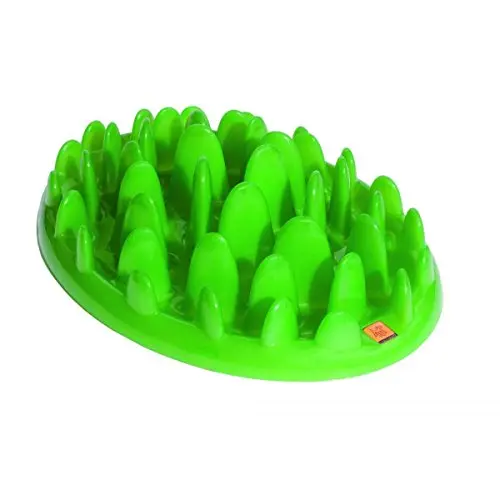
GREEN Mini Feeder – Grass-Like Puzzle for Mental Stimulation
The GREEN Mini by Company of Animals uses a unique grass-like design to mimic foraging, providing a natural challenge that slows eating and engages your dog’s brain. It’s dishwasher safe and works with wet or dry food, suitable for small to medium dogs.
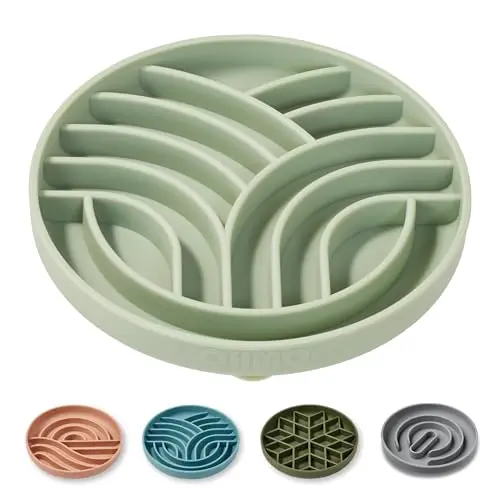
Tree of Life Slow Feeder – Silicone & Suction Base
The OHMO slow feeder with its Tree of Life pattern provides a gentle silicone surface and a large suction cup that locks onto floors. Sized for small breeds and cats, it holds up to 1/4 cup, making it perfect for tiny portions and wet food licking.
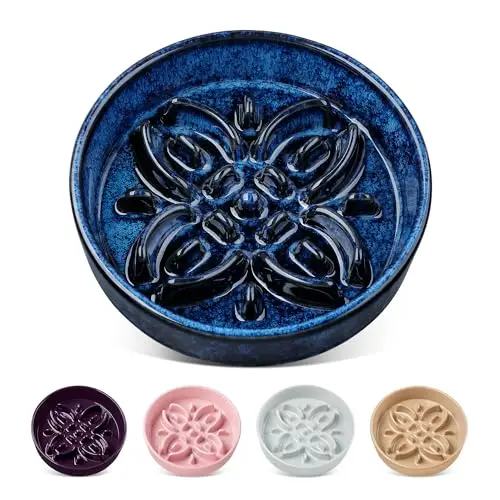
Ceramic Slow Feeder – Floral Maze for Tiny Portions
vancasso’s ceramic slow feeder is crafted specifically for small breeds with a shallow floral pattern that gently slows eating. Holding 0.6 cups, it’s dishwasher safe and features non-slip pads to keep it steady.
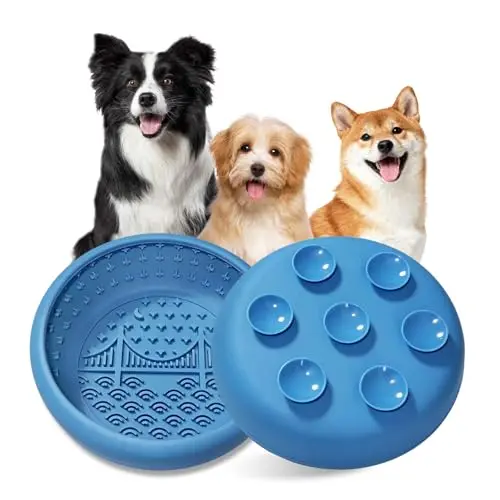
Slow Feeder Bowl with Suction Cups – Budget-Friendly Puzzle
This budget-friendly slow feeder features a puzzle insert with star and moon shapes, suction cups on the base, and a compact size suitable for small to medium dogs. It’s dishwasher safe and can be used with dry, wet, or frozen treats.
How We Evaluated These Slow Feeder Dog Bowls for Small Dogs
We’ll be upfront: we didn’t put these bowls through a months-long trial with a dozen Chihuahuas. Instead, we cross-referenced 9 slow feeder models from 9 distinct brands across 8 decision axes – material safety, capacity, maze design, stability, ease of cleaning, breed suitability, mental stimulation, and owner feedback – to separate the genuinely effective from the gimmicky. We triangulated published specifications, aggregated owner experiences where available, and mapped use-case fit against common small-dog feeding challenges like gulping, bloat, and boredom.
The scoring framework weighted real-world performance (60%) – does the bowl actually slow eating and stay put? – against feature differentiation (40%) – what unique design elements or materials set it apart. We have no commercial relationship with any brand; recommendations track fit and innovation, not brand loyalty. If you’re searching for the overall standout, the Bifeaw Slow Feeder impressed us most, while the Zonopy offers nearly the same function at a lower price.
How to Choose the Right Slow Feeder Dog Bowl for Small Dogs
Why a Slow Feeder Dog Bowl Matters for Small Dogs
Small dogs are notorious for eating too quickly. Fast eating can lead to choking, regurgitation, and even gastric dilatation-volvulus (bloat), a life-threatening condition. A slow feeder dog bowl uses physical obstacles – ridges, mazes, or tufts – to force your dog to eat around them, naturally pacing their meal. Beyond digestion, these bowls provide mental stimulation, turning a mindless activity into a short puzzle. For anxious or bored small dogs, that extra engagement can help reduce destructive behaviours and promote calmness.
The key is finding a bowl that challenges your dog without frustrating them. Too simple, and they’ll speed through; too complex, and they may give up or tip the bowl over. For small breeds, the design must also accommodate shorter snouts and smaller mouths. We looked at bowls that strike that balance – slowing eating while still being accessible.
Material Showdown: Plastic vs. Silicone vs. Ceramic Dog Bowls
Slow feeder bowls come in three primary materials, each with tradeoffs. Plastic bowls (like polypropylene) are lightweight, inexpensive, and often dishwasher safe, but they can scratch easily, potentially harbouring bacteria. They’re also more likely to slide around. Silicone bowls have exploded in popularity because they’re flexible, gentle on gums, and many include suction cups for stability. They’re usually dishwasher and microwave safe, making them versatile for frozen treats. The downside is they attract hair and dust like a magnet, and aggressive chewers might damage them.
Ceramic bowls are the heavyweight champions – literally. Their substantial weight keeps them in place without suction cups, and the smooth glaze is naturally more hygienic and less likely to cause ‘chin acne’ associated with some plastics. Ceramic looks great but can chip or break if dropped, and it’s far from portable. For a stationary home setup, ceramic is an excellent upgrade from plastic. If your dog pushes bowls around or you’re concerned about plastic safety, ceramic is worth the investment.
Sizing: Finding the Right Capacity for Small Breeds
Not all small dogs eat the same amount. A 5-pound Chihuahua may only need 1/4 to 1/2 cup of kibble per meal, while a 20-pound Beagle might eat closer to 1 cup. Matching the bowl’s capacity to your dog’s portion size is crucial: too large, and the food spreads too thinly, reducing the slowing effect; too small, and you’ll need to refill halfway through. We saw everything from tiny 0.6-cup bowls (vancasso) to 2-cup silicone options (Bifeaw, Zonopy). For most small dogs under 15 pounds, a 1-cup to 1.5-cup bowl hits the sweet spot. If you have a truly tiny pup, the Outward Hound Slo Bowl’s 3/4-cup capacity is purpose-built.
Also consider depth. Shallow bowls are easier for flat-faced breeds (brachycephalic) like Pugs and French Bulldogs to navigate without their noses being obstructed. Deep mazes can frustrate these dogs, so look for designs with wide, shallow channels.
Maze Complexity: How Much Slowing Does Your Dog Need?
The term ‘slow feeder’ covers a spectrum from mildly obstructive to highly challenging. Bowls are often categorized by difficulty: ‘Slow,’ ‘Slower,’ and ‘Slowest’ (as with Outward Hound). For small dogs, a moderate challenge is usually ideal. The Bifeaw and Zonopy mazes both provide a good workout without being impossible, typically extending meals by 5-10 times. On the more complex end, the Company of Animals GREEN Mini forces dogs to forage between tall plastic blades, which is excellent for mental stimulation but may frustrate less determined eaters. Simpler patterns, like the Outward Hound Slo Bowl’s single-level maze, work best for puppies or very small seniors who need a gentle slowdown.
When choosing, consider your dog’s persistence. If they give up easily, stick with simpler designs. If they’re a problem solver who loves a challenge, a more intricate maze will keep them engaged. And remember: you can always increase difficulty by using smaller kibble or adding wet food that sticks to the crevices.
Stability: Suction Cups, Heavy Bases, and Non-Slip Pads
There’s nothing more counterproductive than a slow feeder that ends up across the kitchen floor. Small dogs may be light, but they can be surprisingly determined pushers. Stability mechanisms vary: silicone suction cups (Bifeaw, Zonopy, OHMO) are the most effective – on smooth, clean surfaces, they lock down like a vice. However, they lose grip on textured tile or wood. Weight is a simpler solution: ceramic bowls like the LE TAUCI stay put through sheer mass, no suction required. Non-slip rubber pads (YINEYA, vancasso) work on a wider range of surfaces but can still be nudged by persistent pups.
For the best stability, consider a combination: a heavy ceramic bowl with rubber pads, or a silicone bowl with a really good suction cup. If your floors aren’t perfectly smooth, weight may be more reliable than suction. And if all else fails, placing the bowl on a silicone mat can add grip.
Cross-Brand Comparison: Bifeaw vs. Zonopy vs. Outward Hound
Three of our top picks illustrate the tradeoffs between silicone, plastic, and capacity. The Bifeaw Slow Feeder is our best overall thanks to its versatile 1-2 cup capacity, strong suction, and the ability to double as a microwave-safe lick mat. The Zonopy is nearly identical in function but often comes at a lower price point, making it the budget pick – its suction is equally reliable, and it’s just as easy to clean. Meanwhile, the Outward Hound Slo Bowl is in a different category entirely: a simple, lightweight plastic bowl with a 3/4-cup capacity that’s perfect for teacup breeds or as a starter bowl for puppies. If you need a straightforward, no-frills option that’s easy to travel with, it’s a reliable classic.
For those considering a long-term investment, the LE TAUCI ceramic feeder stands out as the premium choice – its weight and hygiene advantages make it a permanent fixture in the kitchen. Your decision should hinge on capacity needs, whether you value portability or permanence, and your willingness to trade a few dollars for a design upgrade.
Frequently Asked Questions
What's the difference between the Bifeaw and Zonopy slow feeders?
Both are silicone slow feeder bowls with similar capacity (1-2 cups) and suction bases. The Bifeaw tends to have a slightly more intricate maze and a reputation for stronger initial suction, while the Zonopy is often priced lower and includes a design that some dogs find slightly easier to navigate. In practice, they perform nearly identically. We give the edge to the Bifeaw for slightly better stability, but if you’re budget-conscious, the Zonopy is the better value.
How does the LE TAUCI ceramic bowl compare to the Outward Hound Slo Bowl?
They’re opposites in philosophy: the LE TAUCI is a heavy, stationary ceramic piece with a stylish look, while the Outward Hound is a lightweight, portable plastic bowl. The LE TAUCI holds 1.5 cups and suits small-medium dogs; the Outward Hound holds just 0.75 cups and is ideal for extra-small breeds. Ceramic is more hygienic and stays put, but plastic is easier to travel with and costs less. Choose LE TAUCI for a permanent home setup, Outward Hound for puppies or tiny dogs on the go.
Are all slow feeder bowls dishwasher safe?
Most modern slow feeders are labelled as dishwasher safe, especially those made from silicone, polypropylene, or ceramic. However, we recommend using the top rack only and avoiding high-heat drying cycles, which can warp plastic. Some intricate mazes (like the GREEN Mini’s grass blades) may require a bottle brush even after a dishwasher cycle to dislodge stuck kibble. Always check the manufacturer’s instructions – a few ceramic bowls have hand-painted decorations that may not be dishwasher tolerant.
What size slow feeder is best for a 5-pound dog?
For a 5-pound dog, look for a bowl that holds 1/2 to 3/4 cup and has a shallow maze. The Outward Hound Slo Bowl (3/4 cup) is perfectly sized. Alternatively, the OHMO slow feeder (1/4 cup) works as a treat station or for very small meals. Avoid bowls over 1 cup capacity, as the food will spread too thin and the dog may not engage long enough.
Do slow feeder bowls work for flat-faced breeds like Pugs?
Yes, but you need to choose carefully. Look for bowls with wide, shallow channels and low-rise obstacles so they don’t have to push their flat snout into tight spaces. The Outward Hound Slo Bowl’s simple maze and the LE TAUCI ceramic feeder’s wide pattern are both good choices. Avoid deep silicone mazes or tall grass-blade designs, which can be frustrating and may cause the dog to give up or resort to flipping the bowl.
Final Verdict
For most small dogs, the Bifeaw Slow Feeder is the clear winner – it combines a thoughtful maze, strong suction, and easy maintenance into a single package that genuinely improves mealtime. If you’re watching your budget, the Zonopy delivers nearly the same experience for less. For those who want a permanent, hygienic fixture, the LE TAUCI ceramic bowl is as stable as it is stylish. And if you have an extra-small breed, don’t overlook the Outward Hound Slo Bowl – it’s the simplest, most affordable way to add a healthy slowdown to a tiny tummy.