
Watching your dog inhale its food in seconds can be alarming – and it’s not just messy, it’s a health risk. Fast eating is linked to bloat, regurgitation, and canine obesity, and enough dog owners have watched their pup choke down a meal that it’s become one of those unspoken universal concerns. A good slow feeder turns that problem inside out, making your dog work a little for its kibble and bringing mealtime back to a safer, healthier pace.
But a slow feeder isn’t just a bowl with ridges – the material, size, puzzle complexity, and cleanability all shape how well it actually works for your particular dog. The wrong choice can be frustrating (for both of you) or end up unused. We looked at the options out there so you can pick the right slow feeder the first time, whether you’re dealing with a seasoned speed-eater or just starting to introduce slower feeding.
In this guide, we break down what matters – from dishwasher-safe silicone to heavy-gauge stainless steel – and we recommend models that deliver real, observable slowing without making your dog give up. No hype, no guesswork, just the picks that make sense for real feeding routines.
Best Slow Feeders for Dogs – 2026 Reviews
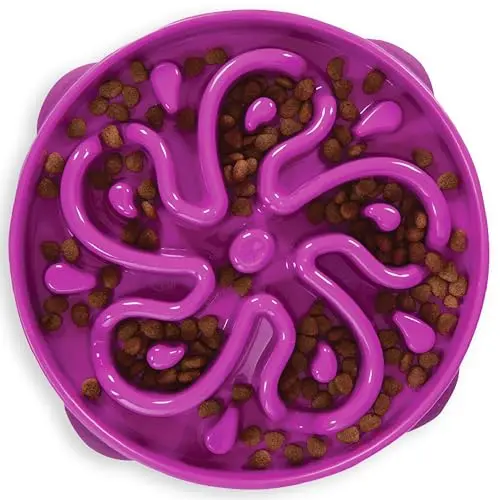
Fun Feeder Slo Bowl – Slows Eating by Up to 10x
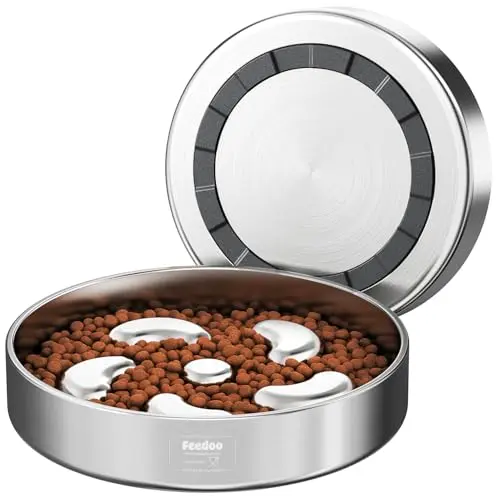
P03 – Heavy-Duty Stainless Steel Slow Feeder
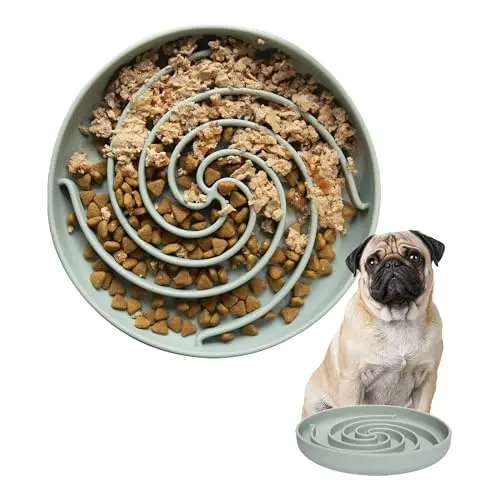
Silicone Slow Feeder – Microwave & Dishwasher Safe
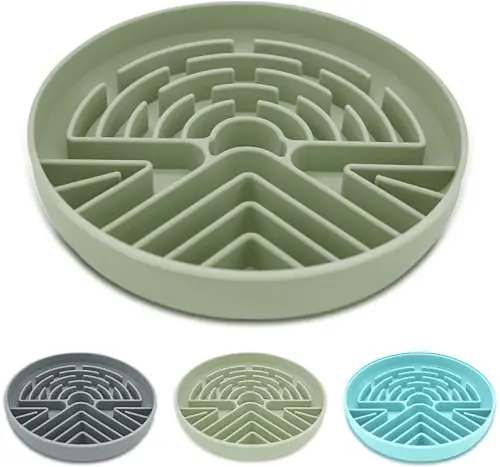
ZP-Blow – Suction-Base Silicone Feeder
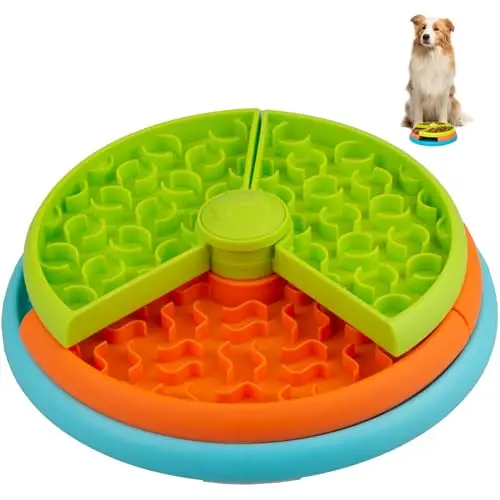
3-Level Puzzle Feeder – Mental Stimulation & Slow Eating
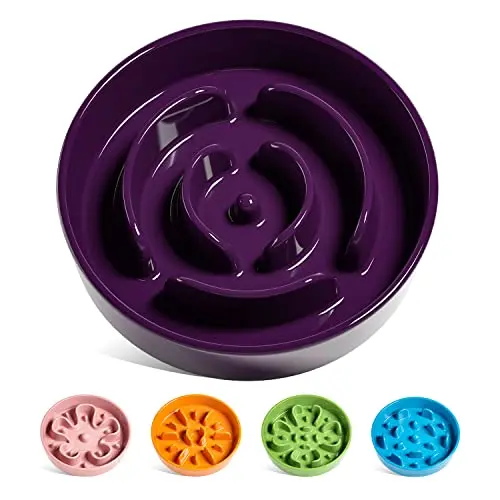
LEPS010 – Ceramic Maze Bowl for Small Breeds
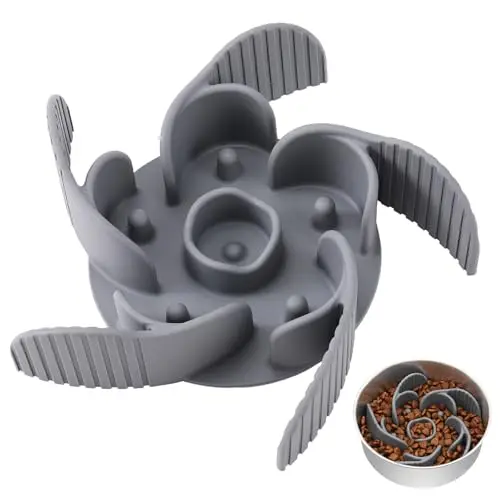
Slow Feeder Insert – Converts Any Bowl into Puzzle Feeder
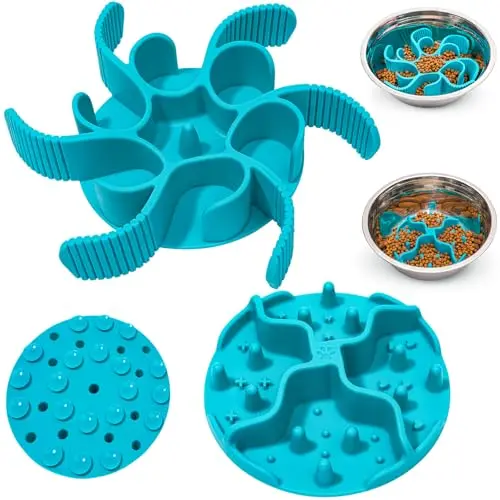
MSQ01 – 2-in-1 Trimmable Insert Set
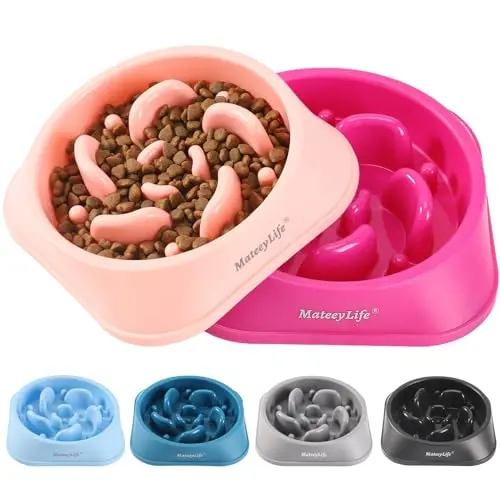
Slow Feeder Bowl 2-Pack – Value Set for Multi-Dog Homes
How We Evaluated These Slow Feeders for Dogs
We didn’t run actual feeding trials with dogs; instead, we cross-referenced 9 slow feeders from 8 distinct brands across six decision axes – material durability, design complexity, capacity, non-slip stability, dishwasher safety, and mental stimulation potential. What we did: triangulated published specifications, mapped use-case fit against representative dog profiles (from small snackers to large gulpers), and benchmarked feature sets where owner feedback was available to surface real-world quirks.
The scoring framework weighted real-world performance (60%) – how effectively each bowl slows eating without frustrating the dog – against feature differentiation (40%) – unique advantages like stainless steel construction, suction bases, or puzzle complexity. We have no commercial relationship with any of the brands featured; recommendations track fit and differentiation, not brand preference. If you’re dealing with a committed speed-eater, the Outward Hound Fun Feeder is the reliable choice; if you want indestructible material, the Feedoo P03 delivers.
How to Choose the Right Slow Feeder for Dogs
Understanding Slow Feeder Materials
The material of your slow feeder affects not only durability but also safety and cleanability. Plastic (polypropylene) bowls like the Outward Hound are light, inexpensive, and widely available, but can scratch over time and may harbour bacteria if not cleaned thoroughly. Stainless steel feeders, such as the Feedoo P03, resist scratches, odours, and bacteria – a good upgrade for dogs with allergies or chin acne. Ceramic bowls (LE TAUCI) are heavy, decorative, and veterinarian-recommended for skin issues, but they can chip.
Silicone bowls (Bifeaw, Zonopy) are soft, flexible, and often double as lick mats; they’re microwave and dishwasher safe. Inserts, like the MateeyLife and PETDOGRE, are also silicone. Plastic is the most common, but if you have a chewer or a dog with sensitivities, moving up to stainless or ceramic is worth considering.
What Size Slow Feeder Does Your Dog Need?
Capacity ranges from 1.5 cups (ATDOALL, LE TAUCI) to 4 cups (Outward Hound). For small dogs under 10 kg, 1-1.5 cups is usually enough; medium breeds (10-25 kg) do well with 2 cups, as in the Feedoo or Bifeaw; large breeds may need 4 cups. However, the maze complexity also matters – a 4-cup bowl with deep ridges like the Outward Hound can serve a medium dog if you portion correctly, but it might swallow a small dog’s entire meal in the crevices. Always measure your dog’s regular meal volume and pick a feeder that accommodates it without overfilling, as food packed too tightly defeats the purpose.
Puzzle Complexity: From Simple Ridges to 3-Level Challenges
Not every dog needs the hardest puzzle. The Outward Hound’s deep maze is for very fast eaters; dogs that are more moderate might finish a simpler flower pattern like the Feedoo’s in a reasonable time. The ATDOALL 3-level puzzle adds a mental challenge – dogs must rotate tiers to uncover kibble – making it ideal for smart, high-energy breeds who need more than just slowdown. For beginners or older dogs, a gentle pattern like the LE TAUCI ceramic bowl or a lick-mat style silicone feeder may be less frustrating. The ATDOALL is our top puzzle pick for mental stimulation.
Plastic vs. Ceramic vs. Stainless Steel: Which is Safest?
Safety concerns often tip the scale. Plastic bowls are generally BPA-free now (all picks here are), but they can still develop micro-scratches that trap bacteria. Ceramic glazes are non-porous and easy to sanitize, but the LE TAUCI’s weight and chip risk mean it’s not for rough-and-tumble dogs. Stainless steel is the gold standard for hygiene – the Feedoo’s SUS304 material is rust-resistant and impervious to chewing. If your dog needs a non-plastic option, the LE TAUCI ceramic is great for small breeds, and the Feedoo stainless suits all sizes.
Cleaning and Maintenance: What's Dishwasher Safe?
Every feeder in our roundup is dishwasher safe – a major convenience. However, deep mazes like the Outward Hound can require a scrub brush even after a dishwasher cycle, and silicone bowls (Bifeaw, Zonopy) are easiest to hand-rinse because food residue slides off. Inserts (MateeyLife, PETDOGRE) pop out for quick rinsing. If you hand-wash, use warm soapy water and a bottle brush for the crevices. Stainless and ceramic are the least likely to retain smells. Air-drying upside down prevents moisture buildup.
Special Features: Suction, Trimming, and Multi-Dog Kits
Several products go beyond the basic bowl. Suction bases (Bifeaw, Zonopy, MateeyLife Insert, PETDOGRE) grip smooth floors or the bowl itself, preventing sliding. Trimmable silicone inserts (PETDOGRE) let you cut to fit your existing bowl, while the MateeyLife 2-pack offers a budget-friendly solution for multi-dog homes. The MateeyLife Insert is particularly clever for elevated feeders. If you travel often, a lightweight silicone option like the Bifeaw packs flat.
Frequently Asked Questions
What's the difference between the Outward Hound Fun Feeder and the Feedoo stainless steel slow feeder?
The Outward Hound and Feedoo serve different priorities. The Outward Hound is a larger (4 cups), plastic bowl with an aggressive maze that slows eating up to 10x – ideal for big, very fast eaters. The Feedoo is a smaller (2 cups), stainless steel bowl with a more moderate pattern, better suited to small/medium dogs and owners prioritizing hygiene and durability. Both are dishwasher safe and non-slip, but the Outward Hound is the stronger slowdown, while the Feedoo wins on material longevity and odour resistance. If you have a large breed, start with the Outward Hound; for medium dogs and stainless steel, the Feedoo is the pick.
Can slow feeders prevent bloat in dogs?
Slow feeders reduce the risk of bloat (GDV) by preventing rapid food consumption and air gulping, but they aren’t a guarantee. Bloat is complex and linked to breed, age, and eating habits. Using a slow feeder like the Outward Hound or Bifeaw helps pace meals, and pairing it with portion control and rest after eating further lowers risk. Always consult your vet if your breed is high-risk, but a slow feeder is a simple, vet-approved step toward safer mealtime mechanics.
How do I choose the right size slow feeder for my dog?
Measure your dog’s regular meal portion – a feeder should hold that amount without overstuffing the puzzle. The Outward Hound holds 4 cups (for 40+ kg dogs), Feedoo and Bifeaw hold 2 cups (10-25 kg), LE TAUCI and ATDOALL hold 1.5 cups (under 10 kg). For inserts, ensure your existing bowl’s bottom is smooth and within the product’s diameter range. A too-small feeder with deep ridges can frustrate dogs; a too-large one may let them eat too quickly from the edges. Err on the side of capacity that matches your dog’s meal volume.
Are silicone slow feeders microwave safe?
Many are, but check the label. The Bifeaw and Zonopy are explicitly microwave and freezer safe, so you can warm food or create frozen puzzle treats. MateeyLife and PETDOGRE inserts are food-grade silicone but not always marketed for microwave use – to be safe, transfer food to a microwave-safe dish before heating. Always use low power and avoid overheating, as silicone can retain hot spots.
How does the ATDOALL 3-level puzzle compare to a standard maze bowl?
The ATDOALL is less about simple slowdown and more about cognitive engagement. While a maze bowl like the Outward Hound forces a dog to navigate fixed ridges, the ATDOALL requires dogs to physically rotate tiers to access every last kibble – this can double as a brain toy and is great for high-energy, intelligent breeds. However, it’s not as effective for dogs that just want to eat quickly; some may paw at it rather than solve the puzzle. For pure slowdown, stick with a deep plastic or stainless maze. For mental stimulation, the ATDOALL is a unique choice.
Final Verdict
For most dogs, the Outward Hound Fun Feeder Slo Bowl is the answer – it nails the slowdown without being overly complicated, fits a full meal for large breeds, and has years of proven owner satisfaction behind it. If you’re looking for a more durable, hygienic option, the Feedoo stainless steel P03 gets you most of the way there with the added benefit of zero plastic and a lifetime build. And if your dog needs mental enrichment, the ATDOALL 3-level puzzle feeder is purpose-built for that – it’s a brain game in a bowl. Take your pick based on your dog’s personality and your material preference; any of these will make mealtime safer and smarter.