
If your dog vacuum-cleans their dinner in under 30 seconds, you’re not alone. Gobbling food can lead to bloat, choking, and mess, but a stainless steel slow feed bowl turns that frenzy into a healthier, calmer ritual. These bowls use ridges and mazes to make your dog work a little for each bite, extending mealtime and aiding digestion.
We compared 10 stainless steel models from 10 brands, focusing on design complexity, capacity, material quality, and how well they stay put on the floor. Whether you need something for a teacup Chihuahua or a hungry Labrador, there’s a bowl here that matches your dog’s pace and your kitchen style.
Best Stainless Steel Slow Feed Dog Bowls – 2026 Reviews
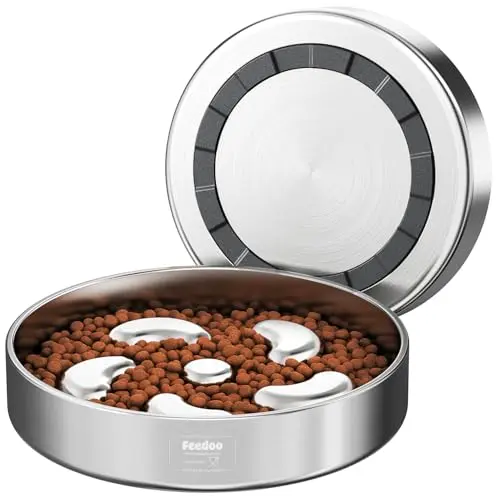
Slow Feeder Bowl – Double-Wall Durability
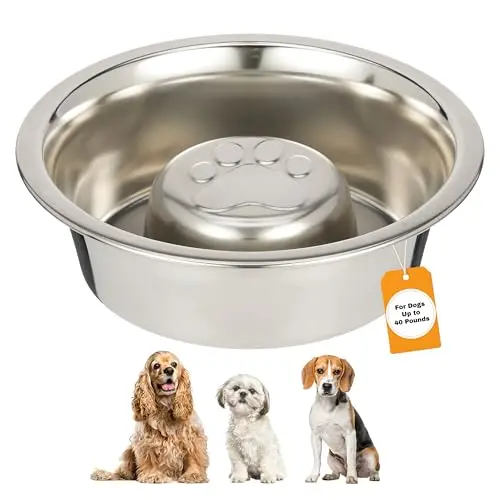
Slow Feed Bowl – Fits Elevated Feeders
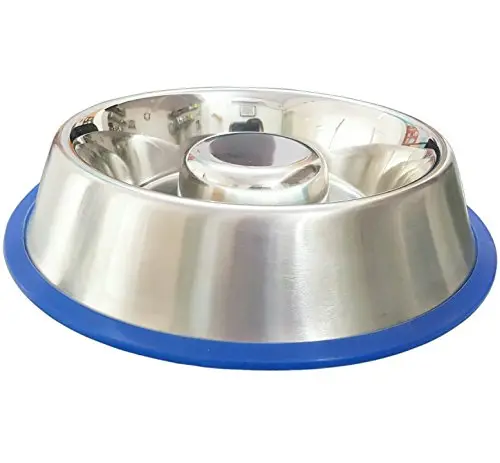
Interactive Slow Feed Bowl – Bundt Design Fun
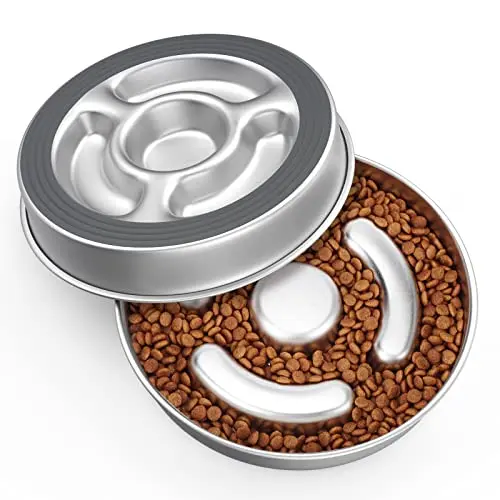
Slow Feeder Bowl – Large 4-Cup Capacity
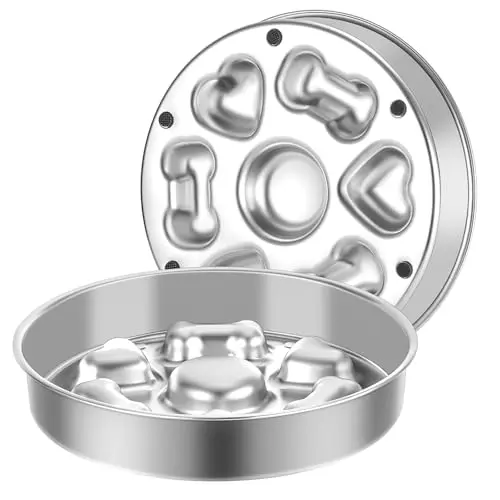
Slow Feeder Bowl – Shallow for Short-Nosed Breeds
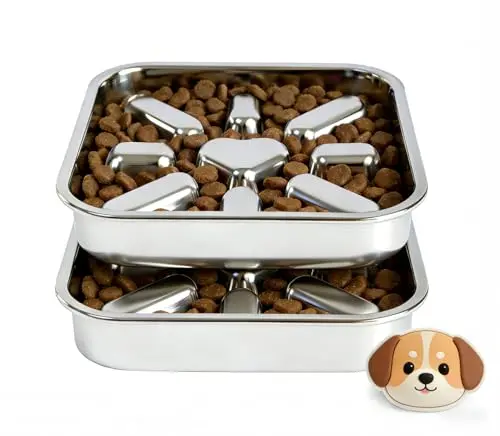
2-Pack Slow Feeder Bowls – Value Set
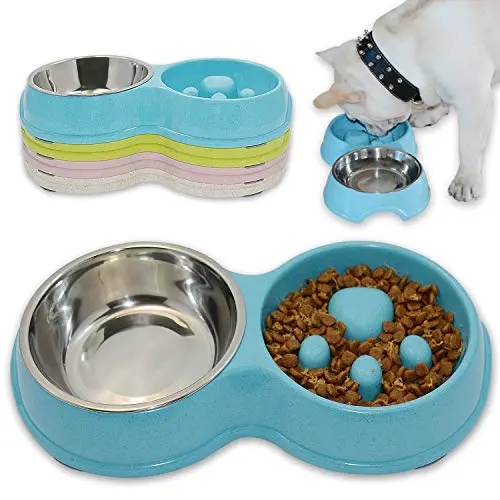
Double Bowl Set – Includes Water Bowl
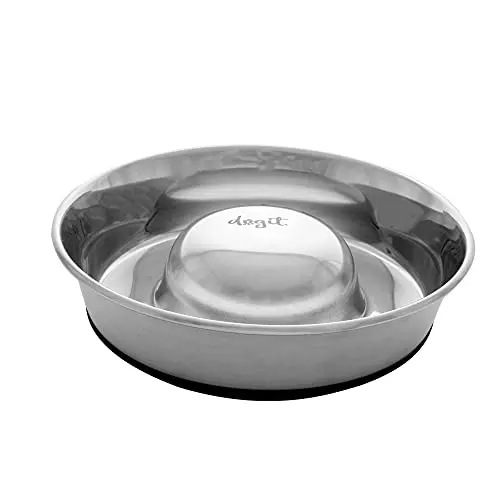
Non-Skid Slow Feed Bowl – 900ml Capacity
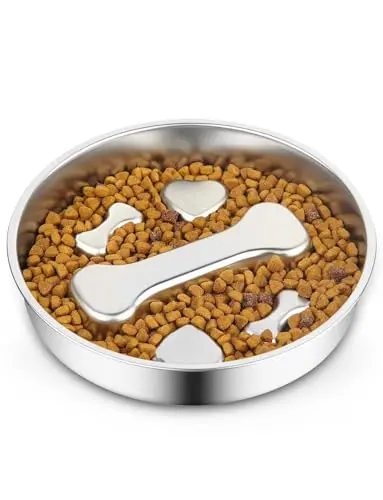
Slow Feeder Bowl – Wide Shallow Design
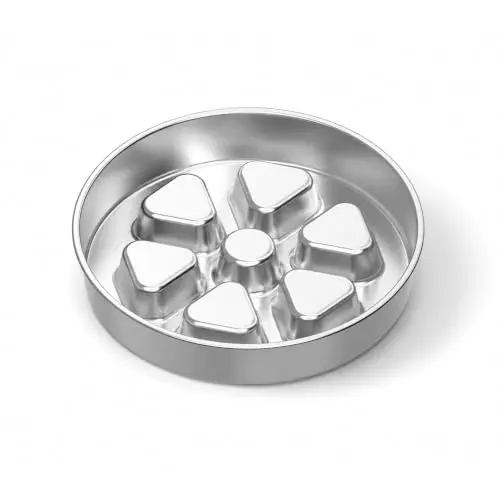
Slow Feeder Bowl – Heavy-Duty Construction
How We Evaluated These Stainless Steel Slow Feed Dog Bowls
We didn’t run controlled eating-speed trials or long-term durability stress tests. What we did: cross-referenced 10 stainless steel slow feed bowls from 10 distinct brands across seven decision axes–design complexity, capacity, material quality, non-slip performance, ease of cleaning, compatibility with elevated feeders, and size suitability. We triangulated published specifications, food-grade material certifications, and aggregated owner feedback where available.
The scoring framework weighted real-world performance (60%)-how effectively a bowl slows eating and stays stable during use-against feature differentiation (40%)-unique design elements and capacity options. We have no commercial relationship with any of the brands featured; recommendations track fit and differentiation, not brand preference. If you’re looking for a rugged, no-nonsense bowl, the Feedoo is our top pick, while the Neater Pet is the one to grab if you use an elevated feeder.
How to Choose the Right Stainless Steel Slow Feed Dog Bowl
Why Stainless Steel Beats Plastic or Ceramic
Stainless steel is hygienic, non-porous, and dishwasher safe, which means less risk of bacteria buildup compared to plastic bowls. It’s also chew-proof and rust-resistant, so you won’t replace it after a few months. Unlike ceramic, it won’t shatter when dropped. The models we reviewed use food-grade 304 or comparable stainless steel, which is the same type used in professional kitchens.
Picking the Right Capacity
Too-small bowls frustrate big dogs; too-large ones overwhelm little pups. Think about your dog’s portion size. Most bowls hold between 1 cup (for small breeds) up to 4 cups (for large breeds). If you feed more than 3 cups per meal, look at the AIPERRO or Yemqloft. For smaller servings, the 1-cup Neater Pet is ideal.
Maze Design: Deep Ridges vs. Smooth Waves
Some bowls use tall, intricate ridges (like the Feedoo and Mr. Peanut’s) to create a demanding maze; others, like the Dogit or RooXchowla, use a simpler raised center. Deep ridges slow eating more effectively but can be frustrating for flat-faced dogs. Shallow patterns are gentler but may not slow dedicated gulpers. Consider your dog’s snout shape and patience.
Non-Slip Base: Rubber Ring vs. Integrated Pad
A non-slip base is non-negotiable-bowls that slide across the floor defeat the purpose and create a mess. Bowls like the Dogit have a permanently bonded rubber ring; others, like the Feedoo and YardEase, use a fused or separate non-slip pad. Check whether the base is molded on (less likely to detach) or a separate ring (which may peel over time).
Compatibility with Elevated Feeders
If your dog eats from an elevated stand, you need a bowl that fits. The Neater Pet is specifically designed to drop into most 1-quart elevated feeders. Other bowls may be too wide or deep. Always measure your feeder’s bowl opening before buying.
Cleaning and Maintenance
All stainless steel bowls are dishwasher safe, but some models have crevices where food can stick. Smooth, one-piece designs (like the AIPERRO) rinse clean faster than complex patterns. Hand washing with a bottle brush helps reach into maze channels. Avoid abrasive scrubbers that can scratch the finish.
Frequently Asked Questions
What's the difference between the Feedoo and Neater Pet slow feed bowls?
The Feedoo is a heavy-duty, double-wall stainless steel bowl with a tall maze pattern and integrated non-slip base, holding 2 cups. It’s built like a tank and works well for determined fast eaters. The Neater Pet holds only 1 cup and has a simpler ridge design, but it’s specifically sized to fit most elevated feeders. If you need a bowl for an elevated stand, Neater Pet is the pick; if you want maximum durability and slowdown, go with Feedoo.
Can I use a slow feed bowl for wet food?
Yes, most stainless steel slow feeders work for wet food, raw diets, or rehydrated kibble. The smoother surface of stainless steel prevents food from sticking as much as plastic. Just be aware that deep maze patterns may make it harder for your dog to lick every last bit, and cleanup will require more attention to get all the crevices clean.
Are stainless steel slow feed bowls safe for puppies?
Absolutely, as long as the bowl is appropriately sized. Stainless steel is non-toxic and free of BPAs or phthalates. For puppies, a bowl with gentle ridges and a smaller capacity (like the Neater Pet or Dogit) can help them learn to eat without gulping. Avoid deep, complex mazes until their muzzles grow a bit.
Mr. Peanut's vs. AIPERRO: Which is better for large dogs?
Both hold generous portions: Mr. Peanut’s goes up to 3 cups and AIPERRO up to 4 cups. Mr. Peanut’s uses a bundt cake design that’s taller and more interactive, which can really challenge large dogs and extend mealtime. The AIPERRO has a shallower, wider maze that’s easier to navigate. If your big dog is a very fast eater and needs serious obstruction, Mr. Peanut’s is the better bet; for a more spacious feeding area, the AIPERRO works well.
How do I clean a stainless steel slow feed bowl properly?
All our picks are dishwasher safe, which is the easiest method. For hand washing, use warm soapy water and a soft brush to get into the maze channels. Pay extra attention under any removable silicone bases to prevent mold. Avoid steel wool, which can scratch the surface and reduce rust resistance.
YardEase 2-pack vs. buying two separate bowls: which is better value?
The YardEase 2-pack offers two identical 3-cup bowls with deep ridges, which is convenient if you have multiple dogs or want a spare. In terms of per-bowl cost, it often comes out comparable to buying two separate mid-range bowls, but you get the benefit of matched, high-quality stainless steel units with good non-slip bases. If you only need one, the single bowls from Feedoo or Mr. Peanut’s might be a better fit.
Final Verdict
After comparing 10 bowls, the Feedoo Slow Feeder Bowl stands out for its unbeatable double-wall build, effective maze, and rock-solid stability-it’s the one we’d set down for our own dogs. If you use an elevated feeder, the Neater Pet is the perfect drop-in fit. For dogs that need an extra dose of fun at mealtime, the Mr. Peanut’s bundt design keeps them guessing. And if you’re feeding a large breed with a bottomless pit, the AIPERRO offers the biggest capacity. Stainless steel slow feeders are a win for digestion, cleanliness, and peace of mind-pick the one that matches your dog’s pace and your feeding setup.