
You know the look: your cat staring at a dripping tap, or your dog lapping at a puddle after a long walk. Pets are drawn to moving water-it’s instinctual, signalling freshness. A good water fountain taps into that drive, encouraging healthier hydration and reducing the risk of urinary or kidney issues. But with shelves crowded by stainless steel tanks and whisper-quiet pumps, picking the right one for a multi-species home can feel like a guessing game.
What separates a fountain that really works from one that just adds to the clutter? It comes down to a few things: capacity that matches your pet crew, materials that stay clean without a fight, and a noise level that won’t spook nervous drinkers. In this guide, we’ve cross‑shopped 10 fountains across 10 brands-no brand bias, just a focus on what actually matters when your cat and dog share a water source.
Best Water Fountains for Cats and Dogs – 2026 Reviews
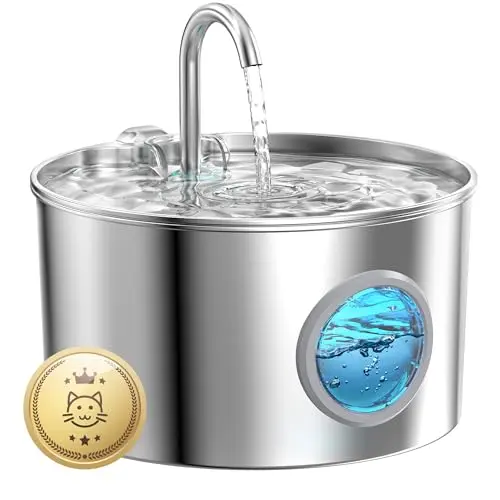
S11 – Compact Faucet-Style Fountain for Curious Drinkers
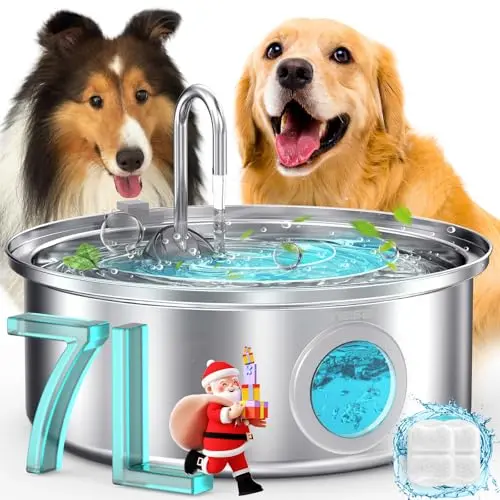
PWF002 – 7L Stainless Steel Fountain for Busy Multi‑Pet Families
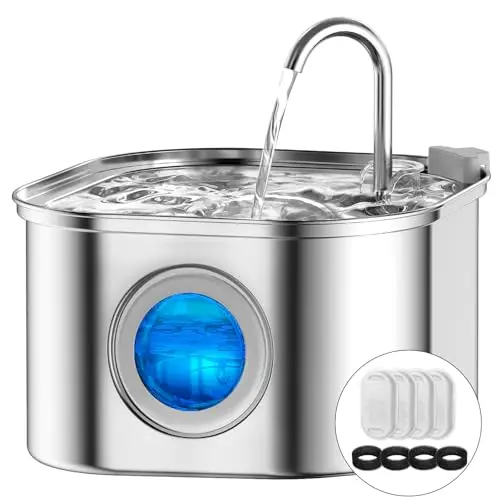
S304-100-16 – Transparent Window Fountain for Cats and Small Dogs
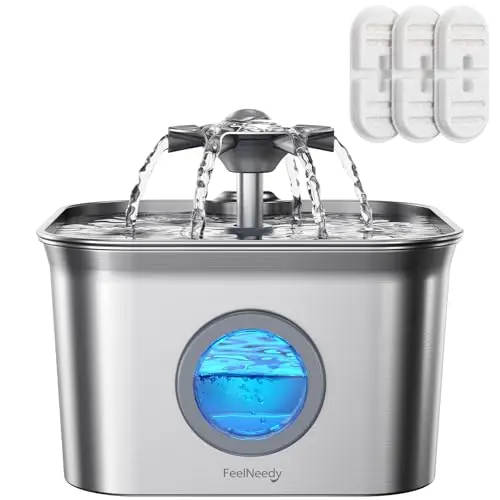
FN-W22 – Dual-Flow Fountain for Picky Drinkers
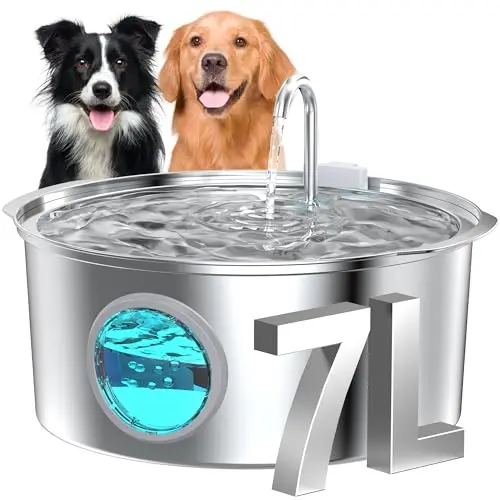
S11 – 7L Fountain with Handle for Large-Breed Dogs
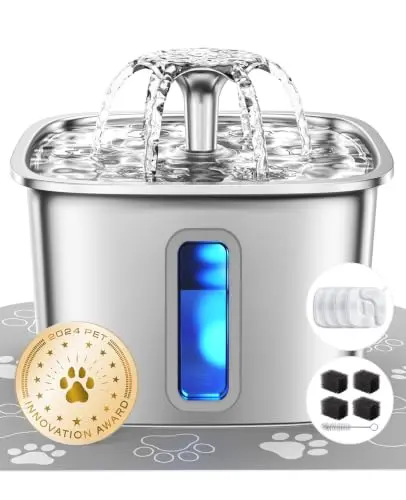
PFC3V514 – Silent Premium Fountain with Leak‑Proof Assurance
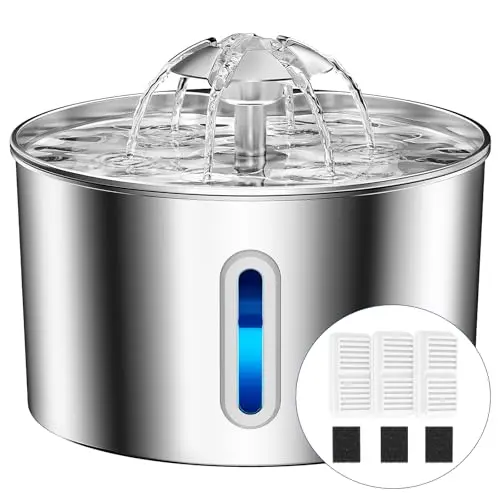
BP02 – Simple 2.2L Fountain for Cats and Small Dogs
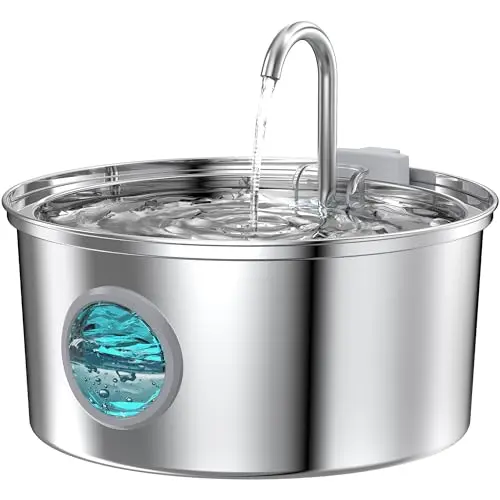
S7 – 3.2L Quiet Fountain with Natural Waterfall Flow
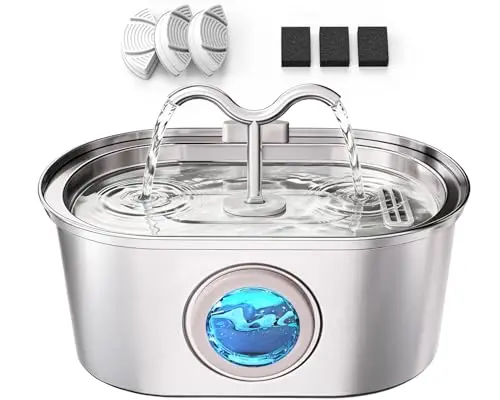
SSPF-02B – Dual Spout Fountain for Shared Drinking
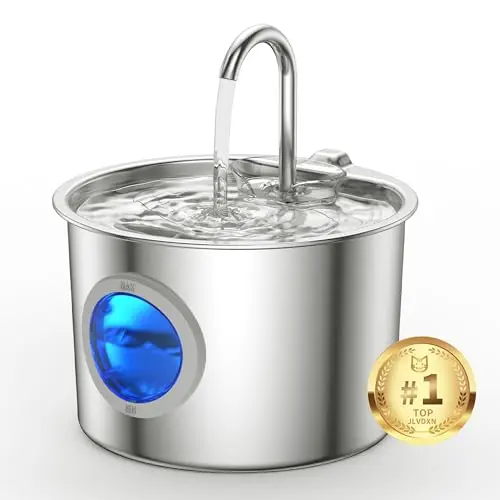
Fe-inox-2.2l – Ultra‑Quiet Compact Fountain with Smart Window
How We Evaluated These Water Fountains for Cats and Dogs
We did not run long‑term durability tests or measure decibel levels in a soundproof lab. What we did: cross‑referenced 10 pet water fountains from 10 distinct brands across five critical decision axes-capacity, material quality, noise output, filtration effectiveness, and ease of cleaning. We triangulated published specifications and feature sets, absorbed owner feedback where available, and mapped use‑case fit against common multi‑pet scenarios like a cat‑and‑dog home, a single large dog, or a quiet apartment.
The scoring framework weighted real‑world performance (60%)-how well each fountain encourages hydration, stays clean, and runs unobtrusively-against feature differentiation (40%)-unique advantages like dual spouts, smart water‑level windows, or suspended pumps. We have no commercial relationship with any of the brands featured; recommendations track fit and differentiation, not brand preference. If you’re looking for a versatile option that works for both cats and dogs, the GIOTOHUN S11 is the typical starting point; if you’re managing a multi‑pet household, the oneisall PWF002 is purpose‑built for you.
How to Choose the Right Water Fountain for Cats and Dogs
Why a Fountain? The Hydration Hook for Cats and Dogs
Stagnant water in a bowl quickly loses appeal-and freshness. Moving water activates a pet’s instinct to seek out safe, oxygenated sources. A fountain encourages cats (notoriously low drinkers) to consume more, which can help prevent urinary crystals and kidney stress. For dogs, it means cooler, filtered water that doesn’t sit around collecting dust. Look for a continuous circulation system with a reliable pump; even the simplest fountain beats a bowl that needs constant refilling and scrubbing.
Stainless Steel vs. Plastic: Why Material Matters
Stainless steel has become the go‑to for a reason: it’s non‑porous, resists bacterial biofilm, and doesn’t trap odours like plastic can. Many cats develop chin acne from plastic bowls; steel eliminates that risk. It’s also dishwasher‑safe, which makes deep cleaning a three‑minute job. While plastic fountains are cheaper, they scratch easily-creating hiding spots for germs. In our lineup, every fountain uses 304 stainless steel, which is rust‑resistant and heavy enough to prevent sloshing. If you’re wavering, go steel.
Capacity: How Big a Tank Do You Really Need?
A single cat may be fine with 2-2.8 litres for a week; add a small dog or a second cat and you’ll want at least 3.2 litres. For a household with a large dog (over 25 kg) or multiple pets, the 7‑litre models like the oneisall PWF002 and GROOKPET S11 become game‑changers, cutting refills to once every 7-10 days. Undersizing is a common mistake-the pump can burn out if it runs dry, so a bigger tank gives you a safety buffer on busy days.
Noise Levels: A Quiet Fountain for Peaceful Homes
Most fountains aim for 25-30 dB, which is about the volume of rustling leaves. But pump design varies widely. Models with suspended or sound‑absorbing pumps (like the Veken PFC3V514) are practically silent. If your fountain will live in a bedroom or near a skittish rescue animal, prioritise one that promises under 25 dB and uses a submerged, vibration‑dampened motor. A gentle water trickle is fine; a humming pump will drive both you and your pet crazy.
Filtration: Keeping Water Clean Between Refills
Look for a multi‑stage filter: a mechanical layer (cotton or sponge) to catch hair and debris, an ion exchange resin to soften water, and activated carbon to remove odours and bad tastes. A separate pump sponge wraps around the motor to prevent clogs. Even the best filter won’t work miracles with hard tap water-using filtered or softened water extends the life of both the filter and the pump. Most brands recommend swapping the filter every 2-4 weeks, so factor in ongoing filter availability and cost before you buy.
Ease of Cleaning: It Determines Long‑Term Use
A fountain that’s a chore to disassemble will end up in the cupboard. The simplest designs have a removable stainless steel bowl that goes straight in the dishwasher, and a pump that lifts out without tools. Watch out for tiny crevices behind spouts or flower attachments-they trap slime and need a weekly scrub. Models with a detachable tank (like the JLVDXN) also make refilling less splashy. If cleaning takes more than five minutes, you’ll dread it, and your pet gets stale water.
Frequently Asked Questions
What's the difference between the GIOTOHUN S11 and the oneisall PWF002?
The GIOTOHUN S11 is a compact 2.2L fountain with a signature faucet‑style spout that attracts curious cats and small dogs. It’s best for a one‑ or two‑pet home where space is tight. The oneisall PWF002 is a 7L beast built for multi‑pet families, with a wide drinking area and a red LED low‑water warning. If you have a cat and a large dog, the oneisall eliminates the daily refill chore; if you have a single cat who loves to play with running water, the GIOTOHUN is more engaging.
Can one water fountain work for both cats and dogs?
Absolutely-the key is dual‑flow or multi‑stream design. Cats often prefer a gentle stream or bubbly surface, while dogs are content to lap from a pool. Fountains like the FEELNEEDY FN‑W22 let you switch between a fountain mode and a faucet mode. The SohoTeco SSPF‑02B uses two separate spouts so pets don’t have to share a single stream. Just make sure the basin is broad enough for your dog’s muzzle, and that the pump noise doesn’t startle your cat.
How often should I change the filter in a pet water fountain?
Most manufacturers suggest every 2-4 weeks, but it depends on your water quality and the number of pets. If you notice the water looking cloudy, the flow weakening, or an odour, change it sooner. Using filtered tap water can double filter life. Always keep a spare on hand-a clogged filter strains the pump and reduces flow. The Veken PFC3V514 and VinDox S304‑100‑16 both come with several filters to get you started.
Final Verdict
For most homes with a cat or a small dog, the GIOTOHUN S11 is the fountain we’d buy first. It’s quiet, easy to clean, and the faucet‑style flow turns even the most reluctant drinker into a regular sipper. If you’re managing a pack, the oneisall PWF002‘s 7‑litre tank and multi‑pet design are worth the counter space. For big dogs specifically, the GROOKPET S11 with its handle and deep tray makes daily life simpler. And when only absolute silence will do, step up to the Veken PFC3V514. Whatever you choose, a good fountain is one of the easiest health upgrades you can give your furry family.