
Managing a dog with pancreatitis is stressful – one wrong treat or a food that’s too rich can trigger a flare-up. The right low-fat dry food is your first line of defence, helping to keep the pancreas calm while still delivering complete nutrition. But with so many options on the shelf, how do you know which formula genuinely delivers low enough fat without skimping on the protein and fibre your dog needs?
We zeroed in on dry foods that explicitly target weight management or digestive care, where fat levels are deliberately trimmed to support leaner bodies and gentler digestion. Not every “weight management” label is created equal, and for pancreatitis, you need more than just a low number on the guaranteed analysis – you need a formula that supports overall metabolic health. That’s where muscle maintenance, probiotics, and joint-friendly extras come in, especially for senior or larger dogs.
Our picks come from two trusted brands that consistently produce these specialized formulas. We compared protein sources, fibre blends, and breed-specific tweaks to find the best fit for different dogs. After sifting through the data, here are the three low-fat dry foods that stood out.
Best Low Fat Dry Dog Foods for Pancreatitis – 2026 Reviews
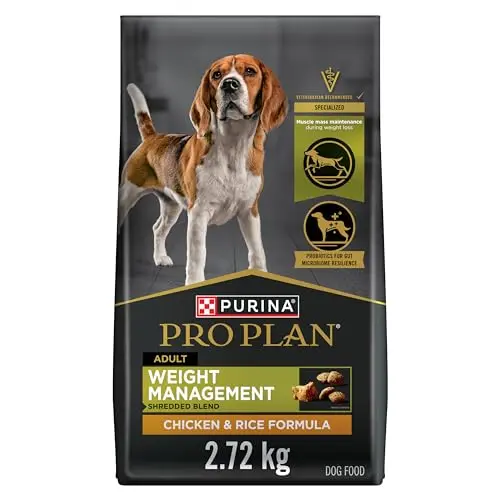
Weight Management Shredded Blend Chicken – Low-Fat Muscle Maintenance
A shredded blend that balances low-fat nutrition with a texture most dogs love, this Pro Plan formula uses real chicken as the first ingredient and includes guaranteed live probiotics for digestive health. It’s designed to maintain lean muscle mass while helping dogs drop extra weight – exactly what you want for pancreatitis management.
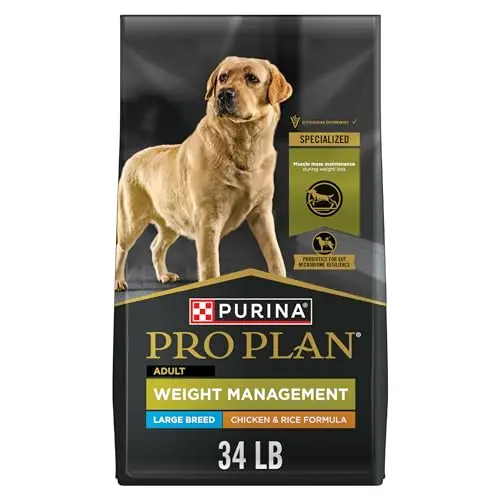
Large Breed Weight Management – Joint-Friendly Low Fat
Formulated specifically for large breed dogs, this Pro Plan recipe adds joint support with EPA and glucosamine on top of the low-fat, high-protein base. It’s a bigger kibble size that encourages chewing, and the wheat bran provides natural prebiotic fibre for steady digestion.
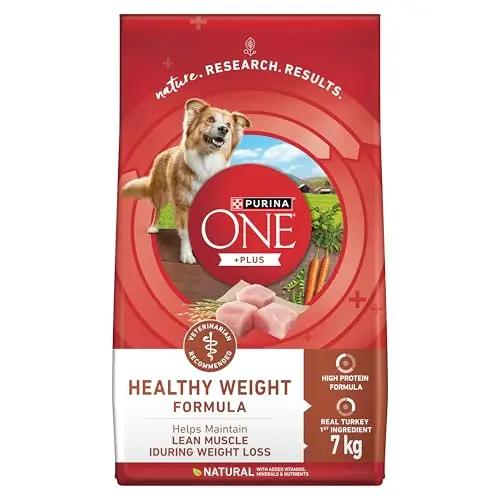
Healthy Weight Turkey & Rice – Affordable Low-Fat Option
A straightforward, budget-friendly weight management formula with real turkey as the first ingredient. Purina ONE Healthy Weight trims the fat while keeping protein at 27% and adds natural glucosamine sources for joint care. It’s widely available and easy on the wallet.
How We Evaluated These Low Fat Dry Dog Foods for Pancreatitis
We did not run veterinary-supervised feeding trials or blood lipid panels on these foods. What we did: cross-referenced 3 low-fat dry formulas from 2 distinct brands across 6 decision axes – fat content, protein quality, digestive probiotics and fibre, breed-specific formulations, texture and palatability, and joint support extras. We triangulated published guaranteed analyses, ingredient decks, and aggregated owner feedback where available, then weighed each product against the specific needs of dogs with pancreatitis.
The scoring framework weighted real-world suitability for pancreatitis (60%) – how low the fat, how well the protein supports lean mass, and how digestible the recipe is – against feature differentiation (40%) – unique benefits like live probiotics, glucosamine, or breed-specific kibble size. Because managing pancreatitis is a long game, we gave extra points to formulas that make daily feeding easier and more consistent. We have no commercial relationship with either brand; these picks come from comparing the numbers and the feedback, not any preference for one label over another. If you’re feeding a large breed, the Large Breed Weight Management makes the most sense; for most other dogs, the Shredded Blend is our top recommendation.
How to Choose the Right Low Fat Dry Dog Food for Pancreatitis
Why Low Fat Matters for Pancreatitis
The pancreas is sensitive to dietary fat – too much can trigger inflammation, pain, and even a life-threatening episode. A true low-fat dry food typically has 10-12% fat or less on a dry matter basis, though some dogs need even lower. When comparing labels, look beyond the guaranteed analysis percentages; the type of fat matters too. Named animal fats (like chicken fat) are more digestible than generic poultry fat or plant oils, which can still stress an inflamed pancreas. Pro Plan and Purina ONE both use clearly named sources, which gives us more confidence.
How to Read Fat Content on Dog Food Labels
Don’t just look at the “crude fat” number – that’s the minimum, not the actual amount. To estimate true fat content on a dry matter basis, you need to account for moisture. Most dry foods are around 10% moisture, so if a food lists 8% fat minimum, the dry matter fat is roughly 8 ÷ 0.9 = 8.9%, which is safely low. However, some “weight management” formulas can still creep up to 12-14% dry matter fat, which may be too high for some pancreatitis dogs. All three of our picks stay comfortably under 12% when calculated this way.
Protein, Probiotics, and Fibre: The Support Trio
Lean protein preserves muscle even as your dog loses weight; look for real meat as the first ingredient. Then, a blend of soluble and insoluble fibre helps regulate digestion and keeps your dog feeling full – beet pulp, wheat bran, or pumpkin are common. Live probiotics are a major bonus because they stabilize the gut during diet transitions, and dogs with pancreatitis often have finicky stomachs. The Shredded Blend includes these, while the Large Breed formula relies on prebiotic fibre instead. Shredded Blend is the better pick if your dog tends toward loose stools; if you’re managing a large breed with a more settled gut, fibre alone may suffice.
Large Breed vs. Small Breed Considerations
Big dogs put more stress on joints, so formulas that add glucosamine and EPA do double duty – they help mobility and reduce systemic inflammation, which is beneficial for pancreatitis. The kibble size also matters: too small and large breeds gulp without chewing; too large and small dogs struggle. Our Large Breed Weight Management has chunky pieces ideal for Labs and Shepherds, while the other two work for any size.
When to Consider a Therapeutic Veterinary Diet Instead
If your dog has had a severe pancreatitis episode or has concurrent conditions like hyperlipidemia, an over-the-counter low-fat food may still be too rich. Therapeutic diets (like Hill’s Prescription Diet or Royal Canin Gastrointestinal Low Fat) are formulated with ultra-low fat (4-8% dry matter) and highly digestible ingredients. These require a vet’s prescription and are often the starting point after a flare-up. Once your dog is stable, you may transition to one of our picks, but never without your vet’s okay – every pancreas is different.
Frequently Asked Questions
What's the difference between Purina Pro Plan Weight Management and Purina ONE Healthy Weight?
Both lines are made by Nestlé Purina and share a low-fat, high-protein approach, but the Pro Plan formulas are more specialized. The Shredded Blend adds live probiotics and a chew‑encouraging texture, while the Large Breed version adds joint-supporting glucosamine and EPA. Purina ONE Healthy Weight is a more straightforward, budget‑oriented option with turkey as the first ingredient and natural glucosamine. For most pancreatitis dogs without large‑breed needs, the Shredded Blend offers the best blend of palatability and digestive support; if cost is a primary concern, the Purina ONE still delivers solid low‑fat nutrition.
Is low-fat dry dog food enough for pancreatitis, or does my dog need a prescription diet?
It depends on severity. Many dogs with mild to moderate pancreatitis do well on OTC weight management foods like the ones we recommend, as long as the fat content is truly below 12% dry matter and they have no other complicating conditions. However, dogs with a history of severe or multiple episodes often need a therapeutic diet that starts with 4-8% fat – something you’ll only see in prescription lines. Always have your vet assess your dog’s individual risk before switching.
Can I feed the shredded blend to my large breed dog, or should I stick to the large breed formula?
You can, but the Large Breed formula is a better fit if your dog weighs over 50 lbs. It’s not just kibble size – the glucosamine and EPA directly support joint health, which is especially important when a heavy dog carries extra weight. The macronutrient profile is nearly identical, so if your large breed dog dislikes the larger kibble, the Shredded Blend is a safe alternative; just consider adding a separate joint supplement.
How do I transition my dog to a low-fat diet without causing digestive upset?
Take at least 7-10 days to mix increasing amounts of the new food with the old. Start with 25% new, 75% old for two days, then 50/50 for two days, then 75/25, then full. Because fat is being reduced, your dog may act hungry at first – splitting meals into three smaller portions helps. If your dog has a history of pancreatitis, it’s especially important to avoid any high‑fat treats during this transition window.
Final Verdict
For most dogs dealing with pancreatitis, the Pro Plan Weight Management Shredded Blend is our top recommendation – it’s low in fat, high in protein, and the live probiotics make a real difference in how dogs handle the diet. If you’re feeding a large breed and joint health is also on your radar, the Large Breed formula gives you that extra support without compromising fat levels. And when budget is a concern, Purina ONE Healthy Weight proves you don’t have to spend a lot to manage pancreatitis safely. Each of these foods puts low fat at the forefront – the one you choose just depends on your dog’s size and your wallet.