
Bringing home a golden retriever puppy is pure joy – but picking the right food for that rapid growth spurt? That’s where it gets tricky. These little fluffballs turn into large, active dogs in what feels like no time, and the nutrition you provide now lays the foundation for their joints, brain development, and overall health.
Not all puppy foods are created equal, especially when you’ve got a breed as specific as a golden. From breed-specific formulas to large-breed blends and all-life-stage options, the choices can feel overwhelming. We surveyed the market’s top contenders – across Royal Canin, Purina Pro Plan, Purina ONE, and more – to narrow down what actually works for your golden retriever puppy. Below, our honest picks.
Best Puppy Food for Golden Retriever Puppy – 2026 Reviews
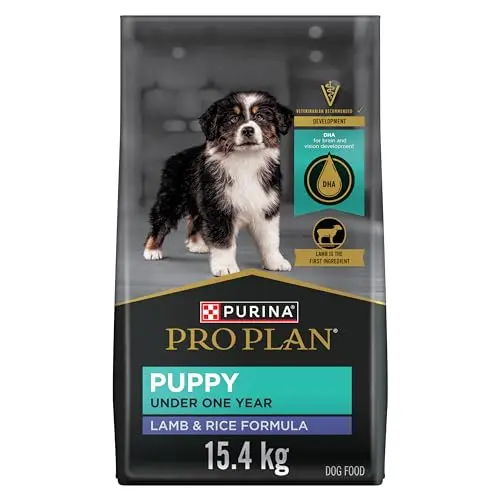
Development Lamb & Rice – Wholesome Growth Support
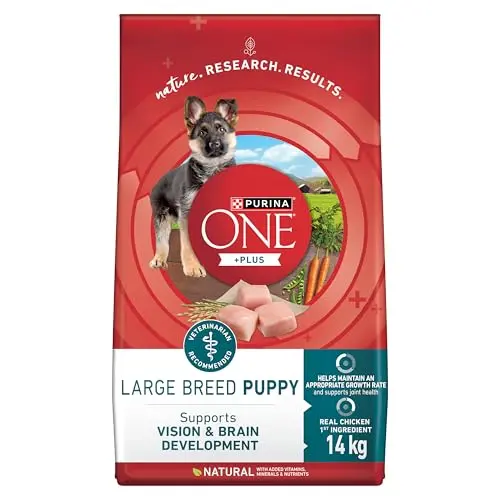
+Plus Large Breed Chicken – Joint & Brain Care
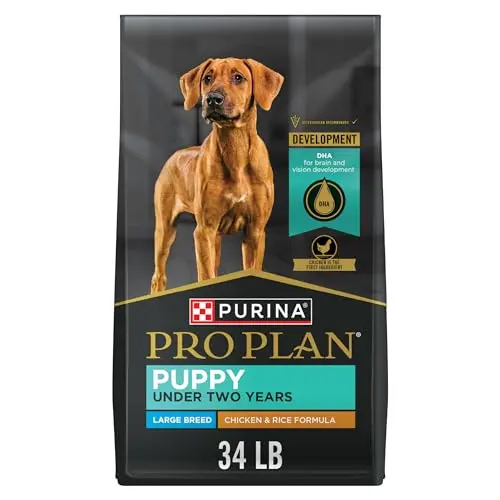
Development Chicken & Rice – Large Breed Support
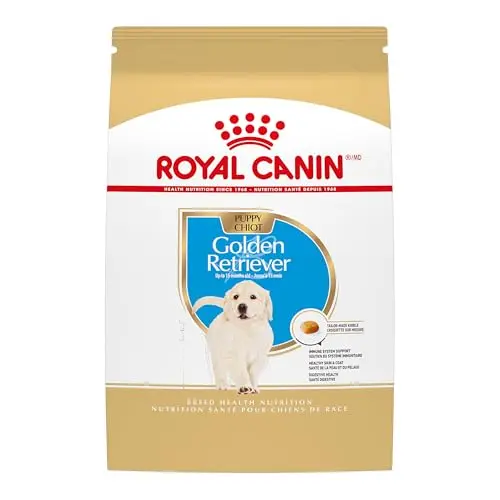
Golden Retriever Puppy – Breed-Specific Formula
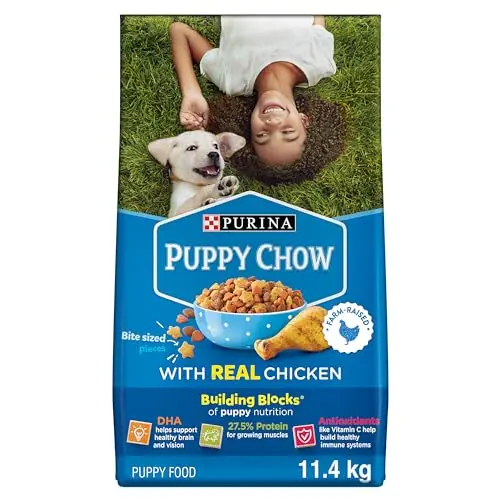
Complete with Real Chicken – Budget-Friendly Nutrition
How We Evaluated These Puppy Foods for Golden Retriever Puppies
We didn’t raise a litter of golden retrievers in a controlled feeding trial. What we did: cross-referenced 5 puppy foods from 4 distinct brands – Royal Canin, Purina Pro Plan, Purina ONE, and Purina Puppy Chow – across 6 decision axes that matter most for growing goldens: breed suitability, joint support, nutritional completeness (DHA, protein, probiotics), ingredient sourcing, digestibility, and real-world owner satisfaction. We triangulated published nutritional profiles, ingredient lists, and aggregated owner feedback where available, weighting real-world performance (60%) against feature differentiation (40%) – because how a food actually works in a puppy’s life matters more than a marketing story. We have no commercial ties to any brand; our picks track which foods best fit the golden retriever growth curve, not which label has the biggest ad budget. If you’re looking for a set-it-and-forget-it all-breed winner, the Pro Plan Lamb & Rice is our top overall pick. If joint support tops your list, the Purina ONE Large Breed earns its badge.
How to Choose the Right Puppy Food for Your Golden Retriever
What Your Golden Retriever Puppy Needs from Their Food
Golden retrievers are large-breed puppies with specific nutritional demands. They grow astonishingly fast, and that growth needs to happen at a controlled rate to avoid stressing developing bones and joints. A good puppy food for golden retrievers strikes a balance: enough high-quality protein to build lean muscle, a deliberate calcium-to-phosphorus ratio to support bone density without spurring too-rapid growth, and DHA for the brain and eye development that makes these dogs so interactive. Look for formulas that either explicitly target large breeds or are nutritionally dense enough to cover those bases without overdoing calories.
Beyond the macro numbers, consider the ingredients. A named protein source like chicken or lamb should lead the list, and you want to see easily digestible carbohydrates – rice or oatmeal tend to work well for sensitive golden tummies. Avoid foods with vague meat meals listed first (some meal is fine, but it should be a named species) and skip artificial colours or preservatives. If the brand calls out prebiotic fibres or live probiotics, even better – golden retriever puppies are notorious for digestive drama, and a gut-friendly formula can save you a lot of clean-up.
Large Breed vs All-Breed Formulas: Does It Matter?
It absolutely matters – but not every golden needs a large-breed-specific food. Large-breed formulas are formulated with controlled calorie and mineral levels to prevent the too-fast growth that can lead to hip and elbow dysplasia. They usually include glucosamine, either naturally occurring or added, to give those joints a head start. If your puppy’s parents were on the larger side (over 70 lbs), a large-breed food is the safer bet, especially during the first 12 months.
All-breed formulas can work if they’re nutritionally robust enough, but you’ll want to keep an eye on growth rate and body condition. The Pro Plan Lamb & Rice, for example, is all-breed but packs enough protein and balanced minerals that many golden owners use it successfully – it just doesn’t come with the built-in joint support of the large-breed options. If you go this route, discuss a glucosamine supplement with your vet. And if you’re choosing between a breed-specific formula and a large-breed one, know that breed-specific trumps large-breed in precision, but often comes at a premium.
Key Nutrients to Look For (and Why)
When scanning ingredient decks, here’s where to focus. DHA (docosahexaenoic acid) is a must – it’s an omega-3 fatty acid found in mother’s milk and fish oil, and it literally builds your puppy’s brain and retinas. Protein sources should be high-quality and named (chicken, lamb, salmon), and you want around 26-30% on a dry matter basis. Calcium is non-negotiable for bones, but the ratio to phosphorus matters more than the absolute number – aim for a ratio between 1.1:1 and 1.4:1, which large-breed foods typically deliver.
Glucosamine and chondroitin are joint-saving additions that show up in many large-breed formulas; they’re not required by AAFCO standards, but they’re a genuine advantage for goldens. Probiotics (like Bacillus coagulans) or prebiotic fibres (chicory root, beet pulp) can firm up loose stools almost instantly. And antioxidants – vitamins C and E, plus things like lutein – support a puppy’s still-developing immune system. If you see a blend of these, the formula is built with intention, not just filler.
Royal Canin Golden Retriever vs Purina Pro Plan: A Closer Look
This is the tug-of-war many golden owners face. Royal Canin’s breed-specific formula is purpose-built – the kibble shape encourages chewing, the antioxidant complex is tuned for the breed’s immune quirks, and the nutrient profile is dialled into the golden retriever growth curve. Owners report gorgeous coats and steady energy. The trade-off? It’s one of the pricier options, and it doesn’t add glucosamine directly, trusting controlled growth instead.
Purina Pro Plan’s Large Breed Chicken takes a different approach: it’s not breed-specific, but it pluses-up with natural glucosamine and a texture designed to entice picky eaters. It’s backed by years of feeding trials and broad owner satisfaction. If you’re more about proven large-breed science and like the idea of shredded pieces mixed in, it’s a compelling option. Choosing between them often comes down to philosophy – breed-specific precision versus large-breed pragmatism – and budget. If you’re still undecided, the Royal Canin Golden Retriever Puppy is unmatched for breed dedication; if you want time-tested large-breed nutrition, the Pro Plan Large Breed Chicken has the edge.
How to Switch Your Golden Retriever Puppy to a New Food
Golden retriever puppies have sensitive systems, so a sudden switch can trigger diarrhoea. Plan on a 7- to 10-day transition. Start with 75% old food and 25% new food for two days, then go 50/50 for two days, then 25/75 for two to three days, watching stool quality. If things stay firm, you can shift fully to the new food. If you get loose stool, slow the transition and add a probiotic supplement or a spoonful of pure pumpkin puree (not pie filling) to firm things up.
Also consider the feeding schedule: large-breed puppies should eat three meals a day up to six months, then twice daily. Free-feeding (leaving food out all day) is a no-go – goldens will eat until they burst, and controlled portions keep growth steady. Always provide fresh water, and if your puppy seems ravenous, try soaking the kibble in warm water for 10 minutes before serving; it slows eating and adds hydration.
Frequently Asked Questions
Do golden retriever puppies really need large breed puppy food?
Yes, and here’s why. Golden retrievers are classified as a large breed, and their rapid growth spurt can put stress on developing bones and joints. Large-breed puppy foods are formulated with controlled calcium and calorie levels to keep growth steady rather than explosive, reducing the risk of hip and elbow dysplasia later in life. They often include natural glucosamine for joint support, too. While some all-breed formulas are nutritionally dense enough to work, a large-breed-specific food is the safest path. Check out the Purina ONE Large Breed for a solid, affordable entry point.
What's the difference between Royal Canin Golden Retriever Puppy and Purina Pro Plan Large Breed Puppy?
Royal Canin’s formula is breed-specific, meaning it’s designed exclusively for golden retrievers – the kibble shape, antioxidant blend, and nutrient ratios target the breed’s unique characteristics. Purina Pro Plan’s Large Breed is a large-breed generic formula that works across multiple large breeds, with added glucosamine for joints and a shredded-meaty texture for picky eaters. Royal Canin tends to result in beautiful coats and is loved for its precision, but it’s pricier. Pro Plan is more widely available, often more budget-friendly, and has a longer track record of real-world feeding trials. Both are excellent; the choice comes down to whether you prioritise breed-specificity or large-breed science.
Purina Pro Plan Lamb vs Purina ONE Large Breed: Which is better for a golden?
It depends on your focus. Purina Pro Plan Lamb is all-breed but uses a novel protein (lamb) that’s gentler on some stomachs, plus it includes guaranteed live probiotics for digestive health. Purina ONE Large Breed is chicken-based, but specifically formulated for large breeds with glucosamine for joints and a dual-defence antioxidant system. If your golden has a sensitive stomach and does well on lamb, Pro Plan Lamb is a fantastic everyday food. If joint development is your primary concern, the Purina ONE Large Breed gives you that targeted support. Both have stellar owner feedback – the Pro Plan won our top spot, but the ONE is the large-breed specialist.
How much should I feed my golden retriever puppy?
Always start with the feeding guide on the bag – it’s a baseline calibrated to the food’s calorie density. For a golden retriever puppy, you’ll typically feed 3-4 cups per day, split into three meals until six months old, then transition to two meals. But those numbers vary wildly by formula; a calorie-dense food like Royal Canin might require less, while a lower-protein option like Puppy Chow might need a bit more. Monitor body condition: you should be able to feel the ribs but not see them, and your puppy should have a visible waist from above. Adjust portions up or down by about 10% at a time, and always consult your vet if you’re unsure – growth that’s too fast is far more dangerous than a temporary underfed week.
Final Verdict
For the vast majority of golden retriever owners, the Pro Plan Lamb & Rice is the sweet spot – it nails protein quality, digestive ease, and brain development without a single gimmick. If joint health keeps you up at night, the Purina ONE Large Breed gives you that targeted glucosamine boost at a friendlier price. For the purists who want a food crafted specifically for the breed, Royal Canin Golden Retriever Puppy is worth the premium. And if your wallet needs a breather, Puppy Chow Complete covers the nutritional bases without drama. Trust your pup’s reaction and watch their growth – you’ll find the right match.