
The weaning stage is messy, adorable, and a little nerve-wracking-you’re introducing your puppy to its first real meals, and you want to get it right. Whether you’re transitioning a litter of tiny newborns or a single pup, the food you choose sets the foundation for healthy growth, strong bones, and a happy gut. With so many brands and formulas on the shelf, it’s easy to feel overwhelmed.
Texture and digestibility are the two big non-negotiables when it comes to weaning food. Puppies are just learning to chew and swallow, so a soft, easy-to-eat option can make all the difference. Key nutrients like DHA for brain development, probiotics for gut health, and high-quality protein for muscle growth are equally critical. We’ve cross-shopped the market to help you find the right fit for your litter.
Best Puppy Foods for Weaning Puppies – 2026 Reviews
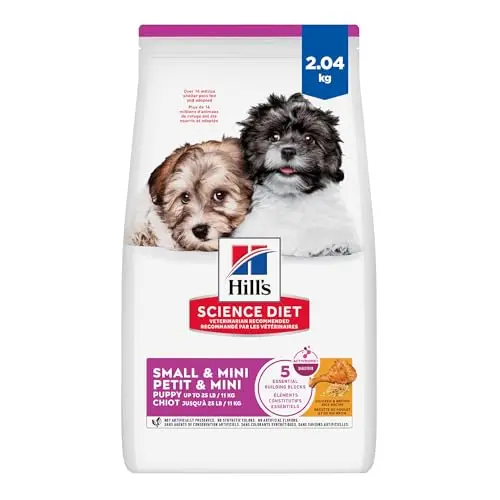
Science Diet Small & Mini – Gentle Nutrition for Growing Puppies
A well-rounded dry food with small kibble that’s easy for tiny mouths to handle. It packs DHA for brain development, balanced minerals for growing bones, and a prebiotic fibre blend to support digestion. Owner feedback skews overwhelmingly positive, and it’s a go-to for breeders and first-time puppy parents alike.
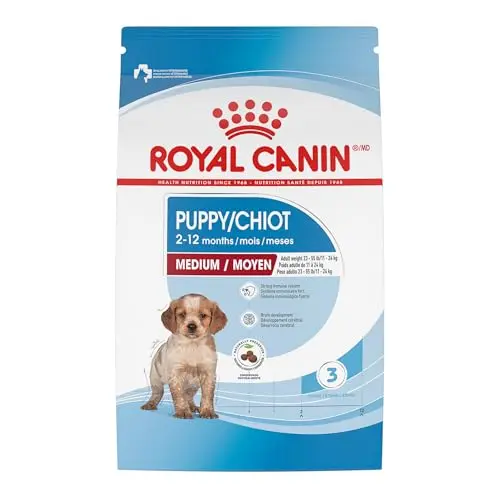
Medium Puppy – Tailored Nutrition for Medium Breeds
A breed-specific formula designed for puppies expected to reach 23-55 lbs as adults. The crunchy kibble works well if you’re transitioning to dry food slightly later in the weaning process, and it includes a mix of prebiotics, antioxidants, and marine-sourced DHA. A strong pick if you know your pup will fall into that medium size range.
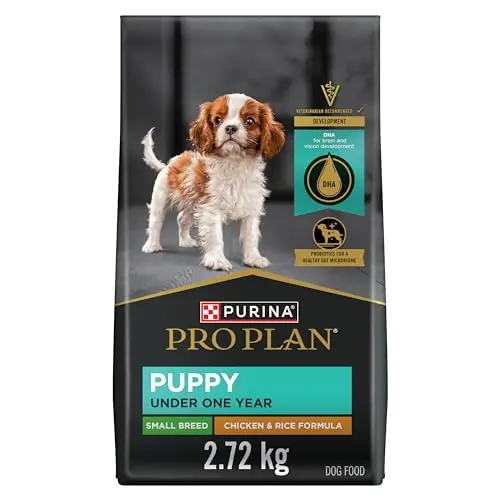
Small Breed Chicken & Rice – High-Protein Support for Little Dogs
A protein-packed dry option with real chicken as the first ingredient and guaranteed live probiotics. The bite-sized kibble is purpose-built for small breed puppies, and the DHA from fish oil rounds out the brain-development support. A favourite among owners of Frenchies, Yorkies, and other petite breeds.
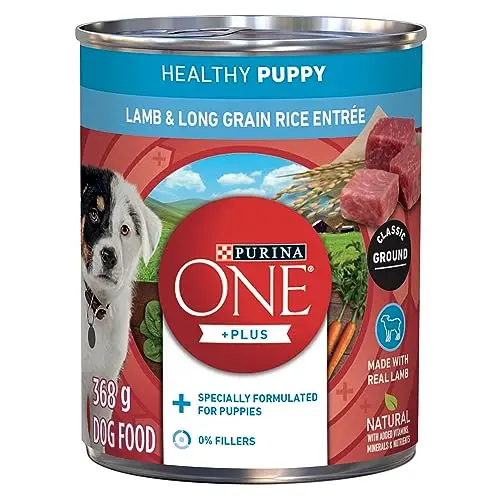
Lamb & Long Grain Rice Entree – Soft Pâté for Easy Transition
The only wet food in our roundup, and purpose-built for the weaning stage. Its smooth pâté texture requires no chewing, making it the easiest introduction to solid food. Lamb is the primary protein, and it skips poultry by-products entirely. A 12-pack of cans gives you plenty to work through a litter without constantly restocking.
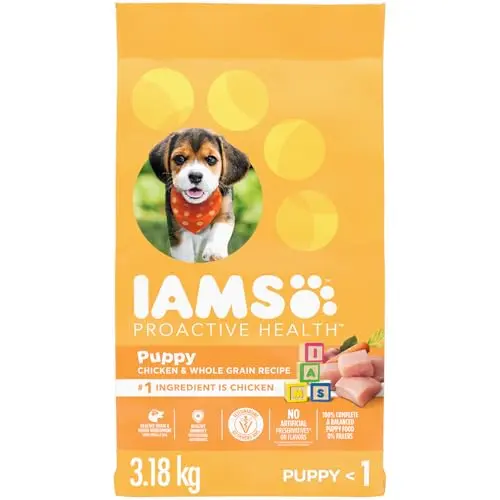
ProActive Health Chicken & Whole Grain – Affordable Nutrition for Small Breed Pups
A wallet-friendly dry food that doesn’t skimp on the essentials. It’s formulated with omega-3 DHA and 22 key nutrients mirroring mother’s milk, and the kibble size works well for small-medium puppies. A solid choice if you’re managing a large litter and need volume without breaking the bank.
How We Evaluated These Puppy Foods for Weaning Puppies
We didn’t run controlled weaning trials in a kennel. What we did: cross-referenced 5 puppy food models from 5 distinct brands across 6 decision axes-texture and ease of eating, digestibility, nutrient profile (DHA, probiotics, antioxidants), ingredient sourcing, kibble size suitability, and real-world owner feedback. We triangulated published specifications, AAFCO nutritional adequacy statements, ingredient decks, and aggregated owner experiences where available, then weighed them against the unique demands of the weaning stage.
The scoring framework weighted real-world weaning performance (60%)-how effectively each food supports the transition from milk to solids without digestive upset-against feature differentiation (40%)-unique technical advantages like guaranteed probiotics, breed-specific kibble, or supplemental DHA. We have no commercial relationship with any of the brands featured; recommendations track fit and differentiation, not brand preference. If you’re looking for a one-bag solution, the Science Diet Small & Mini is the most well-rounded pick. If you need the gentlest texture for hesitant eaters, the Purina ONE Wet Pâté is purpose-built for it.
How to Choose the Right Puppy Food for Weaning
What Makes a Great Weaning Food?
Weaning is the transition from milk to solids, and puppies’ digestive systems aren’t ready for just anything. A great weaning food balances three things: soft, easily manageable texture, high digestibility, and nutrient density. Look for formulas with DHA to support brain development, balanced minerals for growing bones, and probiotics or prebiotics to nurture the gut. Avoid foods with vague by-products, artificial colours, or excessive fillers-puppies need every calorie to count.
Texture Matters: Why Soft Food Eases the Transition
Puppies develop chewing skills over several weeks. In the earliest weaning days (around 3-4 weeks), they’re better off with a gruel or pâté consistency. Wet foods like the Purina ONE Lamb Pâté simply need mashing with warm water to create an oatmeal-like slurry. Dry kibble, even the smallest bits, should be soaked until soft for the first week or two. The Hill’s Science Diet Small & Mini and Pro Plan Small Breed both soften nicely with a few minutes in water, making them versatile options that can start as a mash and transition to dry as the puppy grows.
Key Nutrients for Growing Puppies
Every puppy food we considered contains DHA (docosahexaenoic acid), an omega-3 fatty acid crucial for brain and vision development. Protein content matters too-look for real meat as the first ingredient (chicken, lamb, or fish). The calcium-to-phosphorus ratio is engineered for skeletal health in all AAFCO-approved feeds. Added extras like guaranteed live probiotics (found in the Pro Plan Small Breed) and antioxidants (in every formula we reviewed) give the immune system a leg up during a vulnerable window.
Wet vs. Dry Food for Weaning Puppies
There’s no wrong answer here, just different strategies. Wet food wins on immediate palatability and ease of consumption-it’s ready to go and almost impossible for a puppy to refuse. It’s also more hydrating. Dry food is more economical and shelf-stable, and once puppies are comfortable chewing, it can help keep teeth cleaner. Many breeders use a combination: start with wet or soaked dry, then gradually reduce moisture over a few weeks. If you go the dry route, the Hill’s Science Diet Small & Mini and Pro Plan Small Breed both have tiny kibble that’s easy to soften.
How to Choose Between Small Breed and All-Breed Formulas
Small breed formulas aren’t just about kibble size-they often pack a higher metabolic energy density to match a toy breed’s faster metabolism. If you’re weaning a Chihuahua or Pomeranian, stick with the small breed options. Medium and large breed puppies (like Labs or Goldens) can handle an all-breed formula, but pay attention to kibble dimensions; the Royal Canin Medium Puppy is a nice middle ground. The IAMS ProActive Health is technically small-medium, so it works for a range of sizes while keeping the price approachable.
What About Milk Replacers and Supplements?
If a puppy is struggling to gain weight or the mother’s milk supply is low, a milk replacer might still be part of the picture during early weaning. However, the goal is to move away from liquid nutrition. All the foods here provide complete nutrition once the puppy is licking and chewing, so a separate supplement usually isn’t necessary after the first few days of transition. Just focus on frequency-4-5 small meals a day eases the digestive load.
Frequently Asked Questions
When should I start weaning puppies onto solid food?
Most breeders begin around 3 to 4 weeks of age, introducing a thin gruel made from soaked kibble or wet food mixed with warm water or puppy formula. Start with very small portions a few times a day alongside nursing. By 6-7 weeks, puppies should be eating mostly solid meals. Keep an eye on their stool consistency-loose stools are a sign to slow down or thin the mixture further. The Purina ONE Wet Pâté is especially forgiving for those first exploratory licks because it doesn’t require any chewing.
What's the difference between Hill's Science Diet and Purina Pro Plan for weaning puppies?
Both are premium brands with strong vet backing, and both offer small kibble options rich in DHA and antioxidants. The Hill’s Science Diet Small & Mini emphasizes a prebiotic fibre blend for gentle digestion, and its kibble is among the smallest we’ve seen-perfect for toy breeds. The Pro Plan Small Breed adds guaranteed live probiotics and tends to have a higher protein punch from real chicken. If gut health is a top priority, the probiotics in Pro Plan might sway you; if you want the tiniest kibble and a proven track record, go with Hill’s. Both work well soaked during the first week.
How does the Purina ONE wet food compare to dry kibble for weaning?
The Purina ONE Lamb Pâté is the easiest introduction to solid food because its texture is already soft and uniform-no soaking required. It’s also free of poultry by-products, which some owners prefer to avoid. Dry kibble, on the other hand, offers more versatility: you can adjust the consistency by adding more or less water, and it transitions naturally to the food your puppy will eat as an adult. Many breeders start with a wet or soaked mix, then move to dry-only by 8-9 weeks. If you’re unsure, pick up a case of the wet cans for the first two weeks, and gradually introduce a small-breed dry like the Pro Plan Small Breed as your puppy gains confidence.
Can large breed puppies eat small breed food during weaning?
In the short term, yes-during the weaning weeks, kibble size and digestibility matter more than life-stage classification. A large breed puppy can absolutely start on a small breed formula because the tiny kibble is easier to manage. However, once they hit about 12 weeks, you’ll want to switch to a large breed puppy food that’s calibrated for controlled growth (to prevent joint issues). The Royal Canin Medium Puppy is a good middle-ground if you know your pup will be medium-sized, but for a Great Dane or Mastiff, consider a breed-specific large puppy formula after weaning.
Final Verdict
For the smoothest weaning transition, the Hill’s Science Diet Small & Mini is our top recommendation-it combines tiny, easy-to-moisten kibble with a nutrient profile that breeders and vets swear by. If you’re dealing with a reluctant eater or want the absolute simplest texture, the Purina ONE Wet Lamb Pâté is purpose-built for this stage and almost universally loved by puppies. On a budget, the IAMS ProActive Health delivers essential DHA and small kibble at a price that won’t sting, even with a full litter. Whichever you choose, pair it with plenty of patience and a shallow bowl-you’re on your way.