
If your large dog inhales their dinner in under 30 seconds, you know the concern. Fast eating isn’t just messy-it can lead to bloat, choking, and long-term digestive issues. A slow feeder dog bowl is one of the simplest ways to turn mealtime into a safer, more engaging activity. But with so many shapes, materials, and maze designs out there, finding the right one for a big dog can feel like guesswork.
We looked at slow feeders designed with large breeds in mind-focused on capacity, stability, and the ability to genuinely slow down a determined eater. Whether your priority is durable stainless steel, a heavy ceramic bowl that stays put, or an interactive grass-like mat for mental stimulation, there’s a solid pick here. Our guide walks you through the key features that make a difference for big dogs and helps you choose a bowl that matches your dog’s eating style.
Best Slow Feeder Dog Bowls for Large Dogs – 2026 Reviews
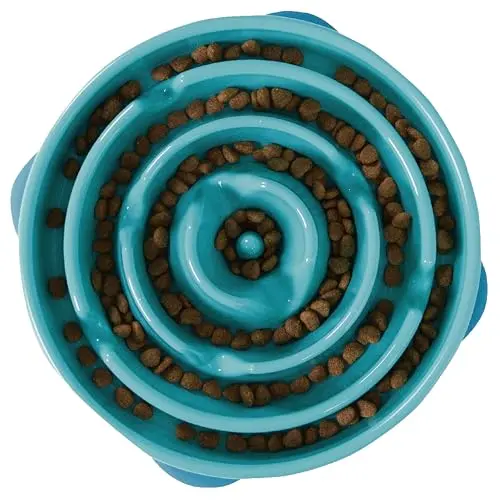
Fun Feeder Slo Bowl – Slowest Eating for Large Breeds
A no-fuss, effective slow feeder that holds up to 4 cups of food, making it a natural fit for large dogs. The deep, challenging maze pattern forces your dog to work around the ridges, stretching out mealtime significantly. It’s lightweight, easy to grab, and top-rack dishwasher safe for quick cleanup.
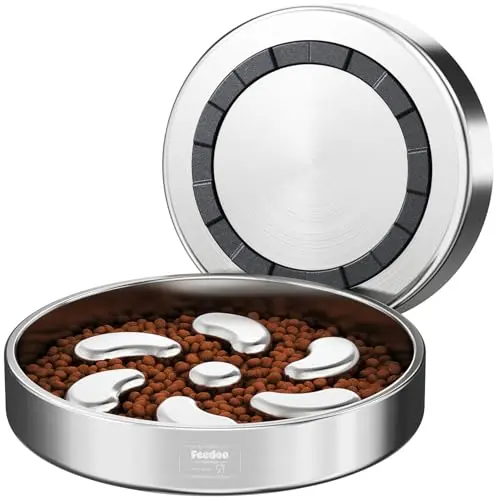
Stainless Steel Slow Feeder – Heavy-Duty & Non-Slip
A double-wall stainless steel option that brings serious durability to slow feeding. The flower-shaped hump pattern breaks up the eating surface effectively, and the heft of the metal bowl-plus a rubber base-keeps it planted. Holds 3 cups, which works well for many large breeds, and cleans up beautifully in the dishwasher.
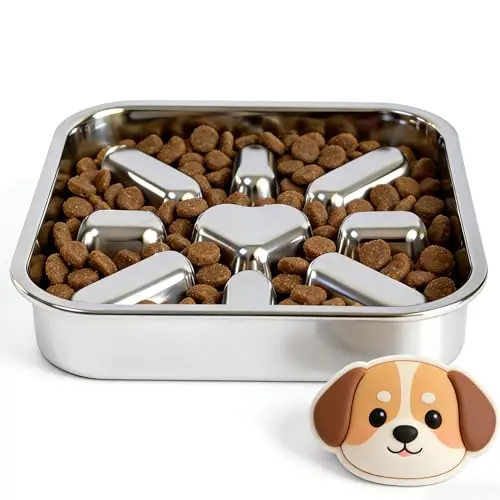
Stainless Steel Slow Feeder – Extra Capacity for Big Eaters
A generously sized stainless steel bowl that holds up to 5 cups when filled to the brim-ideal for large breeds with big appetites. The deep ridge pattern creates a genuine speed bump for fast eaters, while the non-slip base keeps it in place. A reversible design means you can flip it over for a standard snack bowl.
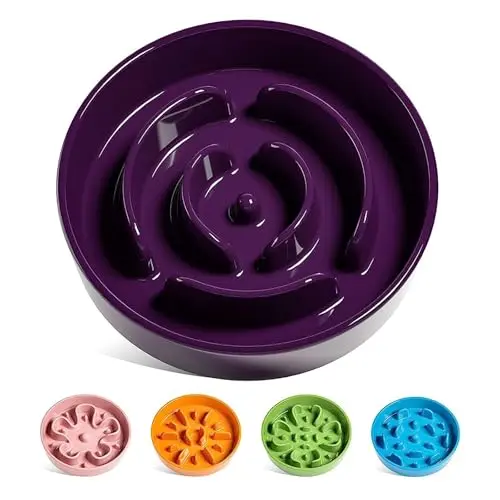
Ceramic Slow Feeder – Heavyweight & Stylish
A ceramic slow feeder that brings weight and style to mealtime. The 3-cup maze design is effective, and the heavy ceramic body-coupled with a non-slip base-means it barely moves, even with an enthusiastic eater. It’s microwave-safe and dishwasher-safe, and the smooth glaze won’t harbour bacteria.
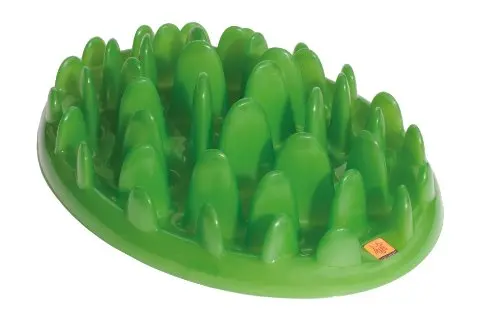
GREEN Interactive Feeder – Grass-Like Enrichment for Large Dogs
Unlike traditional maze bowls, the GREEN uses a grass-like mat to turn feeding into a foraging game. You simply sprinkle dry or wet food across the tufted surface, and your dog must root and lick their way to each bite. Designed for large breeds, it offers mental stimulation in addition to slowing the meal.
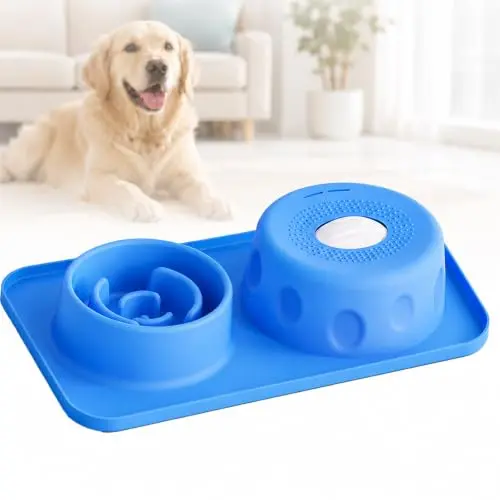
Lick Bowl with Roller Ball – Interactive Slow Feeding
A completely different angle on slow feeding: a large silicone lick mat with a built-in roller ball. Spread wet food or purées across the surface, and your dog licks and works the ball to get every bit. It’s designed for all sizes, with a heavy base that helps prevent sliding.
How We Evaluated These Slow Feeder Dog Bowls for Large Dogs
We did not conduct long-term chew-toy durability testing on these bowls. What we did: cross-referenced 6 slow feeder models from 6 distinct brands across 5 key decision axes – material durability, maze design complexity, capacity for large breeds, non-slip stability, and ease of cleaning. We triangulated published product specifications, aggregated owner feedback where available, and assessed how well each bowl aligns with the real-world needs of large, fast-eating dogs.
The scoring framework weighted real-world slowing performance (60%) – how effectively a bowl extends mealtime and fits a big dog’s portion – against feature differentiation (40%) – unique design elements like stainless steel construction, extra-large capacity, or interactive foraging. We have no commercial relationship with any of the brands featured; recommendations track fit and differentiation, not brand preference. If you’re looking for a proven all-around performer, the Fun Feeder Slo Bowl is the most broadly recommended; if you want the long-term ease of stainless steel, the Feedoo Stainless Steel Slow Feeder is a standout.
How to Choose the Right Slow Feeder Dog Bowl for Large Dogs
What to Look for in a Slow Feeder for Large Breeds
Large dogs come with big appetites and often a turbocharged eating style. The right slow feeder does more than just interrupt gulping-it should fit a full meal, stay put while your dog works, and be made from a material that holds up over time. Start with capacity: a large breed often needs 3 cups or more per feeding, so look for bowls labelled accordingly. The maze depth and pattern complexity should match your dog’s persistence; too shallow and they’ll finish fast, too deep and they may get frustrated. A non-slip base is non-negotiable for big dogs that tend to push bowls around.
Plastic vs. Stainless Steeel vs. Ceramic: Which Material Is Right?
Plastic bowls like the Outward Hound Fun Feeder are lightweight, easy on the wallet, and effective, but they can scratch and retain odours over time. Stainless steel options, such as the Feedoo and YardEase bowls, are more durable, hygienic, and resistant to chewing-ideal if your dog is tough on gear. Ceramic bowls like the LE TAUCI offer heavyweight stability and a sleek look, but they can chip and are less forgiving if dropped. The decision often comes down to your dog’s chewing habits and your cleaning preferences. If your dog hasn’t destroyed a plastic bowl before, you might save with that route; otherwise, investing in metal may pay off.
Size Matters: Picking the Right Capacity for Large Dogs
Not all ‘large” slow feeders hold enough food for a full-grown Labrador or Shepherd. Check the cup capacity carefully. A Labrador on a 3-cup diet might do fine with many standard large bowls, but a Great Dane eating 5 cups needs something like the YardEase to avoid refilling. If you’re unsure, size up – a bowl that’s slightly too big is better than one that leaves your dog hungry or forces multiple rounds. Also consider the bowl’s footprint on your floor; some wide designs take up more space than expected.
Design Features That Actually Slow Eating
The maze pattern isn’t just decoration. Deep, narrow ridges force your dog to manoeuvre their tongue and work for each bite, while wider patterns slow things down more gently. Interactive designs like the Company of Animals GREEN mat turn eating into a foraging puzzle, which can be great for mental stimulation but may not slow as much as a deep plastic maze for speed demons. Look for bowls with raised centres that prevent a straight gulp path. And don’t overlook the lip or rim-a slightly inward-curving edge can help keep food from being pushed right out of the bowl.
Frequently Asked Questions
What's the difference between the Outward Hound Fun Feeder and the Feedoo Stainless Steel Slow Feeder?
The biggest difference is material and heft. The Outward Hound bowl is plastic, lightweight, and holds 4 cups-great for dogs that don’t chew their bowls and benefit from a very challenging ridge pattern. The Feedoo trades a bit of capacity (3 cups) for stainless steel durability and weightier stability; it’s harder to slide and resists scratches. Cleaning is similarly easy for both, but the Feedoo may appeal if you’re avoiding plastic altogether. If your dog is a power-chewer or you want a bowl that looks like new for years, the Feedoo is a better long-term investment; if budget and proven design matter more, the Outward Hound is tough to beat.
Do slow feeder bowls really help prevent bloat in large dogs?
They can be a helpful tool, but they aren’t a guarantee. Bloat (gastric dilatation-volvulus) is a complex condition with multiple risk factors, and speed-eating is one of them. By reducing the intake rate and preventing gulps of air, slow feeders lower one contributor. However, they work best when paired with other practices: feeding smaller, more frequent meals, avoiding exercise right after eating, and using elevated bowls only if vet-recommended. For deep-chested, at-risk breeds like Danes and Shepherds, a slow feeder is a smart part of a broader prevention strategy.
What capacity does a large dog slow feeder need?
Most large breeds need between 2.5 and 5 cups of food per meal, depending on weight, activity level, and food calorie density. A bowl labelled ‘large” should hold at least 3 cups comfortably; for breeds over 80 pounds, aim for 4 cups or more. The YardEase bowl holds up to 5 cups and is a safe pick for giant breeds. Always measure your dog’s typical portion and add a buffer-fitting food isn’t just about volume, it’s about having enough space for the ridges to do their job without crowding the bowl.
Are ceramic slow feeders better than plastic for large dogs?
Not necessarily ‘better,” but different. Ceramic bowls like the LE TAUCI offer significant weight, which keeps them from sliding and makes them ideal if your dog pushes bowls across the floor. They’re also less likely to harbour bacteria if the glaze is intact, and they don’t absorb odours. However, they’re breakable and often smaller in capacity. Plastic bowls are lighter, usually cheaper, and available in larger sizes, but they can get scratched over time. The right choice depends on your dog’s behaviour and your kitchen setup-if you value stability and aesthetics, ceramic wins; if you need max capacity and impact resistance, plastic might be more practical.
Final Verdict
For most large dogs, the Outward Hound Fun Feeder Slo Bowl is the answer – it combines a genuinely challenging 4-cup maze pattern with a non-slip base and dishwasher convenience at a price that’s hard to argue with. If you’d rather skip plastic entirely and want something built to last, the Feedoo Stainless Steel Slow Feeder brings heavyweight durability and easy cleaning. For giant breeds or multi-cup diets, the YardEase bowl’s 5-cup capacity is a lifesaver. And if your dog craves mental engagement alongside slower eating, the Company of Animals GREEN turns dinner into a fun puzzle. Whichever you choose, your big dog’s stomach-and your floor-will thank you.