
Bringing your dog along is half the joy of any adventure—right up until you’re one hand on the wheel trying to keep a sloshing water bowl from soaking the back seat, or halfway up a trail realizing you forgot how your dog was supposed to drink. Feeding and watering a dog on the move has its own set of puzzles, but they’re all solvable with a little planning.
Here’s how to keep your dog fed, hydrated, and comfortable whether you’re doing a long drive or a hard hike—without turning your car or your pack into a disaster zone.
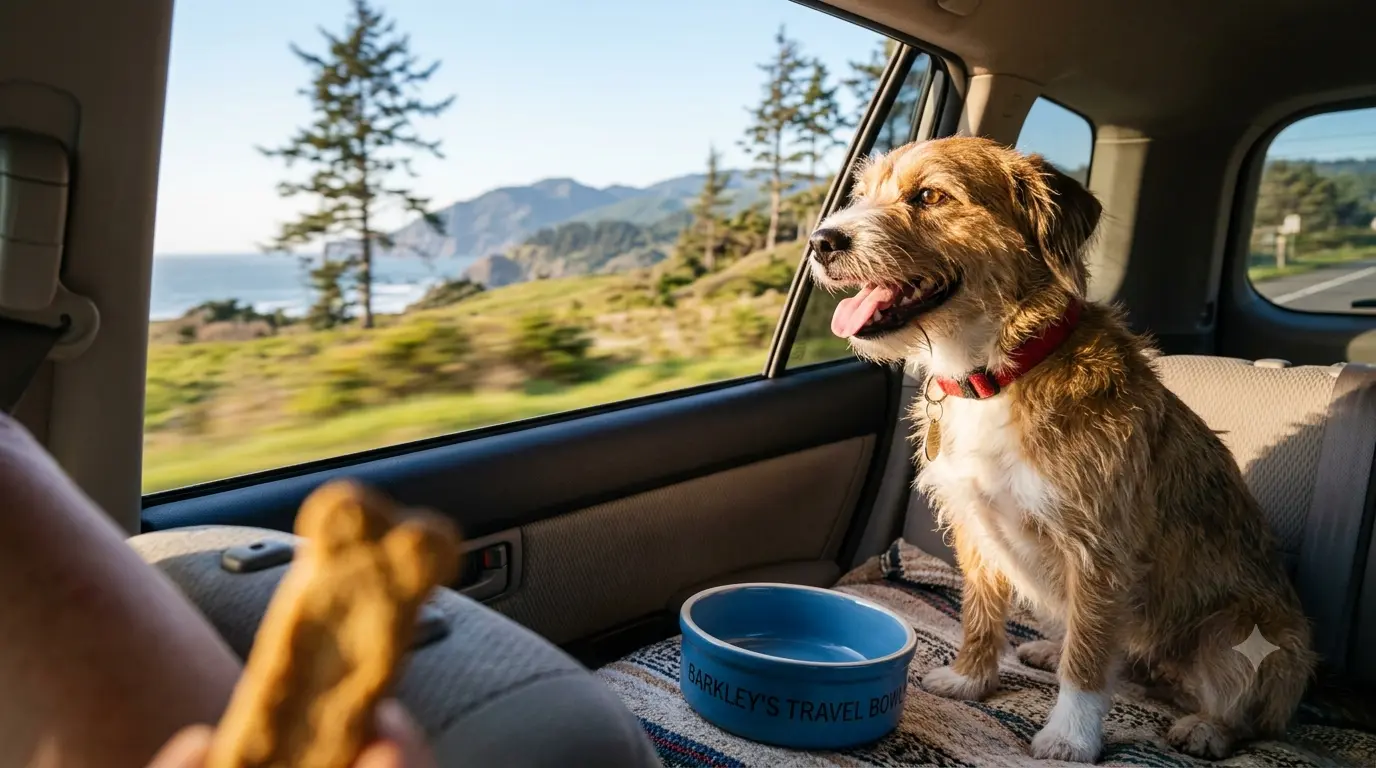
Feeding Your Dog on the Road: Preventing Motion Sickness and Messes
Car travel and full stomachs don’t always mix. Just like some people, dogs can get carsick, and a big meal right before a bumpy ride is asking for trouble.
When to Feed Before a Long Car Ride
The simplest way to prevent car sickness is timing. Feed your dog a few hours before you set off rather than right before, so their stomach has had time to settle. On long drives, offer small amounts rather than full meals, and take breaks to let your dog stretch, relieve themselves, and drink. If your dog is prone to motion sickness, keeping meals light and well-timed makes a big difference—and for dogs who tend to gulp when hungry, our guide on slowing down a fast eater is worth a look, since a bolted meal plus a moving car is a bad combination.
Never let your dog eat from a bowl balanced on a seat while the car is moving—it spills, and sudden stops send it flying. Save proper meals for rest stops on solid ground.
Portable Bowls That Don’t Spill in the Car
The eternal road-trip problem is water: dogs need it available, but an open bowl in a moving vehicle is a guaranteed mess. This is where the right bowl design earns its keep.
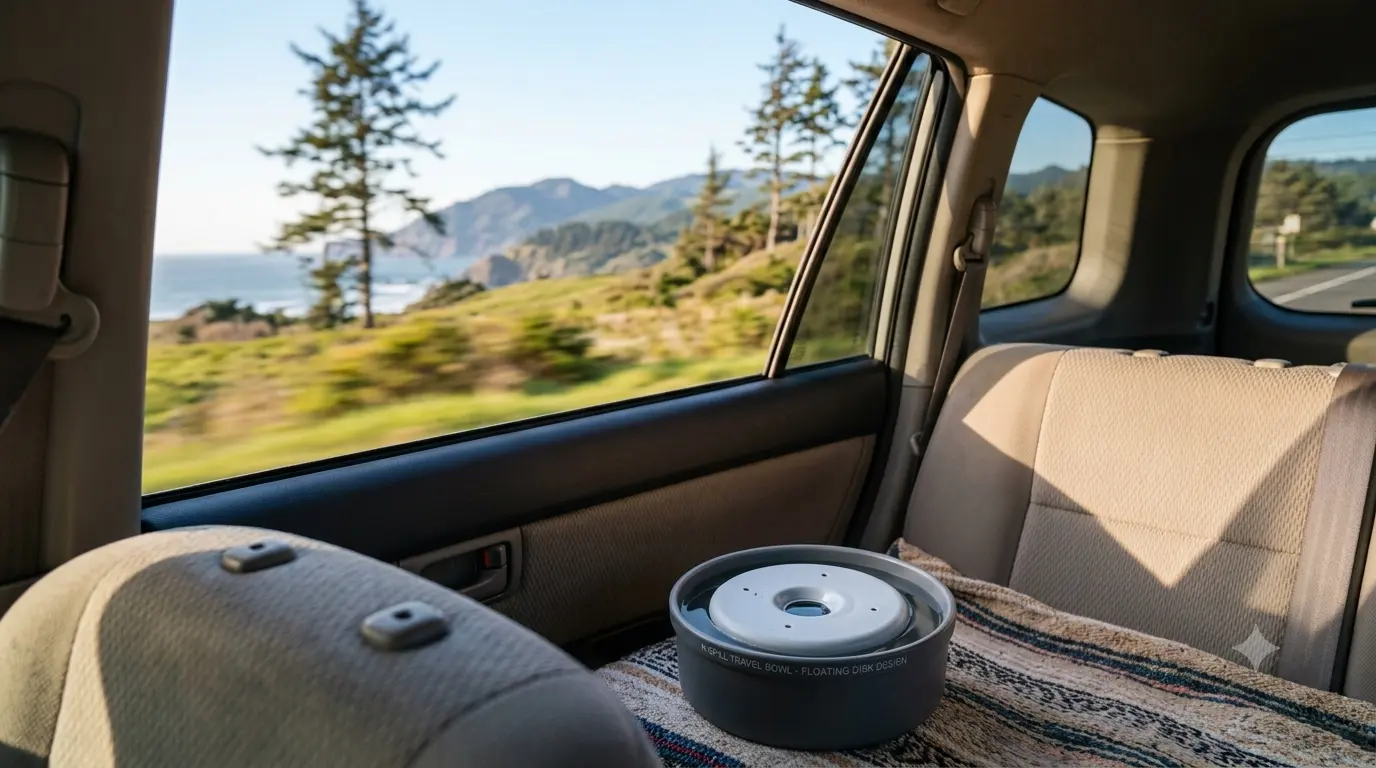
How Anti-Splash and Floating-Disk Bowls Work
No-spill travel bowls solve the sloshing problem cleverly. Many use a floating disk that sits on top of the water, letting your dog push through to drink while the disk suppresses the waves that would otherwise slosh over the rim during turns and bumps. Others have inward-curving lids or raised edges that contain the water. The result is a bowl you can leave accessible in the car without a soaked seat.
When choosing one, look for a secure, stable base or a way to anchor it, a size that suits your dog, and materials that are easy to rinse and won’t hold odors. A spill-resistant bowl means your dog can sip whenever they’re thirsty instead of only at stops.
Hiking with Your Dog: Hydration and Trail Energy
On the trail, the challenge flips from containing water to carrying it. Dogs work hard when they hike, and they can’t tell you when they’re getting dangerously thirsty—so hydration is on you.
Foldable Bowls vs. Water-Bottle Dispensers
Two lightweight solutions dominate for good reason. Collapsible silicone bowls fold flat or clip to your pack, then pop open to hold water you pour from a bottle—simple, cheap, and packable. Dog water bottles with a built-in trough or fold-out tray let your dog drink directly from the spout without a separate bowl, which is fast and tidy for quick trail-side sips. Many hikers carry one of each: a bottle for on-the-move drinks and a collapsible bowl for longer rest stops. Both beat the old trick of pouring water into your cupped hands.
How Much Extra Water Does a Dog Need on the Trail?
A hiking dog needs noticeably more water than a couch day, and hot weather or hard terrain pushes the need higher still. The practical rule is to carry more water than you think you’ll need—for both of you—and to offer your dog small drinks regularly rather than waiting for them to seem thirsty. Watch for signs of overheating and dehydration: heavy panting, thick drool, lethargy, or sluggishness mean it’s time to stop, rest in the shade, and hydrate. If your dog is generally a reluctant drinker, our tips on getting a dog to drink more water carry over to the trail too.
Essential Travel Gear for Outdoor Dogs
A few pieces of kit make traveling with a dog dramatically smoother. A no-spill bowl handles hydration in the car; a collapsible bowl and a trough-style water bottle cover the trail. A portable, sealable food container or a set of pre-measured food bags keeps meals fresh and dosed correctly on multi-day trips—and stops kibble from going stale or attracting pests in a warm car, a concern we cover in our dog food storage guide. Round it out with a stash of poop bags, a small towel, and a basic canine first-aid kit, and you’re set for almost any outing.
The Bottom Line
Feeding and watering your dog on the go isn’t complicated once you have the timing and gear sorted. Feed a few hours before car rides and keep travel-day meals light, use a no-spill bowl so water stays available without the mess, and pack a collapsible bowl or trough bottle for the trail while carrying extra water for the both of you. Offer small, frequent drinks, watch for signs of overheating, and your dog can come along on just about any adventure comfortably.
Frequently Asked Questions
How do I feed my dog while traveling in a car without a mess?
Feed a few hours before driving rather than right before, and keep travel-day meals small to avoid car sickness. Don’t feed from a bowl in a moving car—save real meals for rest stops on solid ground, and use a no-spill bowl for water so your dog can drink en route without soaking the seat.
What’s the best way to give my dog water during a long hike?
Carry a collapsible silicone bowl, a trough-style dog water bottle, or both—a bottle for quick sips on the move and a bowl for longer breaks. Offer small drinks regularly rather than waiting until your dog seems thirsty, and always pack more water than you expect to need.
What kind of dog bowl doesn’t spill in the car?
Look for no-spill travel bowls, many of which use a floating disk that lets your dog drink through it while suppressing the sloshing that would otherwise splash over during turns and bumps. Others use inward-curving lids or raised edges. Choose one with a stable base and easy-to-clean material.
How much extra water does my dog need when hiking?
More than usual—hiking is hard work, and heat or tough terrain increases it further. Carry extra for your dog and offer small amounts often. Watch for overheating and dehydration signs like heavy panting, thick drool, and lethargy, and stop to rest and hydrate in the shade if you see them.
How do I stop my dog from getting carsick?
Timing is the biggest lever: feed several hours before the drive, not right before, and keep meals light on travel days. Frequent breaks, fresh air, and a calm, secure spot in the car also help. If motion sickness is severe or persistent, your vet can suggest additional options.