
You set the bowl down, blink, and it’s already empty. No chewing, no pause for breath—just a vacuum where dinner used to be. For a lot of dogs, mealtime looks less like eating and more like a competitive sport, and while it can be funny to watch, speed-eating isn’t always harmless. Sometimes it leads to a puddle of undigested kibble on the floor minutes later. In rarer cases, it can tip into a real emergency.
The good news is that slowing your dog down is usually simple once you understand what’s driving the rush. Let’s break down why dogs gulp, when it’s a problem worth worrying about, and how to fix it.
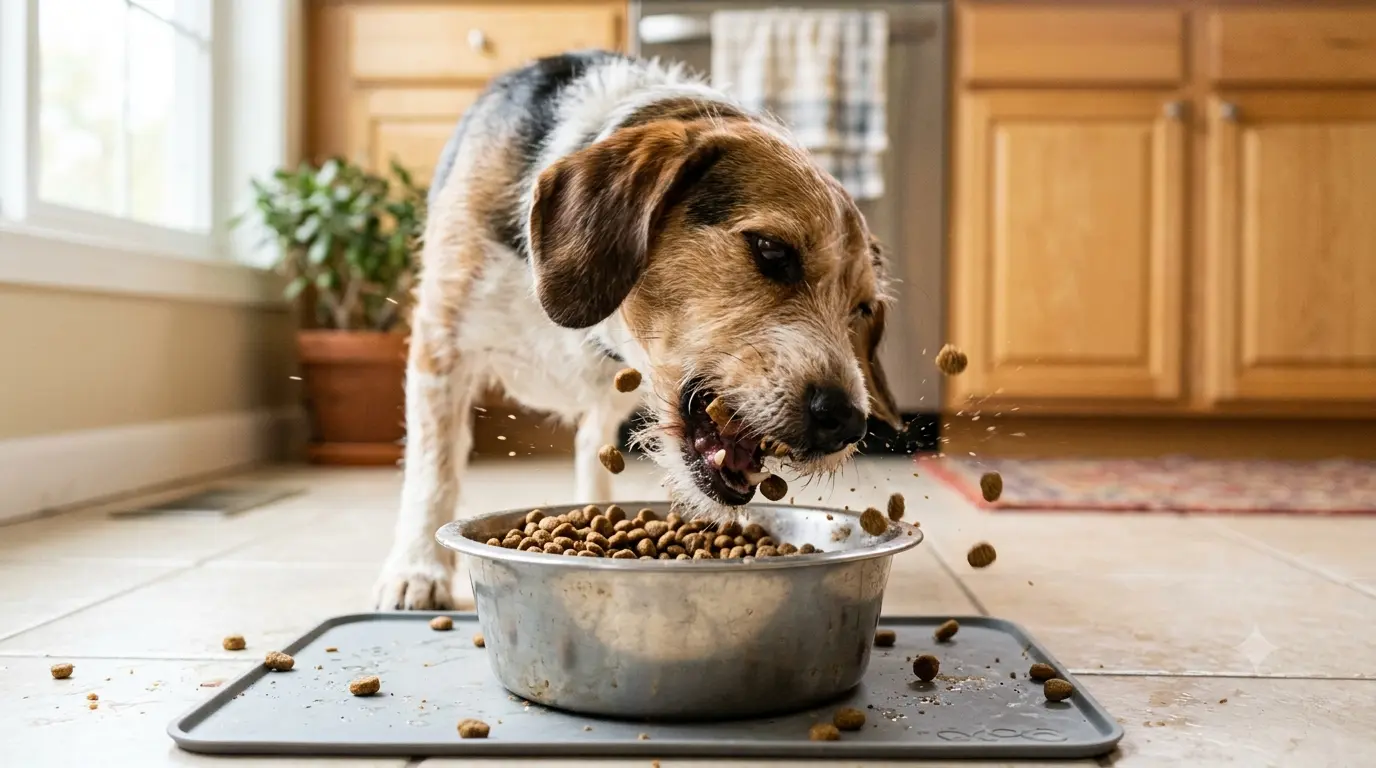
Why Dogs Gulp Their Food Without Chewing (And Is It Dangerous?)
First, a reassuring truth: dogs are built to bolt their food. Their teeth are designed for tearing and crushing, not the slow grinding we do, and their digestive system handles chunks just fine. So a dog swallowing kibble mostly whole isn’t “wrong” the way it would be for a person.
The Evolutionary Roots of Fast Eating
Your dog’s ancestors ate in groups, and food didn’t stick around. Whoever ate fastest ate the most—so eating quickly was a survival advantage, not a bad habit. That instinct is still baked in, especially in dogs who once competed with littermates or other pets for a shared bowl. If your dog grew up in a busy household or a shelter, fast eating may simply be a leftover strategy from a time when slowing down meant going hungry.
Medical vs. Behavioral Reasons for Gulping
Most gulping is behavioral: habit, excitement, or old competition instincts. But a sudden, dramatic increase in appetite or speed can occasionally point to something medical, like a condition that leaves a dog feeling constantly hungry. If your dog has always eaten fast, it’s almost certainly just their style. If a normally relaxed eater suddenly turns frantic, that’s worth mentioning to your vet.
The Hidden Dangers of Speed Eating
Fast eating is usually fine, but two specific risks make it worth managing.
Why Dogs Throw Up Undigested Kibble Right After Eating
If your dog brings food back up minutes to hours after wolfing it down—and it comes up looking untouched, in a tube-like shape, with no dramatic heaving—that’s usually regurgitation, not true vomiting. It’s a passive process: the food never made it far enough to be digested. Eating too fast means swallowing a lot of air along with big mouthfuls, and the overloaded esophagus or stomach simply sends some back up.
Vomiting is different. It’s active, with visible abdominal effort, drooling, and partially digested food or yellow bile. Occasional regurgitation from speed-eating is common and not usually serious on its own, but if your dog is frequently bringing up meals, it’s worth a vet visit to rule out other causes. (If picky eating or refusing food is more your issue, that’s a separate puzzle—our guide on why a dog won’t eat dry food but will eat treats digs into that.)
Can Fast Eating Cause Bloat? Recognizing the Emergency Signs
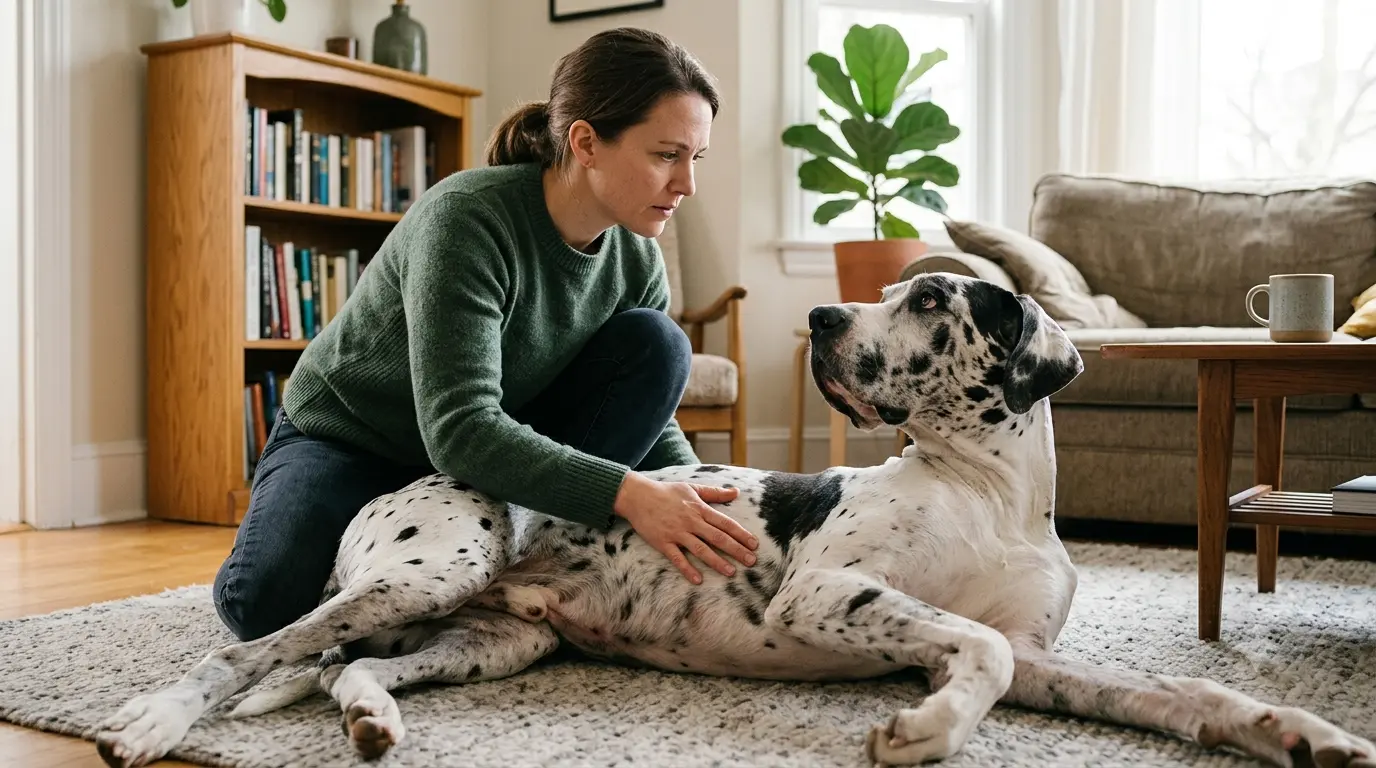
This is the serious one. Bloat, and its life-threatening form called gastric dilatation-volvulus (GDV), happens when the stomach fills with gas and, in the worst cases, twists on itself. Eating too fast and swallowing air is considered one of several risk factors, especially in large, deep-chested breeds like Great Danes, German Shepherds, Weimaraners, and Standard Poodles.
GDV is a true emergency—dogs can go downhill within hours. Get to a vet immediately if you see:
- A swollen, hard, or distended belly
- Repeated unproductive retching (trying to vomit but nothing comes up)
- Restlessness, pacing, and obvious distress
- Excessive drooling
- Pale gums and rapid, shallow breathing
Not every fast eater will ever get bloat, and slowing your dog down is one of the easiest preventive steps you can take—which brings us to the fixes.
How to Slow Down a Fast Eater
The whole goal here is simple: turn a ten-second inhale into a few unhurried minutes. Here’s how.
Aim for a Slower, Steadier Meal
A relaxed dog should take a few minutes to finish a meal, not seconds. If yours consistently empties the bowl in under a minute, that’s your cue to add some friction. The tools below do exactly that.
Make the Food Harder to Inhale
The most effective trick is changing the surface your dog eats from so they physically can’t scoop huge mouthfuls. A few approaches that work well:
Slow-feeder bowls have ridges and mazes molded into them, forcing your dog to nose the kibble out of the grooves a little at a time. Look for one sized to your dog and with a non-slip base so it doesn’t slide across the floor.
Puzzle feeders and snuffle mats take it further, making your dog work for each piece. These double as mental enrichment, which tired-out, satisfied dogs tend to love.
If you’d rather not buy anything, a large, flat baking tray spreads kibble into a single thin layer so there’s nothing to gulp. You can also place a clean, large object (too big to swallow) in the center of a normal bowl so your dog has to eat around it.
Feed Smaller, More Frequent Meals
Splitting the daily portion into two or three smaller meals means less food to rush through at once, less air swallowed, and a calmer eater overall. This is especially worth doing for large, deep-chested breeds where bloat is a concern.
Keep Mealtimes Calm
A hyped-up dog eats faster. Feed in a quiet spot away from foot traffic and other pets, and skip the excited “dinner time!” buildup if it sends your dog into a frenzy. In multi-dog homes, competition is a huge driver of speed—feeding dogs in separate rooms often solves it. If that’s your situation, our guide to multi-dog feeding problems covers it in depth.
The Bottom Line
An enthusiastic eater usually isn’t a cause for panic—dogs are wired to eat fast, and most handle it fine. But slowing things down protects against the two real downsides: the annoyance of regurgitated meals and the rare-but-serious risk of bloat. A slow-feeder bowl, smaller meals, and a calm feeding spot will handle nearly every case. And if your dog’s eating suddenly changes in a big way, a quick vet check is always the safest move.
Frequently Asked Questions
Is it bad if my dog gulps food without chewing?
Usually not. Dogs are built to swallow food in chunks, and their digestion handles it well. The main downsides of very fast eating are swallowing air (which can cause regurgitation) and, in deep-chested breeds, a higher risk of bloat—both of which slowing them down helps prevent.
Why is my dog throwing up undigested food hours after eating?
That’s typically regurgitation, not vomiting. Fast eaters swallow big mouthfuls and lots of air, overwhelming the stomach and esophagus, so undigested food comes back up passively. It’s common with speed-eating, but frequent episodes deserve a vet visit to rule out other issues.
Can dogs really get bloat from eating too fast?
Fast eating and swallowing air are considered risk factors for bloat and its dangerous twisted form, GDV, especially in large, deep-chested breeds. It’s not the only cause, but it’s one of the easiest to reduce—which is why slow feeders and smaller meals are so widely recommended.
How quickly should a dog finish a meal?
There’s no exact number, but a few unhurried minutes is a healthy pace. If your dog regularly empties the bowl in seconds, a slow-feeder bowl or puzzle feeder is a good idea to stretch mealtime out.
Do slow-feeder bowls actually work?
For most dogs, yes. The ridges and mazes force them to nibble instead of scoop, which naturally slows eating, cuts down on swallowed air, and often reduces regurgitation. Choose one sized to your dog with a non-slip base.
Fast eating occasionally overlaps with health issues, so if anything about your dog’s eating changes suddenly or dramatically, check in with your veterinarian to be safe.