
If you’ve got a teething puppy, you already know: those needle-sharp baby teeth and the sore gums behind them turn your pup into a relentless, chomping little machine. Table legs, shoes, your fingers—nothing is safe. Chewing isn’t naughtiness; it’s how a teething puppy soothes aching gums, so the answer isn’t to stop it but to redirect it onto something safe.
The tricky part is that “chew toy” covers everything from soft rubber to rock-hard antlers, and some popular options can crack young teeth or become choking hazards. Here’s how to choose wisely, and what to do if a chew goes down the wrong way.
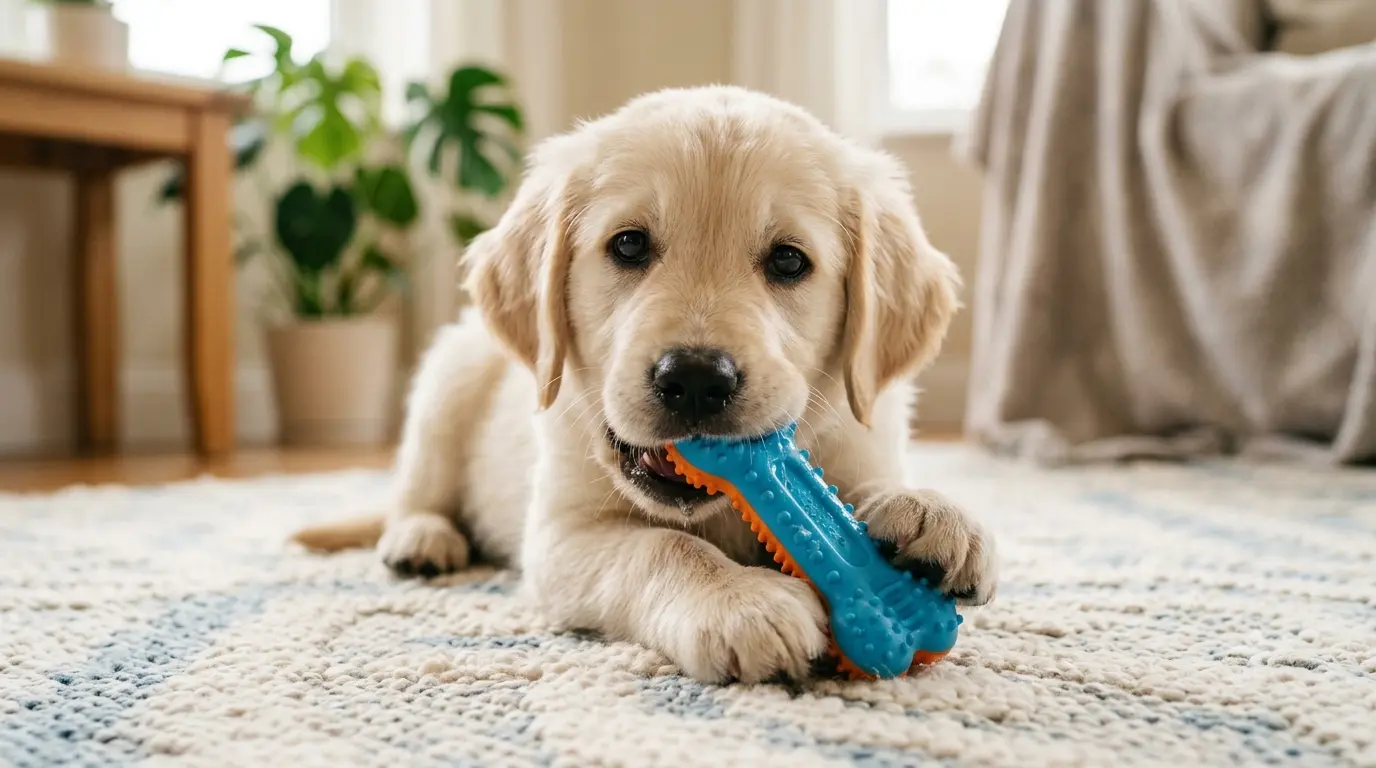
Puppy Teething Timeline: When Do They Lose Their Baby Teeth?
A little context helps you know what you’re dealing with. Puppies get their baby (deciduous) teeth in the first weeks of life, then begin losing them and growing adult teeth as they mature. The heavy teething phase—when gums are sorest and chewing is most intense—typically runs through the early months of puppyhood, and most puppies have their full set of adult teeth in place by around six months of age.
During this window, expect a lot of chewing, some drooling, and maybe a tiny tooth found on the floor now and then (usually they’re swallowed harmlessly). Giving your puppy appropriate outlets during these months protects both your belongings and their developing mouth. If you’re also navigating early feeding, our puppy weaning guide covers that stage.
What to Give a Teething Puppy to Chew Safely
The golden rule of puppy chews: soft enough to be kind to developing teeth, tough enough not to break off into swallowable chunks. Puppy teeth are more fragile than adult teeth, so hardness is the main thing to get right.
The Thumbnail Test
Here’s a simple, widely used way to judge whether a chew is too hard: press your thumbnail firmly into it. If it gives a little or you can make a slight dent, it’s probably safe for teeth. If it’s so hard that your nail makes no impression at all—like bone, hard nylon, or antler—it’s hard enough to fracture a tooth, and that goes double for delicate puppy teeth. A cracked tooth is painful and expensive, so when in doubt, choose softer.
Why Freezable Teething Toys Are Great for Gums
Cold is a puppy’s friend when gums are sore. Freezable teething toys—the kind you chill or freeze before handing over—provide gentle numbing relief along with a satisfying, safe surface to gnaw. Many are made of soft, textured rubber that massages the gums. A frozen wet washcloth (supervised) is a cheap homemade version. Cold soothing plus a puppy-appropriate texture is close to ideal for the teething months.
Beyond those, look for chews and toys specifically labeled for puppies, in a size too big to swallow, and supervise chewing sessions—especially with any edible chew.
Are Deer Antlers Too Hard for Puppy Teeth?
Antlers get recommended a lot because they’re long-lasting and natural, but for puppies they come with a real caution.
Whole vs. Split Antlers and Fracture Risk
The problem with antlers is exactly what makes them durable: they’re extremely hard. Whole antlers in particular fail the thumbnail test badly and carry a genuine risk of cracking teeth—not a chance worth taking with a puppy’s fragile teeth. Split antlers (sliced lengthwise to expose the softer marrow) are somewhat gentler and let a puppy work at the soft center, but they’re still a firm chew that warrants caution and close supervision. For a young teething puppy, softer options are the safer default, and if you do offer any antler, split is preferable to whole and supervision is a must.

What to Do If Your Puppy Swallows a Bully Stick Piece
Bully sticks are a popular, digestible chew, but the risk comes at the end: as a puppy gnaws one down, the final chunk can get gulped and become a choking or blockage hazard. Here’s how to handle it.
Choking vs. Intestinal Blockage
There are two different emergencies to recognize. Choking is immediate and about the airway: gagging, pawing at the mouth, struggling to breathe, or distress right after swallowing. This is a call-your-vet-or-emergency-clinic-now situation. An intestinal blockage develops over hours to days as a swallowed piece gets stuck further down—watch for repeated vomiting, refusal to eat, a painful or bloated belly, lethargy, or straining without producing stool. Both need prompt veterinary care; don’t wait to see if it “passes” on its own if your puppy is showing any of these signs.
If your puppy swallows a piece but seems completely fine—breathing normally, acting themselves—call your vet for advice and watch closely for the blockage signs above over the next day or two. When in any doubt, contact your vet; it’s always better to check than to gamble.
How Chew Holders Reduce the Risk
The simplest prevention is not letting the chew get small enough to swallow in the first place. A chew holder or safety grip clamps onto the end of a bully stick and anchors it, so your puppy can’t gulp that last dangerous nub—the holder keeps it too big and too fixed to swallow. Pair that with always supervising chew time and taking away any piece small enough to be a hazard, and you remove most of the risk.
The Bottom Line
Teething puppies need to chew, so your job is steering that urge onto safe outlets: puppy-labeled chews that pass the thumbnail test, freezable toys for sore gums, and firm supervision with anything edible. Skip rock-hard chews like whole antlers that can crack young teeth. And with swallow-prone chews like bully sticks, a holder plus supervision prevents most incidents—but know the signs of choking and blockage, and get to a vet fast if you see them. Handled well, teething is just a messy phase, not a danger.
Frequently Asked Questions
What can I give a teething puppy to chew safely?
Offer chews and toys labeled for puppies, sized too big to swallow, that pass the thumbnail test (they give slightly when you press a nail in). Freezable teething toys are especially good, since the cold soothes sore gums. Always supervise chewing, particularly with edible chews.
Are deer antlers too hard for puppy teeth?
Whole antlers are generally too hard and can crack a puppy’s fragile teeth—they fail the thumbnail test. Split antlers are somewhat gentler but still firm and need close supervision. For a young teething puppy, softer chews are the safer choice; if you offer antler at all, split is better than whole.
My puppy swallowed a bully stick piece—what should I do?
If your puppy is choking (gagging, pawing at the mouth, struggling to breathe), treat it as an emergency and get veterinary help immediately. If they seem fine, call your vet for advice and watch closely for blockage signs—repeated vomiting, refusing food, a bloated or painful belly, lethargy—over the next day or two, and seek care if any appear.
How do I stop my puppy from swallowing the end of a chew?
Use a chew holder or safety grip that clamps onto the end of the chew and anchors it, keeping the final piece too big and too fixed to gulp. Combine that with supervising every chew session and removing any piece small enough to swallow.
When do puppies stop teething?
The intense teething phase runs through the early months of puppyhood, and most puppies have their full set of adult teeth by around six months of age. Chewing eases considerably after that, though many dogs still enjoy appropriate chews throughout life.
If you ever suspect your puppy is choking or has a blockage, contact your veterinarian or an emergency clinic right away rather than waiting.