
Raw feeding is one of those topics that gets people fired up. Fans swear their dogs have shinier coats, cleaner teeth, and more energy; skeptics worry about bacteria and balance. The truth sits somewhere in the middle, and if you’re curious about raw, the most important thing isn’t picking a side—it’s doing it safely and with clear eyes.
This guide covers the honest pros and cons, how to transition without wrecking your dog’s stomach, whether you can mix freeze-dried raw with regular kibble (a popular question), and how dehydrated treats stack up. Let’s dig in.
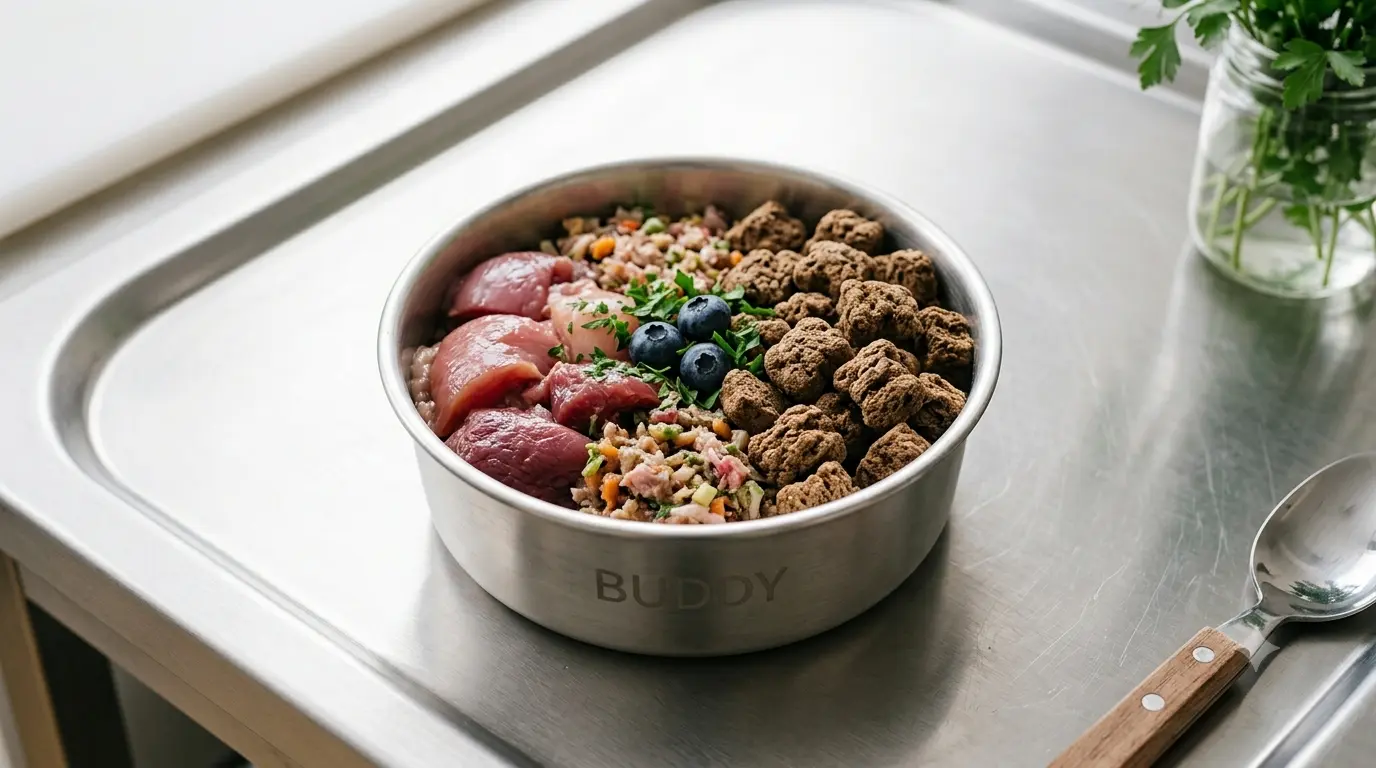
The Pros and Cons of a Raw Dog Food Diet
Let’s be fair to both sides, because the reality is more balanced than the loudest voices suggest.
On the appeal side, many owners report benefits they value: better coat and skin condition, smaller and firmer stools, enthusiasm at mealtimes, and a diet free of the fillers found in some processed foods. Raw feeders like knowing exactly what’s in the bowl.
On the caution side, there are real considerations. Raw meat can carry bacteria like salmonella, which poses a risk both to your dog and to the humans handling it—especially children, elderly people, or anyone immunocompromised. There’s also the challenge of nutritional balance: a raw diet has to be complete and correctly proportioned, and homemade versions can go badly wrong without expert guidance. Raw feeding isn’t recommended for every household or every dog. This is very much a decision to talk through with your vet, ideally one comfortable with raw feeding, before you commit.
How to Switch a Dog from Kibble to Raw Safely
If you’ve weighed it out and want to proceed, the transition method matters a lot for keeping your dog’s gut happy.
Cold Turkey vs. Gradual Transition
There are two schools of thought. Some experienced raw feeders switch abruptly, arguing that raw and kibble digest differently and are best not mixed during the change. Others prefer a gradual crossover, easing raw in over a week or two the same way you’d introduce any new food.
For most owners—especially first-timers and dogs with sensitive stomachs—a gradual approach is the gentler bet, giving the digestive system time to adjust and reducing the odds of loose stools. Whichever you choose, go in with a clear plan and watch your dog’s stools and energy closely, backing off if things get rough. The same slow-and-steady logic we cover in our 7-day food transition guide applies here too.
Hygiene Rules for Handling Raw Pet Food
This part isn’t optional. Treat raw pet food exactly like you’d treat raw meat for your own kitchen: wash your hands, bowls, utensils, and surfaces thoroughly after every handling; don’t let raw food sit out at room temperature; store it frozen or properly refrigerated; and clean your dog’s bowl after each meal. Stainless steel bowls and silicone mats are worth having here because they’re easy to sanitize and don’t harbor bacteria the way scratched plastic can. Good hygiene is what makes raw feeding manageable rather than risky.

Can You Mix Freeze-Dried Raw Food with Kibble?
This is one of the most common raw-curious questions, and the short answer is: yes, for most healthy dogs, you can. Mixing is actually how a lot of people dip a toe into raw feeding without going all-in.
Debunking the Digestion-Speed Myth
You’ll hear a claim that raw and kibble digest at different speeds and shouldn’t be combined because it “causes problems.” For the average healthy dog, there’s little solid evidence behind this. A dog’s stomach is highly acidic and well equipped to handle mixed meals. Most dogs tolerate a kibble-plus-freeze-dried bowl just fine. As always, introduce any new component gradually and watch how your individual dog responds.
How to Rehydrate Freeze-Dried Nuggets
Freeze-dried raw is raw food with the moisture removed, which makes it shelf-stable and convenient. Many owners rehydrate it before serving: add warm (not hot) water, let it sit a few minutes until the nuggets soften and plump back up, then serve. Rehydrating restores moisture your dog would otherwise get from fresh food and makes it easier to eat—especially helpful for older dogs or those who don’t drink much. You can serve some freeze-dried products dry too, but check the packaging, and rehydrating is a safe default.
Dehydrated Treats vs. Raw: Which Is Healthier?
Dehydrated and freeze-dried treats are popular as a “cleaner” snack, and they can be excellent—but “dehydrated” and “raw” aren’t the same thing. Freeze-drying removes moisture at low temperatures and preserves most of the food’s nutritional profile, keeping it close to raw. Traditional dehydration uses gentle heat, which removes moisture and can alter some nutrients, though it still produces a minimally processed, single-ingredient treat that’s far better than heavily processed options.
The honest takeaway: both are good choices as treats, with freeze-dried staying nutritionally closest to raw. Neither replaces a complete, balanced main diet—treats of any kind should stay within about 10% of your dog’s daily calories.
The Bottom Line
Raw feeding can suit some dogs beautifully, but it’s a commitment to safety and balance, not a casual swap. If you go for it, transition gradually (in most cases), practice strict hygiene, and lean on your vet to keep the diet complete. Mixing freeze-dried raw with kibble is a perfectly reasonable middle path for most healthy dogs, and rehydrating those nuggets makes them easier to eat. And whether you feed raw, kibble, or a bit of both, storing everything properly keeps it safe—our dog food storage guide has the details.
Frequently Asked Questions
How do I switch my dog to a raw diet safely from kibble?
Decide with your vet whether raw suits your dog, then transition—most owners do best easing raw in gradually over a week or two while watching stools and energy. Follow strict hygiene when handling raw food, and make sure the diet is complete and balanced rather than improvised, since getting the nutrition right is essential.
Can you mix freeze-dried raw food with kibble?
Yes, most healthy dogs handle a mix of kibble and freeze-dried raw just fine—it’s a popular way to add raw benefits without going fully raw. The idea that they “can’t be digested together” isn’t well supported for the average dog. Introduce it gradually and watch how your dog responds.
Are dehydrated dog treats as healthy as raw?
They’re a good, minimally processed option, but not identical to raw. Freeze-drying preserves most nutrients and stays closest to raw, while gentle dehydration uses low heat that can alter some nutrients. Both make solid treats—just keep treats to around 10% of daily calories, since neither replaces a balanced main diet.
Is raw feeding safe for every dog and household?
No. Raw meat can carry bacteria that risk both dogs and people, so it’s generally not advised for homes with young children, elderly, or immunocompromised members, or for dogs with certain health conditions. It also demands careful nutritional balance. Discuss it with your vet before starting.
Do I need to rehydrate freeze-dried raw food?
You don’t always have to, but many owners do. Adding warm water and letting the nuggets soften restores moisture and makes the food easier to eat, which is especially helpful for seniors or dogs that don’t drink much. Check the product’s instructions, but rehydrating is a safe default.
Raw feeding involves real food-safety and nutritional considerations, so treat this as an overview and consult your veterinarian before making the switch.