
Switching your dog’s food should be easy—new bag in, old bag out, done. But anyone who’s rushed the process knows how it ends: a queasy dog, loose stools, and a lot of extra trips outside. The culprit isn’t usually the new food itself. It’s the speed of the change.
Your dog’s gut runs on a delicate community of bacteria tuned to their current diet. Swap everything overnight and that community gets thrown into chaos, which shows up as digestive upset. The fix is to go slow and let the gut adjust. Here’s exactly how.
Key Signs Your Dog’s Food Isn’t Agreeing With Them
Before we get to the transition itself, it helps to know what a food that genuinely doesn’t suit your dog looks like—versus normal, temporary adjustment.
Digestive Symptoms vs. Skin and Ear Reactions
There are two broad ways a food can disagree with a dog. The first is digestive: loose stools, gas, vomiting, or an unsettled tummy. During a food switch, mild versions of these can be a normal short-term reaction. The second is more telling of a true intolerance or allergy and shows up on the outside—itchy skin, excessive paw licking, or recurring ear infections. These skin-and-ear reactions build over time rather than appearing overnight, and they point to a specific ingredient rather than the change itself. If you’re seeing those, it’s worth reading up on the signs of food allergies in dogs, because a slow transition won’t fix a genuine allergy.
The Vet-Approved 7-Day Food Transition Schedule
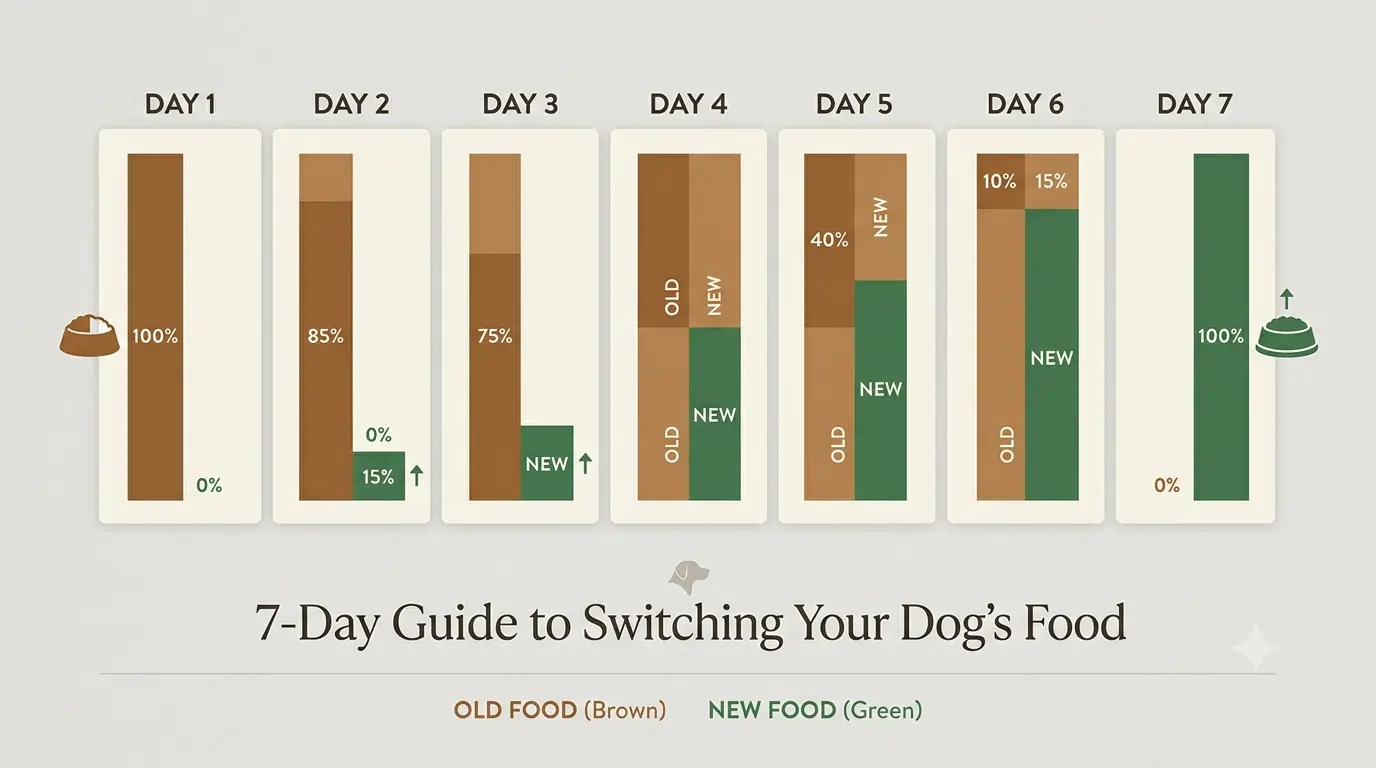
The gold standard is a gradual crossover over about a week, slowly shifting the ratio of old food to new. Here’s the rhythm most vets recommend.
Days One and Two: Mostly Old Food
Start with roughly 75% of the old food mixed with 25% of the new. This tiny amount of new food lets your dog’s gut bacteria start meeting the new ingredients without being overwhelmed. Mix them together in the bowl rather than serving side by side.
Days Three and Four: A Fifty-Fifty Split
Move to an even 50/50 blend. By now many dogs are handling the new food comfortably. If stools are still firm and your dog is eating happily, you’re on track. If things look a little loose, simply hold at this ratio an extra day or two before advancing.
Days Five and Six: Mostly New Food
Shift to about 25% old food and 75% new. Your dog is now eating mostly the new diet, and their digestive system has had several days to adapt. Keep an eye on stool quality and appetite.
Day Seven: Fully Switched
By day seven, you can serve 100% of the new food. Take a moment to confirm your dog is eating well, with normal energy and reasonably firm stools, before you consider the transition complete.
A big caveat: some dogs—especially those with sensitive stomachs, seniors, or puppies—need a slower pace. There’s no prize for finishing in exactly seven days. Stretching it to ten or fourteen days is completely fine and often smoother. When you hit a rough patch, back up a step rather than pushing forward.
Dog Diarrhea After Switching Food: How Long Is Normal?
A little loose stool in the first couple of days of a transition is common and usually resolves as the gut adjusts. As a rough guide, mild digestive upset that’s improving within a day or two isn’t alarming. What matters is the trend: things should be getting better, not worse.
When to Seek Veterinary Care
Call your vet if the diarrhea is severe, watery, or bloody, lasts more than about 48 hours, or comes with vomiting, lethargy, refusal to eat, or signs of dehydration. Puppies and small dogs can become dehydrated quickly, so err on the side of caution with them. Diarrhea that persists well beyond the transition may mean the new food genuinely doesn’t suit your dog.
Fasting and Bland Diets to Reset the Gut
For a healthy adult dog with mild upset, letting the stomach rest briefly and then feeding a plain, gentle diet can help things settle. A classic bland option is plain boiled chicken (no skin, no seasoning) with plain white rice, fed in small amounts until stools firm up, then gradually reintroducing regular food. A spoonful of plain canned pumpkin can also add gentle fiber. Skip the fasting step entirely for puppies and small breeds, who shouldn’t go without food, and check with your vet before making a plan if you’re unsure.
Digestive Support That Actually Helps
You don’t need much to smooth a food switch, but a couple of supports are genuinely useful. A dog-specific probiotic can help keep the gut’s bacterial balance steady during the change—look for one formulated for dogs rather than a human product. Plain canned pumpkin (not pie filling) is an easy, natural source of fiber that many owners keep on hand. And if your dog has a track record of sensitive digestion, choosing a “sensitive stomach” formula as the new food—and transitioning to it extra slowly—can make the whole process easier. When in doubt about supplements, your vet can point you to something appropriate.
The Bottom Line
Switching foods without the mess comes down to one word: patience. Blend old and new in shifting ratios over about a week (longer for sensitive dogs), watch your dog’s stools and appetite, and back off a step whenever things get loose. Mild, improving upset in the first day or two is normal; diarrhea that’s severe, bloody, or dragging on past 48 hours means it’s time to call the vet. Go slow, and most food changes are completely uneventful.
Frequently Asked Questions
How do I transition my dog to new food without diarrhea?
Mix the new food into the old gradually over about seven days—starting at roughly 25% new and increasing the ratio every couple of days until you reach 100%. Going slowly lets your dog’s gut bacteria adjust, which is what prevents the loose stools that come from an abrupt switch.
How long does dog diarrhea last after switching food?
Mild, improving loose stool in the first day or two of a transition is common and usually settles as the gut adapts. If diarrhea is severe, bloody, or lasts more than about 48 hours—or comes with vomiting or lethargy—contact your vet, as it may mean the food doesn’t suit your dog.
Can I switch dog food cold turkey?
It’s not recommended for most dogs. An abrupt change disrupts the gut’s bacterial balance and often causes vomiting or diarrhea. A gradual crossover over a week (or longer for sensitive dogs) is far gentler and much less likely to cause problems.
What are signs my dog’s food isn’t agreeing with them?
Digestive signs like loose stools, gas, or vomiting are the obvious ones, but persistent itchy skin, paw licking, or recurring ear infections can point to a genuine intolerance or allergy to an ingredient. Ongoing symptoms that outlast the transition are a signal to talk to your vet.
Can I speed up the transition if it’s going well?
You can, but there’s little benefit and some risk. Even if the first few days look smooth, sticking to the gradual schedule protects against a surprise upset later on. If anything, err toward going slower rather than faster.